
What Is Huang Jing? Medicinal Parts, Identification, and Common Formulas
Among traditional Chinese medicinal herbs, Huang Jing (Polygonatum rhizome) is often regarded as a gentle tonic. For many overseas readers looking to nature for bodily support, understanding what Huang Jing is, how to identify it, and what its traditional uses are is the first step toward building an objective awareness. This article will cover its physical characteristics, the medicinal part used, its understanding within traditional Chinese medicine, how it differs from Yu Zhu, and some common formulas it appears in.
What Does Huang Jing Look Like? How to Identify It
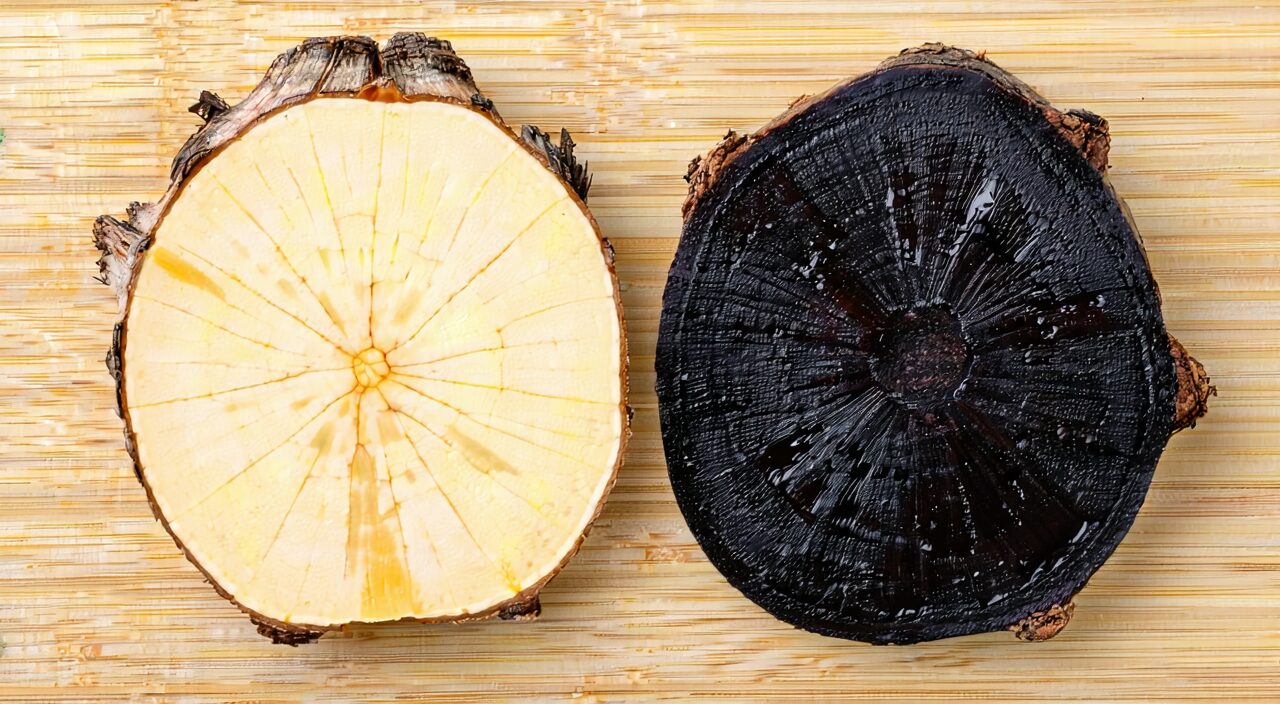
Huang Jing comes from the dried rhizomes of several Lily family plants: Polygonatum kingianum, Polygonatum sibiricum, or Polygonatum cyrtonema. The rhizome has a distinctive shape, appearing nodular overall, with some parts noticeably swollen and chicken-head-like, hence the folk name “chicken-head Huang Jing”. Other roots branch like ginger and are called “ginger-shaped Huang Jing”.
The rhizome surface is yellowish-brown to dark brown, semi-translucent or slightly glossy, with visible nodes and fine rootlet scars. At the nodes there are often sunken, circular stem scars, like small dots.
- Raw Huang Jing: When sliced, the cut surface is pale yellow to yellowish-brown, relatively hard, with a certain mealy texture.
- Processed Huang Jing: After steaming or processing with rice wine, the color turns black and glossy, the texture becomes soft and sticky, the cut surface is shiny, and it tastes and smells sweet.
This obvious change in color and texture is an important feature for distinguishing raw Huang Jing from processed Huang Jing.
What Is the Medicinal Part of Huang Jing?
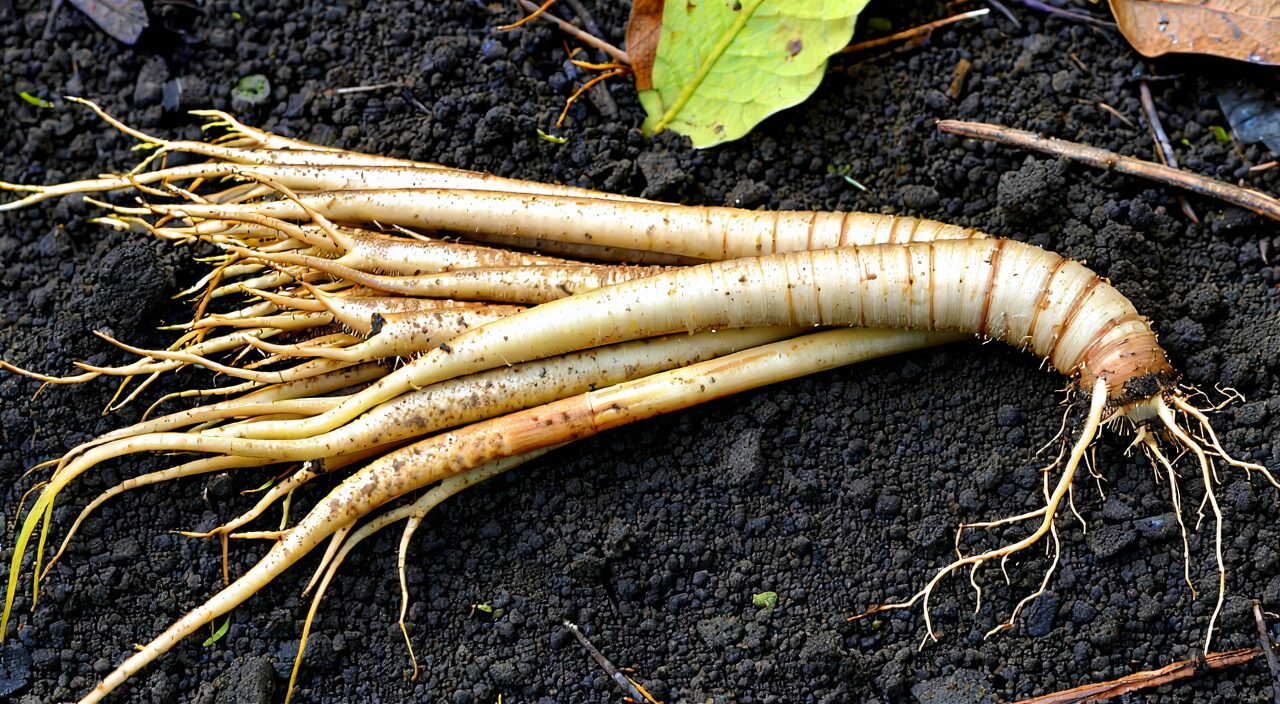
The medicinal part of Huang Jing is the underground rhizome. It is generally harvested in autumn after the aerial parts have withered. The above-ground parts and fibrous roots are removed, the dirt washed off, and then it is processed.
Depending on the processing method, it is divided into two main categories: raw Huang Jing and processed Huang Jing.
- Raw Huang Jing: The rhizome that has been directly sun-dried or dried at a low temperature.
- Processed Huang Jing: The clean rhizome repeatedly steamed until black and moist inside and out, or mixed with rice wine and then stewed or steamed.
Traditionally, there is also a processing method called “nine steaming and nine sun-drying”. Through multiple rounds of steaming and drying, the texture of Huang Jing becomes more moist, the taste sweeter, and its emphasis shifts more towards nourishing and tonifying.
How Does Traditional Chinese Medicine Understand Huang Jing?
From the perspective of traditional Chinese medicine theory, Huang Jing is neutral in nature, sweet in flavor, and enters the Spleen, Lung, and Kidney meridians. It is a qi-tonifying and yin-nourishing herb.
Traditional Chinese medicine typically interprets its action from three angles: tonifying spleen qi, nourishing lung yin, and benefiting kidney essence.
- For physical fatigue and reduced appetite stemming from spleen qi weakness;
- For dry cough and dry mouth caused by lung yin deficiency;
- For soreness of the lower back and knees, and premature greying of the hair attributable to kidney essence depletion.
In such contexts, Huang Jing may be considered as one of the options for regulation. It is important to emphasize that whether Huang Jing is appropriate depends on individual constitution, current presentation, and the judgment of a professional; self-application is not advisable.
What Components and Effects of Huang Jing Are Studied in Modern Research?
Modern research mainly focuses on active constituents in Huang Jing such as polysaccharides, steroidal saponins, and flavonoids. Some basic studies suggest that Huang Jing polysaccharides show potential in immune regulation, antioxidant activity, as well as assisting in the regulation of blood sugar and blood lipids. Additionally, possible roles in anti-aging and anti-inflammatory effects also attract attention.
It should be noted that most of these studies are still at an experimental stage and cannot be directly equated to specific effects in the human body. They mainly provide some modern perspectives for traditional applications.
What Are the Differences Between Huang Jing and Yu Zhu?
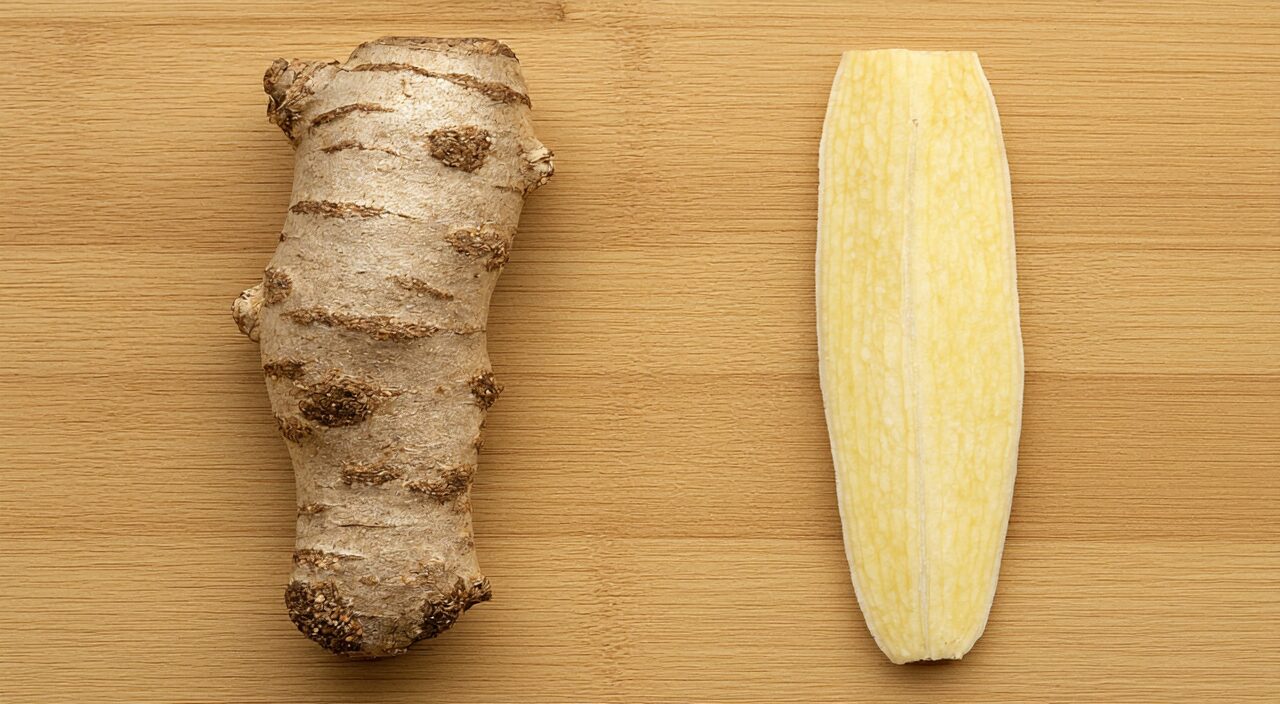
Huang Jing and Yu Zhu both belong to the Lily family and share some similarities in appearance and function, which can lead to confusion. The main differences are as follows:
| Difference | Huang Jing | Yu Zhu |
|---|---|---|
| Source | Rhizomes of several Polygonatum species in the Lily family | Rhizome of Polygonatum odoratum (Lily family) |
| Appearance | Rhizome is markedly nodular, with swollen parts and sunken stem scars; often shaped like “chicken head” or “ginger” | Rhizome is slender and cylindrical, slightly flattened, with closely spaced but relatively smooth nodes; generally uniform in thickness, rarely with nodular protrusions |
| Traditional Use Focus | Leans toward tonifying qi and nourishing yin, addressing the Spleen, Lung, and Kidney simultaneously; its nature is relatively cloying | Excels at nourishing yin, moistening dryness, and generating fluids to quench thirst; mostly used for lung and stomach yin deficiency; its nourishing effect is relatively clear and moist, and it generally does not easily hinder the Spleen and Stomach’s transportation and transformation |
Understanding these differences helps to grasp the unique characteristics of each herb more accurately when learning about them.
Which Formulas Use Huang Jing?
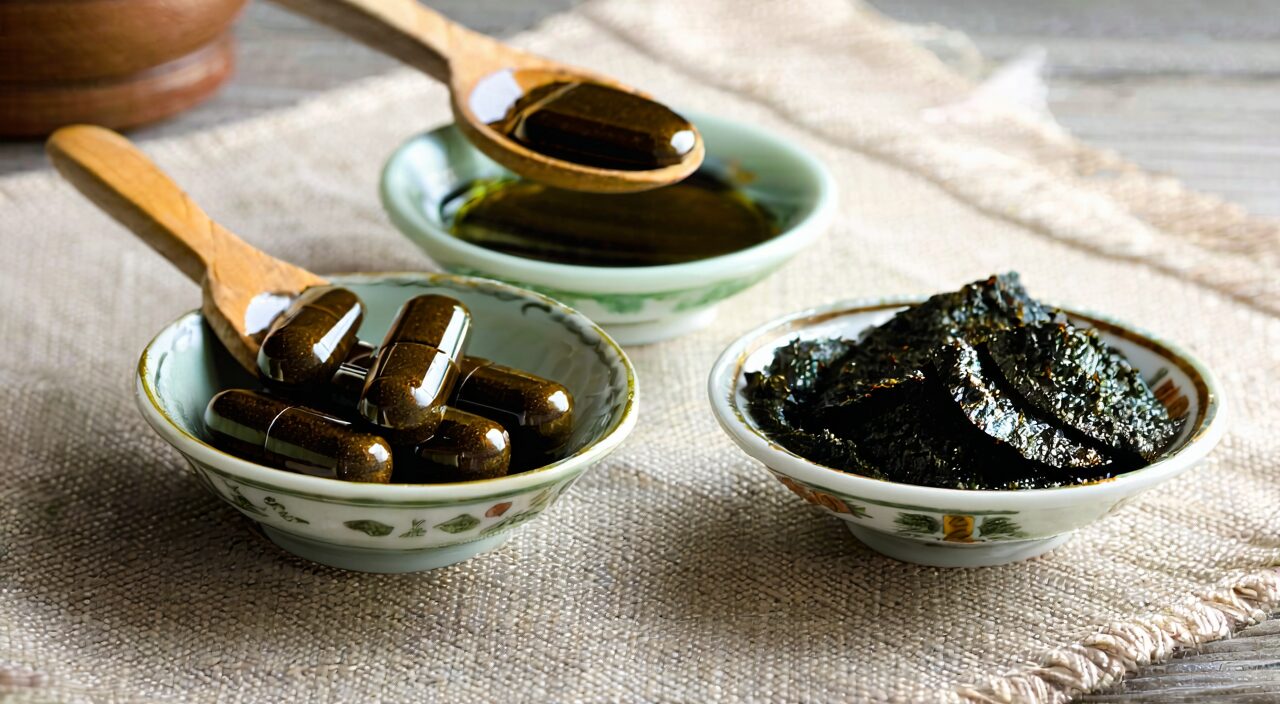
Huang Jing often appears in some traditional formulas, for example:
- Huang Jing Wan (Polygonatum Pill): Huang Jing combined with Dang Gui and other herbs; traditionally used for regulating conditions like a sallow complexion, fatigue, and reduced appetite caused by qi and blood deficiency.
- Jiuzhuan Huangjing Dan (Nine-Times-Refined Polygonatum Elixir): A pill preparation using Huang Jing as the main ingredient and processed through multiple steaming cycles; traditionally used for those who are elderly, frail, or experiencing essence and blood deficiency.
- Huang Jing Gao (Polygonatum Paste): Huang Jing decocted alone, or with Gou Qi Zi, Shan Yao and others, serving as a gentle daily tonic option.
These traditional uses offer different directions for understanding, but when making specific choices, it is still advisable to consider individual circumstances and refer to product instructions or the advice of a Chinese medicine professional.
What Should Be Noted When Using Huang Jing?
When using Huang Jing, the following points deserve special attention:
- Distinguish Raw from Processed: Raw Huang Jing has a numbing taste and may irritate the throat; traditionally, it is generally not taken internally in its raw form. Processed Huang Jing is usually used for daily regulation.
- Cloying Nature May Hinder Digestion: After processing, Huang Jing’s nature becomes cloying. For individuals with weak digestive function, internal dampness, or loose stools, it may increase the risk of bloating or indigestion.
- Pause During Special Periods: If you have a cold, fever, or any acute inflammatory condition, it is usually advised to temporarily stop using it.
- Use in Appropriate Dosage: Any medicinal herb should be used within a reasonable dosage range; long-term, large-quantity consumption is not recommended.
- Seek Medical Attention Promptly: If persistent fatigue, significant loss of appetite, or other discomfort occurs, consult a doctor promptly instead of relying solely on adjusting the dosage of herbs to solve the problem.
Summary
Huang Jing is a Chinese medicinal herb characterized by its ability to tonify qi and nourish yin. Its rhizome is used medicinally, and after processing, its properties change. There is a relatively clear boundary between its appearance and uses and those of Yu Zhu. Familiarity with these basics contributes to a more complete understanding of Huang Jing. When practically considering whether to use it, it is best to combine knowledge of one’s individual constitution and current state, and refer to professional opinion for decisions.
This article is for informational reference only and should not be considered a substitute for professional diagnosis or treatment advice.