
What Is Tangerine Seed? Medicinal Part, Identification and Common Formulas
In learning about Chinese medicine, many people are familiar with tangerine peel or tangerine pith, but often overlook the tangerine seed — Jú Hé. In fact, traditional Chinese medicine recognized the value of tangerine seed very early on and uses it as an independent medicinal substance. For Chinese people living overseas who want to take care of their health through natural approaches, they may have heard that tangerine seed can “regulate qi and dissipate masses”, yet they may not be clear about what it actually looks like, how to identify it, or how it differs from similar herbs. This article will guide you through tangerine seed from the perspectives of identification, medicinal part, common formulas and usage precautions, in a science-popularizing way.
What Does Tangerine Seed Look Like? How to Identify It
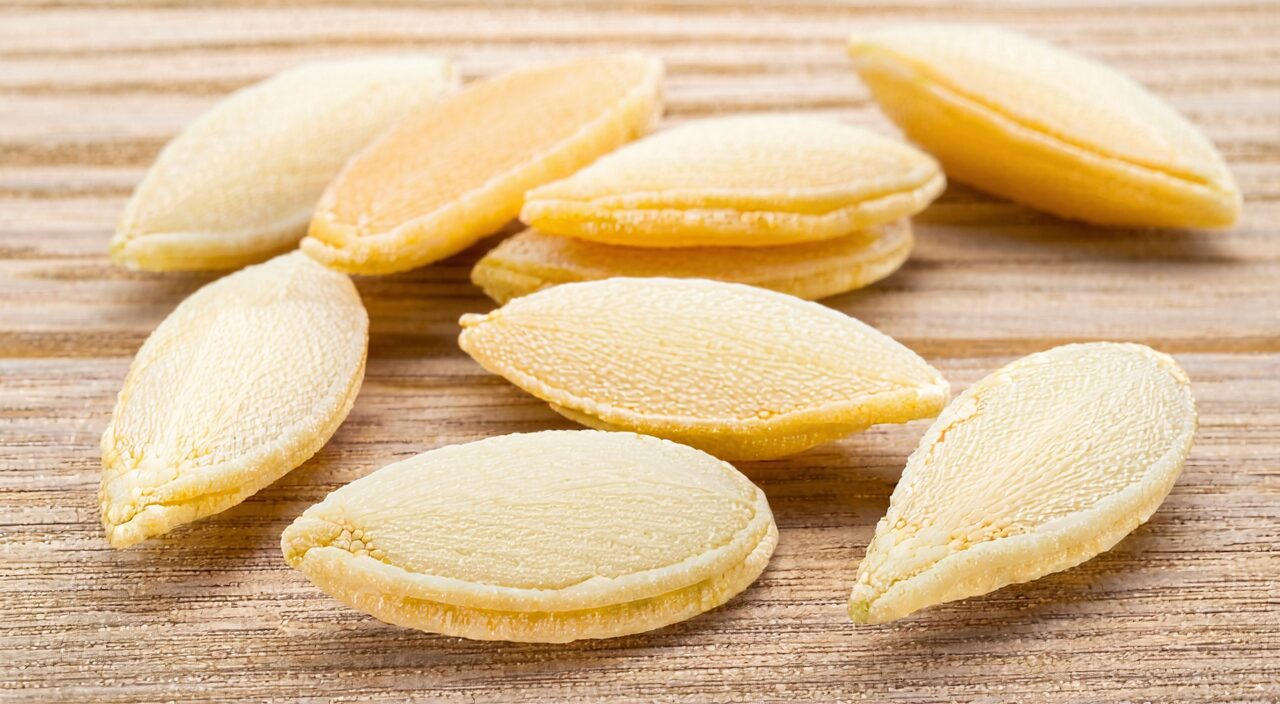
Tangerine seed is the mature seed of tangerine and its cultivated varieties (such as Dahongpao, Wenzhou migan, etc.). A dried tangerine seed is slightly flattened, ovoid or oval, about 0.8–1.5 cm in length and 0.4–0.7 cm in width. The color is pale yellowish-white or light yellowish-brown, and the surface is relatively smooth; when held up to light, faint textures can be seen.
There is a distinctive feature for identifying tangerine seed: one end of the seed is blunt and round, while the other end gradually tapers to a pointed tip. Gently scraping open the outer coat with a fingernail reveals two thick cotyledons inside. They are white or pale yellowish-white with an obvious oily sheen — these are often referred to as “oily cotyledons”. When chewed lightly, they give a slight oily fragrance and a mildly bitter-astringent taste.
Fresh tangerine seeds are relatively plump, whereas those stored too long or of poor quality may appear dark, shrivelled, or even give off a mouldy smell. Therefore, in practice, tangerine seeds that are plump, pale yellowish-white and have a clean aroma are generally more valued.
What Is the Medicinal Part of Tangerine Seed?
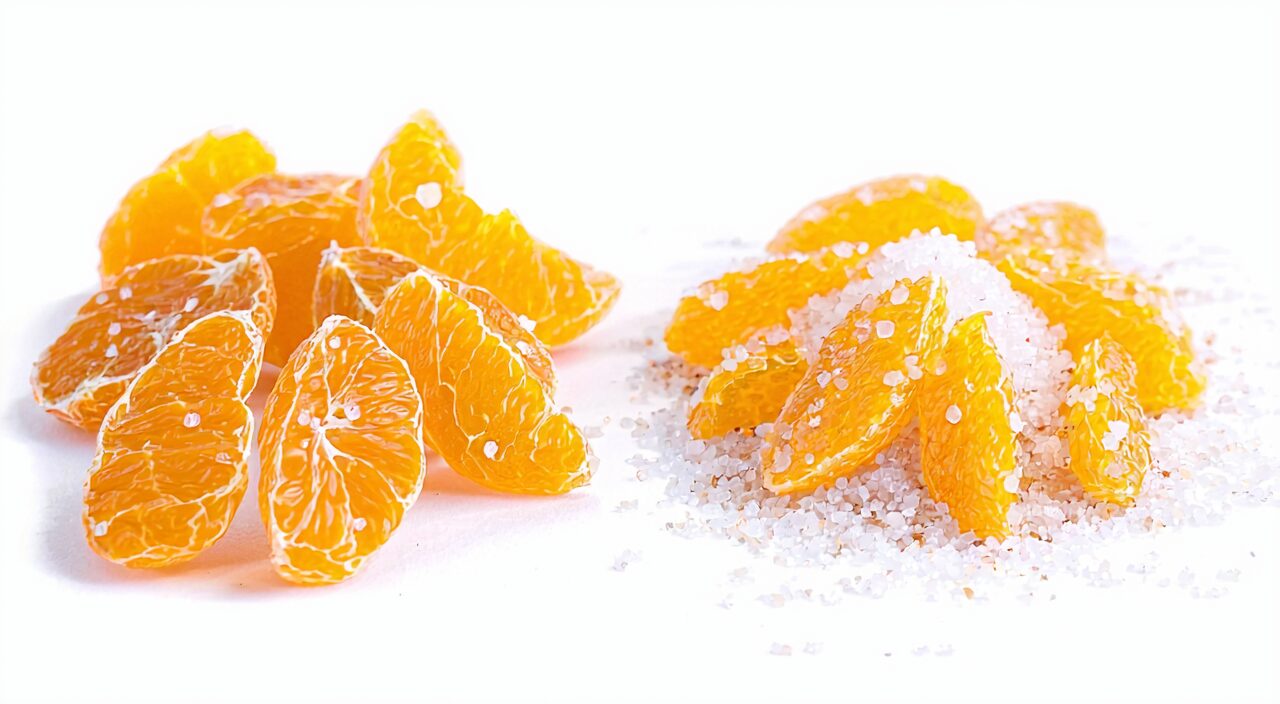
The medicinal part of tangerine seed is the mature seed itself — not the whole fruit and not the immature seed. Traditionally, the seeds are collected after the tangerine fruits are fully ripe in autumn and winter. The fruit pulp and peel residues are removed, and the seeds are washed clean, then sun-dried or dried at low temperature.
To enhance its action of regulating qi and dissipating masses, a salt-processing method is sometimes applied. The so-called “salt-processed tangerine seed (Yan Ju He)” is prepared by mixing clean tangerine seeds with salt water, allowing them to moisten slightly, then stir-frying in a wok over gentle heat until they turn slightly yellow, and finally cooling them. The salt-processed seeds have a somewhat darker color, a slight salt bloom on the surface, and a faint salty smell. It is generally held that salt-processing guides the medicinal action to the lower burner, allowing it to better act on the abdominal region and the areas traversed by the Liver meridian.
Note that if you collect tangerine seeds on your own, you need to ensure the source is clean, free from mould, and fully dried. If you are dealing with an unfamiliar herb, it is best to check the traditional quality requirements through formal channels and avoid casually using unprocessed seeds.
How Does TCM View Tangerine Seed?
From a Chinese medicine perspective, tangerine seed is mostly recorded as bitter and neutral in property, and it enters the Liver meridian. Traditional theories hold that it excels at “regulating qi, dissipating masses, and relieving pain.” It is commonly used to address conditions related to Liver qi constraint and qi movement stagnation, such as hypochondriac distension and pain, breast lumps, and lower abdominal pain due to qi stagnation.
To give an analogy, the qi in the body is like the wind. When the wind is blocked, local “masses” may form. The action of tangerine seed is more like helping the wind flow again, gradually dispersing the masses. This metaphor does not imply actual therapeutic efficacy; it is only for ease of understanding the traditional line of thinking.
In addition, for some people who experience distension in the chest and hypochondrium, or wandering abdominal pain after emotional fluctuations, TCM believes this may relate to Liver qi stagnation, and tangerine seed can be one of the options for such conditions. However, this view is largely empirical, and whether it suits an individual must be determined by combining tongue manifestation, pulse conditions and other signs.
Modern Research on Tangerine Seed
Modern research on tangerine seed mainly focuses on its chemical constituents, such as limonoids, flavonoids, and volatile oils. Some in vitro experiments suggest that these components may possess anti-inflammatory, analgesic, and antioxidant potential, but most of the findings remain at the basic research stage. Although these discoveries offer a certain material basis for understanding the traditional uses of tangerine seed, they are far from reaching a level that can guide everyday application. Therefore, we tend to regard it more as a continuation of traditional experience, rather than a therapeutically validated ingredient by modern medicine.
If you are interested in the progress of modern research on tangerine seed, it is advisable to follow information from authoritative academic platforms and avoid being misled by one-sided claims.
How Does Tangerine Seed Differ from Litchi Seed and Peach Kernel?
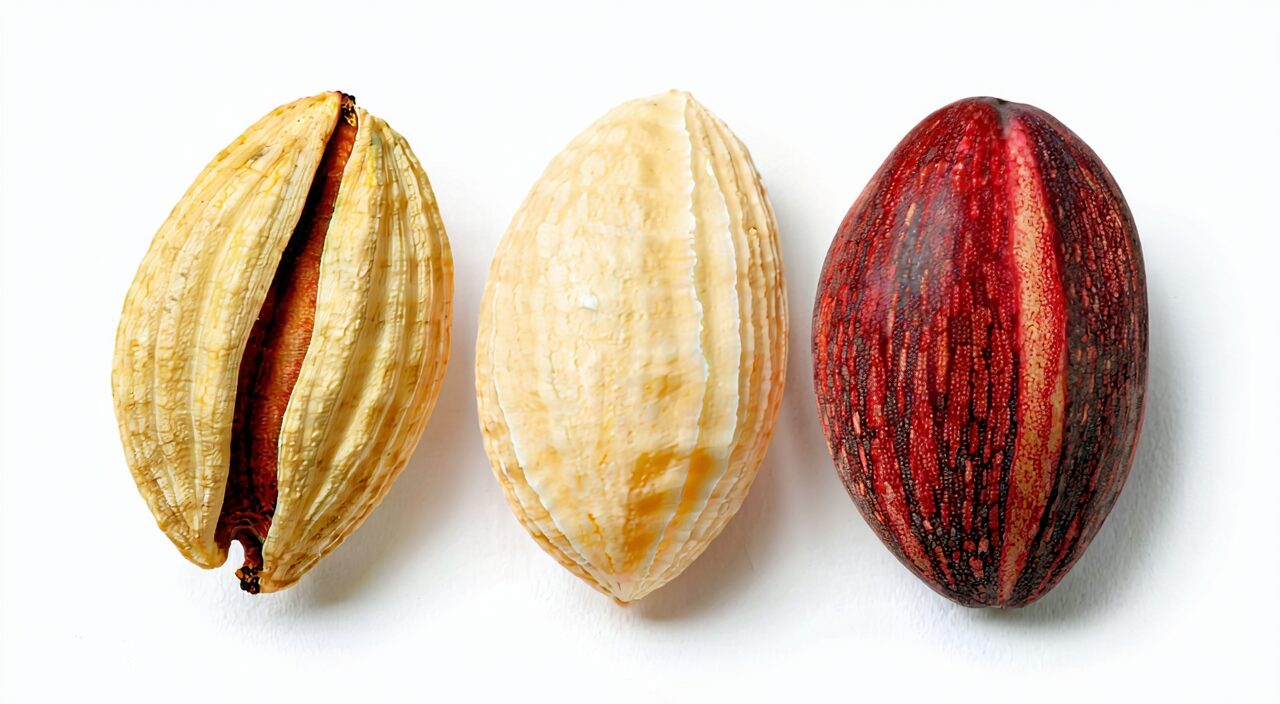
Many overseas users, when learning about tangerine seed, often encounter litchi seed (Li Zhi He) and peach kernel (Tao Ren) at the same time. They can look somewhat similar and are easily confused, but there are clear distinctions in traditional application.
In appearance, tangerine seed is ovoid or oval, pale yellowish-white, and relatively smooth on the surface. Litchi seed is oblong-spherical or almost oval, brownish-red or dark brown, with a relatively hard shell, and is generally larger than tangerine seed, about 1.5–2.5 cm long. Peach kernel is flattened and elongated-ovate, more pointed at one end, with a yellow-brown or reddish-brown surface, many longitudinal veins, and often a thin edge along the margin.
In traditional use, tangerine seed leans toward regulating qi and dissipating masses, and is often used for distension and masses caused by Liver meridian qi stagnation. Litchi seed also enters the Liver meridian, but is more inclined to warm and disperse cold stagnation, traditionally associated with lower abdominal pain and testicular dragging pain due to cold. Peach kernel mainly invigorates blood, dispels stasis, moistens the intestines and unblocks the bowels, and is mostly used for blood-stasis related menstrual irregularities and localized pain. Although all three involve “dissipating masses” or “invigorating blood,” their emphases differ, and self-substitution is not recommended.
Which Formulas Use Tangerine Seed?
In traditional formulas, tangerine seed chiefly appears as an assisting herb, commonly seen in the following three formulas. These are introduced here only for reference, and suitability needs to be judged based on individual presentation.
Tangerine Seed Pill (Ju He Wan) originates from Medical Origins (Yi Xue Qi Yuan). The original formula includes tangerine seed, seaweeds (Hai Zao, Kun Bu), Sichuan chinaberry fruit (Chuan Lian Zi), peach kernel, magnolia bark (Hou Po) and others. Traditionally it is often used to address lower burner cold-dampness and qi stagnation causing hernia discomfort or testicular distension and heaviness. In this formula, tangerine seed regulates qi and dissipates masses, working together with the other ingredients to move qi and relieve pain.
Fennel and Tangerine Seed Pill (Hui Xiang Ju He Wan) is a relatively well-known proprietary Chinese medicine. It is composed of tangerine seed, fennel (Xiao Hui Xiang), litchi seed, combined spicebush root (Wu Yao), Sichuan chinaberry fruit and other herbs, mainly targeting cold congealing and qi stagnation type of lower abdominal cold pain and testicular dragging. It emphasizes warming the meridians, dispersing cold, moving qi and relieving pain. If you have similar discomfort and it is differentiated by a TCM practitioner as cold congealing and qi stagnation, this may be considered as a reference direction, but you must consult a professional before use.
Tangerine Seed Powder (Ju He San) is relatively less commonly discussed in everyday conversation; it is mostly a flexible combination prepared by physicians according to the situation, pairing tangerine seed with corresponding herbs to strengthen the effect of dissipating masses and relieving pain. Since the formula is not fixed, self-preparation is not advised.
Whichever formula or patent medicine it is, traditional thinking emphasizes treatment based on pattern differentiation. Although Fennel and Tangerine Seed Pill is a patent medicine, it still has its scope of application; it is not suitable for all testicular or lower abdominal discomfort, and it should never be taken long term without proper pattern differentiation.
What Precautions Should Be Taken When Using Tangerine Seed?
Although tangerine seed is one of the common materials also used in food therapy, there are still many points to note when using it.
First, it should be used with caution during pregnancy. Traditionally, tangerine seed is considered to have a qi-moving action. During pregnancy the qi dynamic should not be overly regulated, so it is generally recommended to avoid it. If you are unsure, a conservative approach is even more important.
Second, people with a constitution leaning toward yin deficiency with fire hyperactivity should also exercise caution. In Chinese medicine, those with yin deficiency and fire hyperactivity often present with dry mouth and throat, irritability, night sweats, a red tongue with little coating, etc. In such cases, excessive use of qi-regulating substances may worsen the consumption of yin fluids. Therefore, if you suspect you have similar patterns, do not use tangerine seed blindly.
Third, relatively severe or recurrent inguinal and testicular pain or distension should not be managed solely with tangerine seed or formulas containing it. Such symptoms may be related to varicocele, inflammation or other surgical conditions; you should promptly seek medical attention for a clear diagnosis to avoid delaying treatment.
Fourth, long-term unrelieved symptoms such as breast lumps and hypochondriac pain also need to have organic diseases ruled out first. TCM often uses tangerine seed as a supporting substance for regulation, but it cannot replace necessary medical examinations.
Finally, those with allergies to plants of the Rutaceae family should avoid contact or use of tangerine seed. In daily storage, keep tangerine seed out of reach of children to prevent accidental ingestion.
Summary
Tangerine seed (Ju He) is a traditional medicinal substance that uses the mature seeds. Its key identifying features are an ovoid shape with a pale yellowish-white color and white, oily cotyledons. It is often understood from the perspective of regulating qi and dissipating masses, and is used in formulas such as Tangerine Seed Pill and Fennel and Tangerine Seed Pill. However, its nature tends to be dispersing, so pregnant women, those with yin deficiency and fire hyperactivity, and people with recurrent abdominal pain need special caution. In any uncertain situation, consult a professional first, and do not treat tangerine seed as a standalone remedy for severe pain.