
What Is Laoguan Cao? Medicinal Parts, Identification, and Common Formulas
When a Chinese medicinal name contains an animal image, people are often drawn to the name first. Laoguan Cao is one such example. Many overseas Chinese readers who see this name for the first time may wonder what Laoguan Cao is and whether it is actually related to the stork. In fact, Laoguan Cao is not a single plant; it is a type of Chinese medicinal material derived from plants in the Geraniaceae family. Its fruit is slender and elongated, with a pointed, upward-curving tip that looks somewhat like a stork’s beak from a distance, hence the name. This article outlines what Laoguan Cao looks like, what its medicinal part is, how it differs from Xi Xian Cao and Di Jin Cao, as well as common formulas containing Laoguan Cao and precautions for use, helping readers establish a clearer understanding.
What Does Laoguan Cao Look Like? How to Identify It?
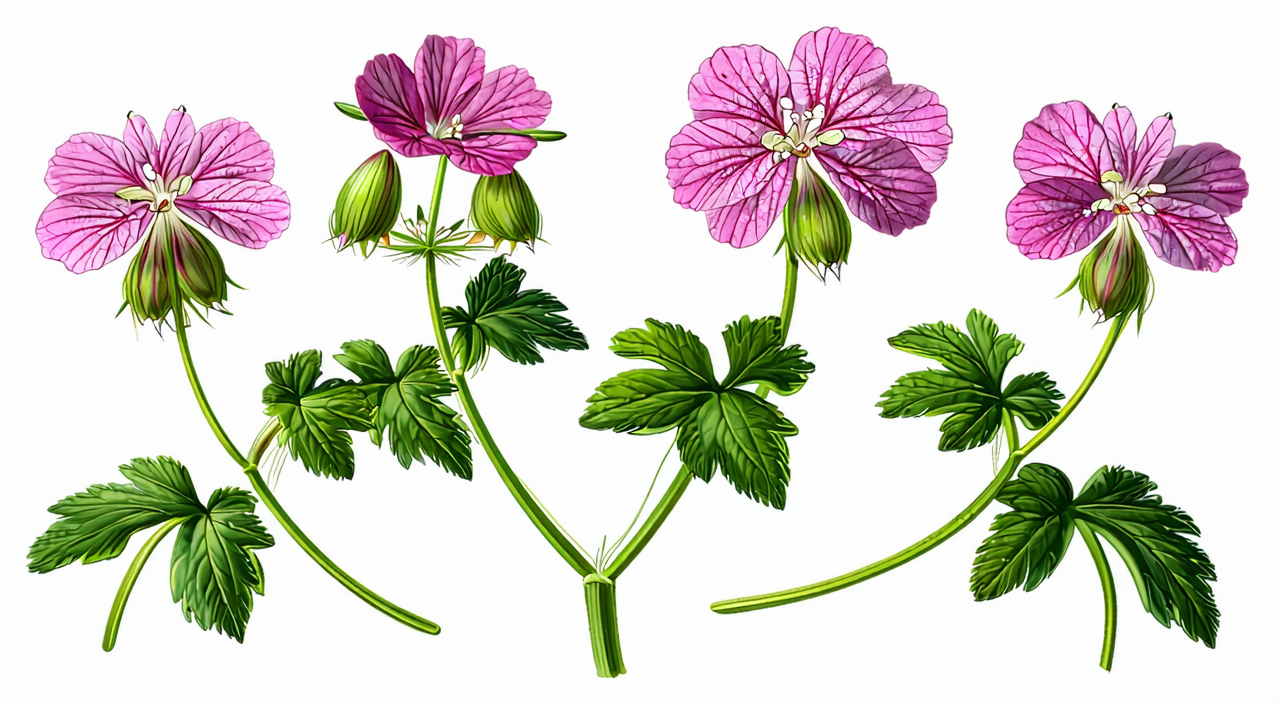
Laoguan Cao is mainly derived from the dried aerial parts of plants such as Erodium stephanianum, Geranium wilfordii, or Geranium carolinianum. In terms of plant morphology, it usually has slender stems with distinct nodes; some species often bear backward-pointing soft hairs or spreading long hairs. The leaves are one of the key identification features: leaf shape varies depending on the source, commonly being palmately lobed or pinnately divided, with generally narrow lobes and sometimes incised or serrated margins. The flowers are five-petaled, mostly purplish red, pale red, or nearly white, and the petals have distinct veins. The most striking feature is the fruit. After the fruit matures, the capsule forms a long, slender column with a pointed, beak-like tip that sometimes curves upward, which is why people traditionally call it ‘old stork’s beak.’ When observing in the field or buying medicinal material, one can judge by combining leaf shape, stem hairiness, flower color, and fruit morphology. However, plant identification requires some experience; do not casually dig up plants when unsure.
What Is the Medicinal Part of Laoguan Cao?
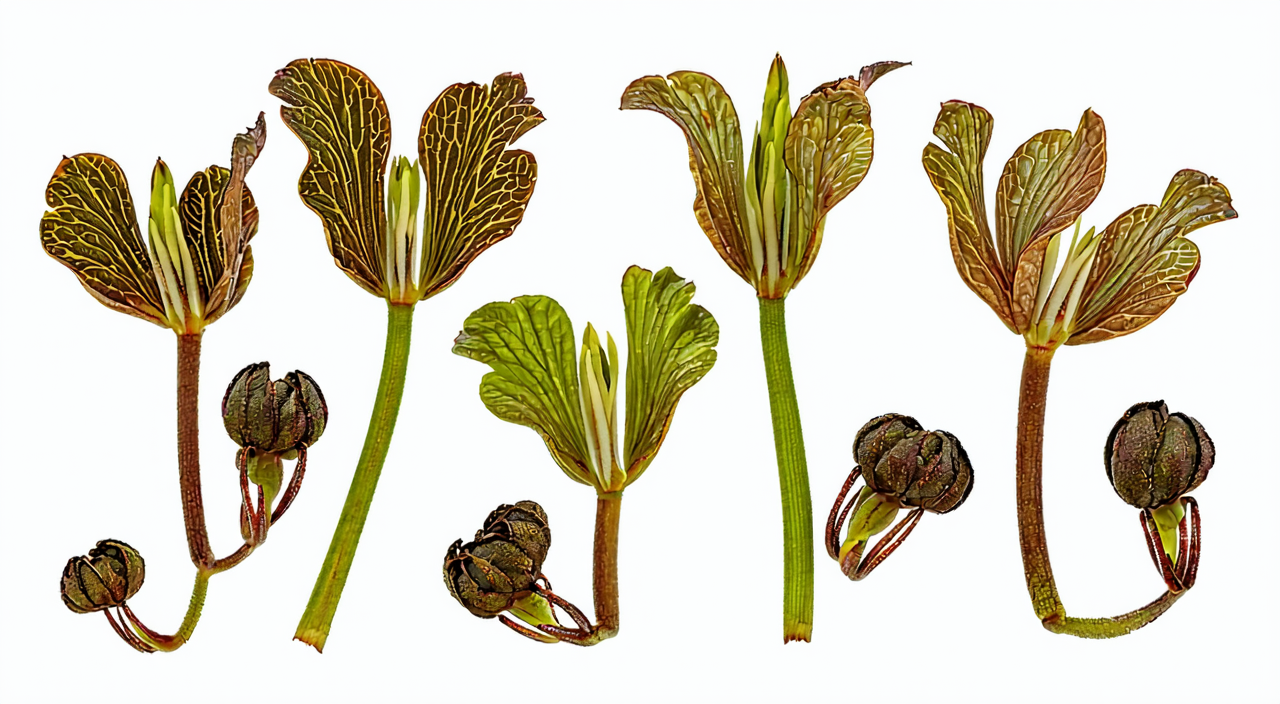
The medicinal part of Laoguan Cao is the dried aerial part, that is, the portion including stems, leaves, flowers, and fruits, rather than the root or seed alone. Traditional harvesting is generally carried out around the time the fruit matures, when the aerial part is relatively complete and the medicinal characteristics are more typical. After harvesting, impurities should be removed, and the material should be washed, dried, and cut into sections for later use. Prepared slices are usually irregular mixed sections of stems and leaves, sometimes with residual flowers or fruits; the stems are thin, the leaves are mostly curled and wrinkled, and the fruits sometimes retain the beak-like feature. Because the source may involve several species within the same genus, the appearance of commercial materials can vary somewhat by region, which is one point to keep in mind when determining the source of Laoguan Cao.
How Does Traditional Chinese Medicine Understand Laoguan Cao?
In traditional Chinese medicine, Laoguan Cao is generally classified among herbs that dispel wind-dampness and unblock the channels and collaterals. Traditional materia medica texts mostly describe it from the perspective of its nature, flavor, and channel tropism, considering it acrid and bitter, neutral or slightly warm in nature, and often used for conditions related to wind-damp bi pain, numbness of the limbs, and limited joint movement. It is also mentioned in some traditional discussions for stopping diarrhea, especially as an auxiliary approach for chronic diarrhea, dysentery, and other intestinal problems. It should be noted that these understandings are mainly summaries of traditional experience and do not represent confirmation of efficacy in the modern medical sense. Whether a health condition is suitable for using Laoguan Cao should be considered in light of one’s individual constitution, specific presentations, and advice from professionals; one should not simply take it on the basis of traditional records.
What Have Modern Studies Observed About Laoguan Cao?
Modern research has mainly observed Laoguan Cao from the perspectives of component analysis and pharmacological experiments. Some studies focus on its flavonoid, tannin, and other constituents, and explore possible directions such as anti-inflammatory, antioxidant, and antibacterial effects. Some experiments have also examined the effects of its extracts on joint inflammation models, but most remain at the stage of basic research or animal experiments. Overall, modern research on Laoguan Cao provides some clues for understanding its traditional uses, but experimental conclusions cannot yet be directly equated with clinical effects. For ordinary consumers, it is enough to be aware of this; one should not exaggerate these findings or judge suitability on one’s own.
How Does Laoguan Cao Differ from Xi Xian Cao and Di Jin Cao?
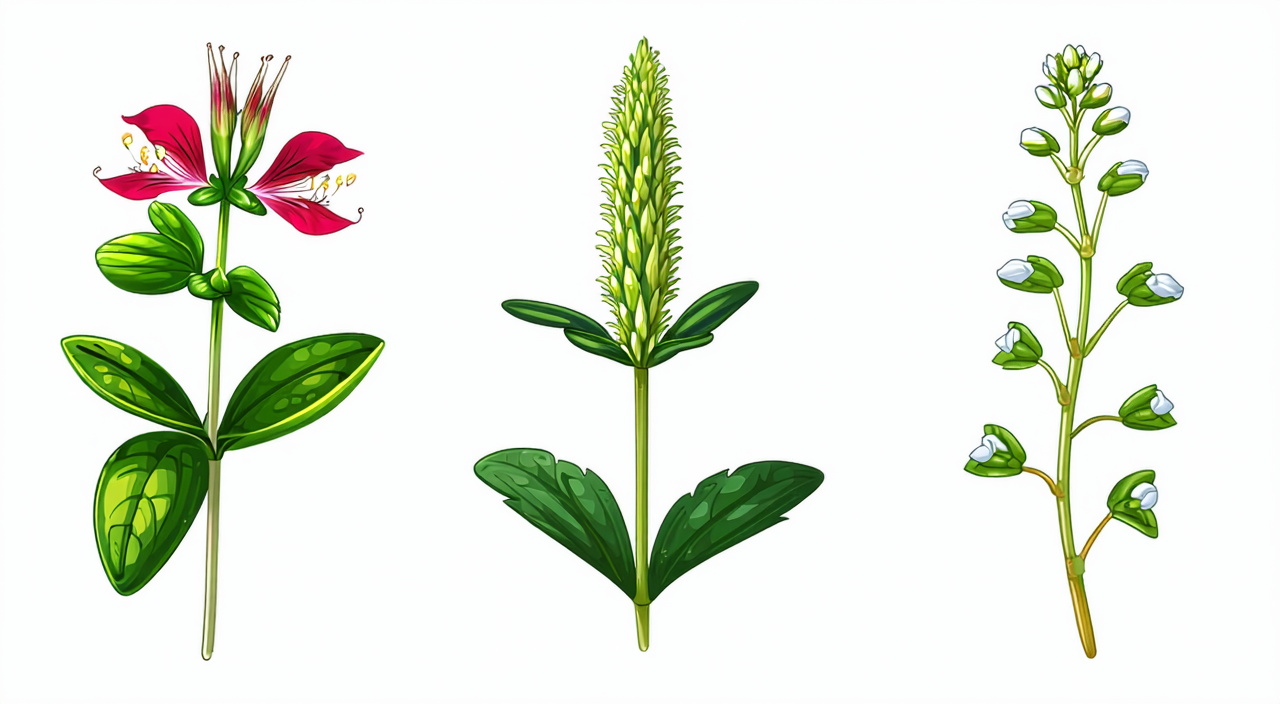
Laoguan Cao, Xi Xian Cao, and Di Jin Cao are several herbs that are easily confused by name or appearance. The three can be distinguished by leaf shape, fruit, and milky sap.
First, leaf shape. The leaves of Laoguan Cao are mostly palmately or pinnately lobed, with distinct lobes and a relatively spreading overall form. The leaves of Xi Xian Cao are generally opposite, ovate or elliptical, with serrated margins, and do not show the deep lobing of Laoguan Cao. Di Jin Cao is completely different; it often grows prostrate close to the ground, with very small, opposite leaves and a delicate overall appearance.
Second, fruit. The fruit of Laoguan Cao is slender and elongated, with a beak-like tip, making it easy to identify. The fruit of Xi Xian Cao is smaller, with glandular hairs on the involucral bracts, and does not have a long beak shape. Di Jin Cao has a capsule that is three-angled and spherical, which is also easy to distinguish.
Third, milky sap. Laoguan Cao and Xi Xian Cao generally do not produce obvious white milky sap when broken. The stems and leaves of Di Jin Cao often exude white milky sap when broken, which is one of the more intuitive distinguishing points. When identifying plants in the field, it is best to combine habitat, inflorescence, leaf characteristics, and other features, rather than relying on a single point.
Which Formulas Use Laoguan Cao?
Laoguan Cao is mostly used in formulas and Chinese patent medicines in the direction of dispelling wind-dampness and unblocking the channels and collaterals. Traditionally, the more common preparations are Laoguan Cao Gao (paste) and Laoguan Cao Wan (pills). Such preparations are often regarded as traditional regulating options for wind-damp bi pain and stiffness of the sinews and bones. Formulas in the wind-dispelling and channel-unblocking category may also include Laoguan Cao as one of the combined herbs, paired with herbs such as Wei Ling Xian, Sang Zhi, Du Huo, and Niu Xi, forming approaches with different emphases.
It should be emphasized that formulas or Chinese patent medicines containing Laoguan Cao are not suitable for everyone. The composition, dosage, and indications of different preparations may vary considerably. Whether to use them should be judged comprehensively based on one’s physical condition, symptom presentation, product instructions, and professional advice. This article only introduces traditional usage directions and does not constitute any medication recommendation.
What Precautions Should Be Taken When Using Laoguan Cao?
Although Laoguan Cao is a common herb, there are still some points to keep in mind when using it. Some people may experience gastrointestinal discomfort after use, especially those who are prone to constipation or have weak intestinal function; they should observe their reactions accordingly. Pregnant women, breastfeeding women, children, and people with chronic diseases should consult a doctor or professional before using products containing Laoguan Cao.
In addition, differences in the source of the medicinal material deserve attention. Laoguan Cao from different origins and different source plants may differ in appearance and composition. When purchasing, choose reputable channels and avoid materials of unknown origin or adulterated materials. Wild collection requires particular caution, because plants near roads, industrial areas, or farmland may be contaminated by heavy metals, pesticides, or vehicle exhaust and are unsuitable for medicinal use. For long-term, recurrent, or unexplained joint discomfort or gastrointestinal symptoms, seek medical attention promptly and do not replace standard treatment with herbal remedies on your own.
Summary
Laoguan Cao is a type of Chinese medicinal material whose medicinal part is the dried aerial portion, and its name is related to the beak-like fruit. Identification mainly relies on leaf shape, stem, five-petaled flowers, and the slender fruit; the medicinal part is the aerial portion harvested during the fruiting period. Traditionally, Laoguan Cao is often used for dispelling wind-dampness and unblocking the channels and collaterals, and it can also be found in some formulas and Chinese patent medicines. Before use, one should understand its differences from Xi Xian Cao and Di Jin Cao, and pay attention to gastrointestinal reactions, pregnancy, and source safety. This article is for informational reference only and cannot replace professional diagnosis or treatment advice.