
What Is Lei Wan? Medicinal Parts, Identification Methods, and Common Formulas
For thousands of years, traditional Chinese medicine has drawn on the abundant fungi in nature as materials for health regulation, and Lei Wan is one such medicinal that often sparks curiosity. It is neither the fruit of a plant nor a mineral, but rather the dried sclerotium of the fungus Omphalia lapidescens (family Polyporaceae). Many overseas readers, upon first hearing the name “Lei Wan,” often confuse it with Fu Ling (Poria) or Zhu Ling (Polyporus), or mistake it for something like a nut or seed. This article will help you understand this special medicinal more clearly by exploring its appearance and identification, medicinal part, traditional understanding, modern research, differences from other sclerotia, common formulas, and usage precautions.
What Does Lei Wan Look Like? How to Identify It?
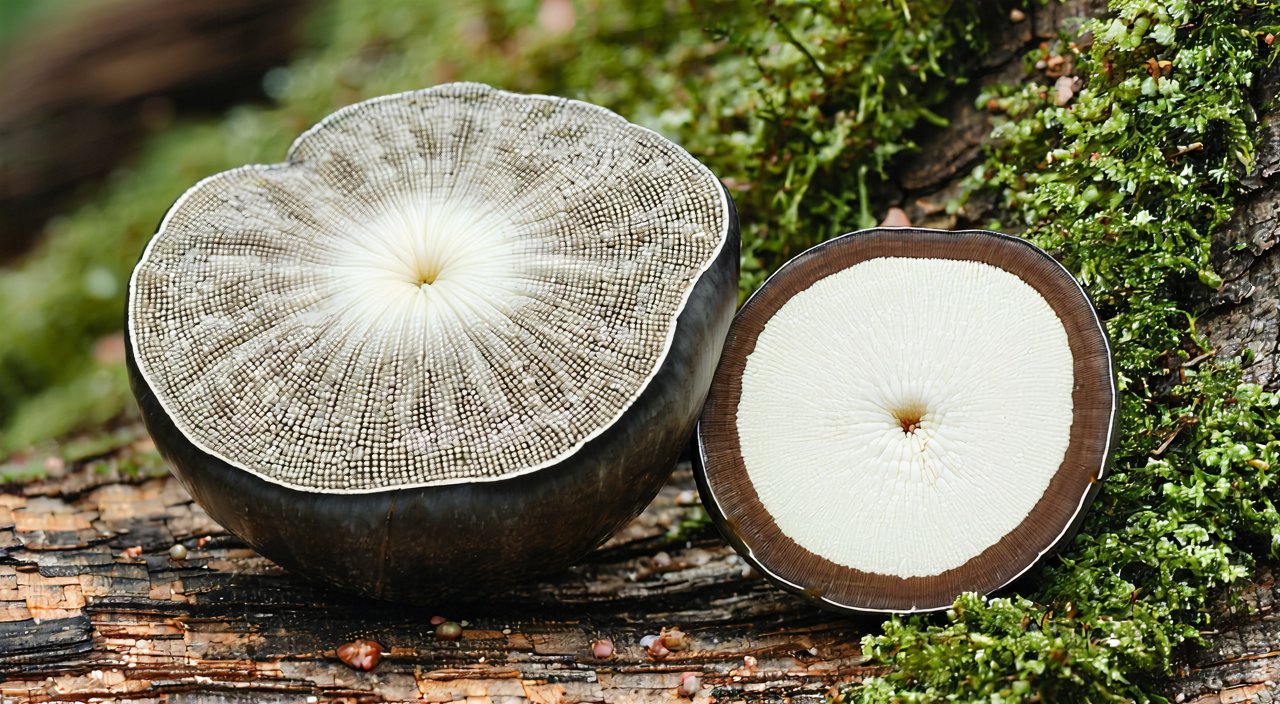
In the medicinal market, Lei Wan typically appears as a subglobose or irregularly shaped sclerotium, mostly one to three centimeters in diameter, though occasionally larger specimens can be found. The surface color is the first key identification point: intact pieces are generally dark brown or deep brownish-black, often with fine reticular wrinkles, giving a rough texture. After breaking or cutting Lei Wan open, the cross-section provides the truly reliable identification. The cut surface is white or grayish-white, with a distinctly granular, powdery texture, and sometimes exhibits yellowish-brown marbled veining. If you scratch the surface with a fingernail or a hard object, you can feel a fine gritty sensation — a structural characteristic of this sclerotium. If the whole piece is too smooth, or if the cut surface appears grayish or greenish, one should be cautious about possible adulterants.
What Is the Medicinal Part of Lei Wan?
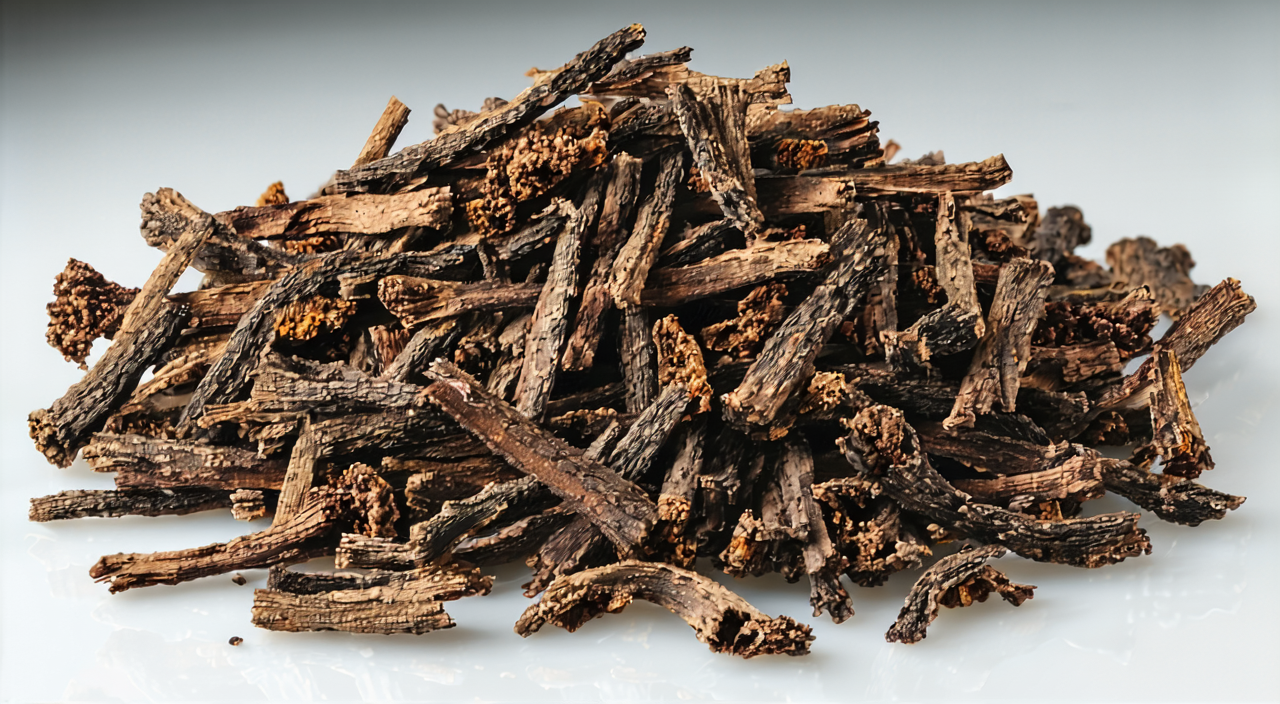
The medicinal part used for Lei Wan is very clear-cut: it is the sclerotium of the fungus Omphalia lapidescens. In the wild, this fungus parasitizes the roots of certain bamboo species, with the sclerotium forming underground. Hence, in traditional harvesting, people usually dig it up in late autumn, early winter, or spring, removing surface soil and impurities, then cleaning and drying it. The drying temperature should not be too high, as excessive heat may affect the stability of its internal components. In commercial circulation, Lei Wan is mostly seen as dried sclerotium that has already been sliced or crushed, not as unprocessed fresh fruiting bodies. This helps the reader understand: Lei Wan is neither a whole herb nor a rhizome; its medicinal part is always that hard sclerotium buried in the ground.
How Does TCM Understand Lei Wan?
In traditional Chinese medicine, understanding of Lei Wan is basically centered around the four characters “shā chóng xiāo jī” (kill parasites and reduce accumulation). In many ancient records, Lei Wan is regarded as good at dealing with intestinal parasites such as tapeworms, roundworms, and hookworms; traditionally, it is thought to act directly on the parasites and expel them. Therefore, when symptoms like abdominal pain around the navel, abnormal appetite, sallow complexion, emaciation, or childhood malnutrition with accumulation appear, some traditional thinking would bring Lei Wan to mind. However, it should be noted that TCM does not simply “use Lei Wan whenever worms are seen.” In specific application, it also considers the patient’s spleen-stomach condition, cold or heat tendency, and whether there is food stagnation. It is often combined with medicinals such as Bing Lang (Areca nut), Shi Jun Zi (Rangoon creeper fruit), and Mu Xiang (Costus root), to strengthen the vermifuge effect while safeguarding the spleen and stomach and regulating qi movement. Moreover, traditional experience emphasizes that Lei Wan should not be decocted for a long time, because high temperature may destroy its active components; therefore, it is more commonly used in powder or pill form. Of course, whether it is suitable to use in accordance with an individual’s constitution must be judged by a professional TCM practitioner; it is not advisable to attempt self-treatment based on symptoms alone.
What Have Modern Studies Discovered?
Modern research on Lei Wan mainly focuses on a type of protease it contains, the most representative being the so-called “leiwanin” (thunder-ball protease). Studies have shown that these proteases can break down the protein structures of certain parasites in vitro and are highly sensitive to temperature — generally, when heated to above 60°C, enzyme activity is rapidly lost. This explains from another angle why traditionally Lei Wan is “not suitable for decoction” and is mostly used in powders or pills. However, most of these findings are still at the laboratory or basic research stage and cannot be directly equated to the same effects within the complex environment of the human body. Moreover, it is worth noting that there are many uncertainties in the home practice of grinding or preparing Lei Wan, including dosage control, reliability of the source, and suitability for the individual situation — all lacking guarantee. Therefore, this article does not provide any suggestions for home preparation or self-dosage; the relevant directions are for knowledge understanding only.
What Are the Differences Between Lei Wan, Fu Ling, and Zhu Ling?
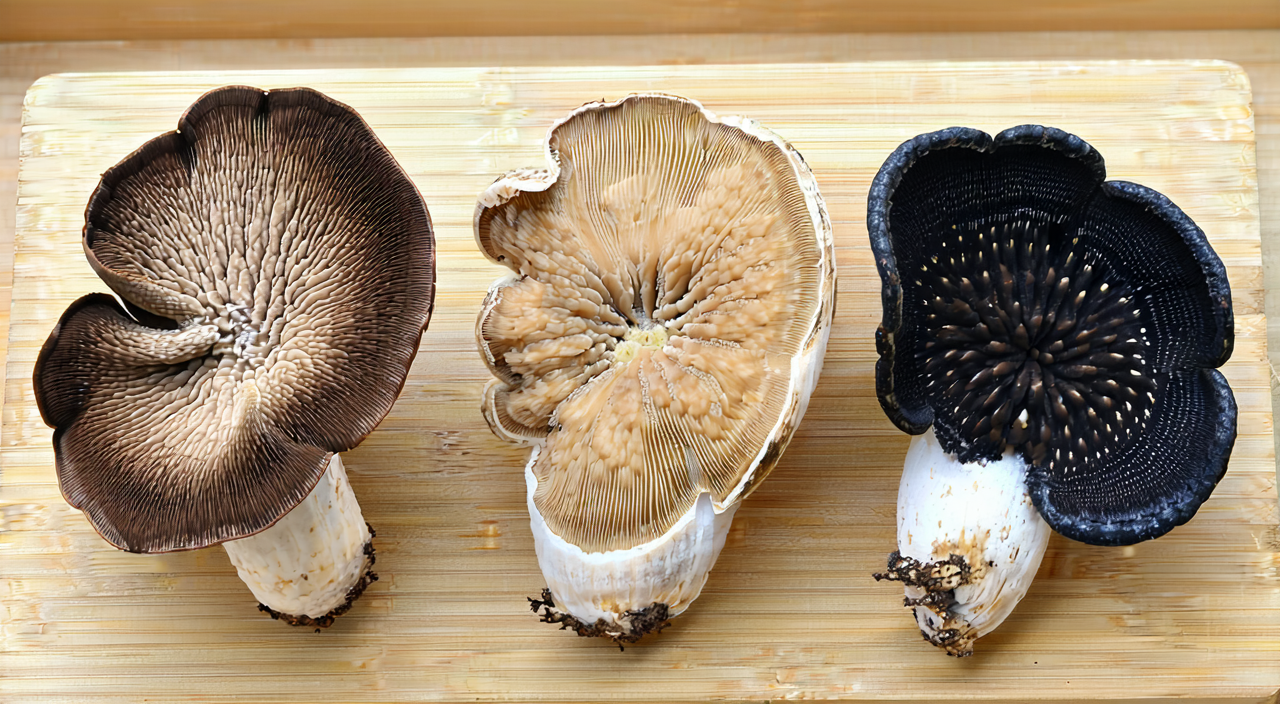
Lei Wan, Fu Ling (Poria), and Zhu Ling (Polyporus) are all fungal sclerotium-type medicinals; they do bear some resemblance in appearance, but there are clear differences in details and uses. Fu Ling comes from the fungus Poria cocos (Polyporaceae); its sclerotium is mostly subglobose, ellipsoid, or irregularly shaped, with a relatively thin outer skin that is pale brown or dark brown. When cut open, the inner part is white or slightly pinkish, dense in texture, and sticky when chewed. Traditionally, Fu Ling is mainly used to promote urination and percolate dampness, strengthen the spleen, and calm the heart. Zhu Ling also comes from the Polyporaceae family; its sclerotium is elongated, blocky, or flattened-spherical, with a black or black-brown surface and a white or pale yellowish-white cross-section. It is harder in texture and also used to drain dampness and promote urination, but with a greater focus on relieving strangury. Lei Wan, on the other hand, has a dark brown surface and a white, granular cross-section, with hardly any sticky sensation. Traditionally, it does not follow the water-draining route; instead, it specializes in expelling parasites and reducing accumulation. Some unscrupulous vendors may sell broken pieces of Fu Ling or Zhu Ling as Lei Wan. Paying attention to the differences in cross-section texture and traditional uses can help reduce the risk of confusion.
Which Formulas Use Lei Wan?
Throughout the formularies of past dynasties, a number of formulas that feature Lei Wan or include it can be found. For example, Lei Wan San (Lei Wan Powder) recorded in the “Sheng Ji Zong Lu” (Comprehensive Record of Sagely Beneficence) often combines Lei Wan with Bing Lang (Areca nut), Qian Niu Zi (Pharbitis seed), Mu Xiang (Costus root), and other medicinals, traditionally used for abdominal pain due to worm accumulation and childhood malnutrition with accumulation. In addition, there is Lei Wan Wan (Lei Wan Pill) from sources such as “Yang Shi Jia Cang Fang” (Yang Family’s Treasured Formulary), which structurally often adds Ku Lian Pi (Chinaberry bark), Shi Jun Zi, and the like, aiming to address different types of worm syndromes simultaneously. In worm-expelling formulas, Lei Wan also appears from time to time; for instance, certain modified versions of Hua Chong Wan (Transform-Worm Pill) may include Lei Wan to enhance the vermifuge power. However, these formulas only appear in historical documents; they are not fixed standards for modern clinical practice, nor do they mean they are suitable for everyone. Different parasite species, patient age, and constitution all influence whether Lei Wan is appropriate to choose, or even whether more modern treatment methods are needed. Therefore, while learning the names and general directions of these formulas, one must make comprehensive judgments by referring to product instructions, personal conditions, and professional advice, and should not combine or take them on one’s own.
What Precautions Should Be Taken When Using Lei Wan?
First, Lei Wan may irritate the gastrointestinal tract in some individuals, causing nausea, abdominal discomfort, or mild diarrhea; therefore, those with a weak spleen and stomach or who frequently have loose stools need to be especially cautious. Second, children, pregnant women, and breastfeeding women should only decide whether to use it under a doctor’s guidance and should not treat it as a health supplement or self-directed worm-expelling product. Another easily overlooked risk is the misidentification of fungal sources: there are non-medicinal fungi in the wild that look similar to Lei Wan; mistaken collection and use could lead to poisoning. Even when purchasing medicinal materials from the market, buy only from reputable channels to avoid adulterated products. More importantly, when there are recurrent, long-term abdominal pain, weight loss, or bowel abnormalities, parasitic infection is only one of many possibilities; one should not assume it is a worm syndrome on their own. A proper diagnosis must be obtained, and after clarifying the cause, a management plan should be formulated by a doctor. Lei Wan or other medicinals can only be considered as a possible part of an overall health strategy.
Summary
Lei Wan is a special medicinal derived from a fungal sclerotium. Its dark brown exterior, white granular cross-section, and traditional vermifuge and anti-accumulation applications are key points that distinguish it from Fu Ling and Zhu Ling. Modern research confirms that its active components are sensitive to heat, indirectly reminding us that it should not be processed or taken casually. Whether encountering classical formulas or hearing certain folk usages, it is recommended to view Lei Wan with the help of proper diagnosis and professional guidance. No medicinal substance can replace necessary medical examination, especially when parasite-related issues require identifying the root cause. This article is for educational reference only and cannot serve as a basis for self-selection or diagnosis.