
What Is Liu Ji Nu? Medicinal Parts, Identification, and Common Formulas
Many people hearing the name “Liu Ji Nu” for the first time may think it refers to a historical figure, but it is actually a traditional Chinese herbal medicine long used in traumatology and gynecology. For readers living overseas, dried herbal decoction pieces can be difficult to match with the fresh plant, and they are also easily confused with morphologically similar herbs such as Yi Mu Cao. This article will help you understand Liu Ji Nu more clearly from its plant sources, appearance identification, medicinal parts, traditional actions, and common formulas. It should be noted that Liu Ji Nu products circulated in different regions may involve different source plants such as Yin Xing Cao. This article will primarily focus on pharmacopeia-listed varieties; when purchasing and using it in practice, please refer to local standards and professional advice.
What Does Liu Ji Nu Look Like? How to Identify It
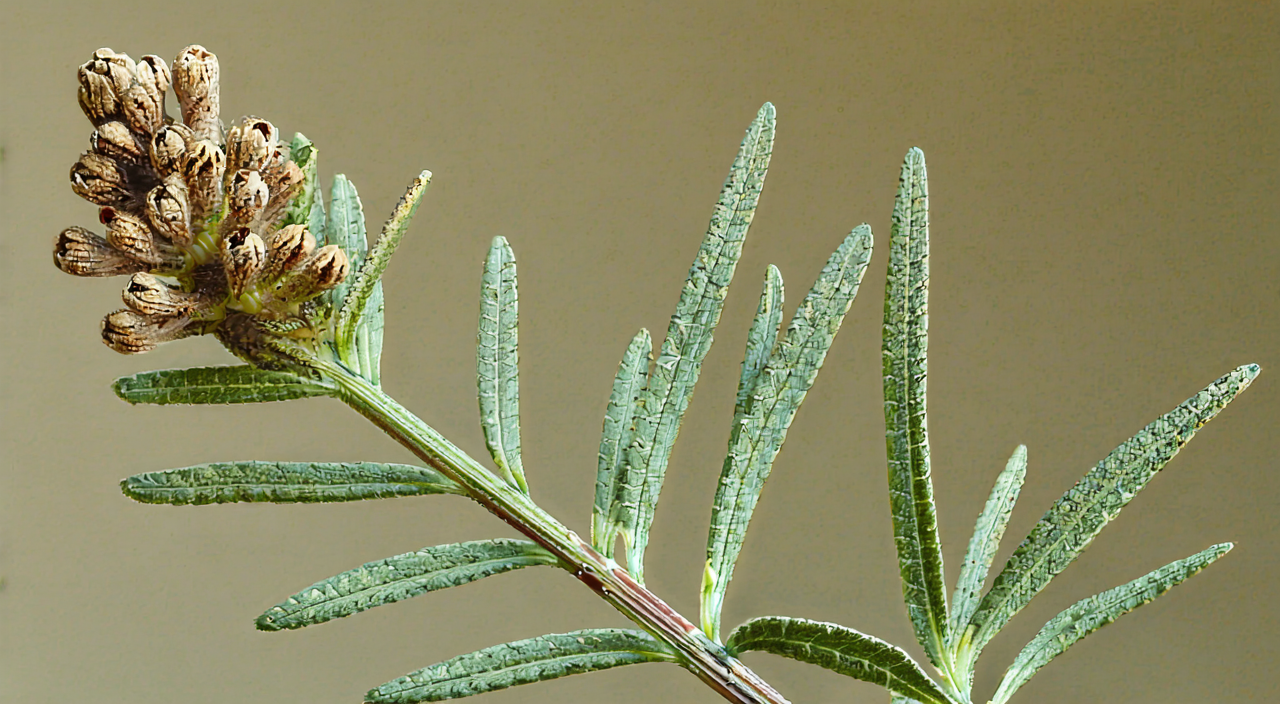
Dried Liu Ji Nu usually appears in broken segments. The whole plant or decoction pieces have relatively fixed characteristics, which can be observed from the following aspects:
Stem characteristics
The stems of Liu Ji Nu are relatively slender and cylindrical, generally around several millimeters in diameter, often with fine longitudinal ridges on the surface. After drying, the stems become brittle, mostly yellowish-brown, grayish-green, or brown in color, and the fractured surface may show pith or a hollow structure.
Leaf characteristics
The leaves are alternate, and intact leaves are mostly lanceolate, ovate-lanceolate, or narrowly elongated, with serrated margins. After drying, the leaves are often wrinkled and curled, turning dark green to grayish-green, thin and brittle, and easily crumbled when pressed. It is normal to see leaves broken into irregular fragments in decoction pieces.
Inflorescences and overall odor
The inflorescences of Liu Ji Nu are mostly terminal or axillary capitula or short spikes, densely covered with small flowers, and mostly yellowish-brown to brown after drying. Liu Ji Nu has a mild odor and a slight bitter and astringent taste when tasted. It should not have a sour, rotten, or noticeably moldy smell.
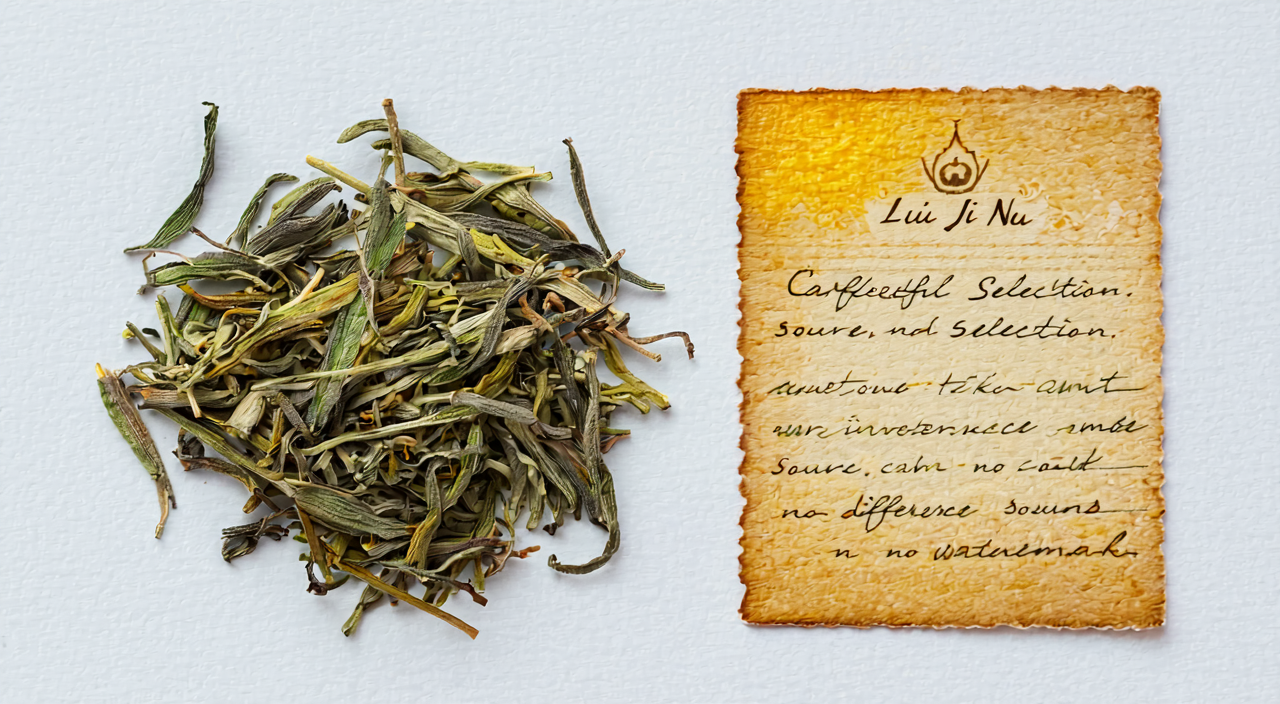
If you buy Liu Ji Nu decoction pieces from an overseas Chinese medicine store, what you usually see is a grayish-green or yellowish-brown mixture of broken segments containing stems, leaves, flowers, and a small amount of fruit mixed together. The overall appearance is quite fragmented, which is determined by harvesting, processing, and transportation.
What Are the Medicinal Parts of Liu Ji Nu?
The medicinal part of Liu Ji Nu is mainly its aerial part or the whole herb with roots, which is different from many herbs that use only the root or only the leaves.
According to traditional harvesting standards, Liu Ji Nu is generally collected in summer and autumn when the plant is growing vigorously, before full flowering or during the flowering period. It is usually harvested by cutting the aerial parts, removing soil and impurities, and then drying them directly or cutting them into sections before drying. In some regions, there is also a habit of pulling up the whole plant with roots, but the root generally accounts for a small proportion after drying.
It should be noted that different regions may have different regulations regarding the source plant of Liu Ji Nu. For example, some local standards list Liu Ji Nu as the aerial part of the Asteraceae plant Qi Hao, while other regions may use the Scrophulariaceae plant Yin Xing Cao as Liu Ji Nu. The two belong to completely different families and genera in plant taxonomy. If the Chinese medicine market or clinic in your country provides a variety sourced from Yin Xing Cao, its appearance and chemical composition will differ considerably from the pharmacopeia standard product. It is advisable to confirm the plant source with the seller when purchasing and make a comprehensive judgment based on local medication practices.
How Is Liu Ji Nu Understood in Traditional Chinese Medicine?
In traditional Chinese medicine theory, Liu Ji Nu is often classified as a blood-activating and stasis-resolving herb as well as a hemostatic herb. Its nature and flavor are mostly recorded as pungent, bitter, and warm, and it mainly enters the Heart, Spleen, and Liver meridians. Traditional understanding of its actions has focused on several areas:
Dispels stasis, relieves pain, heals injuries, and stops bleeding
Liu Ji Nu appears frequently in traumatology formulas. Traditionally, it is considered good at moving in the blood aspect, and can help relieve discomfort in traumatic injuries, blood stasis swelling and pain, and sinew and bone pain by invigorating blood and dispelling stasis. Some ancient texts also clearly mention that Liu Ji Nu can be used for traumatic bleeding, either pounded fresh for external application or ground into powder and sprinkled on the wound, showing its application in stopping bleeding.
Reduces food stagnation and accumulation
Liu Ji Nu also has another relatively distinctive traditional use, namely for food stagnation with abdominal distension and fullness. Some classical Chinese medicine texts consider Liu Ji Nu to have a dispersing and guiding action, able to move the spleen and promote digestion. It can be used as a regulating approach for abdominal distension, belching, and acid regurgitation caused by retained food.
Gynecological uses
Liu Ji Nu also often appears in postpartum formulas. Traditionally, it is used for retained lochia and lower abdominal pain after childbirth, using its blood-activating and channel-freeing properties to help the uterus recover. However, this direction has relatively strict requirements for constitution and symptoms, so it should be judged according to individual conditions and should not be used on one’s own.
It should be emphasized that the above is only the understanding formed by traditional Chinese medicine from the perspectives of qi, blood, and food stagnation. Individual constitutions and specific manifestations vary greatly, so whether Liu Ji Nu is suitable for a particular person still needs to be determined through tongue and pulse diagnosis and professional judgment.
What Clues Does Modern Research Provide?
From modern phytochemical and pharmacological research, Liu Ji Nu contains flavonoids, volatile oils, organic acids, coumarins, and other components. Some experimental studies have observed that its extracts may have certain activities in anti-inflammation, analgesia, promoting blood coagulation, and improving microcirculation. However, most studies are still at the animal experiment or in vitro stage and are still far from forming systematic clinical evidence.
Therefore, these modern research findings can serve as background for understanding the traditional uses of Liu Ji Nu, but they should not be directly equated with confirmed effects in the human body. If you have related health concerns, you should still consult a local doctor or Chinese medicine practitioner first.
How Does Liu Ji Nu Differ from Yi Mu Cao and Ze Lan?
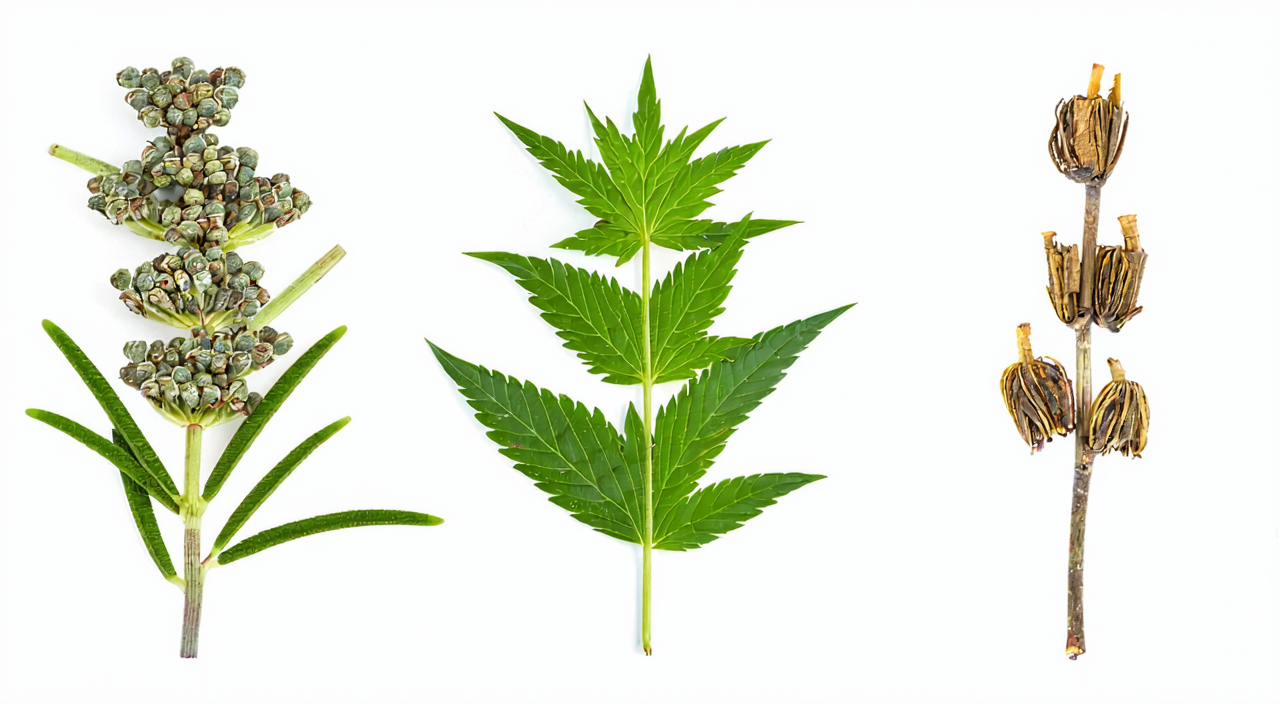
Liu Ji Nu, Yi Mu Cao, and Ze Lan are three Chinese herbs often mentioned for blood-activating and stasis-resolving purposes, but their decoction pieces share many morphological similarities and can easily be confused. The following points can help distinguish them:
Comparing Yi Mu Cao and Liu Ji Nu
Yi Mu Cao is mainly derived from the aerial part of the Lamiaceae plant motherwort. Its fresh stems are quadrangular, a typical feature of the mint family, while Liu Ji Nu stems are generally cylindrical and do not have a quadrangular shape. Yi Mu Cao leaves are palmately divided with relatively deep lobes, somewhat resembling a hand, and after drying the leaves tend to be grayish-green. Liu Ji Nu leaves are mostly lanceolate or ovate-lanceolate, with serrated margins rather than deeply palmately lobed. The inflorescences of Yi Mu Cao are verticillasters, axillary in the upper part of the stem, with bilabiate corollas; Liu Ji Nu inflorescences are mostly capitula or short spikes, and the flower shape is clearly different.
If you only have dried decoction pieces, you can first observe the cross-section of the stem: dried Yi Mu Cao stems still show four corners, while Liu Ji Nu stems are round or nearly round in cross-section. In addition, Yi Mu Cao decoction pieces often contain small fragments of verticillaster inflorescences, whereas Liu Ji Nu decoction pieces contain more capitulum fragments.
Comparing Ze Lan and Liu Ji Nu
Ze Lan is the aerial part of the Lamiaceae plant Mao Ye Di Gua Er Miao. Its stems are also quadrangular and often have white hairs on the surface, while Liu Ji Nu stems generally do not have obvious dense hairs. Ze Lan leaves are opposite and lanceolate, with sharply serrated margins and visible glandular dots on the underside; Liu Ji Nu leaves are alternate rather than opposite, and the leaf shape is also different.
Overall, based on leaf arrangement, Yi Mu Cao and Ze Lan are generally opposite, while Liu Ji Nu is alternate. This is a relatively intuitive identification point.
If you see a medicinal material labeled Liu Ji Nu in an overseas pharmacy, but its stems are clearly quadrangular and its leaves are opposite, it may have been mistakenly supplied as Yi Mu Cao or Ze Lan. When purchasing, pay more attention and check features such as stem shape, leaf arrangement, and inflorescence remnants.
Which Formulas Use Liu Ji Nu?
Liu Ji Nu has a relatively clear application lineage in classical formula books. The following traditional formulas and related usage directions can be noted:
Liu Ji Nu San
Liu Ji Nu San is one of the classic formulas recorded in many Chinese medicine texts. It usually consists of Liu Ji Nu alone ground into powder, or combined with other blood-activating and hemostatic herbs. Traditionally, it is often used for traumatic injuries and external bleeding, mainly for external use, and can also be taken internally when necessary. The formula uses Liu Ji Nu as the main medicinal, highlighting its characteristics in activating blood and stopping bleeding.
Liu Ji Nu Tang
Liu Ji Nu Tang is a compound decoction, often used with blood-activating and qi-moving herbs such as Dang Gui, Chuan Xiong, Chi Shao, and Yan Hu Suo. Traditionally, it is used for poor lochia discharge after childbirth, stabbing pain in the lower abdomen, or pain caused by internal blood stasis. In this formula, Liu Ji Nu is combined with Dang Gui and Chuan Xiong to simultaneously resolve stasis and nourish blood, making it somewhat gentler than methods that only break blood.
Formulas for traumatic injuries
In formulas for traumatic injuries, Liu Ji Nu is often combined with herbs such as Gu Sui Bu, Xu Duan, Ru Xiang, Mo Yao, and Zi Ran Tong. They are used for local bruising, swelling, and soreness of sinews and bones after external impact. Such formulas generally focus on activating blood, reducing swelling, setting bones, and repairing sinews. Liu Ji Nu plays the role of resolving stasis and relieving pain, and can be used both in internal decoctions and as an external wash or compress.
Postpartum stasis-resolving formulas
In addition to Liu Ji Nu Tang, some postpartum stasis-resolving formulas combine Liu Ji Nu with Yi Mu Cao, Shan Zha, Tao Ren, Pao Jiang, and other herbs for poor lochia discharge and lower abdominal bearing-down pain after childbirth. Different formulas may have different emphases in their combinations: some lean toward warming the meridian and resolving stasis, while others emphasize activating blood and expelling stasis.
It should be reminded that the above formulas are all traditional prescriptions, and their specific compositions and dosages may vary slightly in different texts. They should be evaluated comprehensively according to individual constitution, current presentation, and product instructions. Do not prepare formulas or exceed recommended dosages on your own without professional guidance.
What Precautions Should Be Taken When Using Liu Ji Nu?
Although Liu Ji Nu has an empirical basis in traditional use, special caution is needed in the following situations:
Not recommended during pregnancy
Liu Ji Nu has a relatively strong blood-activating and stasis-resolving effect. Traditionally, it is considered potentially harmful to the fetus if used during pregnancy, so pregnant women are generally advised not to use formulas or products containing Liu Ji Nu. If you are trying to conceive, it is also advisable to consult a Chinese medicine practitioner or doctor before use.
Caution when there is a bleeding tendency
Although Liu Ji Nu is traditionally used to stop bleeding, its dual action of activating blood and stopping bleeding is relatively unusual. For people with a bleeding tendency, thrombocytopenia, abnormal coagulation, or those using anticoagulant drugs, using Liu Ji Nu may carry uncertain risks and should only be decided after professional evaluation.
Source variation and species confusion
As mentioned earlier, different regions have different definitions of the source plant of Liu Ji Nu. In some regions, the Liu Ji Nu used may be Yin Xing Cao or other plants, and the components and action directions will differ. If the purchase channel is unclear, try to choose products with complete packaging and a labeled plant source, and refer to local Chinese medicine practitioners or pharmacists.
Risk of misidentification in wild harvesting
Overseas, some Chinese herbal enthusiasts may try to harvest plants on their own. This is quite risky. Liu Ji Nu can easily be confused with some other wild plants in morphology, and mistaken harvesting or use may pose health risks. It is not recommended to harvest, dry, or steep plants for drinking on your own when the species is uncertain.
In addition, if severe traumatic injury, fracture, joint dislocation, progressively worsening pain, or postpartum symptoms such as abnormally increased bleeding, severe abdominal pain, or fever occur, you should not rely solely on any single herbal medicine and should seek medical attention promptly.
Summary
Liu Ji Nu is a herb widely used in traditional Chinese medicine traumatology and gynecology. Its medicinal part is mainly the aerial part or whole herb, and its appearance can be roughly identified from stem shape, leaf arrangement, and inflorescence characteristics. It is often used in traditional regulating approaches such as dispelling stasis and relieving pain, healing injuries and stopping bleeding, and reducing food stagnation. It is also clearly different from Yi Mu Cao and Ze Lan in plant morphology, and understanding these differences can help avoid misuse. Whether you are an overseas reader interested in Liu Ji Nu or someone seeking to understand it as a regulating option, it is advisable to fully understand your own condition and the source of the material before use, and prioritize seeking professional advice from a Chinese medicine practitioner or doctor. This article is for objective educational reference only.