
What Is Mai Dong? Introduction to Its Medicinal Parts, Identification, and Common Formulas
After hearing about the herb Mai Dong, many people’s first question is often “What is Mai Dong,” what it looks like, and how it is used. Mai Dong, also known as Mai Men Dong, is traditionally classified as a Yin-nourishing herb. It comes from the root tuber of the lily family plant Ophiopogon japonicus, named because its tuber shape somewhat resembles wheat grains. This article focuses on the identification characteristics, medicinal parts, traditional understanding, differences from similar herbs, classic formulas, and usage precautions of Mai Dong, outlining a relatively comprehensive cognitive framework.
What Does Mai Dong Look Like? How to Identify It?
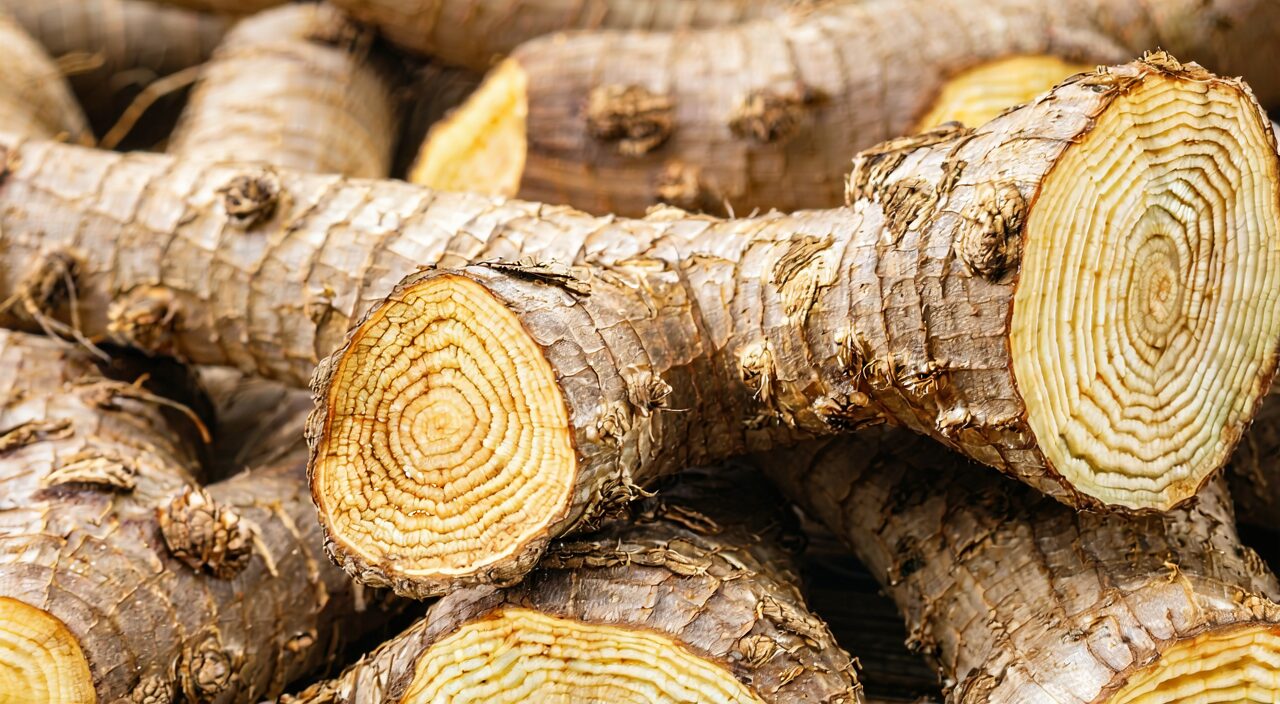
The commercial herb of Mai Dong is typically spindle-shaped or elongated spindle-shaped, slightly pointed at both ends with a plump middle. The surface is yellowish-white or light yellow, sometimes with a slight light brownish-yellow tone, featuring irregular longitudinal wrinkles and fine transverse striations. The dried material often shows slight shrinkage but retains a degree of flexibility and is not easily broken, while fully dried material becomes hard and brittle.
The main identification points are concentrated on the cut surface: when Mai Dong is broken or sliced, the cross-section is yellowish-white with a translucent, horn-like luster and a dense texture. Carefully observing the central part of the cross-section reveals a small, slender wood core, traditionally called the “central column.” A small, slightly darker central column is a key identification point for Mai Dong. Some batches may still retain traces of fine root fibers, but typically, clean, plump, yellowish-white, translucent pieces with a non-coarse, non-hard central column are considered better.
During daily storage, Mai Dong easily absorbs moisture and becomes soft, but this does not affect the traditional understanding of its quality as long as there is no mold or insect infestation. With these appearance and cross-section characteristics, Mai Dong can generally be preliminarily distinguished from herbs with similar appearances.
What Are the Medicinal Parts of Mai Dong?
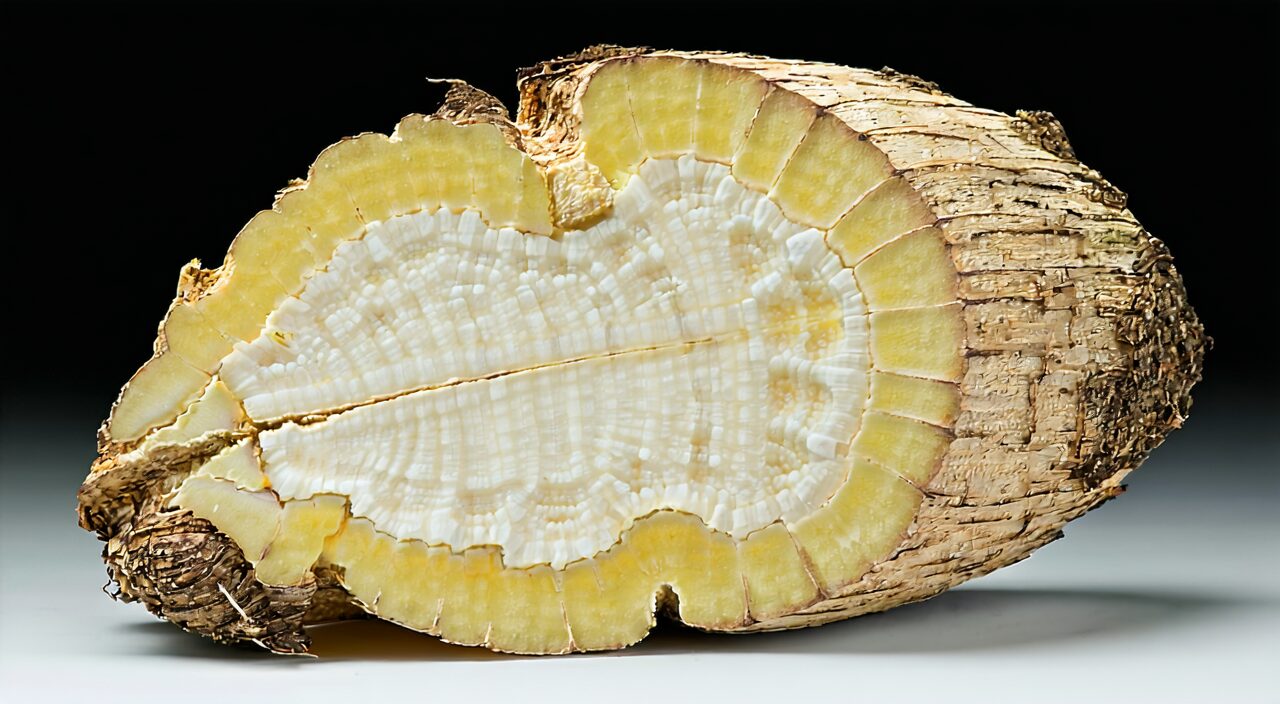
The medicinal part of Mai Dong is the dried root tuber of the lily family plant Ophiopogon japonicus. Harvesting mostly occurs after the aerial parts of the plant wither in summer, when the root tubers are dug out, cleaned of soil, root fibers, stems, and leaves, and then processed through repeated steps of sun-drying, stacking and sweating, and spreading to cool until completely dried. Well-processed Mai Dong has a smooth surface, even color, and the fractured surface appears horn-like.
Common Mai Dong herbs on the market are mostly spindle-shaped, sometimes trimmed slightly to make the tuber shape more uniform. The prepared forms are often dried root tubers with impurities removed, with a few being slightly sliced. Some production areas also have the habit of grading by size, but regardless of size, the core characteristics—yellowish-white, translucent, and tiny central column—are essentially the same. Additionally, the fibrous roots of Mai Dong are used separately as “Mai Dong Xu” in some regions, but the main medicinal part remains the swollen root tuber.
In modern botany, the original plant species for Mai Dong also includes Ophiopogon bodinieri, which is used as one of the source plants. Different sources may have slight differences in tuber morphology, but traditionally they are all used as Mai Dong. When purchasing, one may refer to specific source labels.
How Does Traditional Chinese Medicine Understand Mai Dong?
In traditional Chinese medicine theory, the nature, flavor, and meridian tropism of Mai Dong are often summarized as “sweet, slightly bitter, slightly cold; entering the Heart, Lung, and Stomach meridians.” Based on these properties, Mai Dong is often used within the approach of nourishing Yin, generating fluids, moistening the Lungs, and clearing the Heart.
Specifically, when the body shows manifestations related to Lung Yin deficiency, such as dry cough with little phlegm, dry throat and mouth, and hoarseness, Mai Dong can be considered as an option to nourish Lung Yin. For Stomach Yin deficiency with manifestations like dry mouth, excessive drinking, poor appetite, and relatively dry stools, it is traditionally believed that Mai Dong nourishes the Stomach, generates fluids, moistens dryness, and lubricates the intestines. At the same time, because Mai Dong enters the Heart meridian, for conditions like restlessness, light sleep, and occasional palpitations caused by Yin deficiency, it is also often used in the regulating approach of calming the mind and tranquilizing the Heart.
These understandings do not confer direct “therapeutic” properties on Mai Dong but rather indicate the nourishing role it typically plays within the overall formula combination. Whether it is suitable for an individual still needs to be assessed by an experienced TCM professional based on the specific cold, heat, deficiency, excess patterns and overall constitution.
What Components and Effects Are the Focus of Modern Research on Mai Dong?
Modern pharmacological research has analyzed the components of Mai Dong from different angles, finding that Mai Dong contains steroidal saponins (such as ophiopogonins), homoisoflavonoids, polysaccharides, as well as various amino acids and trace elements. Some in vitro experiments and animal studies have observed that the saponins and polysaccharides in Mai Dong have the potential for antioxidant, anti-inflammatory, and immune-modulating effects. Some research also focuses on its possible impact in the directions of cardiovascular protection and intestinal moisturizing.
However, these studies currently mostly remain at the cellular model or animal experiment level, and high-quality human clinical studies are still relatively limited. Therefore, laboratory data should not be directly equated to confirmed effects after ingestion or clinical treatment conclusions. For users who wish to use Mai Dong or products containing Mai Dong for daily conditioning, it is safer to view it as a direction where traditional experience and modern exploration converge, and to avoid arbitrarily increasing the dosage or using it alone for a long period.
What Are the Differences Between Mai Dong and Similar Herbs?
Among Yin-nourishing herbs, Tian Dong and Yu Zhu are easily confused with Mai Dong, but there are clear differences in their source, morphology, and traditional emphasis.
Tian Dong also comes from the lily family but is the root tuber of Asparagus cochinchinensis. Its shape is often elongated spindle-shaped or cylindrical, slightly curved, with a surface that is yellowish-white to light yellowish-brown, translucent, and relatively soft and moist. The cut surface shows a more obvious wood core. In traditional application, Tian Dong is sweet, bitter, and cold, entering the Lung and Kidney meridians, and is more focused on situations of Lung dryness with dry cough, Yin deficiency cough with wasting, and fluid exhaustion constipation, which emphasize Lung and Kidney Yin deficiency. In contrast, Mai Dong tends to nourish Stomach Yin and clear the Heart. Although both are Yin-nourishing substances, their meridian tropism and emphasis differ and they cannot be simply substituted.
Yu Zhu is the rhizome of Polygonatum odoratum, also from the lily family, not a root tuber. Its shape is strip-like cylindrical or slightly flattened, with a surface that is yellowish-white or light yellowish-brown, translucent, and has longitudinal grooves and node rings, with almost no wood core in the cross-section. Traditionally, Yu Zhu excels at nourishing Yin, moistening dryness, generating fluids, and quenching thirst, with relatively mild effects. It is often used for damage to Lung and Stomach Yin, dry-heat cough, and thirst. Although all three fall under the direction of Yin nourishment, there are differences in source part, appearance, and traditional formula combination approaches, and understanding these can help make more accurate distinctions.
Which Formulas Use Mai Dong?
Mai Dong plays a role in nourishing Yin fluids in many classic formulas. The following formulas are relatively representative.
Sheng Mai San consists of Ren Shen, Mai Dong, and Wu Wei Zi. It is traditionally used for conditions related to deficiency of both Qi and Yin, such as fatigue, excessive sweating, dry mouth, and shortness of breath. In the formula, Mai Dong nourishes Yin, generates fluids, moistens the Lungs, and clears the Heart, cooperating with Ren Shen to tonify Qi and Wu Wei Zi to astringe Yin.
Mai Men Dong Tang uses Mai Dong as the sovereign herb, combined with Ban Xia, Ren Shen, Gan Cao, Da Zao, and Jing Mi. It is often used for dry cough with difficulty expelling sputum, dry throat, and qi counterflow with nausea caused by Lung and Stomach Yin deficiency with rising deficiency fire. The whole formula focuses on nourishing the Lung and Stomach while directing qi downward and alleviating counterflow.
Zhu Ye Shi Gao Tang contains Zhu Ye and Shi Gao to clear heat and relieve restlessness, with Mai Dong nourishing Yin and generating fluids, supplemented by Ren Shen, Ban Xia, etc. Traditionally, it is used for conditions seen in the late stage of febrile disease when residual heat remains uncleared and both Qi and fluids are injured, manifesting as deficient restlessness, dry mouth, fatigue, and dry heaving.
Zeng Ye Tang is composed of only three herbs: Xuan Shen, Mai Dong, and Sheng Di Huang. Its purpose is to increase fluids and moisten dryness, mostly used for constipation, dry mouth and throat, and dry skin caused by warm-heat pathogens damaging Yin fluids. Mai Dong in this formula assists in nourishing Lung and Stomach Yin.
It should be noted that the specific application of these formulas requires professional pattern differentiation and should not be applied on one’s own based solely on individual symptoms.
What Precautions Should Be Taken When Using Mai Dong?
Although Mai Dong is a commonly used Yin-nourishing herb, it is not suitable for everyone to use in large quantities daily. Traditional experience emphasizes that people with spleen deficiency and dampness exuberance, internal retention of cold-damp phlegm-rheum, and those prone to abdominal bloating, loose stools, and thick greasy tongue coating should not blindly take Mai Dong, as this may aggravate dampness stagnation or cause discomfort.
For those who experience persistently abnormal dry cough, recurrent oral and throat dryness, continuous restlessness and insomnia, or symptoms accompanied by chest tightness, palpitations, and unexplained weight loss, they should prioritize consulting a physician for systematic evaluation rather than pinning hopes on a single herb. In addition, pregnant women, lactating women, and those taking other formulas or medications should consult a professional before using Mai Dong or products containing Mai Dong. Overall, Mai Dong can serve as an option for understanding or short-term auxiliary use, but judgment should be made in combination with personal actual conditions to avoid overuse or long-term dependence.
Summary
Mai Dong uses its root tuber as medicine, with its spindle shape, translucent cross-section, and tiny central column being the key identification points. Traditionally, it is mostly used for conditioning related to Yin deficiency and is commonly found in formulas such as Sheng Mai San and Mai Men Dong Tang. The differences from Tian Dong and Yu Zhu mainly lie in the source part, characteristics, and traditional emphases. Those with spleen deficiency and dampness exuberance or loose stools should not use it casually. Regardless of which product or formula containing Mai Dong is chosen, it should be combined with one’s constitution and professional advice. This article is only for objective scientific reference and cannot replace professional diagnosis and guidance.