
What Is Qing Feng Teng? Medicinal Parts, Identification, and Common Formulas
What is Qing Feng Teng? In Chinese medicine, Qing Feng Teng generally refers to the dried stems of Sinomenium acutum or Sinomenium acutum var. cinereum, plants in the Menispermaceae family. Although its name is similar to Hai Feng Teng, they come from different sources and differ in appearance and traditional uses. Overseas Chinese readers often see the name “Qing Feng Teng” when encountering Chinese medicinal decoction pieces, formulas, or modern extract products, yet it is not always clear what it specifically refers to. This article provides a basic overview of its appearance and identification, medicinal part, traditional understanding, modern research boundaries, common adulterants, and precautions.
What Does Qing Feng Teng Look Like? How Is It Identified?
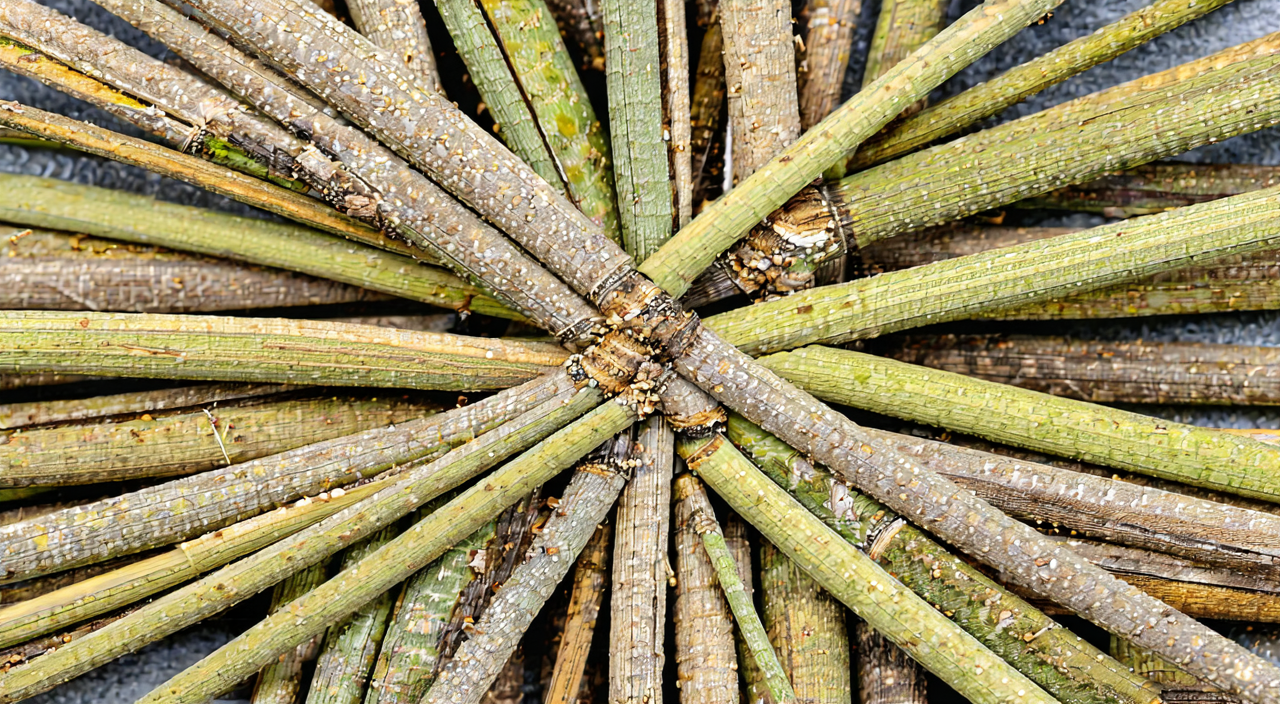
Key Features of the Medicinal Material
Qing Feng Teng medicinal material is mostly long cylindrical, slightly curved, and often cut into segments or thick slices. The surface is mostly grayish-brown, grayish-brown to greenish-brown, with longitudinal wrinkles, transverse lenticel-like protrusions, and obvious nodes. The surface of old stems may show irregular cracks, while young stems are relatively smooth. The texture is firm or slightly tough and not easily broken. When broken, the cross-section is yellowish-white or grayish-yellow, sometimes with radial striations, and the central pith is obvious or hollow. The cut surface of decoction pieces is often uneven, and the edges may be slightly curled.
Practical Identification Notes
For identification, the characteristics of “long cylindrical stems, grayish-brown or greenish-brown surface, obvious nodes, and radial striations on the cross-section” can serve as initial clues. However, macroscopic identification in Chinese medicine relies on experience, and ordinary people can easily confuse materials based on pictures alone. If you need to purchase the herb or verify its source, it is advisable to consider the species, origin, processing method, and professional opinions rather than judging only by color or thickness.
What Is the Medicinal Part of Qing Feng Teng?
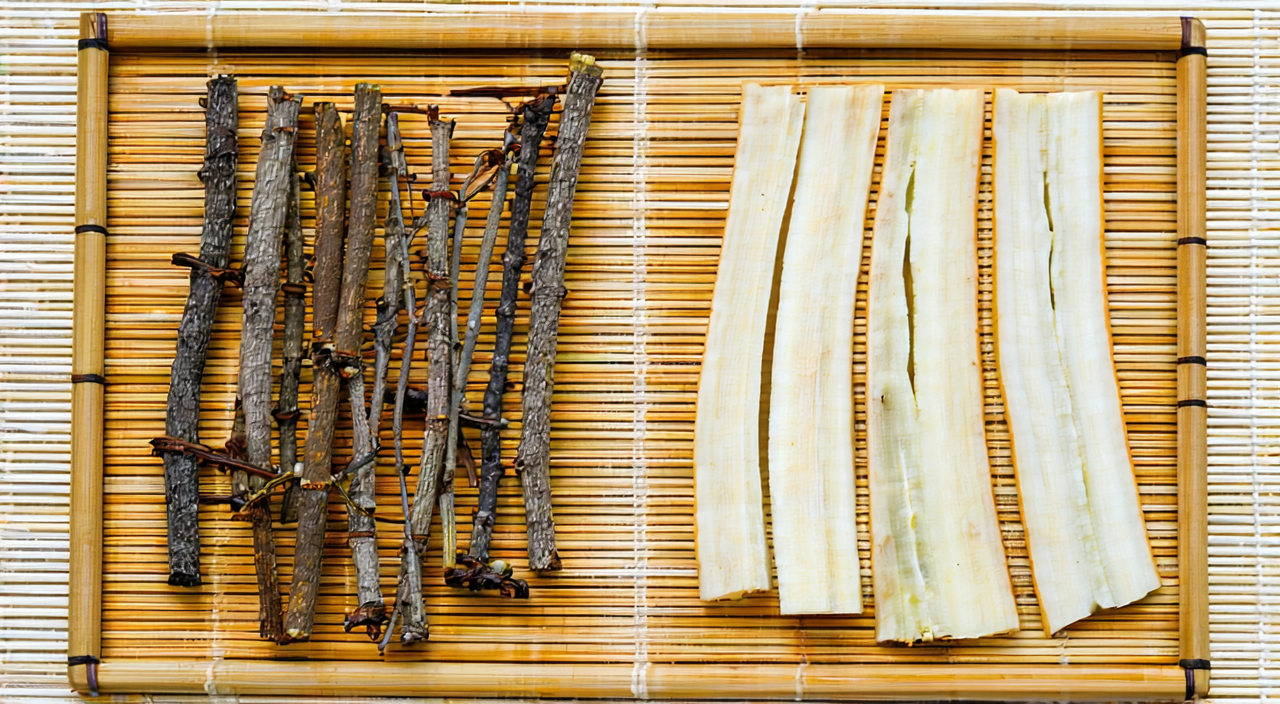
The medicinal part of Qing Feng Teng is the dried vine stem, not the leaves, roots, or fruits. Traditional harvesting usually takes place in late autumn or early winter. The stems are cut, small branches and leaves are removed, and the stems are cut into sections and dried. Nowadays, prepared slices are commonly oblique slices, short segments, or thick slices with relatively high cleanliness. The thickness, age, and origin of the stems may affect the appearance. Some adulterants often contain many leaves or are of uncertain origin, so special attention is needed. An important difference between Qing Feng Teng and Luo Shi Teng is that Luo Shi Teng often includes leaves, while the medicinal part of Qing Feng Teng is mainly the vine stem. When purchasing or checking the material, pay attention to whether it is dried stem, the condition of the cut surface, and whether there is any foreign matter.
How Is Qing Feng Teng Understood in Traditional Chinese Medicine?
Traditional Chinese medicine generally understands Qing Feng Teng from the perspectives of dispelling wind-dampness, freeing the channels, and promoting urination. For symptoms such as heavy and sore limbs and joints, difficulty bending and stretching, and migratory pain caused by wind, cold, and dampness invading the channels, Qing Feng Teng may be used as one ingredient in a compound formula. For scanty urination and edema caused by internal accumulation of water-dampness, some traditional prescriptions may also consider using vine-type herbs. Classical texts mostly record its flavor as bitter and acrid, its nature as neutral or slightly cold, and its meridian tropism as the liver and spleen meridians, but different bencao records vary slightly.
Overall, traditional Chinese medicine does not use Qing Feng Teng as a drug targeting a single modern disease name. Instead, it is used according to the overall presentation, constitution, and pathomechanism. It commonly appears in formulas that dispel wind, free the channels, and relieve dampness and pain. When combined with herbs such as Wei Ling Xian, Qin Jiao, Fang Ji, Hai Feng Teng, and Luo Shi Teng, the direction of treatment changes depending on the prescription.
What Are the Main Focuses of Modern Research?
The focus of modern research is the sinomenine alkaloids, especially sinomenine. In laboratory studies, sinomenine has shown certain anti-inflammatory, immunomodulatory, and analgesic activities. Some studies have also explored its potential in rheumatic diseases, neuropathic pain, and other areas. However, this evidence mostly comes from in vitro experiments, animal experiments, or early clinical observations, and does not mean that daily use of the raw Qing Feng Teng herb will have the same effects.
More importantly, extract preparations containing sinomenine alkaloids differ greatly from raw Qing Feng Teng in dosage, concentration, and risk. Some people may experience rash, itching, nausea, or dizziness after use. A small number may develop severe reactions such as asthma, chest tightness, decreased blood pressure, or even anaphylactic shock. Therefore, modern research findings should be viewed as background information, not as a basis for long-term self-use or for replacing standard medical treatment.
How Does Qing Feng Teng Differ from Hai Feng Teng and Luo Shi Teng?
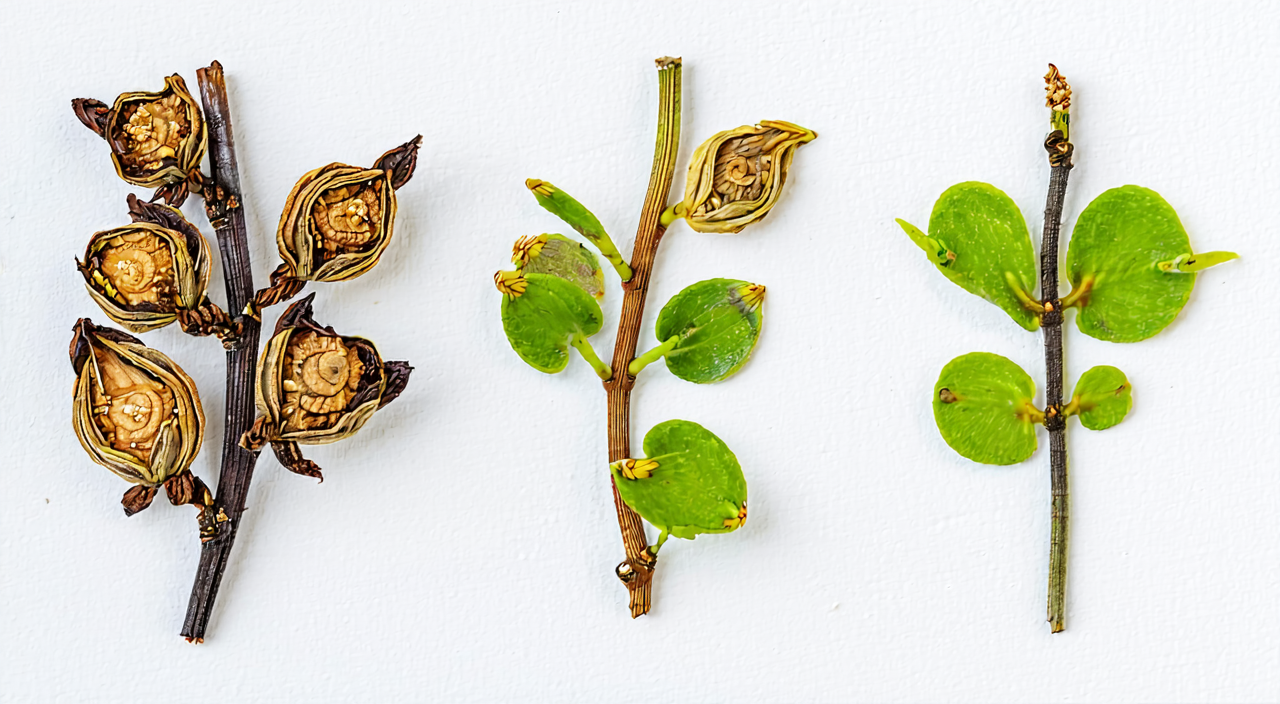
The three are most easily confused by name and appearance. Qing Feng Teng is derived from the dried stems of Sinomenium acutum or Sinomenium acutum var. cinereum in the Menispermaceae family; Hai Feng Teng is mostly derived from the dried stems of Piper kadsura in the Piperaceae family; Luo Shi Teng is derived from the leafy stems of Trachelospermum jasminoides in the Apocynaceae family. The three come from different sources and should not be treated as the same.
In appearance, Qing Feng Teng has a grayish-brown to greenish-brown surface and a yellowish-white or grayish-yellow cross-section with visible radial striations. Hai Feng Teng has a grayish-brown surface, a relatively narrow bark, grayish-yellow wood, and an obvious pith. Luo Shi Teng often has leaves, cylindrical stems, a reddish-brown to brownish surface, and a yellowish-white cross-section. Differences in cut surface color, presence of leaves, and source can serve as preliminary reference. However, after the decoction pieces are cut, it is difficult for ordinary consumers to judge by appearance alone, so professional identification and source information should be the main basis.
Which Formulas Commonly Use Qing Feng Teng?
In traditional formulas, Qing Feng Teng is often used as an herb for dispelling wind and freeing the channels. Qing Feng Teng Wan is a relatively common traditional formula name and is used as one approach for wind-damp bi syndrome. Modern preparations such as Zhengqing Fengtongning products use sinomenine as the main active ingredient. These are extract preparations and are regulated more like medicines, so they should not be regarded as ordinary herbal teas or health products. Formulas that dispel wind and free the channels may also combine Qing Feng Teng with Hai Feng Teng, Luo Shi Teng, Wei Ling Xian, Qin Jiao, and others.
Different formulas have different pathomechanisms, dosages, and indications. For the same joint discomfort, some cases tend toward wind pathogen with migratory symptoms, some toward cold-dampness with heaviness, and some toward deficiency of qi and blood. The treatment approach is not the same. Therefore, whether a formula or patent Chinese medicine containing Qing Feng Teng is suitable should be judged comprehensively based on individual constitution, symptom presentation, product instructions, and professional advice. You should not self-prescribe based only on the formula name or ingredients.
What Precautions Should Be Taken When Using Qing Feng Teng?
Allergic Reactions Are a Key Concern
Qing Feng Teng is not suitable for everyone. Traditional bencao texts indicate that caution is needed in conditions such as qi and blood deficiency or yin deficiency with dryness-heat. Modern safety information puts more emphasis on allergic reactions. People who are already allergic to sinomenine or Qing Feng Teng should avoid using it. If rash, itchy skin, chest tightness, shortness of breath, dizziness, nausea, or decreased blood pressure occurs after use, stop using it and seek medical attention promptly.
Special Populations and Risks of Extract Preparations
Pregnant women, breastfeeding women, children, older adults, people with abnormal liver or kidney function, and people taking other medications should consult a doctor or pharmacist before use. Extract preparations containing sinomenine have concentrated doses. They should not be considered low-risk simply because they come from a plant source, and you should not increase the dosage on your own or maintain long-term use. Raw Qing Feng Teng should also be understood as a Chinese medicinal material and should not be used blindly without considering syndrome differentiation and actual needs.
Summary
Qing Feng Teng is a vine-stem Chinese medicinal material derived from the dried stems of Sinomenium acutum or Sinomenium acutum var. cinereum. Identification mainly depends on its long cylindrical shape, grayish-brown to greenish-brown surface, nodes, and radial striations on the cross-section, but ordinary users should still combine these with professional judgment. It has different sources from Hai Feng Teng and Luo Shi Teng and is easily confused with them. Traditionally, it is understood from the perspectives of dispelling wind-dampness, freeing the channels, and promoting urination, while modern preparations require special attention to allergy and dosage safety. This article is for general information only and cannot replace professional diagnosis or treatment advice.