
What Is Qing Pi? Medicinal Parts, Identification, and Common Formulas
Qing Pi, as a traditional Chinese medicinal material, is often used in approaches aimed at soothing the liver, rectifying qi, dispersing food accumulation, and resolving stagnation. Many people associate Qing Pi simply with \”unripe tangerine peel,\” but its harvesting, appearance, and usage differ significantly from the more common Chen Pi. This article provides a fairly complete understanding of Qing Pi by covering its source, key identification points, medicinal parts, traditional understanding, differences from Chen Pi, and common formulas.
What Does Qing Pi Look Like? How to Identify It?
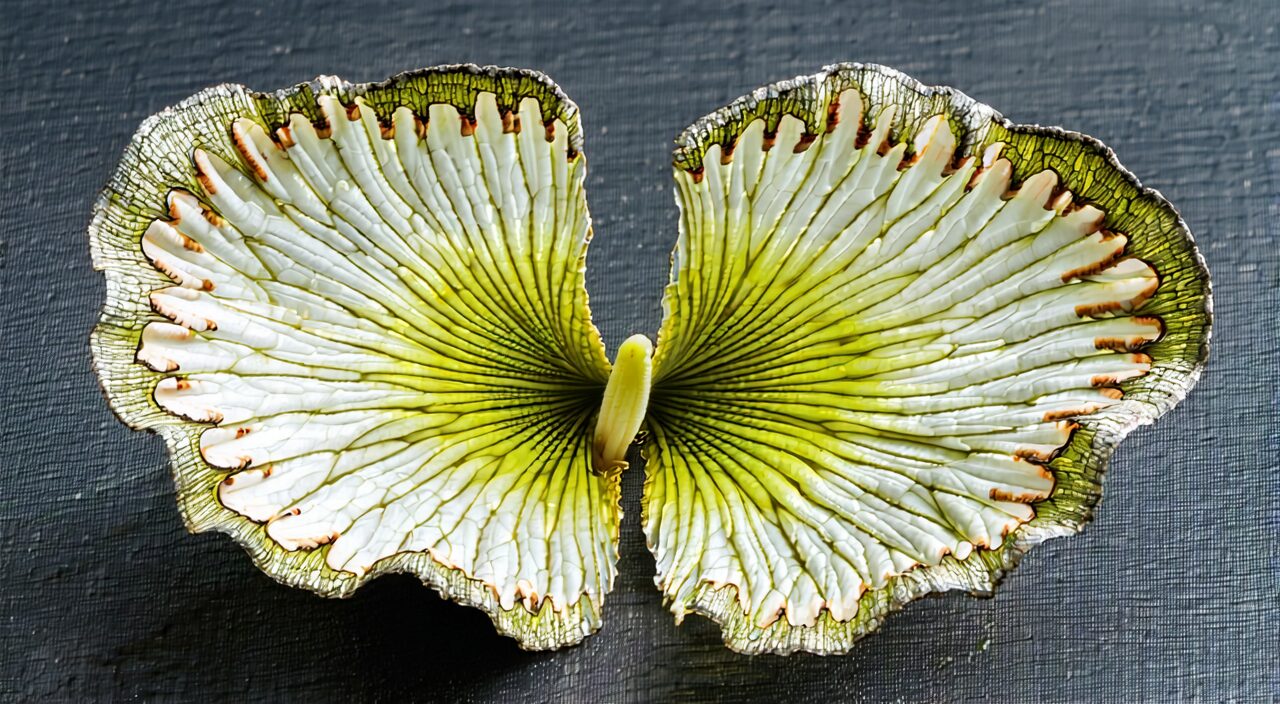
In the herbal market, Qing Pi is mainly classified into two types: Si Hua Qing Pi (four-petal unripe peel) and Ge Qing Pi (whole young fruit). Each has relatively typical morphological features.
Si Hua Qing Pi
Si Hua Qing Pi is made by cutting the unripe fruit lengthwise into four sections, removing the pulp, and drying them. The resulting pieces are petal-shaped, with an outer surface ranging from greyish green to blackish green, densely covered with numerous oil cavities. After drying, these oil cavities appear as slightly depressed fine dots. The inner surface is yellowish white to yellowish brown, showing distinct vein-like lines. The texture is hard, the aroma is fresh, and the taste is bitter and acrid.
Ge Qing Pi
Ge Qing Pi is prepared by collecting young fruit and drying it whole. It appears as irregular, almost spherical pieces, about 0.5 to 2 cm in diameter. The surface is blackish green or greyish green, also showing fine oil cavities and wrinkled textures. Occasionally, a fruit stalk scar is visible at the base. The texture is hard; when broken open, oil cavities are visible along the edge of the fractured surface, and the inner pith is dark in color. The smell and taste are similar to Si Hua Qing Pi, but traditionally Ge Qing Pi is considered to have a stronger qi-breaking action.
Regardless of the type, the greyish-green to blackish-green outer surface, distinct oil cavity traces, and yellowish-white to yellowish-brown inner surface are practical observation points for identifying Qing Pi.
What Is the Medicinal Part of Qing Pi?
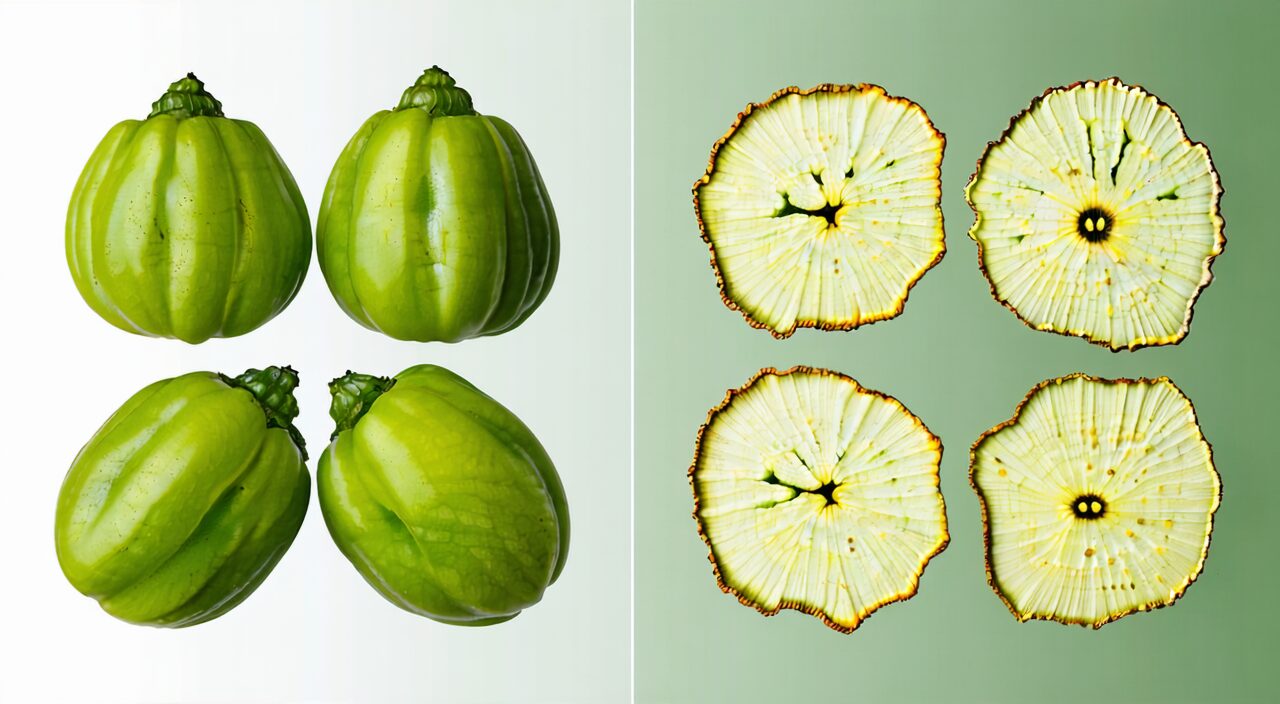
The medicinal part of Qing Pi is clearly defined: the dried unripe peel or young fruit of Citrus reticulata Blanco and its cultivated varieties, belonging to the Rutaceae family. Traditionally, between May and June, fallen young fruit is collected and dried to obtain Ge Qing Pi; from July to August, unripe fruits are harvested, cut lengthwise into four sections, the internal pulp is removed, and the peel is dried to obtain Si Hua Qing Pi.
The emphasis on \”unripe\” is crucial because as the fruit approaches maturity, the color of the peel and the composition of volatile oils within the oil cavities will change. Traditionally, it is understood that the direction and intensity of its action will also shift accordingly. Therefore, although Qing Pi and Chen Pi come from the same parent plant, they are assigned to different categories in Chinese medicine therapeutic approaches due to different harvest times.
How Does Chinese Medicine Understand Qing Pi?
In traditional Chinese medicine theory, Qing Pi is commonly attributed to the Liver, Gallbladder, and Stomach meridians. Its main functions are typically summarized as soothing the liver, breaking qi stagnation, dispersing food accumulation, and resolving stagnation. Compared to general qi-regulating herbs, \”breaking qi\” emphasizes its stronger focus on relieving deeper or more stubborn qi stagnation.
When symptoms such as distension and oppression in the chest and hypochondrium, breast distension and pain, or hernia pain arise due to emotional constraint or stress, some classical strategies consider combining Qing Pi with Chai Hu (Bupleurum) and Xiang Fu (Cyperus) to help soothe liver qi. In cases of food accumulation with pronounced abdominal distension and epigastric fullness, Qing Pi may also be used together with Shan Zha (Hawthorn), Mai Ya (Malt), and Zhi Qiao (Aurantium) to assist in promoting digestion, relieving stagnation, and moving gastrointestinal qi.
It is important to note that this qi-breaking action leans toward \”attacking and dispersing,\” making it unsuitable for constitutions with qi deficiency. It must be carefully evaluated based on individual circumstances.
What Has Modern Research Found?
Modern research on Qing Pi mainly focuses on volatile oil and flavonoid components. Qing Pi contains monoterpene compounds such as limonene and γ-terpinene, as well as flavonoids such as hesperidin and neohesperidin. Some basic experiments and animal studies suggest these components may be related to directions such as regulating smooth muscle peristalsis, influencing gastric juice secretion, and providing antioxidant effects.
In explorations of modernizing Chinese medicine, some studies have attempted to combine Qing Pi extracts with pharmacological models related to hepatobiliary and gastrointestinal motility. However, their conclusions remain at the laboratory exploration stage and have not yet formed uniform clinical application recommendations. These findings offer some perspectives for understanding the traditional functions of Qing Pi, but they do not directly equate to effects in everyday use.
What Is the Difference Between Qing Pi and Chen Pi?
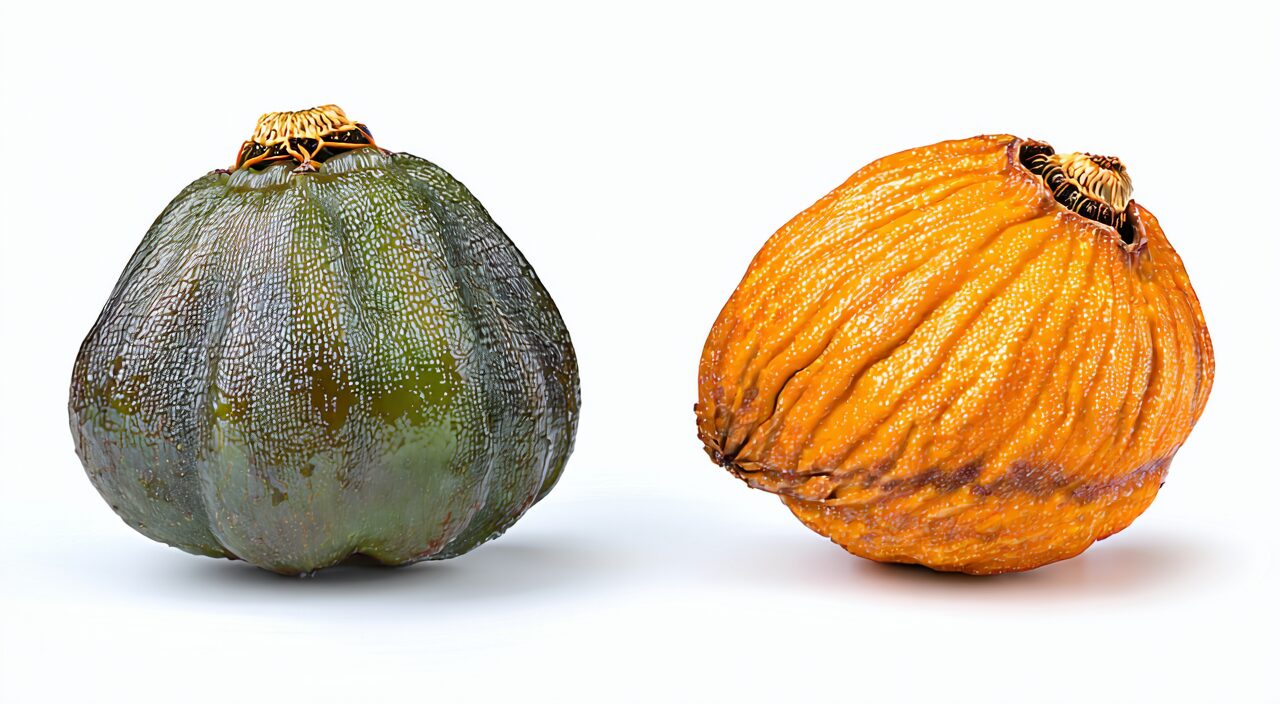
Qing Pi and Chen Pi are often compared. Although they originate from the same source, their traditional applications differ due to the harvest stage and processing method. Understanding these differences helps avoid misuse.
The distinctions can be observed from several angles. First, the degree of ripeness differs: Qing Pi is the unripe peel or young fruit, whereas Chen Pi is the peel of mature fruit, usually requiring long-term aging. Second, the appearance and smell differ: the outer surface of Qing Pi is greyish green or blackish green with distinct oil cavities and a strong, youthful, bitter-acrid aroma; the outer surface of Chen Pi is mostly orange-red to brown, and after aging, it has a fragrant, gentle aroma with a relatively mild bitterness. Third, traditional application focuses differ: Qing Pi is often used in situations requiring qi breaking, mass dispersing, and accumulation elimination, such as pronounced rib-side distension or food stagnation; Chen Pi is more often used to regulate qi, strengthen the spleen, dry dampness, and transform phlegm, suitable for relatively mild conditions such as qi stagnation in the spleen and stomach with distension or cough with copious phlegm.
To put it simply, if using an analogy, Qing Pi is like a \”pioneer\” that breaks through stagnation, while Chen Pi is more like a \”mediator\” that excels at gradually harmonizing qi flow. The choice between them should be made based on constitution and specific conditions.
Which Formulas Use Qing Pi?
There are quite a few traditional formulas that use Qing Pi. Several representative ones are listed below to illustrate its usage direction.
Mu Xiang Bing Lang Wan frequently pairs Qing Pi with Mu Xiang (Aucklandia), Bing Lang (Areca), and Huang Lian (Coptis) for food accumulation with internal stagnation and epigastric distension and pain, focusing on guiding out stagnation and unblocking the bowels. Tian Tai Wu Yao San, composed of Wu Yao (Lindera), Mu Xiang, Qing Pi, and Hui Xiang (Fennel), is traditionally used for cold-congealed qi stagnation causing small intestine hernia and lower abdominal referred pain; Qing Pi assists in moving qi and dispersing masses. Hai Zao Yu Hu Tang is mainly used for early-stage goiter, with Qing Pi combined with Hai Zao (Sargassum), Kun Bu (Kelp), and Bei Mu (Fritillaria) to regulate qi, transform phlegm, soften hardness, and disperse masses. Additionally, Qing Pi Wan is a relatively basic formula often combined with Zhi Qiao (Aurantium) and Xiang Fu (Cyperus) for chest and hypochondriac oppression and food accumulation.
It should be noted that each formula targets specific syndrome patterns and is not suitable for all cases of abdominal bloating, gas, or thyroid nodules. Whether a specific formula is appropriate must still be determined based on constitution, detailed symptoms, and under the guidance of a qualified Chinese medicine practitioner. The timing and dosage of formulas also require professional control.
What Precautions Should Be Taken When Using Qing Pi?
Although Qing Pi is a traditional medicinal substance, there are many points to consider when using it on your own.
The action of Qing Pi is inclined towards breaking qi. For individuals with pronounced qi deficiency—such as those who easily feel fatigued, short of breath, have poor appetite, and tend to have loose stools—it is generally not advisable to use large amounts of Qing Pi alone, as it may exacerbate the feeling of qi weakness. Pregnant and breastfeeding women are usually not advised to use Qing Pi on their own because its strong qi-moving action could cause unnecessary physical stress. Additionally, Qing Pi has a certain stimulating effect on the gastrointestinal tract; people with excess stomach acid, frequent stomach pain, or existing stomach discomfort should be cautious.
If noticeable stabbing abdominal pain, diarrhea, nausea, or decreased appetite occurs while taking formulas or dietary preparations containing Qing Pi, it should be stopped promptly and a professional informed. In summary, Qing Pi should not be used on one’s own long-term or in large doses, especially when taken as a daily herbal tea; it should be approached rationally. For chronic, recurrent gastrointestinal discomfort or emotion-related symptoms, it is advisable to first consult a doctor or licensed Chinese medicine practitioner to avoid delaying diagnosis.
Summary
Qing Pi is a medicinal material derived from the unripe peel or young fruit of the tangerine. Its key identification features are the greyish-green to blackish-green outer peel, distinct oil cavities, and yellowish-white inner surface. It fundamentally differs from traditional Chen Pi in both harvesting stage and regulating direction. Qing Pi is often used in formula strategies to soothe the liver, break qi, disperse accumulation, and resolve stagnation, but precisely because of its attacking and dispersing nature, it is not suitable for qi-deficient individuals or for use without proper differentiation over the long term. The use of any medicinal substance must be based on individual conditions and professional advice; educational content cannot replace personalized syndrome differentiation.