
What Is Quan Shen? Medicinal Parts, Identification, and Common Formulas
Quan Shen is a traditional medicinal herb commonly discussed in relation to clearing heat, alleviating dysentery, and cooling the blood. When people first encounter the name Quan Shen, some wonder whether it comes from ginseng, while others may confuse it with herbs such as Chonglou and Bai Tou Weng because of their similar appearance. In fact, the medicinal part of Quan Shen is mainly the dried rhizome of a Polygonaceae plant known as Quan Shen. Its name, appearance, and traditional uses all have distinctive characteristics. Understanding what Quan Shen looks like, which part is used medicinally, and how it differs from Chonglou and Bai Tou Weng can help reduce misidentification when reading about traditional formulas or medicinal herbs.
What Does Quan Shen Look Like and How Is It Identified?
Main Appearance Features
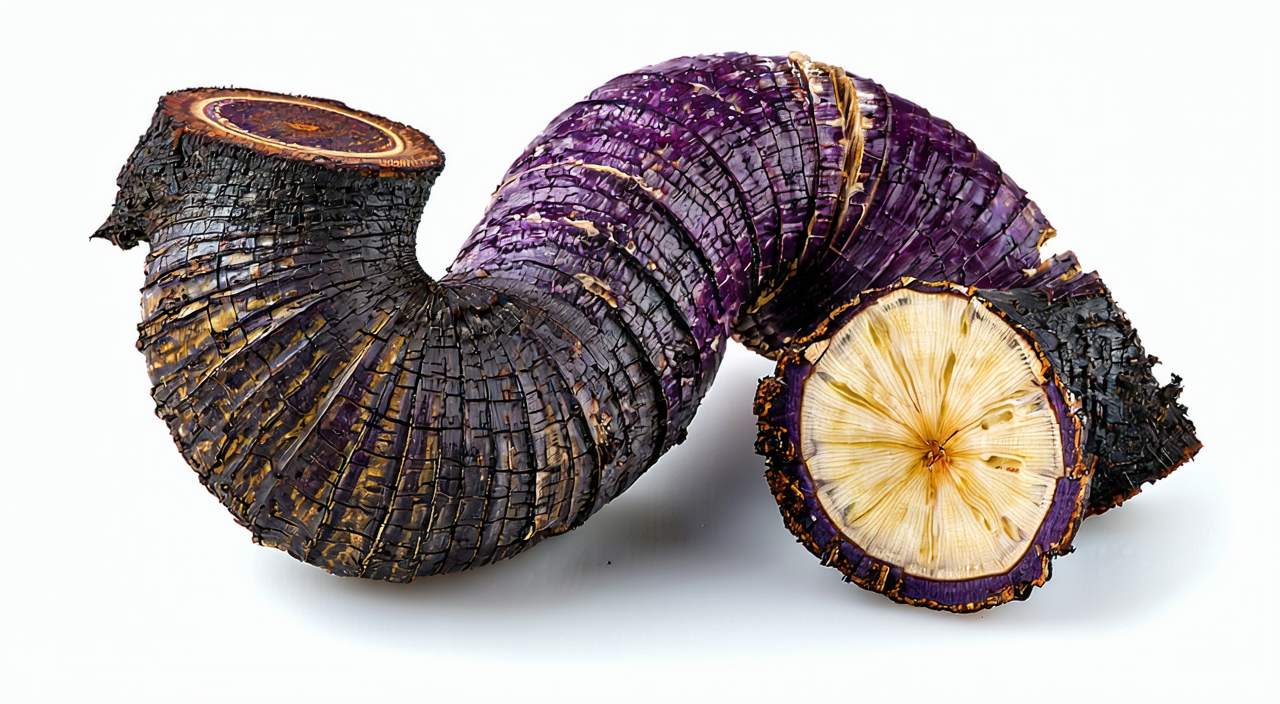
Quan Shen has a relatively distinctive medicinal form. Traditional herbal materials are often flattened and cylindrical or curved into fist-like or shrimp-like shapes. Some rhizomes curl up like small fists, which is one of the direct sources of the name Quan Shen. The surface is usually purplish-brown, purple-black, or dark brown, with fine, dense ring patterns and visible dot-like root scars or remnants of fibrous roots. Stem scars or bud scars may sometimes be seen at the top of the rhizome. The texture is hard, while the cross-section is relatively rough and commonly yellowish-white, light brown, or reddish-brown. Small yellowish-white, dot-like vascular bundles may also be visible.
Details That Can Cause Confusion
When identifying Quan Shen, pay particular attention to three features: first, whether the shape is curved and fist-like or flattened and cylindrical; second, whether the surface has a purplish-brown outer layer and fine ring patterns; and third, the color and granular texture of the cross-section. Because dried rhizomes may vary according to their growing region and processing method, identification should not rely on color alone. It is best to assess the texture, cross-section, and smell together. If the rhizome appears relatively straight, has an unusually pale surface, or has a very powdery white cross-section, consider the possibility that it may be another herb with a similar appearance.
Which Part of Quan Shen Is Used Medicinally?
The Rhizome Is Used
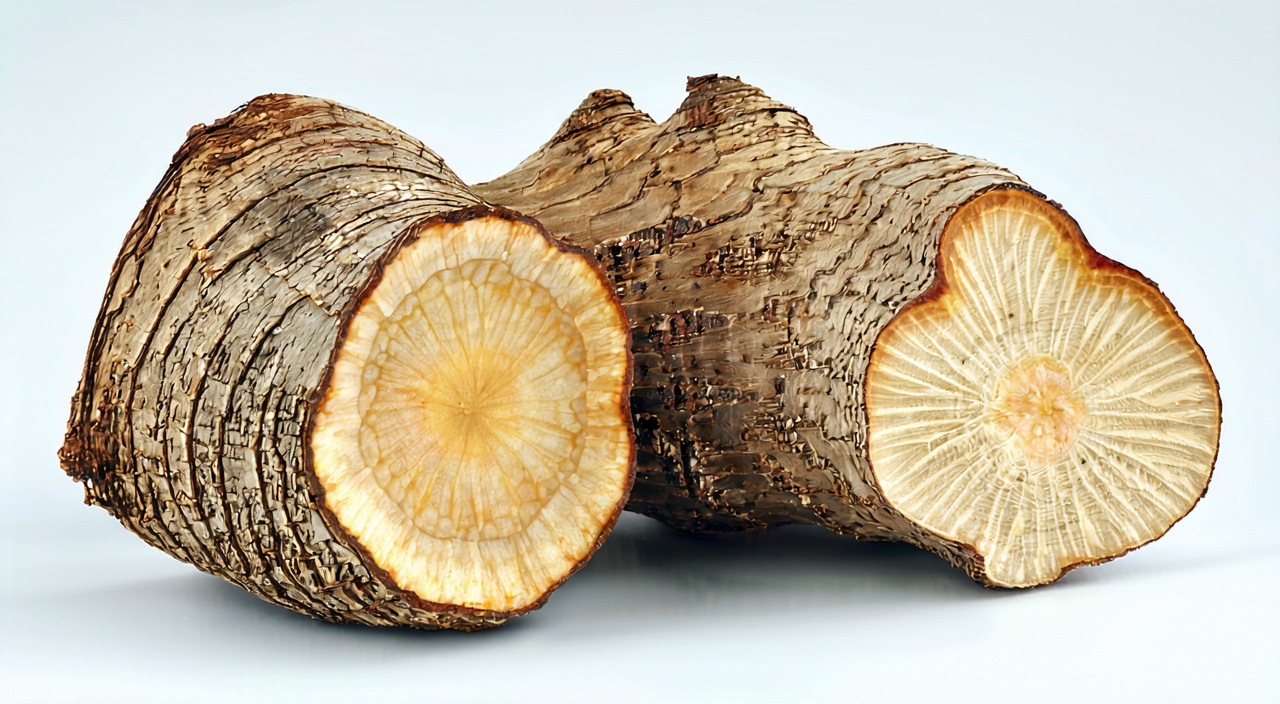
The medicinal part of Quan Shen is the dried rhizome, not the above-ground stems and leaves or the fibrous roots. Traditionally, the rhizome is considered to best represent Quan Shen’s characteristics of astringency, heat-clearing, and blood-cooling. After harvesting, the rhizomes must be cleaned of soil and fibrous roots and then dried before they can be used as a medicinal material.
Harvesting and Drying
Quan Shen is generally harvested before sprouting in spring or after the stems and leaves wither in autumn. The soil and fibrous roots are removed, and the material is dried for medicinal use. After harvesting, the herb is usually cut into thick slices or crushed before decoction. Different degrees of processing may affect how readily its flavor and constituents are released during boiling. When evaluating the herb, pay attention to whether its source is clear, whether it is authentic Quan Shen, and whether the rhizome is intact and has a natural cross-sectional color. Ordinary consumers generally do not need to identify or harvest wild specimens themselves.
How Does Traditional Chinese Medicine Understand Quan Shen?
Taste, Temperature, and Meridian Associations
Traditional Chinese medicine commonly understands Quan Shen through its taste, temperature, meridian associations, and traditional functions. Quan Shen is generally described as bitter, astringent, and slightly cold, entering the Lung, Liver, and Large Intestine meridians. Bitterness and coldness are commonly associated with clearing heat, purging fire, and resolving toxicity, while astringency is associated with收敛, or astringing and containing. For this reason, it has traditionally been used in situations involving intense heat or toxin accumulation, sore and swollen throats, damp-heat diarrhea and dysentery, and bleeding. It is important to emphasize that these concepts do not equate to anti-infective or hemostatic effects in the modern medical sense; they describe a traditional pattern-based approach.
Traditional Uses
In actual practice, traditional Chinese medicine practitioners generally do not assess a single herb in isolation. They consider the tongue, pulse, and symptom patterns to determine whether factors such as heat, dampness, toxicity, or astringency are involved. Quan Shen may be more suitable for patterns characterized by excess heat, dampness, or heat toxins, while it may not be appropriate for people with a cold-deficient constitution or weak digestion. Whether a formula or patent medicine containing Quan Shen is suitable for a particular person must therefore be determined according to individual circumstances.
What Areas Does Modern Research Examine?
Modern research on Quan Shen has mainly focused on constituents such as tannins and flavonoids. Preliminary studies have explored areas including antioxidant, anti-inflammatory, and astringent activity. Some research has also examined the effects of Quan Shen extracts on intestinal-related indicators, but most of this work remains at the experimental or small-scale exploratory stage and cannot be directly equated with clinical effectiveness. For the general public, modern research can provide supplementary background for understanding the herb’s traditional uses, but it should not be used as the basis for self-selection or as a substitute for standard medical care.
How Does Quan Shen Differ from Chonglou and Bai Tou Weng?
Comparison of Rhizome and Root Appearance
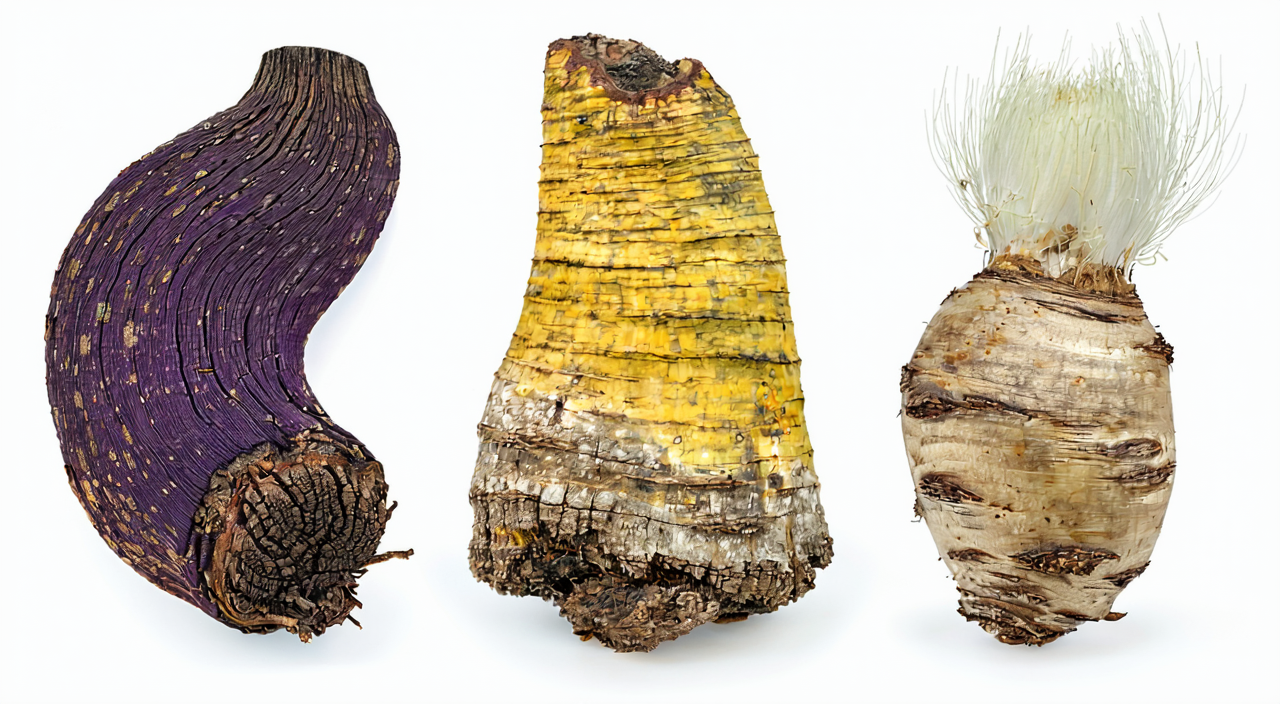
Quan Shen, Chonglou, and Bai Tou Weng are all medicinal herbs that can be confused because of their appearance or names, but their botanical sources, rhizome or root forms, and traditional uses are different.
Quan Shen comes from a Polygonaceae plant, and its medicinal part is the dried rhizome. It is commonly flattened and cylindrical or curved into a fist-like shape, with a purplish-brown or purple-black surface and a yellowish-white, light brown, or reddish-brown cross-section. Traditionally, it is mainly associated with clearing heat, cooling the blood, and alleviating dysentery.
Chonglou comes from a plant in the Liliaceae family, and the medicinal part is commonly the rhizome. It is usually nodular or roughly cylindrical, with a yellowish-brown or grayish-brown surface and a white, powdery cross-section. Traditionally, Chonglou is more associated with clearing heat and toxins, reducing swelling, and relieving pain. In some formulas, it is used for conditions involving abscesses, swellings, or sore and swollen throats.
Bai Tou Weng comes from a plant in the Ranunculaceae family, and its medicinal part is the root. The root is commonly cylindrical, and white hairs may sometimes be visible at the root crown. Its surface is yellowish-brown, and the cortex of the cross-section separates readily. Traditionally, Bai Tou Weng is often used for damp-heat dysentery and dysentery with bloody stools caused by heat toxins.
Differences in Traditional Uses
Although all three may appear in formulas associated with clearing heat or alleviating dysentery, they come from different sources and should not be substituted for one another. When purchasing or using them, choose reputable suppliers and seek professional identification or guidance from a pharmacist. If herbs are harvested in the wild or identified solely from online images, Chonglou or Bai Tou Weng can easily be mistaken for Quan Shen, potentially affecting safety.
Which Formulas Contain Quan Shen?
Quan Shen Tablets
In traditional formulas, Quan Shen is commonly found in formulas associated with clearing heat and alleviating dysentery. Depending on the pattern, it may be combined with herbs such as Huang Lian, Huang Qin, and Bai Tou Weng. The dosage and combinations vary among formulas, and there is no universally fixed best formula. Quan Shen tablets, Quan Shen decoctions, and other dosage forms or products are also available on the market, but similar names do not mean that their ingredients or intended uses are exactly the same.
For example, Quan Shen tablets may be modern preparations containing Quan Shen, but whether they are suitable for a particular symptom depends on the ingredients, directions, and precautions listed on the product label. Quan Shen decoctions are also traditionally or empirically associated with clearing heat, alleviating dysentery, and cooling the blood. They are not suitable for every type of diarrhea.
Formulas for Clearing Heat and Alleviating Dysentery
In traditional Chinese medicine, formulas for clearing heat and alleviating dysentery are commonly used for patterns such as damp-heat dysentery, but the relative proportions of heat, dampness, toxicity, and deficiency differ from one formula to another. Quan Shen may be included as one ingredient, sometimes combined with Bai Tou Weng, Huang Bai, and Gan Cao. In cases of acute abdominal pain, persistent diarrhea, fever, bloody stools, or obvious dehydration, seek medical care promptly rather than self-administering a formula or product containing Quan Shen.
What Precautions Should Be Taken When Using Quan Shen?
Who Should Use Caution?
Quan Shen is traditionally considered bitter, cold, and astringent. From a traditional perspective, people with cold-deficient digestion or a tendency toward loose, watery stools should use it cautiously. Children, pregnant or breastfeeding individuals, older adults, and people with a history of chronic disease should consult a doctor or pharmacist before use. Because Quan Shen resembles Chonglou, Bai Tou Weng, and other herbs, the risk of misidentification during wild harvesting is relatively high. Self-harvesting, drying, or decocting is not recommended.
When to Seek Medical Attention
When diarrhea occurs, do not simply assume that a Quan Shen preparation can be used to stop it. Frequent diarrhea, intense thirst, reduced urination, dizziness, or weakness may indicate dehydration or an electrolyte imbalance and require prompt medical attention. If these symptoms are accompanied by significant abdominal pain, fever, bloody stools, black stools, or weight loss, do not rely on a single herb or independently purchase a product containing Quan Shen.
Summary
When learning about Quan Shen, focus on three key points. First, the herb mainly uses the dried rhizome, which is often curved like a fist, has a purplish-brown surface, and has a yellowish-white or reddish-brown cross-section. Second, its botanical source and traditional uses differ from those of Chonglou and Bai Tou Weng, so the herbs should not be used interchangeably. Third, formulas and preparations containing Quan Shen are generally associated with clearing heat, alleviating dysentery, and cooling the blood, but their suitability depends on individual constitution and circumstances. This article is intended for general educational reference only and cannot replace professional diagnosis or treatment advice. If you experience significant discomfort, consult a qualified healthcare professional promptly.