
What Is Hawthorn? Medicinal Parts, Identification and Common Formulas
When people think of hawthorn, the first things that often come to mind are candied hawthorn sticks, haw flakes, or the sweet-and-sour dried fruit used for making tea. However, in Chinese medicine, hawthorn is not merely a fruit — it is a medicinal herb with a long history of use. The fresh fruit, dried slices, and prepared slices found in herbal pharmacies all come from the same source, yet their applications differ. This article starts with the original plant of hawthorn to help overseas Chinese readers interested in Chinese medicinal herbs understand what hawthorn looks like, how the medicinal parts are differentiated, and the thinking behind its use in common formulas.
What Does Hawthorn Look Like? How to Identify It
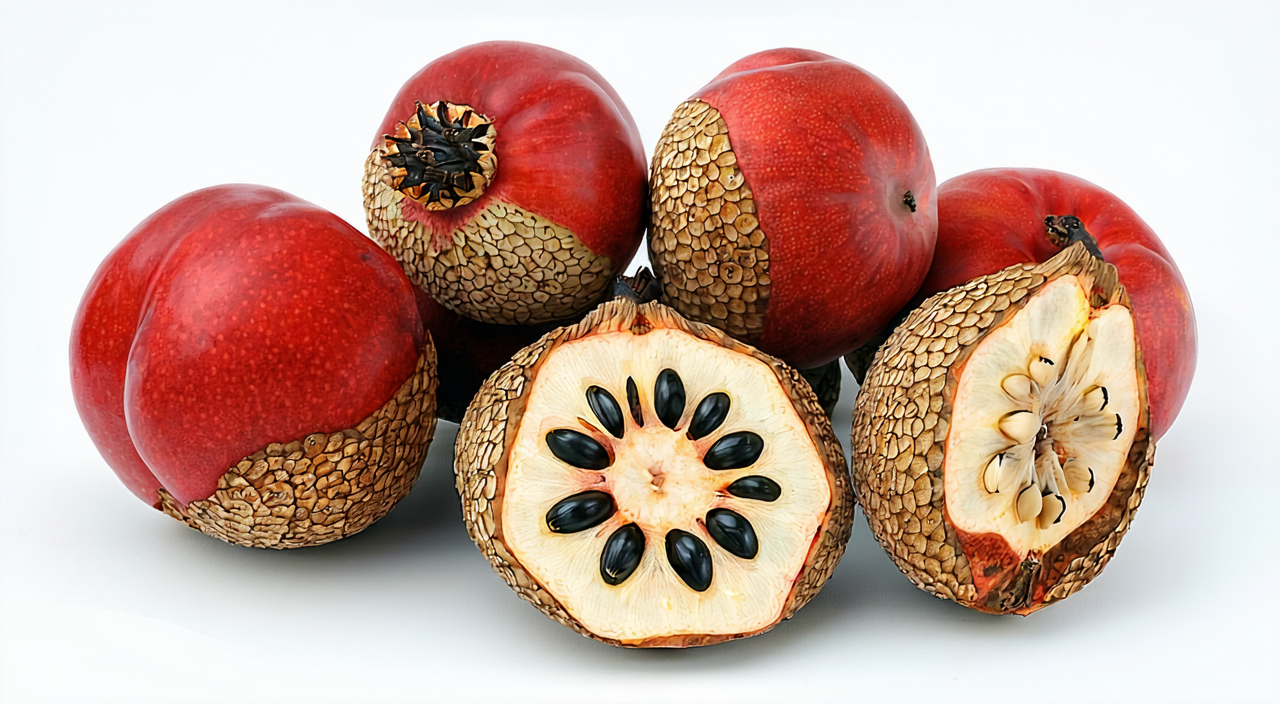
The medicinal hawthorn mainly comes from the ripe fruit of Crataegus pinnatifida var. major or Crataegus pinnatifida of the Rosaceae family. Without distinguishing between specific varieties, the whole fruit is mostly subspherical or slightly flattened, about 1.5 to 2.5 cm in diameter — not particularly large. The outer surface is predominantly reddish-brown, deep red, or dark red, and some fruits show small greyish-white speckles on the surface, which is a relatively typical feature.
When the fruit is cut open, the flesh can be seen to be rather thin and compact in texture, ranging in colour from yellowish-brown to brownish-brown. Inside are several hard seeds that are nearly quadrangular in shape, hard and smooth in texture. In Chinese herbal slices, hawthorn is often cut transversely or longitudinally. Once dried, the slices become wrinkled, the surface colour deepens, the flesh turns yellowish-brown to brownish-brown, and the seeds are clearly visible. In transverse slices, the trace of five seeds arranged in a circle can sometimes be seen in the centre.
The fresh hawthorn fruit bought in everyday supermarkets looks similar, but may be larger and contain more moisture; the dried slices used for medicinal purposes have lost most of their moisture, taste more sour, and are hard and brittle. Once you grasp the characteristics of a red peel, whitish speckles, and multiple hard seeds, you can generally distinguish hawthorn from other fruits that look similar.
What Is the Medicinal Part of Hawthorn?
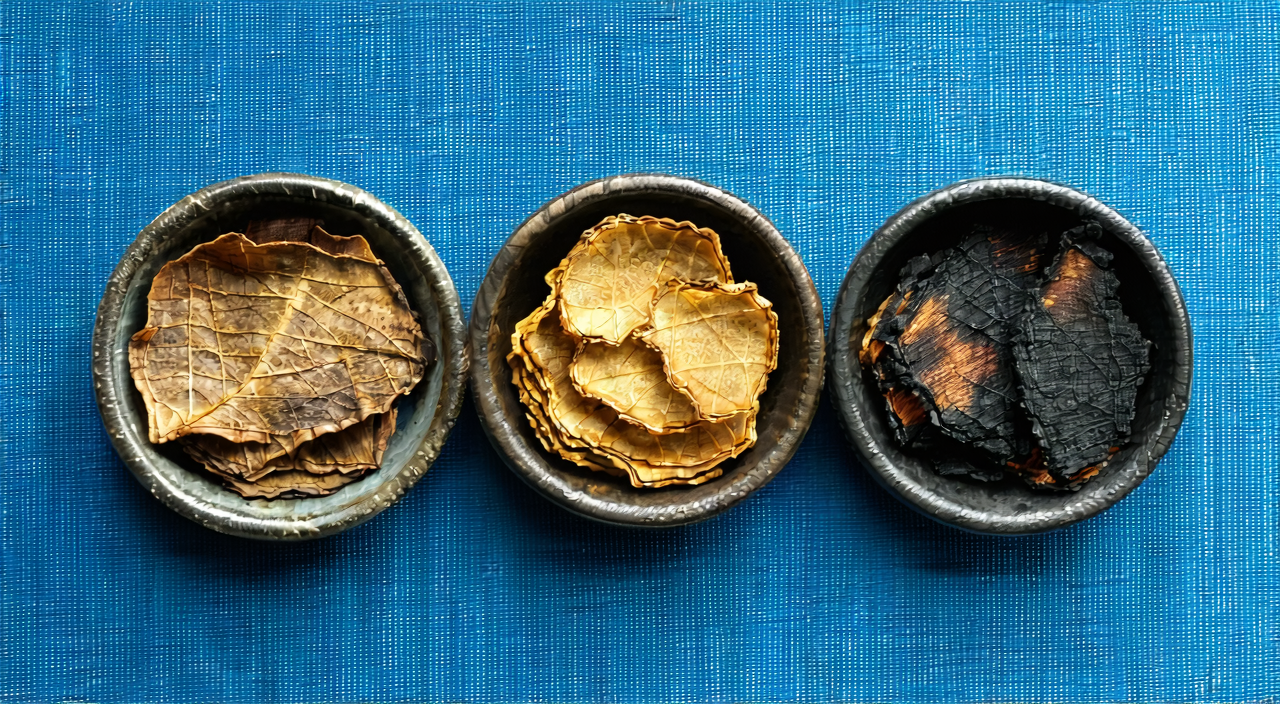
The medicinal part of hawthorn is quite specific: it is the ripe fruit. The harvest usually takes place in autumn when the fruit is fully mature. After harvesting, impurities are removed, the fruit is sliced, and then dried, yielding raw hawthorn (Sheng Shanzha). Raw hawthorn excels at promoting digestion, removing food stagnation, invigorating blood, and resolving stasis. Traditionally, it is used for problems such as meat-food stagnation, blood stasis, and amenorrhea.
Raw hawthorn can undergo different processing methods to produce various processed products. For example, stir-fried hawthorn (Chao Shanzha) is prepared by stir-frying over a low flame until the colour deepens and the sour taste diminishes, somewhat reducing its irritant effect on the spleen and stomach. Scorched hawthorn (Jiao Shanzha) is made by stir-frying over a high flame until the surface is charred-brown and the inside is burnt-yellow, producing a burnt aroma. It is particularly good at promoting digestion and stopping diarrhoea, traditionally leaning towards the idea of “the burnt aroma awakens the spleen”. Charred hawthorn (Shanzha Tan) is stir-fried over a high flame until the surface is jet-black and the inside is charred-brown, and is mainly used for its astringent, haemostatic, and antidiarrheal properties.
Although all these processed products come from the hawthorn fruit, Chinese medicine selects different specifications according to different therapeutic needs. Therefore, to answer the question “What is the medicinal part of hawthorn?”, one must not only know it is the ripe fruit but also understand the different processing methods applied to the dried slices.
How Does Chinese Medicine View Hawthorn?
In traditional Chinese medical theory, hawthorn is sour and sweet in flavour, slightly warm in nature, and enters the Spleen, Stomach, and Liver meridians. Its core actions are commonly summarised as: promoting digestion and strengthening the stomach, moving qi and dispersing stasis, and transforming turbidity and lowering lipids.
The action of promoting digestion and strengthening the stomach is particularly targeted at stagnation caused by meat or greasy foods. Traditional experience holds that it “excels at resolving the accumulation of meat foods,” suggesting that hawthorn can promote the spleen and stomach’s transportation and transformation, helping to resolve epigastric and abdominal distension, belching, and acid regurgitation caused by overindulgence in rich, fatty, or sweet foods. For this reason, hawthorn often appears in formulas that address food accumulation and indigestion.
Moving qi and dispersing stasis operates more on the level of qi and blood. Chinese medicine believes hawthorn can enter the blood aspect and has a certain ability to invigorate blood and dissipate stasis. For delayed menstruation, postpartum abdominal pain due to blood stasis, or menstrual blood that is dark purple with clots caused by qi stagnation and blood stasis, hawthorn is traditionally considered as part of a combination. However, in such applications it is usually combined with herbs such as Chinese Angelica (Dang Gui), Sichuan Lovage (Chuan Xiong), and Motherwort (Yi Mu Cao), rather than used alone in large doses.
Transforming turbidity and lowering lipids is a usage concept that has gradually developed in modern times. Combining traditional experience with modern research, hawthorn is believed to help regulate blood lipids. This type of application is mostly mentioned in dietary therapy or long-term health maintenance settings, often combined with Cassia Seed (Jue Ming Zi), Lotus Leaf (He Ye), and Red Sage (Dan Shen) for those interested in this aspect. It must be emphasised that this is only an extension of traditional understanding and does not mean that hawthorn can directly lower blood lipids or treat hyperlipidaemia.
What References Does Modern Research Provide?
In recent decades, research on the constituents of hawthorn has mainly focused on organic acids, flavonoids, and triterpenoids. Among these, hawthorn flavonoids and hawthorn triterpenoids are considered to be the important material basis for its biological activities. In in vitro studies and some animal experiments, these constituents have shown activities in antioxidation, improving myocardial metabolism, and regulating blood lipid profiles.
Some clinical observations have also attempted to explore the effects of hawthorn preparations on digestive function, blood lipid levels, or cardiovascular health. However, most current research remains at the level of supportive regulation and cannot yet yield definitive therapeutic conclusions. For consumers, these studies can be viewed as references that confirm traditional experience, rather than as clinical gold standards. If there is a clear health problem, a professional evaluation should still be sought, and one should not rely on a single medicinal herb for a solution.
What Is the Difference Between Hawthorn, Wild Hawthorn, and Smoked Plum?
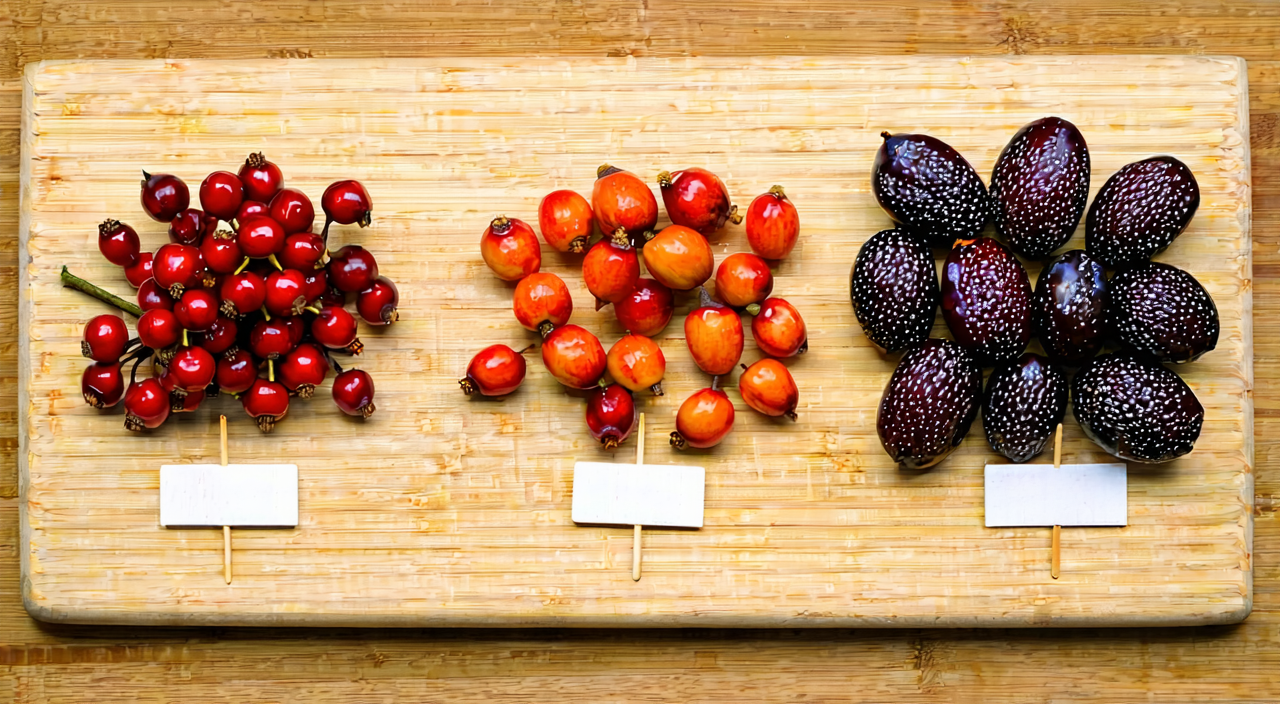
Hawthorn and wild hawthorn can be easily confused because wild hawthorn is sometimes used as hawthorn in certain regions, but they are not the same species. The fruit of wild hawthorn is usually smaller, generally around 1 to 1.2 cm in diameter. Its surface colour tends towards yellowish-brown or brownish-red, and the speckles are less pronounced than on hawthorn. The flesh is thinner, and the seeds are relatively larger with more prominent edges. Traditionally, wild hawthorn is considered to taste more sour and astringent, its power to promote digestion and resolve accumulation is slightly weaker than hawthorn, while its tendency to astringe and stop diarrhoea is slightly stronger. In some areas, wild hawthorn was once used as a regional substitute for hawthorn, but currently the mainstream medicinal hawthorn remains Crataegus pinnatifida var. major and Crataegus pinnatifida.
Hawthorn and smoked plum (Wu Mei) are relatively easy to tell apart. Smoked plum comes from the nearly ripe fruit of Prunus mume of the Rosaceae family, which is dried at a low temperature and then smoked until black. The surface is jet-black or brownish-black, and the flesh is extremely sour. It is generally not used as a digestive herb but excels at astringing the lungs, binding the intestines, generating fluids, and calming roundworms. In appearance, hawthorn is reddish-brown with speckles, while smoked plum is jet-black and wrinkled; their flavours are also distinctly different. The idea that hawthorn can promote digestion and smoked plum can astringe, and therefore they are interchangeable, is a misunderstanding, as their traditional applications differ.
Which Formulas Use Hawthorn?
Hawthorn features prominently in many classic or commonly used formulas that address food stagnation. The following lists a few relatively well-known examples to illustrate the thinking behind traditional applications, but this does not mean these formulas are suitable for everyone.
Baohe Wan (Harmony-Preserving Pill) is a frequently used formula for promoting digestion and harmonising the stomach, originating from Danxi’s Experiential Methods. The formula contains Hawthorn (Shan Zha), Medicated Leaven (Liu Shen Qu), Pinellia (Ban Xia), Poria (Fu Ling), Tangerine Peel (Chen Pi), Forsythia (Lian Qiao), and Radish Seed (Lai Fu Zi). Hawthorn plays the principal role as a digestive herb, specifically targeting meat-food stagnation. The entire formula is commonly used for presentations such as epigastric and abdominal distension, foul belching, acid regurgitation, and a lack of appetite caused by food accumulation.
Daan Wan (Great Calmness Pill) is a modification of Baohe Wan with the addition of White Atractylodes (Bai Zhu). It adds the element of strengthening the spleen, and is traditionally suitable for food accumulation combined with spleen deficiency. In this formula, hawthorn’s dispersing action is combined with Bai Zhu’s spleen-supplementing qi, embodying the formula-constructing principle of simultaneously dispersing and supplementing.
Shanzha Huazhi Wan (Hawthorn Stagnation-Resolving Pill), as the name suggests, uses hawthorn as the main ingredient, combined with Germinated Barley (Mai Ya), Medicated Leaven, and Betel Nut (Bing Lang). Its purpose is to move qi, resolve stagnation, promote digestion, and guide out accumulation. It is traditionally used for food stagnation in the stomach and intestines, epigastric and abdominal distension and pain, and undispersed accumulation.
Jiao San Xian (Scorched Three Immortals) is not a single fixed formula name, but a common combination using three scorched-fried herbs: Scorched Germinated Barley (Jiao Mai Ya), Scorched Hawthorn (Jiao Shan Zha), and Scorched Medicated Leaven (Jiao Shen Qu). In this pairing, scorched hawthorn focuses on resolving meat-food accumulation, scorched germinated barley tends to resolve accumulations of rice and flour, and scorched medicated leaven addresses both promoting digestion and harmonising the stomach. This combination frequently appears in various formulas that regulate the spleen and stomach and eliminate food stagnation.
The above formulas and combinations each have their own application biases. In actual use, one must take into account individual constitution and specific symptoms, and exercise comprehensive judgement after thoroughly understanding product instructions or consulting a professional. It is not advisable to simply copy these combinations for self-use.
What Precautions Should Be Taken When Using Hawthorn?
Although hawthorn is common and widely used as a food, when used medicinally or consumed in large quantities over a long period, there are some precautions to be aware of.
First, those with gastric hyperacidity, gastric ulcers, or duodenal ulcers should be cautious. Hawthorn contains relatively high levels of organic acids, which can stimulate gastric acid secretion and potentially aggravate acid-related discomfort. When there is significant heartburn, acid reflux, or stomach pain, indiscriminately consuming large amounts of hawthorn is not recommended.
Second, pregnant women should avoid consuming large amounts of hawthorn. Traditional experience suggests that hawthorn has a certain blood-invigorating effect, and expectant mothers, especially in early pregnancy, should avoid consuming large quantities of hawthorn products to prevent any potential impact on fetal stability. This advice is more of a conservative consideration; there is no need for panic, but it is worth noting.
Furthermore, one should not consume large amounts of hawthorn fruit or drink strong hawthorn tea on an empty stomach. When the stomach is empty, gastric acid secretion is relatively high, and the acidic components of hawthorn may irritate the gastric mucosa, causing stomach discomfort.
In addition, commercially available hawthorn cakes, haw flakes, and hawthorn beverages often contain high levels of added sugar. Individuals who need to manage their blood sugar should pay attention to the product’s ingredient list to avoid excessive intake of added sugar. If wishing to use hawthorn as a dietary aid, choosing dried slices with no added sugar or consulting a professional is a safer approach.
If symptoms such as recurrent bloating, belching, and indigestion occur after eating, or are accompanied by obvious abdominal pain, black stools, or weight loss, one should not simply rely on hawthorn for relief but should seek timely medical evaluation to rule out organic diseases of the digestive system.
Summary
Hawthorn is a Chinese medicinal herb deeply rooted in the tradition of medicine-food homology. Understanding its fruit characteristics, medicinal part, and different processed products helps with accurate identification and use. From promoting digestion and guiding out stagnation to moving qi and dispersing stasis, and on to the more modern interest in transforming turbidity and lowering lipids, hawthorn’s scope of application is broad. Yet it always needs to be judged in combination with specific constitution and actual conditions, and it can never replace a necessary professional diagnosis. In daily use, special attention should be given to issues such as gastric hyperacidity, pregnancy, and large-scale consumption on an empty stomach; some forms of discomfort warrant a more cautious approach.