
What Is Wu Mei? Medicinal Parts, Identification & Common Formulas
When people hear the name Wu Mei, many first think of sour preserved plum snacks or refreshing Wu Mei soup. However, the Wu Mei used as a Chinese medicinal herb differs greatly from dietary Wu Mei products. Medicinal Wu Mei is the dried nearly ripe fruit of the plum plant Prunus mume (Rosaceae). Collected in early summer before the fruit fully ripens, it is processed through traditional smoking or low‑temperature drying, turning the surface dark black. With its sour and astringent properties, Wu Mei is an important astringent herb in Chinese medicine. This article focuses on the source, visual identification, key actions, differentiation from similar substances, and common formulas of Wu Mei, providing a systematic reference for overseas enthusiasts of Chinese medicine.
What Does Wu Mei Look Like? How to Identify It
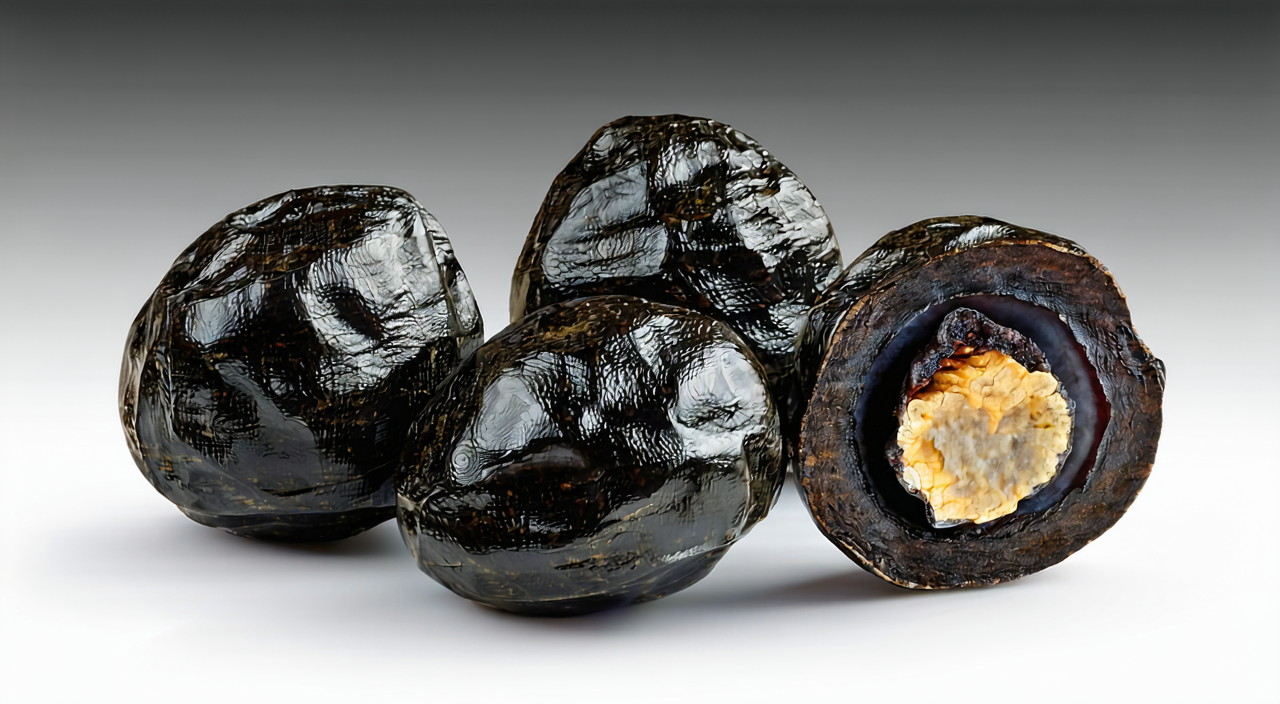
Dried Wu Mei is typically spherical or somewhat flattened, about 1.5–3 cm in diameter. The surface is dark black or brownish‑black with irregular wrinkles and feels dry and hard. At one end, a round fruit stalk scar is visible; at the other, traces of the style may remain. The flesh is relatively thin, dark brown, pliable and sticky, and not easily separated from the pit. When opened, a hard pit is revealed — oval, brownish‑yellow, and densely covered with small pits, which is one of the key identifying features of Wu Mei. Inside the pit is a single seed. The odor is faintly smoky, and the taste is extremely sour, lasting long. If you encounter a similar‑looking fruit that is not sour or lacks acidity, it may be an adulterant. When differentiating Wu Mei from hawthorn or chebule, the pitted pit surface and the intense sourness are crucial.
What Is the Medicinal Part of Wu Mei?
The medicinal part of Wu Mei is precisely the dried nearly ripe fruit of the plum. Harvest usually takes place around the fourth or fifth lunar month, when the fruit skin changes from green to yellowish‑green and the flesh begins to soften but is not yet fully ripe. The traditional processing method involves placing fresh plums in a smoking pit for low‑temperature, slow smoking, turning the peel dark black and imparting a distinctive smoky flavor. Today, low‑temperature oven drying is also used, but the product must still retain a certain acidity and wrinkled appearance. After drying, impurities are removed, and the pit is left intact. The best quality Wu Mei is large, with thick flesh, a small pit, black outer skin, a sour taste, and a smoky note. In contrast, snack preserved plums are often sugar‑cured, salt‑cured and flavored, containing many additives; they lack the specific astringent property of the medicinal herb and cannot substitute for Wu Mei in Chinese medicine.
How Does Chinese Medicine Understand Wu Mei?
In Chinese medicine theory, Wu Mei is neutral in nature, with a sour and astringent taste, and it mainly enters the Liver, Spleen, Lung, and Large Intestine meridians. Sourness has the ability to astringe and consolidate, so the core action of Wu Mei is astringing. Specifically, this includes the following:
- Constraining the Lung to stop coughing: For lung qi deficiency with chronic cough and scant sputum, Wu Mei can astringe lung qi. It is often combined with Wu Wei Zi (Schisandra) or Ying Su Ke (Poppy husk) to reduce dry cough caused by dissipation of lung qi. Sometimes it is used together with descending‑lung‑qi herbs such as Ku Xing Ren (bitter apricot seed) to achieve a combination of astringing and descending.
- Binding the intestine to arrest diarrhea: In cases of spleen‑deficiency chronic diarrhea with involuntary leakage, the sour‑astringent nature of Wu Mei helps stabilize the intestines. It is traditionally used with Rou Dou Kou (Nutmeg), He Zi (Chebule), and Bai Zhu (Atractylodes) for chronic diarrhea; when paired with Bu Gu Zhi (Psoralea) and Wu Zhu Yu (Evodia), it can also enhance warming of the spleen and kidney.
- Generating fluids and relieving thirst: Wu Mei’s sour taste can transform yin and generate fluids, suitable for yin‑deficiency thirst and summerheat damaging fluids. It is often combined with Mai Dong (Ophiopogon), Tian Hua Fen (Trichosanthes root), and Gan Cao (Licorice), or with Sha Shen (Glehnia) and Yu Zhu (Solomon’s seal). A well‑known folk beverage is Wu Mei and white sugar decoction, which clears heat and generates fluids.
- Calming roundworms to stop pain: This is a unique use of Wu Mei. Roundworms become quiet when exposed to sour substances, and Wu Mei’s extreme sourness can calm them. For abdominal pain and cold limbs due to roundworms (hui jue), Wu Mei Wan is the representative formula.
- Astringing to stop bleeding: In some formularies, charred Wu Mei has been used for uterine bleeding or bloody stools, drawing on its astringent hemostatic property.
The realization of these traditional functions relies heavily on appropriate combination with other herbs and syndrome differentiation; Wu Mei alone cannot achieve them.
What Has Modern Research Found?
Chemically, Wu Mei is rich in organic acids such as citric acid, malic acid, and succinic acid, as well as flavonoids, terpenoids, and small amounts of volatile compounds. In vitro studies suggest these constituents may exhibit antioxidant effects and inhibit certain pathogenic bacteria, while organic acids may stimulate saliva and gastric juice secretion, partially explaining the traditional understanding of fluid generation and appetite stimulation. However, most of these studies are preliminary data at the cellular or animal level, and there is still some distance from directly guiding human use. It is advisable to take an open but cautious attitude toward modern pharmacological information and not to equate it directly with clinical efficacy.
How Does Wu Mei Differ from Hawthorn and Chebule?
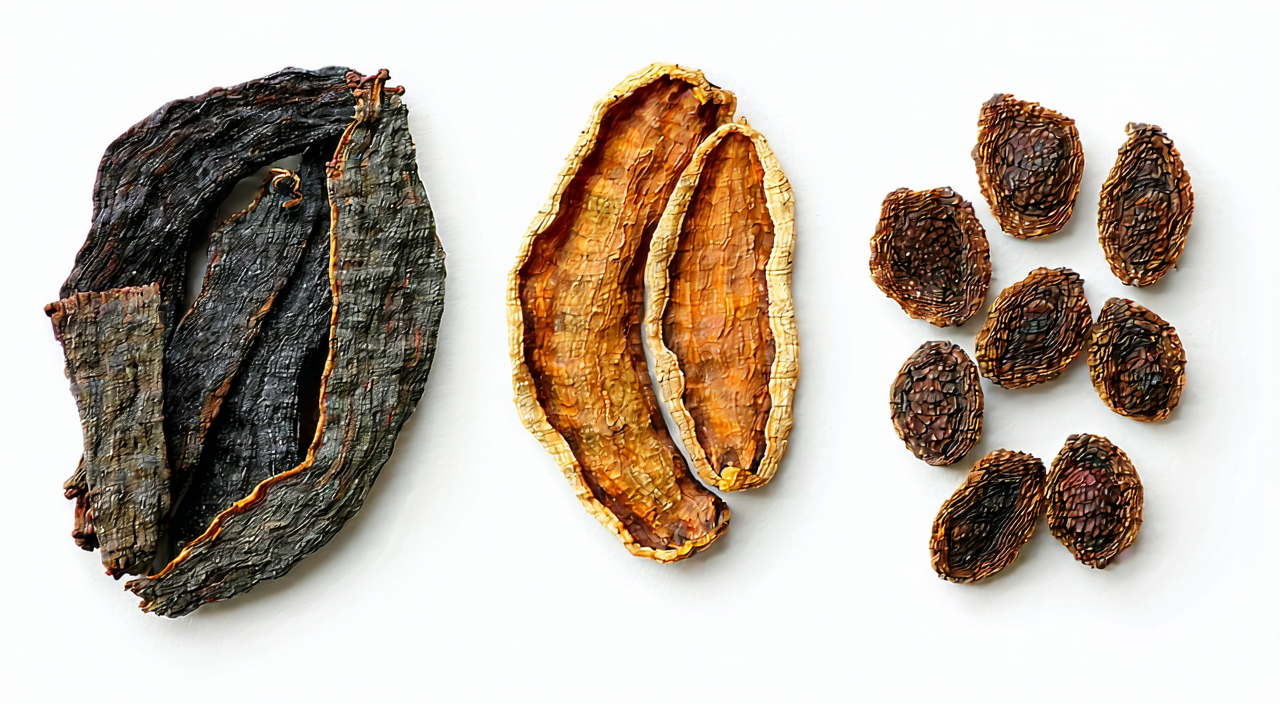
Wu Mei, hawthorn (Shan Zha), and chebule (He Zi) are all sour‑tasting medicinal substances that can look somewhat similar when dried, but upon careful examination, the differences are clear:
- Color differences: Wu Mei surface is black or brownish‑black. Hawthorn, when cut and dried, is mostly reddish‑brown or yellowish‑brown, and the cross‑section shows hard seeds. Chebule tends to be grayish‑brown or brown.
- Pit characteristics: The Wu Mei pit is hard and covered with dense small pits. Hawthorn slices contain several hard, yellowish‑brown seeds inside. Chebule fruit has a spindle‑shaped or oval pit with a relatively smooth surface or shallow longitudinal grooves.
- Taste differences: Wu Mei tastes extremely sour and often has a distinct smoky note. Hawthorn is sour with a sweet aftertaste and a fruity aroma. Chebule is astringent, slightly sour, with no smoky flavor.
Functionally, hawthorn is more inclined to promote digestion and relieve food stagnation; chebule excels at astringing the intestine to stop diarrhea and benefiting the throat; Wu Mei, in addition to binding the intestine, is especially noted for constraining the lung and calming roundworms. By clearly grasping these points, it is much harder to confuse them when handling loose herbs. Overseas users can use these characteristics as an aid when purchasing Chinese medicinal materials.
Which Formulas Use Wu Mei?
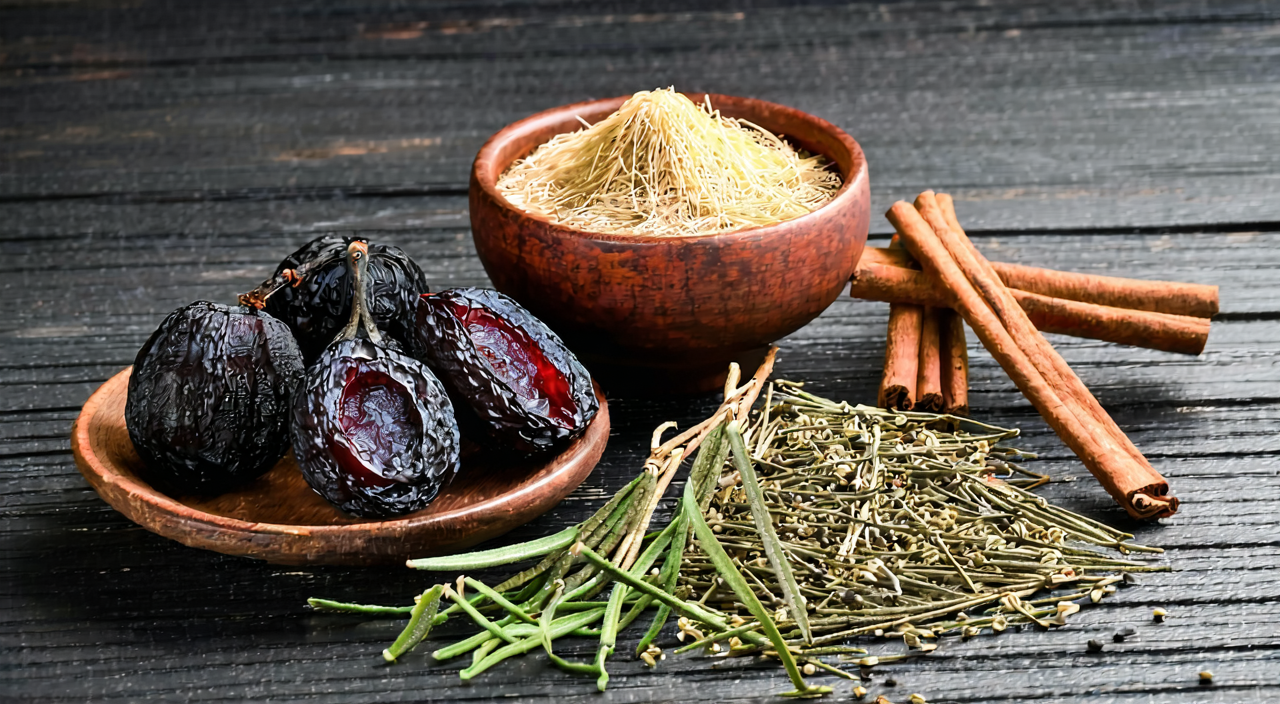
As an essential herb for astringing the lung and intestines, Wu Mei appears in many classic formulas. Below are some common examples to illustrate traditional combination strategies:
- Wu Mei Wan (Mume Pill): Composed of Wu Mei, Xi Xin (Asarum), Gan Jiang (dried ginger), Huang Lian (Coptis), Dang Gui (Angelica), Fu Zi (Aconite), Shu Jiao (Sichuan pepper), Gui Zhi (cinnamon twig), Ren Shen (Ginseng), and Huang Bai (Phellodendron). It is the representative formula for warming the internal organs and calming roundworms. It suits hui jue syndrome with recurrent abdominal pain, vexation, vomiting, cold hands and feet, and also chronic dysentery and diarrhea.
- Lian Mei An Hui Tang (Coptis and Mume Roundworm‑Calming Decoction): Contains Huang Lian, Wu Mei, Huang Bai, Ban Xia (Pinellia), Fu Ling (Poria), etc. It focuses on clearing heat and calming roundworms, often used for abdominal pain caused by damp‑heat disturbance in the middle burner due to roundworms.
- Mei Hua Tang (Plum Blossom Decoction): Combines Wu Mei with plum blossoms and other herbs. Traditionally used for liver‑stomach disharmony with distension and pain in the chest and hypochondrium, poor appetite, irritability, and dry mouth.
- Wu Mei San (Mume Powder): Consists of Wu Mei, Rou Dou Kou (Nutmeg), Ying Su Ke (poppy husk), etc. Originally used mostly for long‑lasting childhood diarrhea or spleen‑deficiency efflux. Because it contains poppy husk, its use today is extremely cautious; it must strictly comply with regulations and be used under professional guidance.
Once again, these formulas are presented only as Chinese medicine knowledge and do not imply that individuals can use them. Whether they are appropriate must be determined by a qualified Chinese medicine practitioner based on constitution and symptoms.
What Precautions Should Be Taken When Using Wu Mei?
Although Wu Mei has a long history of both dietary and medicinal use, several points should be noted when using it. First, for those with gastric hyperacidity, gastric ulcers, or duodenal ulcers, the sour taste of Wu Mei may irritate the gastric mucosa and worsen discomfort. Second, the organic acids in Wu Mei can have a corrosive effect on tooth enamel; long‑term heavy chewing may cause dental erosion, so rinsing the mouth promptly after consumption is recommended. Many candied Wu Mei products on the market are high in sugar and are not suitable for people with poor blood‑sugar control or those requiring a low‑sugar diet. More importantly, in the early stages of externally contracted cough or when there is internal excess‑heat and stagnation, it is not advisable to use the strongly astringent Wu Mei, as it may trap the pathogen inside — a situation Chinese medicine calls “locking the bandit inside the house.” In addition, Wu Mei should not be used alone for astringing in damp‑heat diarrhea. Pregnant and postpartum women, infants, and people with special constitutions should consult an experienced Chinese medicine practitioner before using Wu Mei and should not decide on their own. If there is long‑standing, severe diarrhea, cough, or accompanying symptoms such as worsening abdominal pain, blood in the stool, or weight loss, one should first seek medical evaluation and should not rely on self‑treatment with Wu Mei.
Summary
As a distinctive astringent herb in Chinese medicine, Wu Mei’s core value lies in its traditional applications such as constraining the lung to stop cough, binding the intestine to arrest diarrhea, generating fluids, and calming roundworms. The key to recognizing Wu Mei is its black, wrinkled surface, hard pit with dense small pits, and extremely sour taste. Among common formulas, Wu Mei Wan and Lian Mei An Hui Tang embody the special approach of using Wu Mei to calm roundworms. When using Wu Mei, one must pay attention to contraindications like gastric hyperacidity and externally contracted excess pathogens, and combine professional advice for comprehensive judgement. This article provides only cultural and educational reference in Chinese medicine and cannot replace individualized diagnosis and treatment. If you have health concerns, please consult a qualified Chinese medicine practitioner or relevant healthcare provider.