
What Is Shen Jin Cao? Medicinal Parts, Identification, and Common Formulas
Many people come across the name “Shen Jin Cao” when learning about herbs that relax sinews and unblock channels, but are not sure exactly what it refers to or which part of the plant is used. Shen Jin Cao is not an independent product name; traditionally it mostly comes from the dried whole plant of Shi Song, a plant in the Lycopodiaceae family. In the context of Chinese medicinal materials, Shen Jin Cao is therefore closely related to Shi Song and can be understood as one of the common names used for Shi Song when it is used as a medicinal herb. This article introduces its appearance, medicinal parts, formulas, and precautions.
What Does Shen Jin Cao Look Like? How to Identify It?
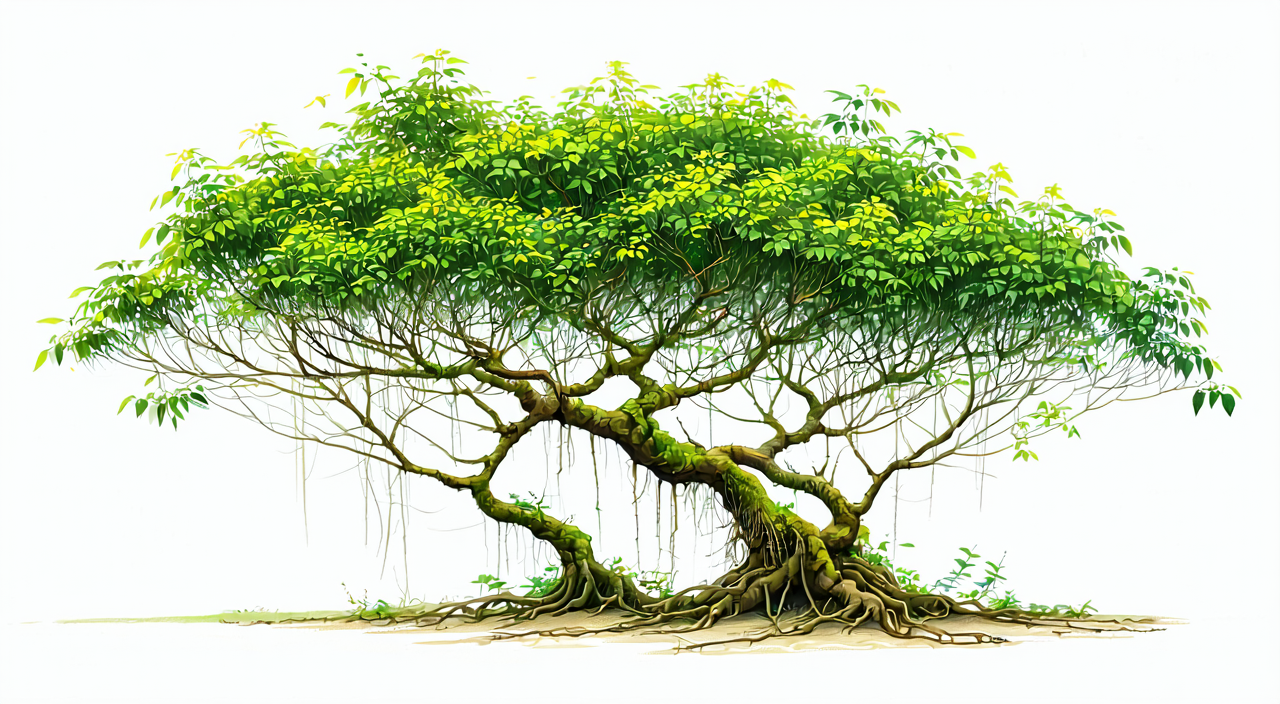
The most distinctive feature of Shen Jin Cao is its slender, creeping stems. The main stem usually extends along the ground, can root at the nodes and produce branches, giving the whole plant a tufted, grass-like appearance. The leaves are small, mostly needle-shaped or linear, densely arranged on the stems in a spiral pattern, making the whole plant look like a fine green brush. When fresh it tends to be yellowish green; after drying the color becomes lighter, ranging from pale yellowish green to yellowish brown, and the texture is pliable. When identifying it, pay attention to three points: first, the stems are slender and densely covered with small leaves at the nodes; second, the leaves are needle-shaped or linear rather than broad and thin; third, the dried whole plant is mostly yellowish green with stems and leaves mixed together. In the wild it is easily confused with other creeping herbs, so self-harvesting is not recommended.
What Is the Medicinal Part of Shen Jin Cao?
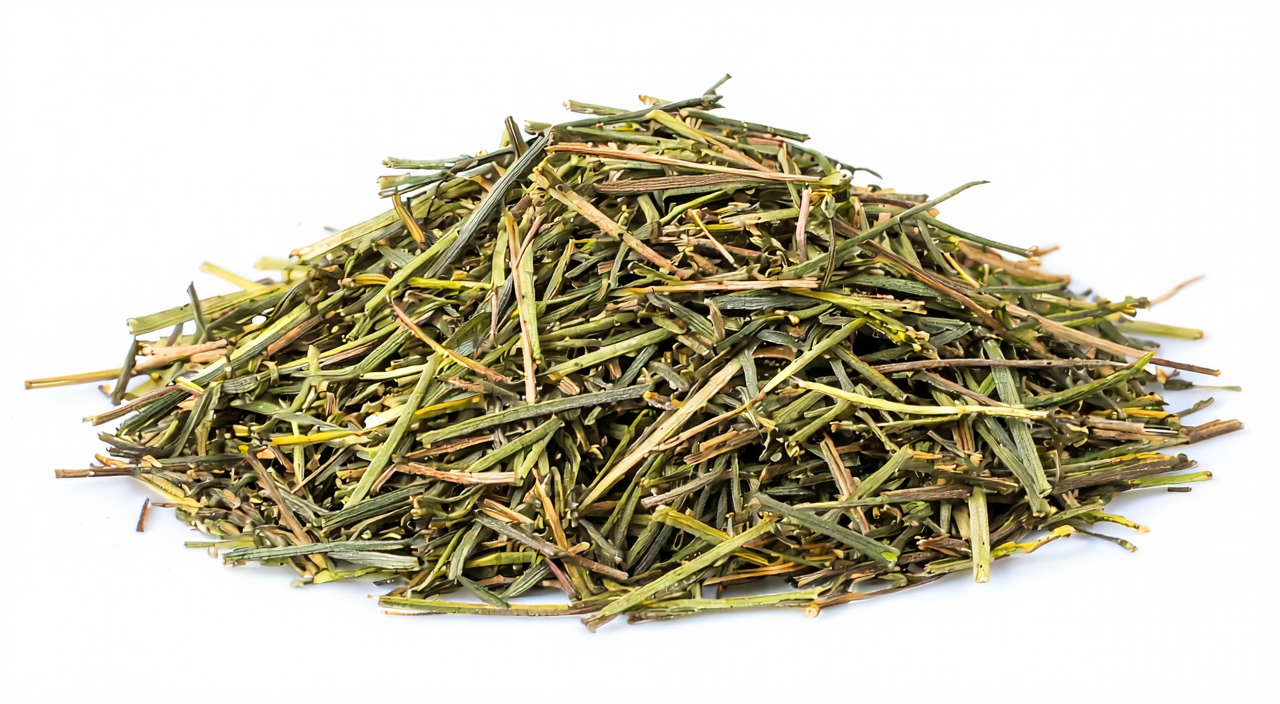
The medicinal part of Shen Jin Cao is the dried whole plant, mainly the aerial parts, including the slender stems and densely arranged small leaves, sometimes with a small amount of rhizome or root. Harvesting is usually carried out in summer and autumn when the stems and leaves are relatively vigorous; after removing sediment and impurities, the plant is dried in the sun or in the shade and then cut into sections. Using the whole plant as medicine is one of its major characteristics, different from herbs that use only rhizomes, fruits, or spores. Therefore, Shi Song spore powder cannot be equated with Shen Jin Cao whole plant. Commercially available Shen Jin Cao decoction pieces are usually yellowish green fine sections, in which both stems and small leaves can be seen.
How Does Traditional Chinese Medicine Understand Shen Jin Cao?
Traditional Chinese medicine usually understands Shen Jin Cao from the perspective of dispelling wind, eliminating dampness, relaxing sinews, and activating the channels. According to traditional theory, when wind, cold, and dampness stagnate in the limbs and channels, symptoms such as inflexible joint flexion and extension, soreness and heaviness of the muscles, and spasm of the sinews may appear. Shen Jin Cao is often recorded as slightly bitter and acrid in flavor, warm in nature, and entering the liver meridian; traditionally it has been used in approaches aimed at these directions. It is also often used in combination with herbs that dispel wind, eliminate dampness, invigorate blood, and unblock the channels. However, this does not mean that using Shen Jin Cao alone can resolve all sinew and bone discomfort; whether it is suitable still needs to be judged according to individual constitution, symptoms, and professional advice.
How Does Modern Research View Shen Jin Cao?
Modern research mainly focuses on the phytochemical constituents and basic experiments of Shen Jin Cao, with alkaloids, flavonoids, and triterpenoids among the more frequently reported components. Some studies have observed its potential effects on inflammation-related factors, cartilage-related indicators, or local circulation signals from the perspective of cell or animal experiments. These findings can serve as modern observation directions for traditional use, but most are still at the experimental stage, cannot be directly equated with clinical efficacy, and cannot be used as a basis for self-medication.
How Does Shen Jin Cao Differ from Shi Song Spores and Qian Nian Jian?
Shen Jin Cao is the dried whole plant of Shi Song, mainly using the slender stems and small leaves; Shi Song spore powder comes from the reproductive structures of Shi Song and is in powder form, with traditional uses different from those of the whole plant; Qian Nian Jian comes from the dried rhizome of the plant Qian Nian Jian of the Araceae family, and is commonly seen in slices or sections with a relatively hard appearance. In terms of appearance, Shen Jin Cao is a slender whole plant with small leaves, Shi Song spore powder is a fine powder, and Qian Nian Jian consists of rhizome slices or short sections. The three have different sources and medicinal parts and should not be substituted for one another; in particular, Shi Song spore powder should not be used as Shen Jin Cao.
Which Formulas May Contain Shen Jin Cao?
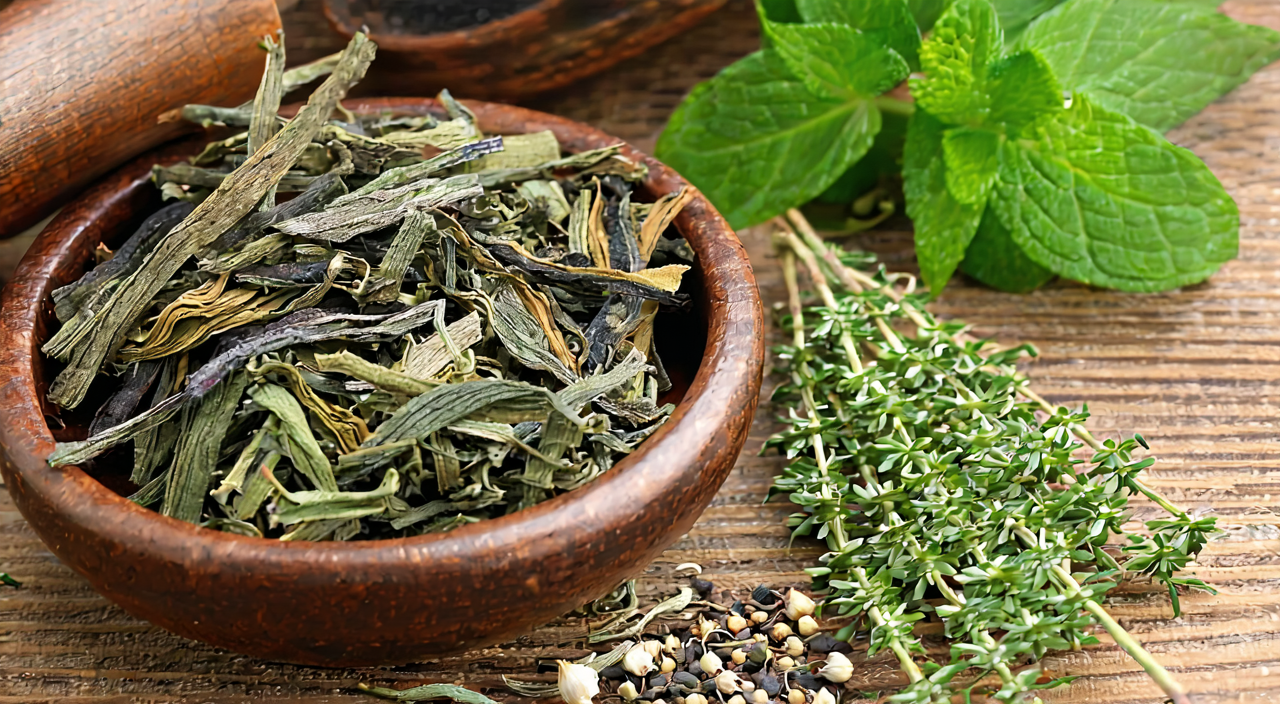
Shen Jin Cao may appear in traditional formulas or Chinese patent medicines such as Shen Jin Cao Tang, sinew-relaxing and blood-activating preparations, and external-wash formulas for unblocking the channels. The name Shen Jin Cao Tang appears in some traditional Chinese medicine sources, but it does not have a fixed, unified composition; it is usually formulated around the principles of relaxing sinews, activating the channels, dispelling wind, and eliminating dampness. Specific herbs and proportions may vary depending on version, region, or practitioner. Whether it is suitable for an individual should be judged according to symptoms, constitution, and product instructions. Sinew-relaxing and blood-activating preparations have traditionally been used for manifestations such as sinew and bone soreness, restricted joint movement, and heaviness of the limbs. However, different preparations vary greatly in composition. Before use, one should read the product instructions and take into account pregnancy, bleeding tendency, allergies, and other conditions. External-wash formulas for unblocking the channels often combine Shen Jin Cao with Tou Gu Cao, Wei Ling Xian, Hai Tong Pi, and others, decocted for steaming and washing; traditionally they have been used mostly for local muscle soreness, heaviness, or joint discomfort. When using them, pay attention to water temperature and skin irritation; they should not be used when the skin is broken, eczematous, or allergic.
What Precautions Should Be Taken When Using Shen Jin Cao?
It should be avoided during pregnancy; during breastfeeding, consult a professional before use. People with bleeding tendency, heavy menstrual bleeding, or those using anticoagulant medications should exercise caution. When used externally, it is not suitable if the skin is broken or affected by eczema, rash, or burns; the water temperature should not be too high, and on first use a small area should be tested first. If redness, itching, or irritation occurs, use should be stopped immediately. People who are prone to allergies to plant-based medicinal herbs also need to be cautious. Do not increase the dosage or prolong use simply because of the name “Shen Jin Cao,” and do not harvest wild plants on your own to avoid confusion. If joint pain, obvious swelling, limited movement occur repeatedly or persist, or if accompanied by chest tightness, palpitations, abnormal breathing, or other symptoms, consult a doctor promptly rather than relying on a single herb. Shi Song spore powder is not equivalent to Shen Jin Cao whole plant and cannot be used as a direct substitute.
Summary
Shen Jin Cao is a medicinal herb prepared from the dried whole plant of Shi Song, and can be identified by its slender creeping stems, dense needle-like small leaves, and yellowish green whole-plant appearance. Traditionally it is mostly understood from the perspective of dispelling wind, eliminating dampness, relaxing sinews, and activating the channels, and it often appears in Shen Jin Cao Tang, sinew-relaxing and blood-activating preparations, and external-wash formulas for unblocking the channels. When using it, pay attention to distinguishing it from Shi Song spore powder and Qian Nian Jian, and make decisions based on individual circumstances and professional advice. This article is for general information only and cannot replace professional diagnosis or treatment advice.