
What Is Suan Zao Ren? Medicinal Part, Identification and Common Formulas
In traditional Chinese medicine, Suan Zao Ren (Sour Jujube Seed) is a widely recognized calming herb. Many people hear about it when they experience poor sleep or feel easily stressed. But for Chinese people living overseas, what does Suan Zao Ren actually look like? How does it differ from Bai Zi Ren (Platycladus Seed)? And what exactly is the often-mentioned Suan Zao Ren Tang? This article organizes foundational knowledge about Suan Zao Ren from the perspectives of herb identification, Chinese medicine understanding, and common formulas.
What Does Suan Zao Ren Look Like? How to Identify It
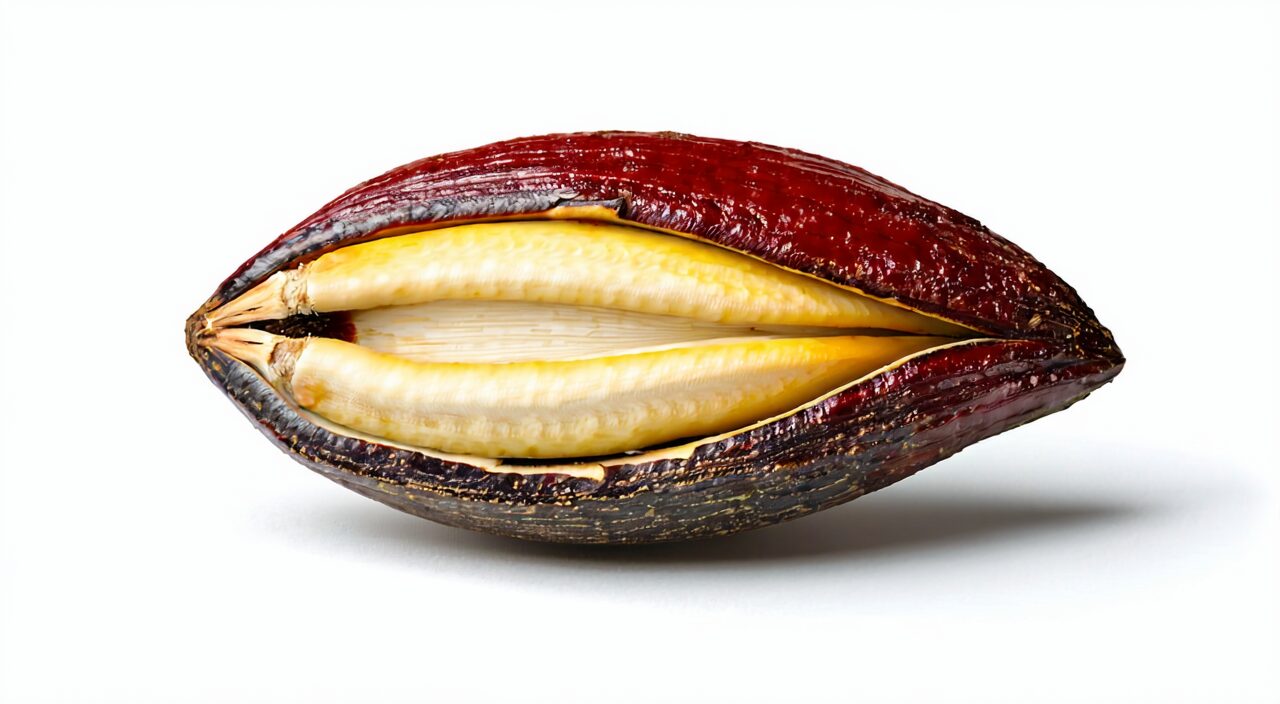
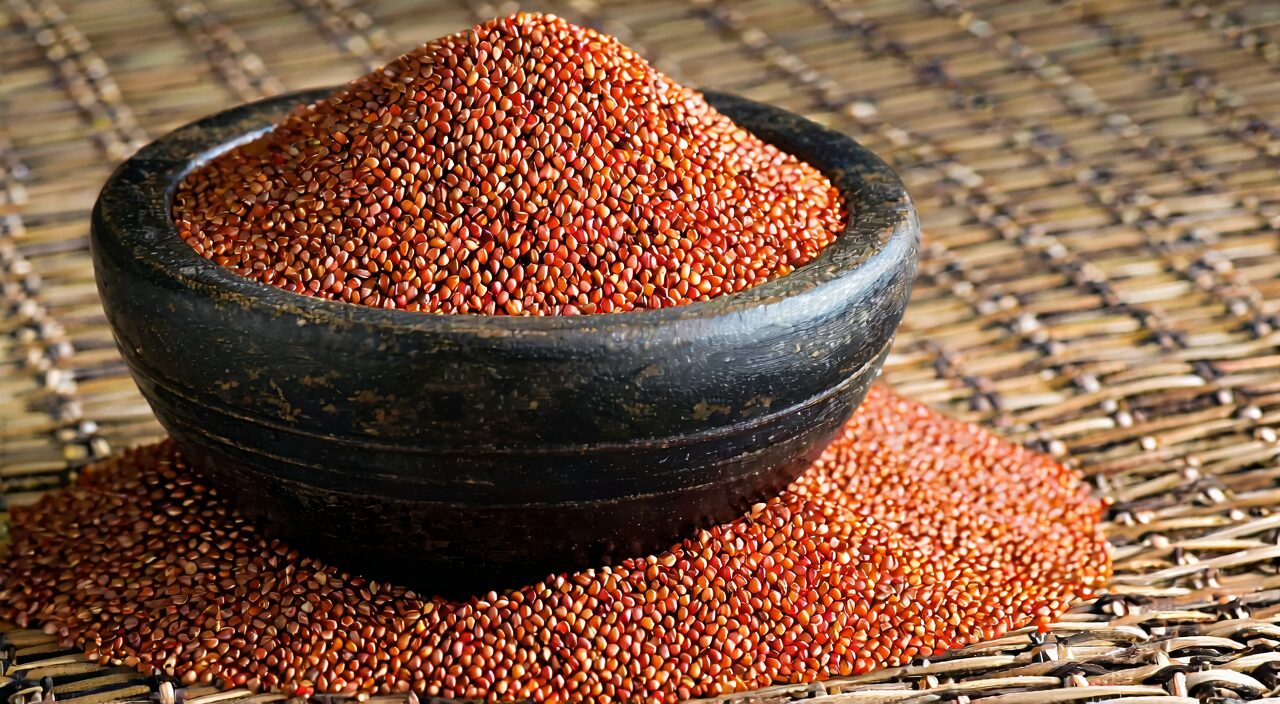
The typical appearance of Suan Zao Ren is a flat-round or flat-oval seed, about 5–9 mm long, 5–7 mm wide, and 3–5 mm thick. The surface color is mostly purplish-red or purplish-brown, sometimes slightly dark brown, smooth, and with a certain gloss.
A longitudinal ridge line is often visible in the center of one side, which is its raphe; the other side is slightly raised, with relatively thin edges. After peeling off the seed coat, you can see yellowish-white cotyledons that are plump and oily, leaving a slight oily sensation on the fingers. The odor is very mild, and chewing releases a slightly sweet, oily flavor without obvious bitterness or irritation.
Traditional experience has a saying: “purple skin, oily and plump.” When purchasing, larger, plump, purplish-red intact seeds are commonly considered better quality. Commercially available Suan Zao Ren comes in two forms: raw and dry-fried. The raw product has a purplish-red or purplish-brown surface, while the dry-fried product is slightly darker, slightly puffed, with a toasted aroma and a brittle texture.
What Is the Medicinal Part of Suan Zao Ren?
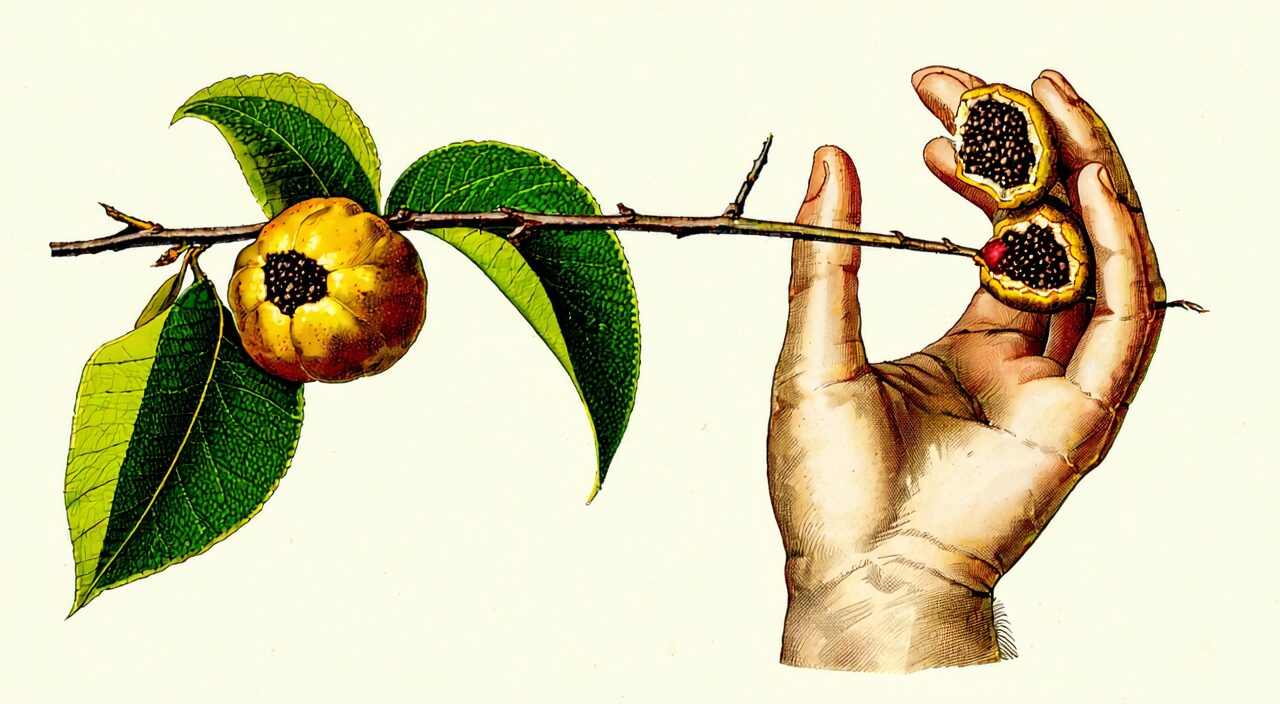
The medicinal part of Suan Zao Ren is the dried ripe seed of Ziziphus jujuba var. spinosa, a plant in the Rhamnaceae family. It is usually harvested when the fruit ripens in late autumn and early winter. The fruits are piled up to allow the pulp to rot, then washed; the hard shell is crushed and removed to take out the seeds, which are then sun-dried or dried at low temperature. In other words, the Suan Zao Ren seen in herbal medicine is actually just the seed after the flesh and hard shell have been removed.
Commercial Suan Zao Ren usually undergoes cleaning. Some are circulated raw, while others are dry-fried to become Chao Suan Zao Ren. The two differ in appearance and aroma. Traditionally, it is believed that raw and dry-fried forms may have different emphases in action, but this must be viewed within specific formula contexts rather than simply comparing which is better.
How Does Chinese Medicine Understand Suan Zao Ren?
In Chinese medicine theory, Suan Zao Ren is sweet and sour in flavor, neutral in nature, and enters the Heart, Liver, and Gallbladder meridians. Traditional Chinese medicine mainly understands its actions as “nourishing the heart and replenishing the liver, calming the heart and spirit, astringing sweat and generating body fluids.”
When Heart and Liver yin-blood are insufficient and deficiency heat disturbs the interior, leading to difficulty falling asleep, waking easily after sleeping, restlessness, or excessive sweating, Suan Zao Ren is often included as one of the important herbs in the treatment approach. Its sour flavor has some value in astringing sweat, and for people who are physically weak and prone to sweating, especially night sweats, traditional usage may combine it with other qi-tonifying or yin-nourishing herbs. However, all of this is based on Chinese medicine pattern differentiation. Whether it is suitable must be judged by combining personal constitution and symptoms, and should not be applied casually.
What Components and Effects of Suan Zao Ren Are of Interest in Modern Research?
Modern pharmacological research mainly focuses on saponins (such as jujuboside A and B), flavonoids (such as spinosin), and fatty oils in Suan Zao Ren. Some animal experiments and in vitro studies suggest these components may exhibit effects like prolonging sleep time and reducing anxiety-like behaviors through pathways such as affecting GABA receptors.
However, most current research is still at the animal model or cellular level. Human clinical studies are small in scale, and the strength of evidence is limited. Therefore, experimental conclusions cannot be directly equated with clinical effects, much less indicate that consuming Suan Zao Ren will produce the same results as in experiments. Researchers are analyzing it more from a mechanism exploration perspective, and it has not yet been confirmed that Suan Zao Ren can be used as a conventional sedative or therapeutic approach. The relevant component information can serve as a direction for further understanding but can never replace professional evaluation of sleep problems.
How Does Suan Zao Ren Differ from Similar Herbs?
The herb most easily confused with Suan Zao Ren is Bai Zi Ren. Bai Zi Ren comes from the dried ripe kernel of Platycladus orientalis, a plant in the Cupressaceae family. There are distinct differences in appearance and traditional application emphasis.
- Different appearance: Suan Zao Ren is flat-round or flat-oval, with a purplish-red or purplish-brown surface and a central longitudinal line on one side; Bai Zi Ren is long-ovate or long-elliptical, with a yellowish-white or pale yellowish-brown surface, a brown hilum, no central longitudinal line, higher oil content, and an obvious aroma when chewed.
- Different medicinal parts: Suan Zao Ren uses the seed with its intact seed coat; Bai Zi Ren uses the shelled kernel, which is more oily.
- Different traditional application emphases: Suan Zao Ren leans toward nourishing the liver, calming the heart, and astringing sweat, addressing both sleep and excessive sweating; Bai Zi Ren focuses on nourishing the heart, calming the mind, moistening the intestines, and promoting bowel movements, commonly used for palpitations and insomnia due to heart blood deficiency as well as intestinal dryness constipation.
The two come from different families and genera, so careful distinction is required during identification and use; they should not be used interchangeably.
Which Formulas Use Suan Zao Ren?
Classic formulas containing Suan Zao Ren mainly include the following, each with a different role in the combination and differing applicable directions.
- Suan Zao Ren Tang: Uses Suan Zao Ren as the sovereign herb, combined with Zhi Mu, Fu Ling, Chuan Xiong, and Gan Cao. Traditionally used for deficiency-type restlessness and insomnia, palpitations, and unease caused by liver blood insufficiency and deficiency heat disturbing the interior. In this formula, Suan Zao Ren mainly nourishes the blood and calms the spirit.
- Tian Wang Bu Xin Dan: Contains Suan Zao Ren, Bai Zi Ren, Dang Gui, Sheng Di Huang, Tian Men Dong, etc., focusing on nourishing yin, tonifying blood, supplementing the heart, and calming the mind. Its applicable scope is mostly palpitations, insomnia, hotness in the palms and soles, and forgetfulness caused by yin deficiency and blood deficiency.
- Gui Pi Tang: Contains Ren Shen, Huang Qi, Bai Zhu, Dang Gui, Suan Zao Ren, etc. Often used for insomnia, forgetfulness, fatigue, and poor appetite caused by dual deficiency of the heart and spleen and insufficiency of qi and blood. Suan Zao Ren here helps calm the spirit and is part of the approach of tonifying qi and nourishing blood.
- Bai Zi Yang Xin Wan: Contains Bai Zi Ren, Suan Zao Ren, Gou Qi Zi, etc., focusing on nourishing blood and heart, calming the mind, suitable for cases where heart blood is insufficient with a tendency toward throbbing restlessness.
These formulas are traditional combination approaches passed down for a long time and are not suitable for everyone. Whether they are appropriate for one’s own use must be comprehensively judged by combining current symptoms, constitutional characteristics, and professional advice; one should not choose them arbitrarily based on a single symptom alone.
What Should Be Noted When Using Suan Zao Ren?
Although Suan Zao Ren is a relatively common calming herb, there are some precautions for its use.
- Some people may experience daytime drowsiness after taking it. Therefore, if you need to drive, operate machinery, or engage in activities requiring high alertness, you should carefully assess your own response.
- If you are already taking sedative, sleeping, or anti-anxiety medications and also intend to use products containing Suan Zao Ren, it is advisable to consult a doctor or pharmacist first to avoid possible additive effects.
- For pregnancy, breastfeeding, and prolonged high-dose self-administration, there is insufficient safety data, so such use should not be arranged casually.
- The causes of sleep problems are complex. If accompanied by significant anxiety, depression, palpitations, chest tightness, or if sleep disorders persist and recur over a long period, one should not overly rely on a single herb for regulation but should prioritize seeking evaluation from a healthcare professional.
Summary
As a traditional calming herb, Suan Zao Ren’s appearance characteristics, medicinal part, and distinction from Bai Zi Ren are prerequisites for correct identification and use. Chinese medicine uses it from the perspective of nourishing the heart, replenishing the liver, and calming the spirit in conditions related to heart and liver yin-blood insufficiency, while modern research is also exploring its component mechanisms, though these cannot yet be directly generalized as therapeutic conclusions. Classic formulas containing Suan Zao Ren each have different emphases; when choosing to understand them, one must combine personal constitution and professional judgment. This article is for informational reference only and cannot replace professional diagnosis or individualized advice.