
What Is Xin Yi? Identification, Medicinal Parts, and Common Formulas
In early spring, many people experience nasal discomfort due to temperature changes—frequent congestion, runny nose, and sneezing. In the traditional Chinese pharmacopeia, a uniquely shaped flower bud is often used for such issues: Xin Yi. For Chinese readers overseas, “What is Xin Yi?” is often the first question when encountering this herb. This article provides a basic understanding of Xin Yi from aspects such as physical identification, medicinal parts, traditional understanding, differences from similar herbs, and common formulas.
What Does Xin Yi Look Like? How to Identify It?
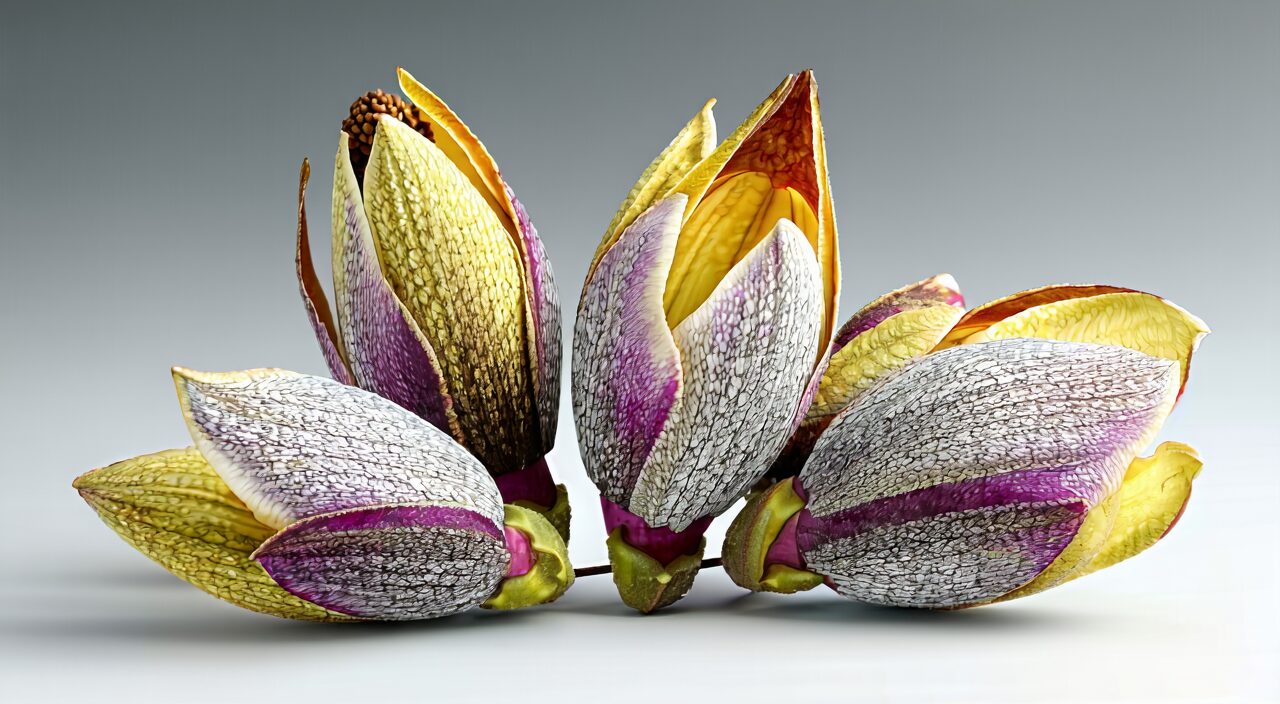
Xin Yi is highly recognizable among Chinese herbs. The whole bud looks like an unopened writing brush tip, hence its common names “mubi flower” or “spring welcoming flower.” A fully dried Xin Yi bud is inverted conical or elongated ovoid, about 1.5 to 3 cm long, with an obvious pedicel remnant at the base and a slightly pointed tip. Its most distinctive feature is the outer layer densely covered with grayish-white or yellowish-white fine fuzz, feeling soft and thick to the touch as if wrapped in a tiny velvet blanket. Peeling back the outer bracts reveals purplish-brown perianth segments layered on top of each other and quite thin. When smelled up close, Xin Yi has a distinctive aromatic fragrance with a slight cool pungency. Mastering these characteristics—brush‑tip shape, dense fuzz, inner perianth segments, and aromatic scent—allows you to distinguish it fairly quickly from other dried plant materials.
What Is the Medicinal Part of Xin Yi?
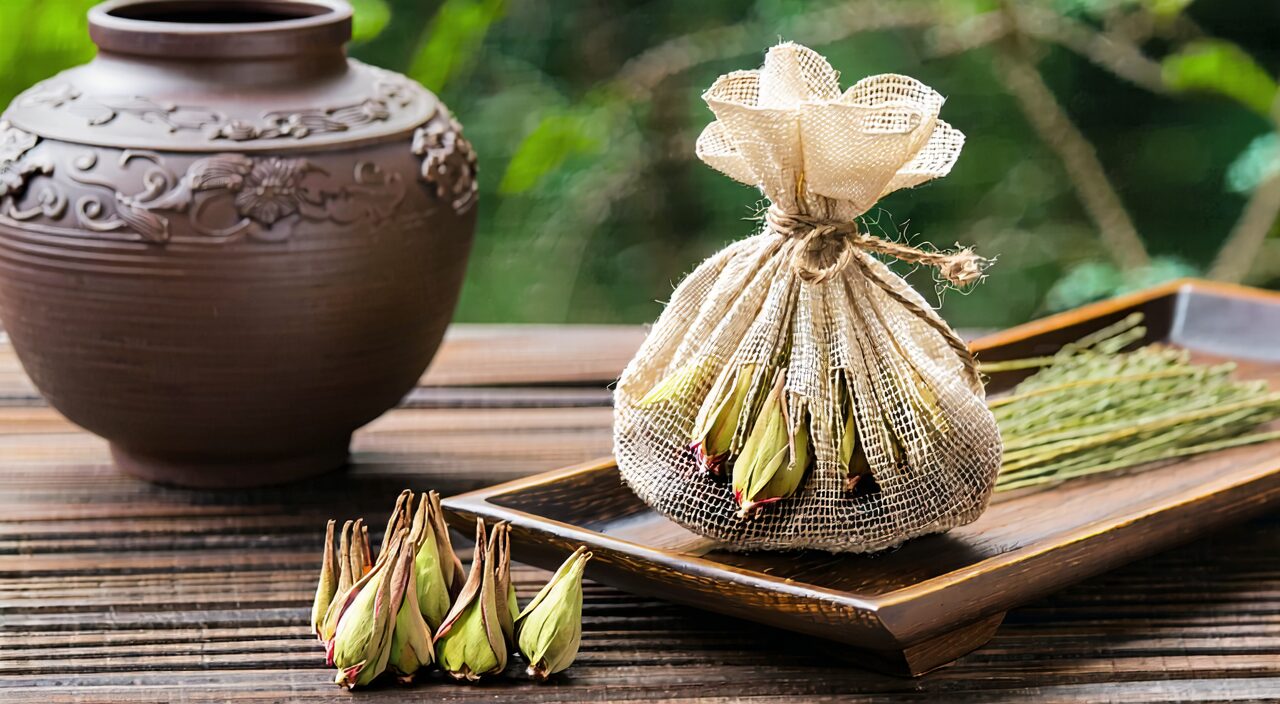
The medicinal part of Xin Yi is the dried flower bud of Magnoliaceae plants such as Magnolia biondii, Magnolia denudata, or Magnolia sprengeri. The buds are usually harvested in late winter or early spring before blooming, with branches and impurities removed, and dried in the shade or at low temperature for later use. The part used medicinally is the flower bud, not the opened flower or the twigs and leaves. Because the surface of Xin Yi is densely covered with tiny fuzz, if added directly to a decoction, these fine hairs can easily float in the liquid, irritating the throat and causing coughing discomfort. Therefore, traditional decocting often emphasizes “wrap‑decocting,” which means placing Xin Yi in a gauze bag before cooking it with other herbs, so as to reduce throat irritation from the fuzz. This practice is a very important detail in the use of Xin Yi.
How Does Traditional Chinese Medicine Understand Xin Yi?
In the TCM system, Xin Yi is acrid and warm in nature, entering the Lung and Stomach meridians. Traditionally, its main directional actions are “dispersing wind‑cold” and “opening the nasal passages.” When the body is attacked by external wind‑cold with symptoms like nasal congestion, clear runny nose, and dull headache over the forehead, Xin Yi is commonly used to relieve such discomfort. Its mild uplifting nature makes it very suitable for wind‑cold‑induced nasal surface patterns. Many traditional formulas use it as a guiding herb to lead other medicinals upward to the head, face, and nasal passages. However, this is simply one way of understanding the body; whether it is suitable in a particular case depends on the person’s overall presentation—whether it tends more toward cold or heat, and whether other concurrent patterns exist.
A Preliminary Look at Modern Research on Xin Yi
Modern compositional analysis has found that Xin Yi contains volatile oils such as eucalyptol, citral, eugenol, and lignans such as magnolin. Some experiments suggest that these components may have certain effects on local vasoconstriction and reducing mucosal edema, and there is also research observing their regulatory influence on some inflammation‑related indicators. These findings provide modern‑perspective references for Xin Yi’s traditional use, but the related research mainly consists of laboratory observations or small‑scale reports and cannot yet be directly equated with clinical effects. The general public may take this information as knowledge extension, but should not regard Xin Yi as some kind of “proven drug” on this basis.
How Does Xin Yi Differ from Cang Er Zi and Bai Zhi?
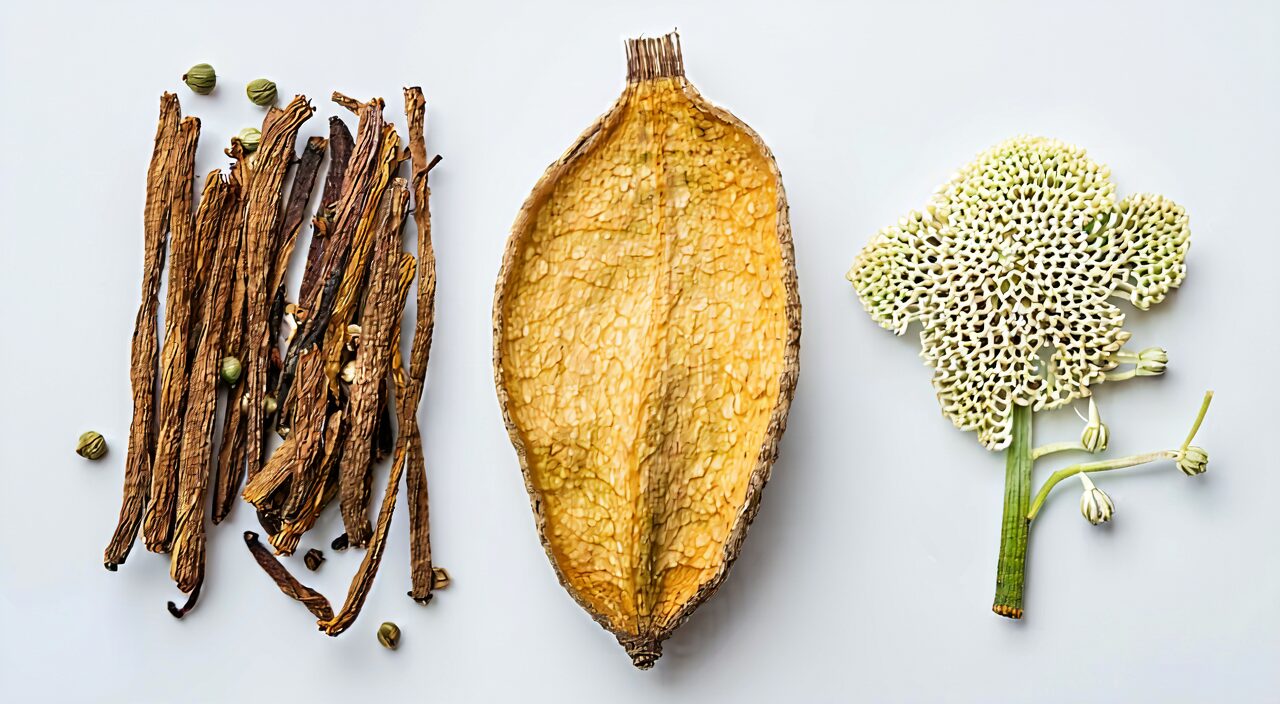
These three herbs frequently appear together in traditional formulas related to nasal disorders, but they differ in origin, appearance, and application emphasis. Xin Yi is a flower bud; Cang Er Zi is the fruit enclosed in the involucre of the Asteraceae plant Xanthium sibiricum; Bai Zhi is the dried root of an Apiaceae plant. In appearance, Xin Yi is a fuzzy flower bud, Cang Er Zi is a spindle‑shaped or oval small nutlet covered with hooked spines on the surface, and Bai Zhi is a roundish or elongated slice with a powdery cut surface showing concentric rings. In application emphasis, Xin Yi focuses more on dispersing wind‑cold and opening nasal passages; Cang Er Zi excels at dispelling wind and removing dampness, and is considered for symptoms like heaviness and drowsiness associated with damp‑turbidity; Bai Zhi is used more for dispelling wind, eliminating dampness, expelling pus, and relieving pain, and may be chosen for concurrent forehead pain or excessive vaginal discharge. Understanding these differences helps form a clearer thinking framework when choosing a regulating direction, rather than simply equating the three.
Which Formulas Use Xin Yi?
Xin Yi holds a relatively important place in traditional nasal‑regulating formulas. The following formulas are frequently mentioned in related discussions:
Xin Yi San: This formula uses Xin Yi as the sovereign herb, combined with Bai Zhi, Xi Xin, Gao Ben, Sheng Ma, Chuan Xiong, Mu Tong, Fang Feng, Gan Cao, and others. Traditionally, it is used for nasal congestion, reduced sense of smell, and profuse clear or sticky‑white discharge, emphasizing patterns of wind‑cold or cold‑dampness lodged in the nasal passages.
Cang Er Zi San: Composed of Cang Er Zi, Xin Yi, Bai Zhi, and Bo He. This formula combination is fairly common for nasal congestion, runny nose, and forehead pain caused by exposure to wind and cold. Xin Yi plays the role of opening nasal passages in the formula, forming a synergy with Cang Er Zi and Bai Zhi. It must be emphasized again that both formulas merely represent traditional usage directions; whether they are needed and how to use them must be assessed based on the individual’s physical condition.
Xin Yi Qing Fei Yin: This formula leans toward clearing the Lung and opening the nasal passages, suitable for patterns with heat in the Lung meridian, sores in the nose, yellow nasal discharge, or accompanying bad breath—manifestations tending toward heat. Although Xin Yi is warm in nature, within the overall heat‑clearing formula combination, it is still employed for its nasal‑opening effect, working together with Shi Gao, Huang Qin, Zhi Zi, and others to make adjustments.
The formulas mentioned above are all summaries of traditional experience. Different individuals respond differently, and even the same person may present differently at different times. If you wish to explore regulating ideas through these formula directions, you should consult a TCM professional familiar with your personal situation and should not apply them by yourself.
What Precautions Apply When Using Xin Yi?
Although Xin Yi has a fairly clear tradition of use, it is not suitable for everyone. First, because of the irritation caused by its surface fuzz, it must be wrap‑decocted when used in decoctions; this step cannot be omitted. Second, Xin Yi is acrid, warm, aromatic, and dispersing. For individuals with a constitution tending toward yin deficiency with fire effulgence—such as those who often feel heat in the palms and soles, dry mouth and throat, and have a red tongue with little coating—using Xin Yi may aggravate internal dryness‑heat and should be approached with caution. Additionally, if nosebleeds or increased nasal dryness occur during use, it should be suspended and re‑evaluated. For special populations like pregnant women, due to a lack of adequate safety evaluation, traditional practice mostly avoids use to err on the conservative side. Finally, any nasal congestion or nasal discomfort that lasts a long time, or is accompanied by yellow purulent discharge, facial pressure or pain, vision changes, repeated unexplained bleeding, or develops into wheezing and chest tightness, should not be taken lightly. Prompt medical attention is needed to first rule out conditions such as nasal polyps, sinus infection, or other problems requiring modern medical intervention.
Summary
Xin Yi is a Chinese herb used in its dried flower bud form. Resembling a writing brush tip and densely covered with fuzz, it is traditionally used to disperse wind‑cold and open the nasal passages, often combined with herbs like Cang Er Zi and Bai Zhi in classic formulas such as Xin Yi San, Cang Er Zi San, and Xin Yi Qing Fei Yin. When using Xin Yi, it must be wrap‑decocted, and careful selection based on constitution is required—especially for those with yin deficiency fire effulgence or a tendency toward nosebleeds. The information provided here is only for TCM cultural education and cannot replace professional diagnosis or treatment advice. For any health concerns, please consult a qualified medical practitioner.