
Waking Up Early and Unable to Fall Back Asleep: TCM Understanding and Daily Care Suggestions

It’s three or four in the morning, the sky is still dark, but you are already awake, tossing and turning and unable to get back to sleep — this experience is not unfamiliar to many. Waking up early and finding it difficult to return to sleep is different from trouble falling asleep; it often makes the rest of the night feel especially long, and during the day you feel tired, lacking energy and vitality.
An occasional episode like this may just be a temporary adjustment the body makes, but if it becomes a regular occurrence, it can easily disrupt the rhythm of life and even affect mood and work performance. Traditional Chinese medicine has its own observations and approaches to this kind of issue. This article will explore some directions worth understanding from a TCM perspective.
Common manifestations of early awakening and possible modern triggers

Early awakening does not look the same for everyone.
- Some people suddenly wake up at two or three in the morning, their mind unusually clear, as if they have already had enough sleep.
- Others open their eyes at four or five in the morning, their body still feeling tired, but their consciousness can no longer sustain sleep.
How they feel after waking also varies: some are calm inside but simply cannot sleep again; more often, they are accompanied by racing thoughts, troubled by work or daily worries — the harder they try to sleep, the more awake they become.
In terms of duration, an occasional episode once or twice a week is usually not a big problem; but if it happens more than three times a week and persists for several weeks or even longer, it deserves more attention.
Many factors in modern life can act as triggers:
- Mental stress and anxiety often keep the brain in a semi-alert state, making it hard to maintain sleep.
- Irregular sleep-wake schedules — especially frequent staying up late, daytime catch-up sleep, or large differences between weekday and weekend bedtimes — can disrupt the body’s circadian rhythm.
- Excessive use of electronic screens such as phones and computers at night; blue light may suppress melatonin secretion, making it easier to wake during the second half of the sleep period.
- Overeating at dinner or consuming too many stimulating foods or drinks (such as coffee, strong tea, or alcohol) can interfere with sleep quality later in the night.
- Exercising too intensely close to bedtime can also leave the body over-stimulated.
- External environmental factors such as light, noise, and an uncomfortable temperature are also important factors to consider.
Understanding these triggers can help you make some initial adjustments in your daily life.
How TCM understands early awakening: yin-yang waxing and waning and organ connections
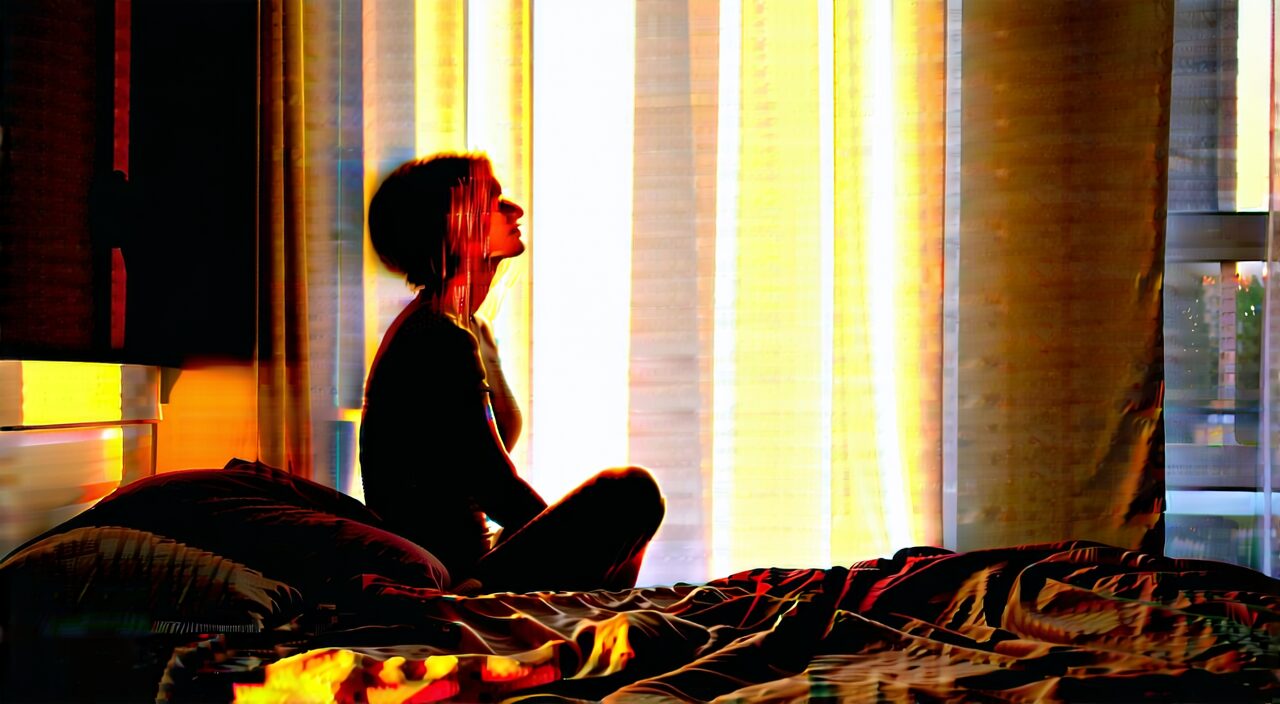
In traditional Chinese medicine theory, sleep is seen as an outward manifestation of the waxing and waning of yin and yang and the circulation of defensive and nutritive qi.
During the night, yin qi gradually becomes stronger and yang qi hides inward, so a person sleeps peacefully; before dawn, yang qi begins to stir and yin qi gradually retreats. If the transition between yin and yang is smooth, a person will wake naturally feeling refreshed. Waking early and struggling to return to sleep is often regarded as a sign that “yin fails to anchor yang” or “yang fails to enter yin” — meaning the body’s yin component is insufficient to nourish yang, or yang qi floats upward prematurely during the period when it should be stored, causing a person to wake.
From the perspective of the zang-fu organs, different time periods are traditionally associated with the flow of qi and blood in different meridians.
- The time from 1 a.m. to 3 a.m. is the period when the liver meridian is most active. If a person tends to wake at this time, traditional theory pays more attention to the state of liver qi and liver blood.
- The period from 3 a.m. to 5 a.m. is related to the lung meridian. Waking easily at this time may be linked to lung qi or to the function of related organs.
Of course, this is not a one-to-one correspondence; TCM also emphasizes the mutual influence among organs. The heart governs the spirit and is responsible for mental calm during sleep; the liver stores the ethereal soul (hun), which is related to dreaming and the depth of sleep; the spleen is the source of qi and blood production and can nourish the heart spirit; the kidney governs storage and is closely connected to the fundamentals of yin and yang in the body. Therefore, early awakening can be related to a dysfunction of one or more organs, such as the heart, liver, spleen, or kidney.
TCM does not directly equate early awakening with any single disease, but instead sees it within the broader context of an individual’s constitution, together with other bodily signals.
Common related patterns: understanding several constitutional directions from a traditional perspective
It is important to be clear that the patterns mentioned below are only a way of categorizing from a traditional understanding and cannot replace professional pattern differentiation. Everyone’s situation is complex and unique; the following content is only for information and reference and should not be used to self-diagnose or self-medicate.
Heart and spleen deficiency
This pattern is commonly seen in people who tend to overthink, have irregular eating habits, or have a weak spleen and stomach.
- Common signs: in addition to early awakening and difficulty falling back asleep, they may experience profuse dreaming, feeling tired after waking, poor memory, palpitations, poor appetite, and a slightly yellowish complexion.
Traditionally, approaches that tonify the heart and spleen, nourish blood, and calm the spirit are considered. Related formulas such as Guipi Wan are often used in this kind of care direction. However, whether it is suitable still needs to be judged in combination with the product instructions, individual constitution, and professional advice.
Heart-kidney disharmony
Heart-kidney disharmony refers to a state where heart fire is hyperactive and kidney water is insufficient, so fire and water fail to balance each other.
- Common signs: feeling of vexation, hot flushes, dry mouth, soreness and weakness of the lower back and knees, and possibly a sensation of heat at night; after waking early, the mind is restless and returning to sleep is difficult.
In traditional understanding, formulas such as Tianwang Buxin Dan are often used as one direction for nourishing yin and blood, clearing the heart, and calming the spirit. Again, this requires a TCM practitioner to judge whether it is appropriate based on actual symptoms; it is not suitable for everyone who wakes up early.
Liver depression transforming into fire
People who are emotionally tense, under high stress, or easily annoyed and angry may develop liver qi depression, which over time transforms into fire and disturbs the heart spirit.
- Common signs: this type of early awakening often occurs between 1 a.m. and 3 a.m. After waking, the person tends to feel vexed and agitated, with a dry and bitter taste in the mouth, sometimes accompanied by dizziness and a distending pain at the temples.
Traditionally, ideas such as soothing the liver and clearing heat, nourishing blood and calming the spirit with formulas like Jiawei Xiaoyao Wan may be referenced. However, emotional management is equally important in such cases; relying on internal regulation alone while ignoring psychological adjustment may produce limited results.
Phlegm-heat harassing the heart
If the spleen and stomach’s transportation and transformation function is poor, water-dampness may accumulate internally and turn into phlegm turbidity, and when phlegm combines with heat it can disturb the heart spirit, also causing early awakening.
- Common signs: this type of person often has a relatively heavy body, a yellow and greasy tongue coating, and may experience chest oppression, epigastric distension and fullness, and profuse and chaotic dreams when waking.
Sometimes traditional formulas such as Suanzaoren Tang, which calm the spirit and relieve restlessness, are taken into consideration, but their focus is on nourishing blood and calming the spirit, clearing heat and eliminating vexation. The specific combination still needs to be individually tailored and chosen by a professional.
A reminder once again: the formulas and patent medicines mentioned above are merely an introduction to possible directions in traditional care and should never be regarded as a direct recommendation for “treating the pattern.” Each person’s constitution, symptoms, and causes are different. Before using any Chinese patent medicine, read the product label carefully to understand its indications, contraindications, and cautions, and whenever possible make the choice under the guidance of a professional such as a TCM practitioner.
Daily care: starting with sleep routines and emotional management
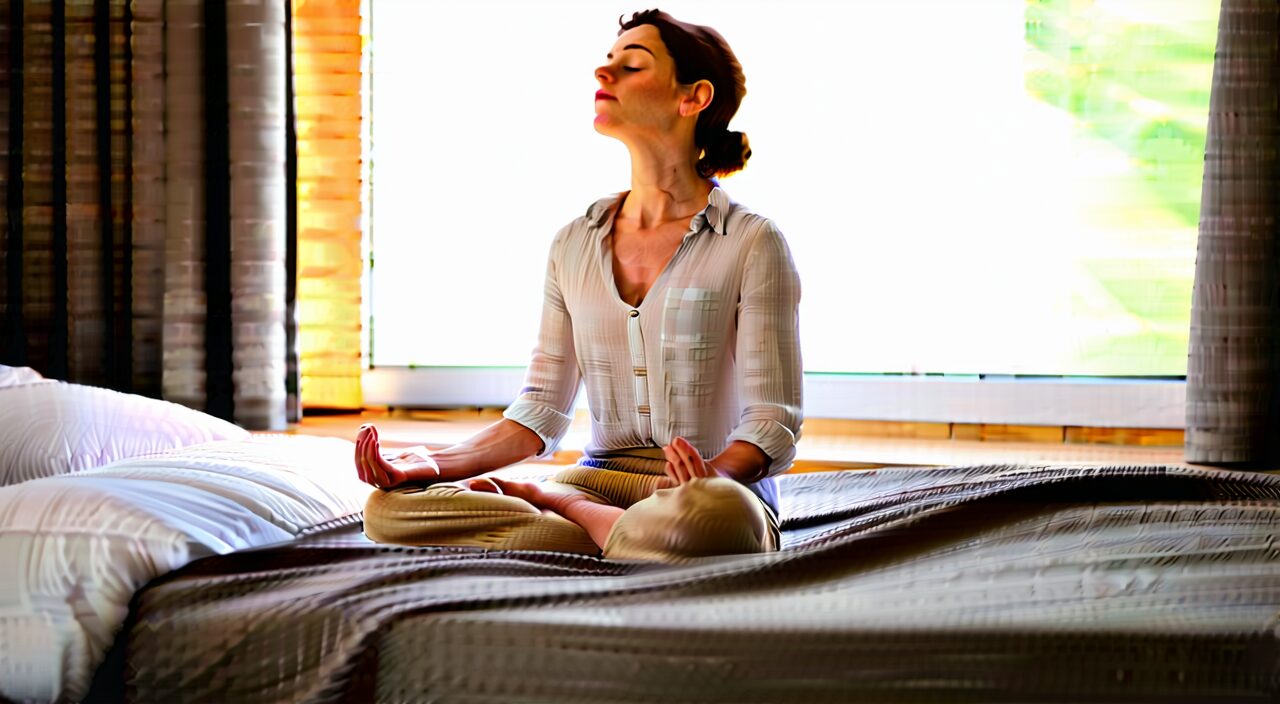
Whether or not TCM care is used, establishing a regular and stable sleep-wake schedule is always a very important foundation for dealing with early awakening.
- Try to maintain relatively fixed times for going to bed and waking up. Even if you slept poorly the previous night, avoid oversleeping or taking longcatch-up naps during the morning, so as not to disrupt the following night’s sleep rhythm.
- Getting appropriate exposure to natural light during the day helps reinforce the body’s perception of day and night.
- One to two hours before bed, stay away from bright screens such as phones and computers as much as possible. Instead, you could listen to some slow-paced audio, read a paper book, or do some simple stretching and relaxation.
- The bedroom environment should be as quiet, dark, and comfortably temperate as possible.
If you wake up during the night, do not force yourself to go back to sleep immediately. You can leave the bed, spend a few minutes doing deep breathing or mindfulness sitting in soft light, and then lie back down only when you feel sleepy again. This helps avoid strongly linking the bed with the anxiety of being awake.
Emotions and sleep influence each other. Stress and anxiety accumulated during the day often emerge quietly in the second half of the night, making it even harder to fall asleep again after waking. You could try setting aside a fixed time in the early evening to “offload” your worries by writing in a diary or simply sorting through them, so they do not follow you to bed.
Some gentle relaxation practices, such as abdominal breathing, progressive muscle relaxation, or body scan meditation, can also help the body and mind transition from the tension of the day into a state ready for rest.
Regarding diet:
- Dinner should be light and moderate, ideally finished about three hours before bedtime.
- In the afternoon and evening, avoid coffee, strong tea, energy drinks, and other stimulating beverages.
- Although alcohol may help some people fall asleep quickly, it tends to make sleep lighter and more fragmented in the second half of the night, so it is not recommended as a sleep aid.
Points to note when choosing Chinese patent medicines and formulas
If you have some knowledge of traditional formulas like Tianwang Buxin Dan, Guipi Wan, Jiawei Xiaoyao Wan, or Suanzaoren Tang, you may wish to explore further their relationship with early awakening. These patent medicines do indeed have their own traditional ranges of use in TCM clinical practice, but they are by no means a universal key.
For example:
- Tianwang Buxin Dan: often used for restless sleep and vexatious early awakening caused by heart yin deficiency with flaring of deficiency fire.
- Guipi Wan: mostly considered for heart and spleen deficiency patterns with profuse dreaming, easy awakening, mental fatigue, and lack of strength.
- Jiawei Xiaoyao Wan: leans toward liver depression transforming into fire accompanied by emotionally triggered sleep interruptions.
- Suanzaoren Tang: mainly used for deficiency restlessness and insomnia due to liver blood insufficiency and internal disturbance of deficiency heat.
However, in reality, people often have mixed patterns with a combination of cold and heat, and simply applying a single ready-made formula may not be appropriate. Sometimes it may even cause new discomfort because the medicinal nature does not match the constitution.
Therefore, when considering these products, be sure to read the product information carefully, paying particular attention to the ingredients, target population, contraindications, and possible adverse reactions. Differences may also exist between different brands and dosage forms.
Special populations, such as pregnant or breastfeeding women, children, the elderly and debilitated, and those already taking other medications, need to be especially cautious. For safety knowledge regarding the use of Chinese patent medicines, you can refer to the relevant page on this site about the safe use of Chinese herbs to help build a basic awareness of the risks.
Let me stress once again: no form of self-care is meant to replace professional diagnosis. There are hidden dangers in viewing Chinese patent medicines as snacks or health supplements.
When to seek professional help

Most occasional early awakening can be relieved by adjusting lifestyle habits, but if the following situations occur, it is advisable to consult a doctor or another professional promptly:
- Early awakening persists for more than one month, occurs more than three days a week, and clearly affects daytime energy, memory, and work efficiency.
- After waking, you often experience chest tightness, palpitations, difficulty breathing, headache, or fixed pain in another part of the body.
- Early awakening is accompanied by persistently depressed mood, loss of interest, excessive worry, nervousness and restlessness, or even feelings of hopelessness or thoughts of self-harm. This may suggest depression or anxiety, which needs to be evaluated by a psychiatrist or mental health professional.
- Family members report that during sleep you have loud snoring, pauses in breathing, limb jerking, or other abnormal signs.
- After trying regular sleep-wake routines and emotional regulation on your own, the situation still does not improve and even tends to worsen.
A doctor, TCM practitioner, or psychotherapist can help sort out the underlying causes of early awakening through detailed questioning and necessary examinations, and provide more targeted advice.
Please understand that this article is only an introduction to traditional health knowledge and cannot and should not replace any form of medical diagnosis. When physical or mental discomfort goes beyond the range of everyday self-regulation, seeking professional help is the responsible choice.
Summary
Waking up early and being unable to fall back asleep is a difficulty many people experience. Its appearance may be related to short-term stress, irregular schedules, emotional fluctuations, and various other factors, and may also reflect certain imbalances in yin-yang and organ coordination within the body.
From a holistic perspective, TCM links early awakening to the functions of organs such as the heart, liver, spleen, and kidney, as well as to the states of qi, blood, yin, and yang, proposing a variety of pattern-based ideas and corresponding care directions. However, all of these are meaningful only on the premise of individualized analysis.
The most fundamental and safe daily approach is to start with a regular sleep-wake schedule, a reasonable diet, and emotional management, allowing the body to gradually restore its natural sleep rhythm. For those interested in delving deeper into traditional formulas, formulas like Tianwang Buxin Dan, Guipi Wan, Jiawei Xiaoyao Wan, and Suanzaoren Tang are often mentioned, but they are not universal solutions. Their use must be combined with product instructions, individual constitution, and professional advice in a comprehensive judgment.
Finally, a last reminder: if early awakening persists or is accompanied by obvious physical discomfort or emotional issues, please seek help from a professional doctor or TCM practitioner in a timely manner, so as not to delay attention to important health signals through self-care alone.