
Precautions for Using Chinese Patent Medicines for Sleep: What You Need to Know Before Buying

When tossing and turning at night becomes the norm, many people begin to look into possibilities offered by traditional Chinese medicine, such as Chinese patent medicines corresponding to classical formulas like Suan Zao Ren Tang, Tian Wang Bu Xin Dan, and Gui Pi Wan. Yet, between “hearing that it might help” and “adding it to your shopping cart,” a crucial step is often missing—taking the usage precautions and safety boundaries seriously. This article is designed to help you fill that gap, so that before purchasing sleep-related Chinese patent medicines, you can first understand the easily overlooked precautions.
Why “Reading the Package Insert” Matters More Than You Think
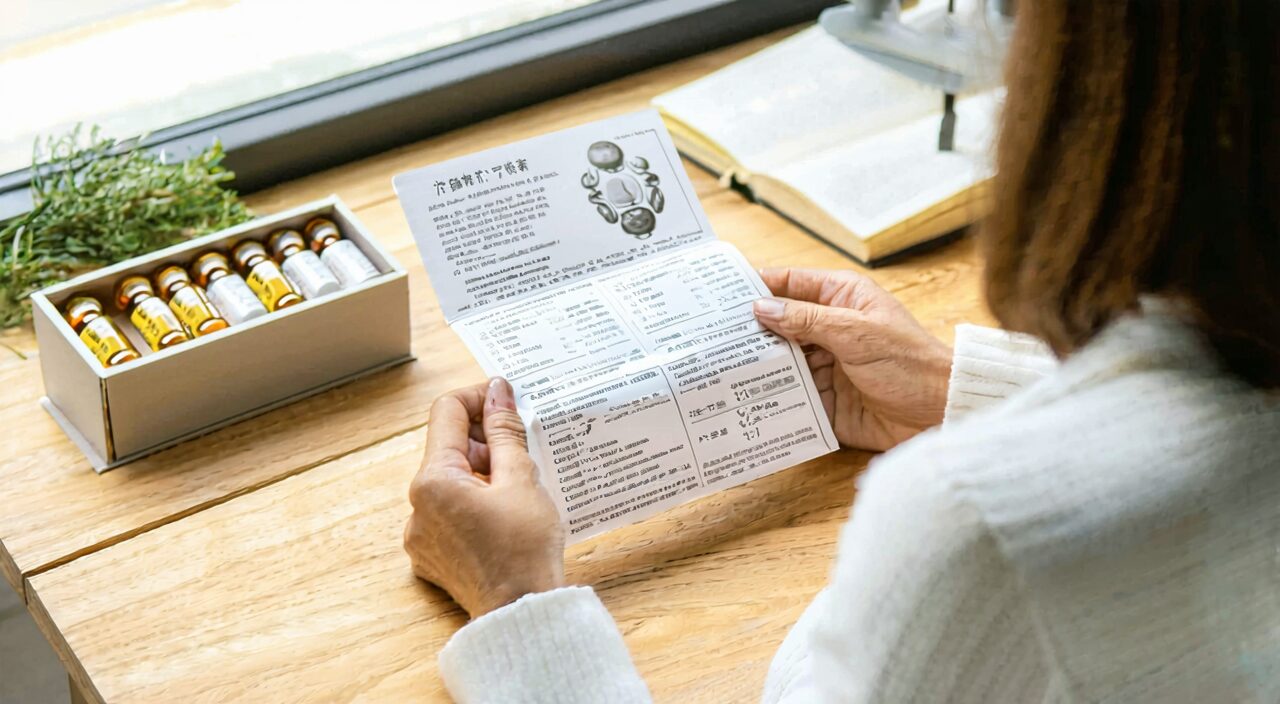
Although the outer packaging of Chinese patent medicines may look familiar, the ingredients, indications, and contraindications can vary significantly from one product to another. When you pick up a box, your eyes probably go first to the large characters on the front of the package, not the densely printed insert. But what truly determines whether a product might be suitable for you is hidden right inside that leaflet.
Learn to Read the Description of Efficacy and Indications
The package insert usually uses terms such as “Functions and Indications,” with wording like “nourish blood and calm the spirit,” “soothe the liver and relieve depression,” or “boost qi and nourish blood.” These descriptions represent the usage direction from the perspective of traditional Chinese medicine, rather than a direct equivalence to modern diagnoses like “insomnia” or “anxiety disorder.”
- Formulas related to Suan Zao Ren Tang are often centered around the traditional pattern of “liver blood deficiency causing restless sleep”;
- Products related to Tian Wang Bu Dan Xin Dan are often linked to “heart yin deficiency, palpitations and forgetfulness.”
If your own subjective experience has little overlap with these descriptions, blindly trying the product may not be wise.
Pay Attention to the Ingredients, Not Just the Name
Many Chinese patent medicines indicated for sleep have similar names. For example, Bai Zi Yang Xin Wan, Tian Wang Bu Dan Xin Dan, and Gui Pi Wan all involve the idea of “nourishing the heart and calming the spirit,” but their specific compositions and emphases are quite different.
- Some contain spirit-calming herbs such as Suan Zao Ren (Sour Jujube Seed) and Bai Zi Ren (Biota Seed);
- Others also include qi-tonifying ingredients like Dang Shen (Codonopsis) and Huang Qi (Astragalus).
If you have ever had an adverse reaction to certain herbs or have specific dietary restrictions, checking the ingredient list is a necessary step.
Boundaries of Suitable User Groups: These Situations Require Extra Caution

Chinese patent medicines are not for everyone—and this is especially true in the context of sleep issues. Behind similar troubles like difficulty falling asleep or early waking, there may be completely different underlying body conditions. The following groups should set a higher safety threshold before considering a purchase:
- During pregnancy, breastfeeding, and when planning pregnancy: Many spirit-calming Chinese patent medicines are explicitly marked in the package insert as contraindicated during pregnancy or requiring use under medical guidance. Even when the labeling is not explicit, the physiological state of pregnant and breastfeeding women is special, and any additional herbal ingredients introduced could bring uncertain effects. In these cases, non-pharmacological sleep approaches may be a more preferable initial direction to explore, but they also require professional evaluation.
- Chronic disease patients who are already taking other medications: If you are on long-term treatment with antihypertensives, antidiabetics, anticoagulants, antidepressants, sedative-hypnotics, or other drugs, the ingredients in Chinese patent medicines may interact with those medications in the body. For example, some spirit-calming formulas may contain Gan Cao (Licorice Root), which can affect some people with hypertension. Those with impaired liver or kidney function also need to be particularly careful, because the metabolic pathways of Chinese patent medicines could place an extra burden on these organs. That a formula is traditionally regarded as relatively gentle does not mean it is naturally safe to combine with Western pharmaceuticals.
- Children and the elderly: The establishment of sleep rhythms in children is different from that in adults. Very often, difficulty falling asleep is linked to daytime activity levels, mood swings, or developmental stages, and should not be casually intervened with Chinese patent medicines. Elderly individuals tend to have a deficient constitution, or a mix of deficiency and excess, and often have multiple concurrent health issues. Self-selecting calming patent medicines may mask other underlying changes that need attention. If these two populations are to use sleep-related Chinese patent medicines, it should be done under the specific assessment of a qualified professional, rather than by following product instructions alone.
Why Long-Term Self-Medication Is Not Recommended
A common line of thinking is this: “Since it’s a Chinese patent medicine and some people seem to take it long-term without problems, I’ll just try it myself.” But it’s important to clarify two concepts here:
- The positioning of Chinese patent medicines is more suitable as a direction for calibration during a specific stage and for a specific pattern, rather than being used indefinitely like a dietary supplement;
- If you need to rely on a particular product long-term to maintain sleep, it may indicate an unresolved root cause behind the problem.
Using sleep-related Chinese patent medicines long-term on your own may blur the body’s real signals. For instance, persistent early morning waking could be connected to emotional stress, sleep apnea, or endocrine fluctuations. Solely relying on a calming medicine makes these signals less obvious, but they do not disappear. What truly needs attention is the overall state behind the sleep pattern.
When to Consult a Professional

The situations below are not signals to “try one more Chinese patent medicine,” but reminders that it may be time to communicate with a doctor or pharmacist:
- Difficulty falling asleep, frequent waking, or early morning waking occurs more than 3 times per week, persisting for over a month;
- Sleep problems visibly affect daytime energy, mood, work, or interpersonal relationships;
- There is obvious accompanying anxiety, palpitations, chest tightness, shortness of breath, or depressed mood;
- Snoring during sleep is accompanied by breathing pauses or waking with a gasp;
- Other medications are being used and you are unsure whether they can be combined with a Chinese patent medicine;
- You have doubts about the contraindications or adverse reactions listed on a product’s package insert.
In these settings, a professional can help differentiate the type of sleep disorder, determine whether any organic issues exist, and, if necessary, provide more comprehensive treatment and lifestyle recommendations. Any TCM-oriented consultation should also involve a licensed TCM practitioner who provides guidance based on syndrome differentiation, rather than making decisions solely from product descriptions and online information.
Rethinking the Notion of “Safety of Chinese Patent Medicines for Insomnia”
The online focus on the “safety of Chinese patent medicines for insomnia” often carries a simple hope: to find a way to relieve sleep difficulties without developing dependency. From a traditional experience perspective, many spirit-calming formulas have indeed been used long-term for appropriate patterns. However, “long-term use” and “risk-free” are two different concepts.
Safety is built on selecting the correct pattern, ruling out contraindications, and using the product within a reasonable duration. These judgments often go beyond what consumers can reliably make by themselves. So, when you come across a sleep-related Chinese patent medicine, consider pausing to ask yourself:
- Am I dealing with a short-term sleep rhythm disturbance, or is there a more persistent issue that needs attention?
- Do I understand the traditional syndrome pattern this product is designed for?
- Are there other health conditions or medication backgrounds that need to be taken into account?
These questions can protect you better than sales figures and positive reviews.
Summary

Before purchasing a sleep-related Chinese patent medicine, what really matters is not memorizing the name of a particular product, but establishing a few basic safety habits:
- Read the package insert carefully, and match the “Functions and Indications” with the three perspectives (body constitution, symptoms, and professional advice);
- Clearly distinguish ordinary fatigue from sleep abnormalities that require vigilance, and know which groups need to be especially cautious;
- Avoid long-term self-medication, so you do not mask important health information;
- When signals become complex, take the initiative to consult a doctor or pharmacist.
Improvement in sleep is rarely achieved by a single product alone; more often it is the result of the interaction between daily habits, emotional states, and physical conditions. Chinese patent medicines can serve as one direction of insight from traditional wisdom, but making that direction safe is far more critical than going fast. I hope this article helps you maintain a clearer, more discerning outlook—and less blind expectation—as you browse related products.