
How Overseas Users Choose Sleep-Related Chinese Patent Medicines? A Pre-Purchase Education Guide

Sleep problems trouble many overseas Chinese. When conventional approaches yield limited results, many turn their attention to Chinese patent medicines. However, faced with an array of calming products on independent websites, most people are unsure where to start judging which one is suitable for them.
This article will not tell you “what to take to fall asleep.” Instead, it helps you build a relatively clear pre-purchase understanding framework: first observe your specific manifestations, then learn a bit about how traditional Chinese medicine views sleep, and finally judge whether a product is worth further consideration based on its description.
Why You Shouldn’t Buy a Product Just by Looking at It
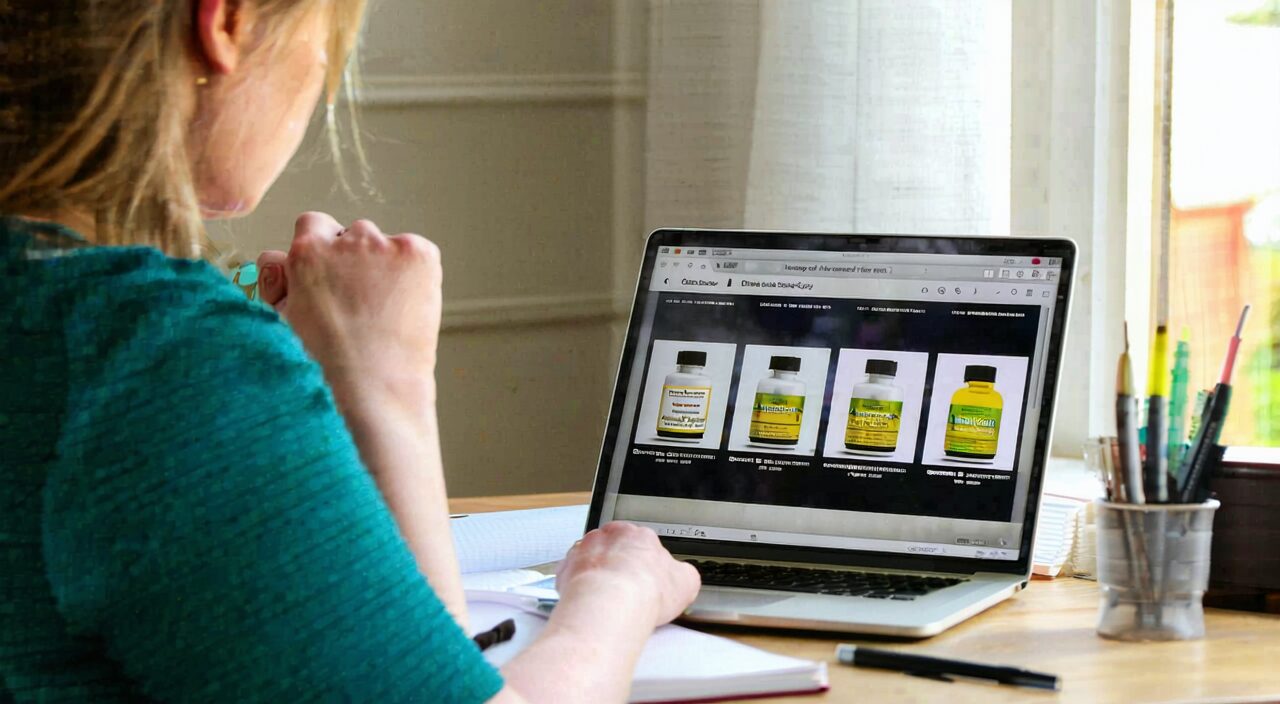
Chinese patent medicines differ from single-ingredient dietary supplements; they are typically composed of multiple herbs and correspond in traditional use to different types of “patterns” rather than a generalized “insomnia.”
Both may have difficulty falling asleep, but some experience racing thoughts and agitation, while others feel as if they never truly sleep and dream all night long; the underlying constitutional tendencies are different. If you choose the same product indiscriminately, it may not meet your actual needs.
Therefore, before browsing any calming Chinese patent medicine, spend some time observing your sleep patterns, daily sensations, and overall tendencies—this is much more meaningful than directly searching for “An Shen Wan” or “An Shen Bu Nao Ye.”
Start with Symptom Manifestations and Constitutional Clues

Traditional Chinese medicine does not only focus on the single act of “not being able to sleep,” but pays more attention to accompanying manifestations. You can try self-observation from the following perspectives, which will give you better direction when you later review product descriptions.
Difficulty Falling Asleep with Irritability
If you cannot stop the racing thoughts after lying down, feel easily irritable, have warm palms and soles, and occasionally feel chest tightness or dry mouth, traditionally this may be understood from the perspective of “heart-liver fire hyperactivity” or “yin deficiency with internal heat.” In such cases, formulas that take the approach of settling and calming the mind or nourishing yin and clearing heat are more commonly referenced.
Excessive Dreaming, Waking Easily, and Fatigue upon Waking
Some people, even though they have slept, feel like they have been dreaming all night, wake up at the slightest noise, and wake up as if they haven’t rested at all, with daytime palpitations and difficulty concentrating. This is different from simply “not sleeping”; it tends more toward “heart-spleen deficiency” or “heart-gallbladder qi deficiency” type manifestations. Traditionally, the approach may focus on boosting qi, nourishing blood, and calming the mind to secure the spirit.
Early Waking and Difficulty Falling Back Asleep
The early-waking type also deserves attention. If it often happens in the early morning hours, you find it hard to fall back asleep, and it is accompanied by dry mouth and soreness and weakness of the lower back and knees, it may be associated with a tendency of “yin deficiency” or “internal disturbance by deficiency heat.” For such situations, the approach to choosing a product will differ from the previous two types.
The above is only a rough self-assessment and cannot replace professional judgment. However, with these clues, when you look at the “applicable” scope in product descriptions, you will be less likely to be misled by the generic claim of “improves sleep.”
Understanding Pattern Directions Is More Important than Remembering Disease Names
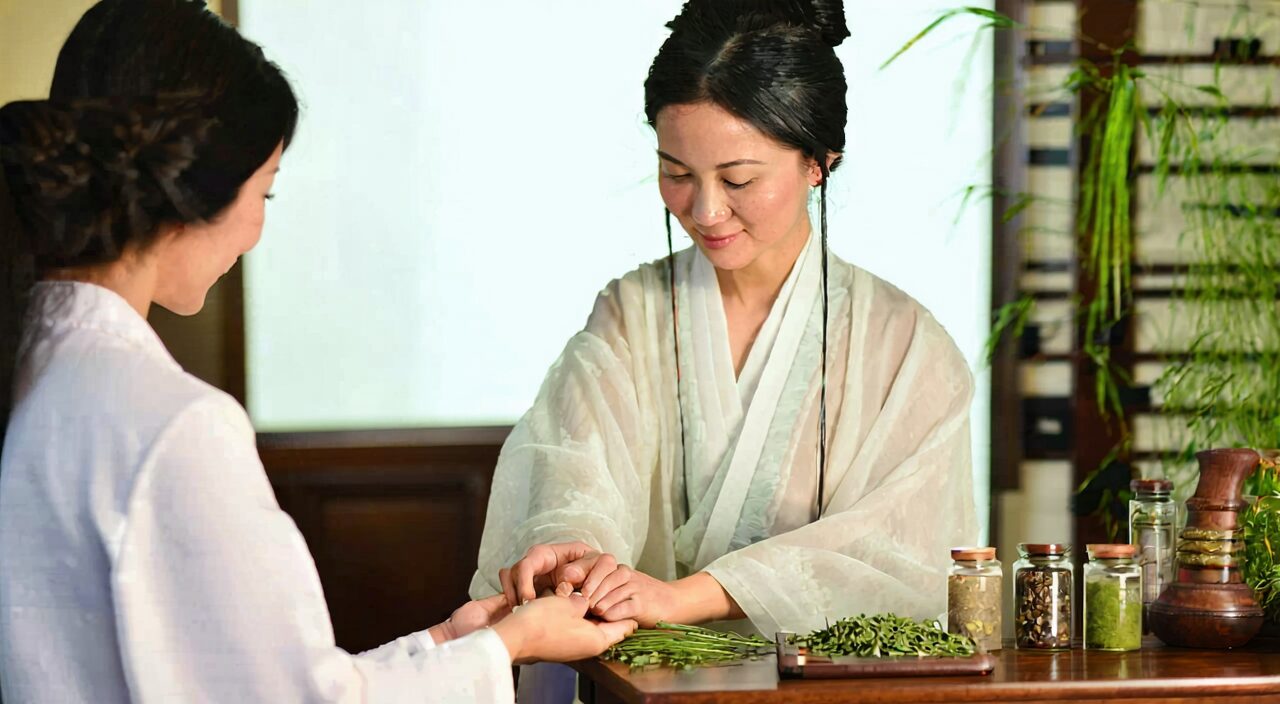
When browsing Chinese patent medicine information, you may find that many product descriptions do not directly mention “difficulty falling asleep” or “excessive dreaming,” but instead use terms like “heart-spleen deficiency,” “heart-kidney disharmony,” or “liver fire disturbing the heart.” These concepts represent a way of understanding body states in traditional Chinese medicine and can serve as reference points when choosing a product.
Heart-Spleen Deficiency Type
In traditional descriptions, this group often presents with excessive dreaming, waking easily, difficulty falling back asleep, low daytime energy, average appetite, a sallow complexion, and easy fatigue. Corresponding calming Chinese patent medicines often include ingredients that replenish qi and blood, strengthen the spleen, and nourish the heart, such as suan zao ren (sour jujube seed), dang gui (Chinese angelica root), and dang shen (codonopsis root).
Heart-Kidney Disharmony Type
If sleep is consistently shallow, accompanied by mental restlessness, warm palms and soles, soreness and weakness of the lower back and knees, and night sweats, traditionally this may be seen as “heart-kidney disharmony.” The common approach is to harmonize the heart and kidney, nourish yin, and reduce fire. Some formulas containing ingredients such as di huang (rehmannia root), xuan shen (scrophularia root), huang lian (coptis rhizome), and rou gui (cinnamon bark) appear in this category.
Liver Fire Disturbing the Heart Type
Mainly characterized by difficulty falling asleep, irritability, bitter taste in the mouth, distension in the rib area, headache, and red eyes, traditionally it is considered to soothe the liver and clear heat, settle the heart and calm the spirit. Formulas may include chai hu (bupleurum root), long gu (fossilized bone), mu li (oyster shell), zhen zhu mu (mother of pearl), etc.
It is important to note that these patterns are only a traditional cognitive framework. In reality, an individual may have multiple tendencies, and patterns can change over time. As a consumer, you do not need to force yourself into a specific box, but you can use this information as a reference to determine whether a product has a potential connection to your own situation.
What to Focus on When Comparing Formulas and Chinese Patent Medicines
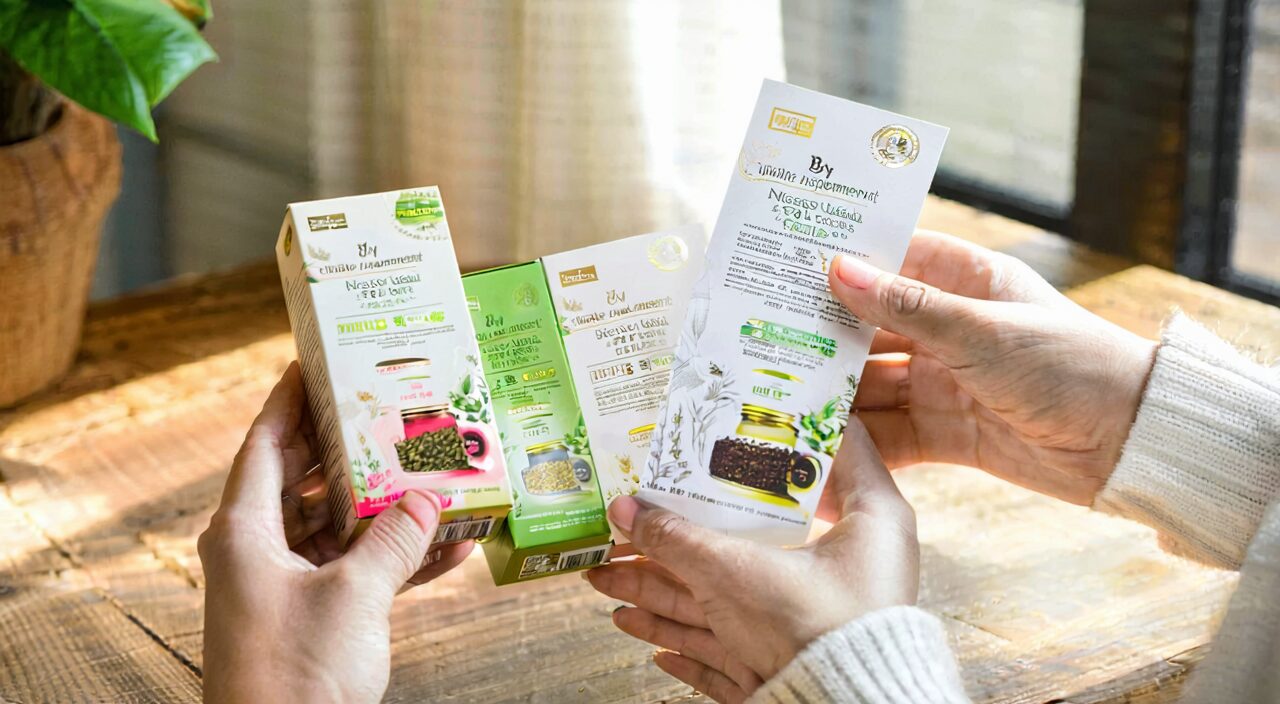
After you have initially sorted out your symptom manifestations and gained a general understanding of pattern directions, you may encounter several Chinese patent medicines that seem to have similar functions. At this point, you can differentiate and compare based on the following points, rather than just the product name.
Differences in Wording of Functions and Indications
Among the same category of calming products, the instructions may emphasize “mental restlessness and insomnia,” another may emphasize “excessive dreaming and waking easily,” and yet another may emphasize “palpitations and anxiety.” Subtle differences in wording often hint at different formulating ideas.
- Tianwang Buxin Wan: Traditionally often used for palpitations, insomnia, mental restlessness, and fatigue caused by yin deficiency and blood insufficiency.
- Guipi Wan category: More often used for shortness of breath, palpitations, insomnia with excessive dreaming, dizziness and lightheadedness of the heart-spleen deficiency type.
If your chief complaint from earlier observation was “sleep is not restful and I tire easily,” then the latter’s function description may be more aligned.
Dosage Forms and Usage Scenarios
Chinese patent medicines come in various dosage forms such as pills, capsules, oral liquids, and granules. When purchasing overseas, you need to consider the practical convenience of use:
- Portability and storage: Granules may be more convenient during travel, but some sugar-containing granules may not be ideal for those who need to control sugar intake.
- Absorption characteristics: Different dosage forms may have slight differences in absorption speed, and such information can often be found in product descriptions or processing descriptions.
Contraindications and Precautions
This is the part that cannot be omitted in pre-purchase education. Carefully read the “contraindications” and “precautions” sections in the instructions, and note whether you have any relevant conditions:
- Some calming formulas contain cinnabar and should not be used in excessive amounts or for a long duration;
- Some medicines require caution during pregnancy;
- Some may not be suitable for people with spleen-stomach deficiency-cold.
Whether or not the website highlights this information, you should proactively check it yourself. If uncertain, it is advisable to consult a professional before making a decision.
Source and Compliance Considerations When Purchasing Chinese Patent Medicines Overseas

When buying Chinese patent medicines from overseas independent websites, product origin, qualifications, and after-sales service are often overlooked but very important factors. The following points can serve as a reference for evaluation.
Manufacturer and Qualification Information
Legitimate Chinese patent medicine products will clearly list the manufacturer, approval number, or corresponding GMP information. Even when sold overseas, responsible websites will provide these details on the product page so consumers can judge whether the product comes from a compliant channel. If a product page even lacks basic manufacturer information, that should raise alarm bells.
Cross-Border Logistics and Storage Conditions
Some Chinese patent medicines are sensitive to temperature and humidity. For example, yin-nourishing formulas containing ingredients such as sheng di huang (fresh rehmannia root) and mai dong (ophiopogon tuber) may become unstable at high temperatures. Pay attention to whether the website specifies transportation and storage requirements. After receiving the product, also check whether the packaging is intact and the product appearance is normal.
After-Sales and Professional Consultation
Although independent websites are not medical institutions, responsible operators usually provide basic medication consultation or guidance to help users understand the traditional usage approach and precautions. If a site only displays products but has no contraindication warnings and does not remind that “severe insomnia should be discussed with a professional,” it may lack necessary consumer protection awareness.
When It Is Not Appropriate to Self-Select Chinese Patent Medicines

The purpose of this article is not to encourage self-treatment of all sleep problems with Chinese patent medicines. The following situations call for consulting a doctor or relevant professional first, rather than relying on online information to make a choice:
- Chronic, recurrent severe insomnia that has clearly affected daily work and life;
- Sleep problems accompanied by noticeable anxiety, depressed mood, persistent palpitations, chest tightness, unexplained pain, or abnormal breathing;
- Currently taking other prescription medications or having multiple underlying health issues;
- Special physiological stages such as childhood, pregnancy, or breastfeeding;
- Discomfort or unclear reactions after use.
Chinese patent medicines may serve as one approach in traditional health maintenance, but no product can replace necessary medical evaluation. The essence of pre-purchase education is to help you view the vast array of product information more rationally, not to encourage bypassing medical channels.
Practical Mindset Steps When Browsing Independent Websites

To help you avoid getting lost while browsing websites, here is a condensed practical mindset step-by-step. It is not a fixed process but a reference framework:
- Record sleep characteristics: Not just “can’t sleep,” but also note whether it is difficulty falling asleep, early waking, excessive dreaming, waking easily, or fatigue after waking, along with accompanying body sensations.
- Combine with constitutional tendencies: Try to understand which direction you lean toward, such as whether it is more heat or deficiency, and whether it is dominated by irritability or fatigue.
- Read product function descriptions: Focus on the “functions and indications” in the instructions or the “traditional applicable direction” on the product page, and look for similarities with your own clues rather than just sales volume or reviews.
- Check contraindications and precautions: Confirm that you have no relevant contraindications. If uncertain, it is better to put it aside and consult first.
- Pay attention to source and service: Determine whether the store discloses complete manufacturer and approval information, and whether it provides clear pre-sale and after-sale instructions.
- Seek medical attention decisively in serious situations: Do not use Chinese patent medicines to replace necessary professional diagnosis and treatment.
If you can do these, even if you end up not purchasing any product, you will have avoided making an unsuitable choice due to information asymmetry.
Summary
The core of choosing sleep-related Chinese patent medicines overseas is not to find the “strongest” product, but to understand the emphasis of different calming Chinese patent medicines in traditional use by observing your symptom manifestations and constitutional clues.
Before purchasing, carefully reading the functions and indications, contraindications, and precautions in the product instructions, and paying attention to the product source, storage, transportation, and the transparency of the seller’s information are all effective ways to protect yourself and reduce blind buying.
This article provides only TCM popular science and pre-purchase educational insights and cannot replace professional diagnosis. For long-term, severe, or sleep problems accompanied by obvious anxiety, palpitations, abnormal breathing, etc., promptly consulting a doctor or professional is the priority.