
Shen Ling Bai Zhu San: A Classic Formula for Strengthening the Spleen and Resolving Dampness – Who Is It Suitable For?

In daily life, “heavy dampness” has become a phrase that many people often use. Some feel heavy and easily fatigued, some have persistently unformed, sticky bowel movements, and others have a sallow complexion and poor appetite. They may have tried various methods such as drinking red bean and coix seed water, foot baths, or cupping, but often with little effect or with symptoms recurring soon after. The root cause is likely not just simple “dampness,” but rather an insufficient transformation and transportation function of the spleen and stomach, leading to internal generation of dampness and turbidity, forming what Chinese medicine calls “spleen deficiency with dampness exuberance.”
Shen Ling Bai Zhu San is a classic formula in traditional Chinese medicine for regulating such conditions. It not only resolves dampness but, more importantly, starts with strengthening the spleen, simultaneously supplementing qi and draining dampness, giving it a quite comprehensive approach. This article attempts to help readers understand this formula more clearly from the perspectives of its composition, suitable applications, differences from similar formulas, and precautions, but it does not replace professional diagnosis. Specific usage still needs to be based on individual conditions and under the guidance of a Chinese medicine practitioner.
The Composition Rationale of Shen Ling Bai Zhu San: Not Just Resolving Dampness, but Strengthening the Spleen
Shen Ling Bai Zhu San was first recorded in the “Taiping Hui Min He Ji Ju Fang” from the Song Dynasty, with a history of nearly a thousand years. The original text records its use for “spleen and stomach weakness, loss of appetite, frequent tiredness and lack of strength, epigastric fullness and obstruction, palpitations and shortness of breath, vomiting and diarrhea, as well as cough and belching associated with cold damage.” Later clinical applications focus primarily on the direction of spleen deficiency complicated by dampness, where dampness is generated internally.
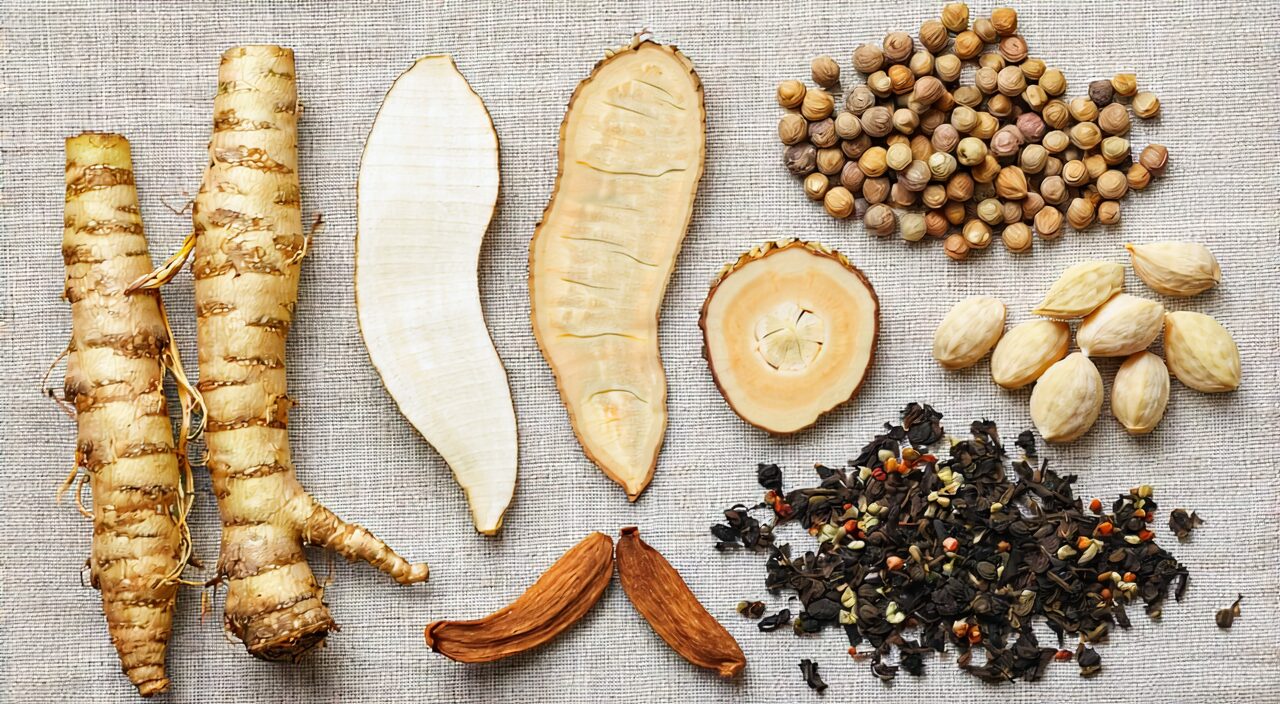
In terms of composition, the formula includes Ren Shen (Ginseng), Bai Zhu (Atractylodes), Fu Ling (Poria), Gan Cao (Licorice), Shan Yao (Chinese Yam), Lian Zi Rou (Lotus Seed), Bai Bian Dou (Hyacinth Bean), Yi Yi Ren (Coix Seed), Sha Ren (Amomum), and Jie Geng (Platycodon). This combination has several distinct layers:
- Core of supplementing qi and strengthening the spleen: Ren Shen greatly supplements the original qi and nourishes the spleen and lungs, Bai Zhu strengthens the spleen and dries dampness, Fu Ling strengthens the spleen and drains dampness, and Gan Cao supplements the center and boosts qi. These four herbs also form the basis of Si Jun Zi Tang (Four Gentlemen Decoction), establishing the main tone of strengthening the spleen and supplementing qi.
- Combination of astringing and securing the intestines: Shan Yao gently supplements the spleen, lung, and kidney and also has astringent properties; Lian Zi Rou supplements the spleen and stops diarrhea, capable of securing the intestines. For chronic diarrhea or persistent loose stools caused by spleen deficiency, these two herbs provide a certain restraining and consolidating effect.
- Assistants for draining dampness and stopping diarrhea: Yi Yi Ren strengthens the spleen and drains dampness, Bai Bian Dou strengthens the spleen and transforms dampness. They help eliminate excess water-dampness from the body through urination, thereby reducing dampness stagnation in the intestines and relieving unformed stools, borborygmus, and diarrhea.
- Moving qi, harmonizing the stomach, and guiding the medicines upward: Sha Ren is acrid and warm, capable of transforming dampness, moving qi, warming the middle burner, and stopping vomiting, preventing the tonic herbs from causing stagnation and ensuring the entire formula supplements without causing cloying; Jie Geng carries the other herbs upward, diffuses the lung and regulates qi, and by leveraging the lung’s function of regulating water passages, it enhances the dampness-draining effect. This also embodies the method of “cultivating earth to generate metal,” i.e., supplementing the spleen to benefit the lung.
Overall, the core action of Shen Ling Bai Zhu San is to “strengthen the spleen, supplement qi, drain dampness, and stop diarrhea.” It is suitable not for simple heavy dampness alone, nor for pure spleen deficiency alone, but for the compound state where both coexist.
It can be understood this way: the spleen governs transformation and transportation. If the spleen’s function declines, water metabolism becomes imbalanced, and water-dampness easily lingers in the body. If it pours down into the intestines, it causes loose stools or diarrhea; if it rises upward, it produces a white, greasy tongue coating; if it overflows outward, it causes heaviness in the limbs. Shen Ling Bai Zhu San precisely targets this chain reaction.
Which Manifestations Might Indicate Considering the Shen Ling Bai Zhu San Approach?
Shen Ling Bai Zhu San has traditionally been used in clinical practice to regulate patterns of spleen deficiency with dampness exuberance. The typical manifestations can be comprehensively observed from several aspects such as complexion, digestion, bowel movements, tongue, and pulse. If an individual meets most of the following characteristics, Shen Ling Bai Zhu San may be considered as a direction for understanding, but the final judgment should be made by a Chinese medicine practitioner.
Digestive System and Bowel Movement Characteristics
- Poor appetite and abdominal distension after eating: Often feeling no appetite, and feeling bloated after eating even a small amount, with very slow digestion as if food is stuck in the stomach and not moving down.
- Unformed stools or diarrhea: Stools are chronically soft, loose, or mushy and sticky, tending to stick to the toilet bowl when flushing. Sometimes there are undigested food residues in the stool, with noticeable borborygmus and gurgling sounds in the abdomen, possibly accompanied by mild abdominal pain that eases after bowel movement. Such diarrhea tends to recur repeatedly and is easily triggered by consuming even slightly greasy or raw, cold foods.
- Discomfort easily arising from dietary indiscretions: Sensitivity to cold, greasy, or glutinous rice-based foods, often leading to bloating, diarrhea, or worsening of existing symptoms after eating them.
Whole-Body Manifestations and Mental State
- Fatigue of the limbs and heaviness of the body: A constant feeling as if the body is wrapped in a damp cloth, difficulty lifting the limbs, easy fatigability, lack of energy, and difficulty recovering even with adequate sleep.
- Sallow complexion and disinclination to speak: Lack of luster on the face, appearing more yellow and dull, reluctance to talk, and a relatively low, weak voice.
- Flaccid muscles or thin body shape: Some people may have normal appetite but chronic poor absorption leading to low body weight and less firm muscles; others may be overweight but with a puffy, swollen appearance rather than solid flesh.
Tongue and Pulse Manifestations
- Pale tongue with white, greasy coating: The tongue body is relatively pale, not bright red; the surface is covered with a white, greasy coating that is relatively thick, and sometimes tooth marks are visible on the edges. This is the typical tongue image of spleen deficiency with dampness exuberance.
- Soggy, moderate or weak pulse: Upon palpation, the pulse feels soft and forceless, slightly slow or not rapid, and lacks strength upon deep pressure.
It is important to note that the above manifestations are often persistent rather than an occasional bout of indigestion. If such presentations have persisted for some time and organic diseases have been ruled out, traditional Chinese medicine is then more likely to consider the Shen Ling Bai Zhu San approach. For occasional watery diarrhea caused by eating something bad, or acute gastroenteritis, this formula generally falls outside its scope of application.
Differences from Similar Formulas: How to Choose Among Ren Shen Jian Pi Wan, Xiang Sha Liu Jun Wan, and Shen Ling Bai Zhu San?
Faced with a dazzling array of spleen-strengthening patent Chinese medicines on the pharmacy shelf, many people feel confused: Ren Shen Jian Pi Wan, Xiang Sha Liu Jun Wan, and Shen Ling Bai Zhu San all sound like they regulate the spleen and stomach, but what are their differences? Understanding the key distinctions helps in forming a clearer perception and avoiding mixed-up usage.
Comparison of Core Differences
To more intuitively grasp the focus of each, we can compare them by their main functions, characteristic suitable manifestations, and key differentiating points:
| Formula | Main Functional Direction | More Suitable for Prominent Manifestations | Key Differentiating Point |
|---|---|---|---|
| Shen Ling Bai Zhu San | Strengthens spleen, supplements qi, drains dampness, stops diarrhea | Chronic loose, unformed stools; white, greasy tongue coating; fatigue of limbs | Focus on draining dampness and securing the intestines, targeting spleen deficiency with water-dampness pouring down into the intestine |
| Ren Shen Jian Pi Wan | Strengthens spleen, supplements qi, disperses food and stops diarrhea, with blood-nourishing function | More obvious qi deficiency, marked sallow complexion, indigestion with food accumulation, or possibly a slight sinking sensation of internal organs | Stronger supplementation, emphasizing supplementation of qi and blood, and dispersing food; relatively weaker in draining dampness |
| Xiang Sha Liu Jun Wan | Strengthens spleen, supplements qi, harmonizes stomach and transforms phlegm, moves qi and relieves pain | Prominent stomach distension and pain, frequent belching, nausea and vomiting, copious phlegm, pronounced qi stagnation and phlegm-dampness in the middle burner | Leans toward harmonizing the stomach, moving qi, and transforming phlegm, targeting phlegm-dampness and qi stagnation in the middle and upper burners |
Reference for Direction of Selection
- If chronic loose, unformed stools, accompanied by fatigue and a white, greasy tongue coating are the primary concern, Shen Ling Bai Zhu San may be the direction more worth considering.
- If qi deficiency is prominent, with a pale complexion, palpitations and insomnia, indigestion with food accumulation, or a mild tendency toward internal organ sinking, the Ren Shen Jian Pi Wan direction should be given more attention.
- If stomach distension and pain, frequent belching, nausea, and phlegm vomiting are obvious, representing a mixture of deficiency and excess, the Xiang Sha Liu Jun Wan direction is more worth learning about.
Of course, these formulas may also be modified or combined in clinical practice. The specific choice needs to be determined based on the bias of the individual’s pattern presentation, and one should not self-diagnose based on just one or two symptoms.
What Conditions Might Not Be Suitable for Shen Ling Bai Zhu San? Risks of Misuse
Although Shen Ling Bai Zhu San is mild, it is not suitable for everyone. It has warm, supplementing, and astringing properties. If chosen incorrectly, it may conversely aggravate discomfort. The following categories of conditions are generally not suitable or require careful evaluation.
Damp-Heat Diarrhea or Damp-Heat Stagnating in the Spleen
If diarrhea is accompanied by sticky, foul-smelling stools resembling paste, anal burning, a preference for cold drinks due to thirst, scanty dark urine, red tongue with yellow, greasy coating, these damp-heat manifestations are completely different from the spleen deficiency with dampness exuberance (cold-dampness or simple dampness) pattern that Shen Ling Bai Zhu San addresses. Using this warm-supplementing, astringing formula in such cases is akin to “bolting the door and keeping the burglar inside,” potentially making it harder to expel damp-heat pathogens and worsening bloating, fever, and tenesmus. Therefore, whenever stools are unusually sticky and foul-smelling, or the tongue coating is yellow and greasy, one should not self-use Shen Ling Bai Zhu San.
Food Retention with Abdominal Distension or Stomach Excess Heat
Indigestion caused by binge eating or overeating, manifesting as epigastric and abdominal fullness, belching with a putrid smell and sour regurgitation, foul-smelling stools or constipation, and a thick, greasy, curd-like tongue coating requires dispersing food and guiding out stagnation, not supplementing the spleen. Using Shen Ling Bai Zhu San in this case, its supplementing and astringing actions may make the food retention even harder to resolve. Moreover, those with evident stomach heat manifesting as dry mouth, bad breath, swollen and painful gums, and red tongue with yellow coating are also not suitable for this formula alone.
Early Stage of Acute Gastroenteritis
In acute vomiting and diarrhea, the body’s righteous qi is struggling with pathogenic qi, and when pathogens are relatively exuberant, it is not advisable to prematurely use supplementing and astringing substances, as this may trap the pathogen. Conventionally, aromatic herbs to transform dampness and regulate qi and harmonize the center are used first; only after acute symptoms have resolved and the spleen and stomach qi is weak can supplementation be considered as appropriate.
Where External Pathogenic Factors Have Not Been Cleared
If there are still unresolved external symptoms such as a cold, fever, or cough, it is also inappropriate to rush into supplementation to avoid “shutting the door on the intruder.” One must first release the exterior, then later consider supplementing the spleen.
In any case, if there is recurrent or severe diarrhea accompanied by fever, bloody stools, severe abdominal pain, or significant short-term weight loss, one should seek medical attention promptly rather than self-treating with patent Chinese medicines.
Lifestyle Support Suggestions While Using Shen Ling Bai Zhu San
Shen Ling Bai Zhu San is only one direction of regulation; lifestyle coordination is equally important for spleen and stomach recovery. Traditional Chinese medicine emphasizes “three parts treatment, seven parts cultivation.” While considering whether Shen Ling Bai Zhu San is suitable, one can also pay attention to the following daily habit adjustments.
Dietary Aspects
- Prefer warm, soft, bland, and moderate amounts: Choose warm-temperature foods as much as possible and avoid raw, cold, or iced drinks; food should be soft in texture to reduce the burden on the spleen and stomach; flavors should be light, not overly greasy, spicy, or excessively sweet; eat until seventy percent full at each meal and avoid overeating.
- Moderately reduce gas-producing or hard-to-digest foods: Such as beans, sweet potatoes, taro, glutinous rice products, fried foods, fatty meats, etc., which often aggravate bloating or diarrhea.
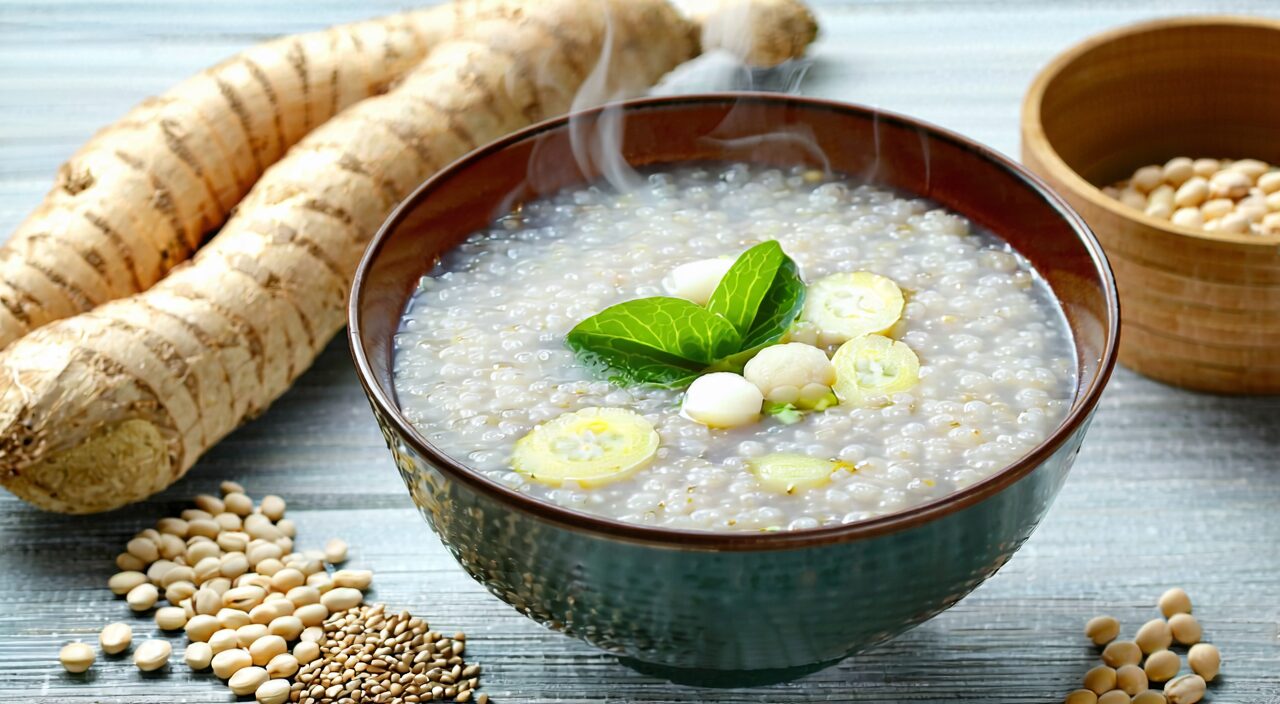
- Increase spleen-strengthening and dampness-resolving ingredients: In daily life, one may appropriately use Shan Yao (Chinese Yam), Lian Zi (Lotus Seed), Yi Yi Ren (Coix Seed), Bai Bian Dou (Hyacinth Bean), Qian Shi (Euryale Seed), and Fu Ling (Poria) in soups or congees. These align with the thoughts behind some ingredients of Shen Ling Bai Zhu San but in milder doses, making them more suitable as dietary support. For example, yam and lotus seed congee, or coix seed and hyacinth bean soup are common choices.
Daily Routine
- Avoid prolonged sitting, engage in moderate activity: The spleen governs the four limbs; moderate physical movement of the limbs aids the spleen and stomach’s transformation and transportation. Do not sit or lie down immediately after meals; instead, take a leisurely walk for a while. Long-term sitting without movement causes qi mechanism stagnation and aggravates dampness encumbrance.
- Keep the abdomen warm: The spleen prefers dryness and detests dampness, and it also fears cold and coolness. During sleep at night, keep the abdomen warm and avoid cold drafts blowing directly on the belly. This is especially important for women during menstruation.
- Regulate emotions, avoid excessive rumination: Chinese medicine holds that “pondering damages the spleen.” Chronic overthinking, worry, or excessive psychological stress may affect the spleen and stomach function. Reasonably arranging work and rest and maintaining a calm mindset might be more effective for those troubled by dampness than merely eating red beans and coix seeds.
Usage Timing and Duration
As a traditional formula, Shen Ling Bai Zhu San is generally used for a certain period and should not be taken indefinitely over the long term. The specific course and dosage need to be determined based on individual conditions and the advice of a Chinese medicine practitioner.
If after using it for some time, stools become formed, appetite improves, the tongue coating becomes thinner, and energy improves, one may consider reducing the dosage or discontinuing under a practitioner’s guidance and shifting to relying on diet and lifestyle to consolidate. If symptoms do not change after use, or signs such as dry mouth, constipation, or “heat” manifestations appear, one should reassess whether the pattern matches and promptly consult a professional.
Using Under Professional Guidance Is a Safer Choice
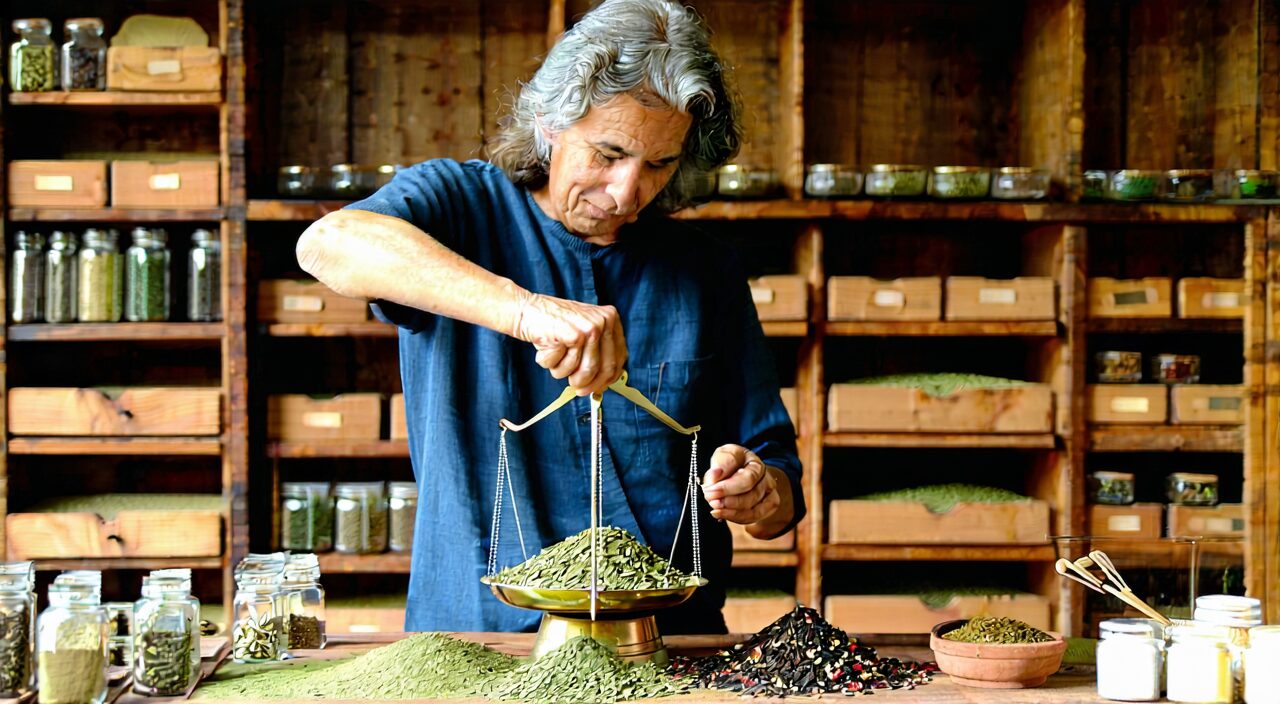
Although Shen Ling Bai Zhu San is a classic, renowned formula, individual differences are significant. Spleen deficiency with dampness exuberance is only a basic pattern type; specifically, each person may also have complicating factors such as qi stagnation, blood stasis, yang deficiency, or dampness transforming into heat. Therefore, it is not advisable to self-prescribe merely based on one or two popular science articles.
Before considering it, it is recommended to consult a qualified Chinese medicine practitioner in person, who can conduct a comprehensive assessment through observation, listening, questioning, and pulse-taking to determine whether the case truly falls under the spleen deficiency with dampness exuberance direction and whether there are any contraindications that need to be excluded. Some over-the-counter versions of Chinese patent medicines may have additions or subtractions to the original formula, and different formulations and brands may have varying applicable details and usage methods, so one should carefully read the product instructions or follow medical advice.
The content of this article is only for informational introduction and cannot replace professional diagnosis. If digestive system problems persist for a longer time or symptoms affect daily life, be sure to seek help from a medical institution.
Summary
As a classic spleen-strengthening and dampness-resolving formula in Chinese medicine, Shen Ling Bai Zhu San is based on supplementing qi and strengthening the spleen, combined with draining dampness, stopping diarrhea, and securing the intestines. Traditionally, it is commonly used for patterns of spleen deficiency with dampness exuberance manifesting as poor appetite, unformed or chronic loose stools, fatigue of the limbs, sallow complexion, and white, greasy tongue coating. It is not a simple “dampness-removing medicine,” but rather targets the root of “spleen deficiency” while also addressing the secondary aspect of water-dampness, making it more suitable for composite body types where deficiency and dampness coexist.
Compared with other frequently confused formulas like Ren Shen Jian Pi Wan and Xiang Sha Liu Jun Wan, Shen Ling Bai Zhu San is characterized more by its emphasis on draining dampness and securing the intestines, with a stronger focus on loose stools and white, greasy tongue coating, while the former tend toward supplementing qi and blood and dispersing food, or moving qi, harmonizing the stomach, and transforming phlegm, respectively.
In addition, in states of excess patterns such as internal damp-heat, food retention with stomach heat, or acute infections, Shen Ling Bai Zhu San is not appropriate, and using it may backfire.
Whichever regulation method is chosen, it is recommended to proceed under the guidance of a Chinese medicine practitioner after pattern differentiation, combined with adjustments to daily living habits, such as keeping the diet gentle, avoiding raw and cold items, engaging in moderate exercise, and relaxing the emotions, in order for the spleen and stomach function to gradually recover. When complex, persistent, or worsening digestive symptoms occur, one should seek timely medical attention rather than self-medicating.