
Common Questions About Digestive Issues: Self-Regulation from a Traditional Chinese Medicine Perspective

Many people, as soon as they experience bloating, poor appetite, loose stools or belching with acid reflux after meals, subconsciously think of “weak digestive system.” But when it comes to how to regulate it, what methods to use and whether medication is necessary, their minds are full of questions. Online opinions vary widely; some suggestions make people more anxious the more they read, while others treat individual experiences as universal solutions, often overlooking individual differences.
This article focuses on frequently asked questions about digestive problems and attempts to sort them out from the perspective of Traditional Chinese Medicine. It should be noted in advance that TCM emphasizes pattern differentiation. The same discomfort may have completely different causes in different people. The following content is for health knowledge reference only and cannot replace a face-to-face diagnosis.
How to Simply Observe Whether You Have Spleen Deficiency, Dampness Stagnation or Food Accumulation

In TCM, the functions of the spleen and stomach are often associated with concepts such as “transformation and transportation,” “ascending the clear” and “drying dampness.” In daily life, we can make rough observations from the following perspectives, but we must remember that this is only an auxiliary approach and not a diagnostic standard.
Some Common Manifestations of Spleen Deficiency
Spleen deficiency most easily brings to mind “bloating after eating and indigestion,” but in fact its scope is broader. Traditionally, people with spleen deficiency may exhibit some of the following characteristics:
- Easily fatigued and reluctant to speak
- Feeling sleepy after meals
- Stools tend to be soft and unformed, sometimes several times a day
- Lackluster complexion
- Pale tongue body with possible slight tooth marks on the edges
These manifestations are more likely to worsen after overwork or excessive mental strain.
Clues of Dampness Stagnation
Dampness stagnation is usually “internal dampness” produced by impaired water metabolism on the basis of spleen deficiency. Common sensations include:
- Heavy body sensation, as if wrapped in a wet towel
- Mental fogginess and heavy-headedness
- Sticky sensation in the mouth, no thirst, and even occasional nausea
- Sticky, greasy and difficult-to-pass stools that tend to stick to the toilet bowl
- A thick, greasy tongue coating
The color of the tongue coating can provide more clues: white and greasy often points to cold-dampness, while yellow and greasy is usually more closely related to damp-heat.
Signs of Food Accumulation
Food accumulation is often related to eating too much or too varied a meal at one time, especially after consuming greasy, sweet or glutinous rice-based foods. Common manifestations include:
- Fullness and distension in the epigastric region or abdomen
- Belching with a sour, rotten odor
- Possible acid reflux and nausea
- Stool either constipation or diarrhea, with a sour, foul smell
- Thick tongue coating, especially thick and greasy in the center, sometimes resembling accumulated food residue
These three states are not completely separate and may coexist in one person. For example, long-standing spleen deficiency may be mixed with dampness stagnation, and dampness stagnation easily affects digestion, so a slight dietary indiscretion can lead to food accumulation. Therefore, self-observation is only a starting point; do not rush to label yourself.
Does Taking a Walk After Meals Really Help Digestion?

Many people suggest “taking a walk after eating.” From a TCM perspective, whether this advice is suitable depends on the specific situation.
A proper, slow stroll after meals can help promote the flow of spleen and stomach qi and may indeed be helpful for people with relatively weak transformation and transportation functions who are prone to bloating. But the prerequisite is “slow” – not brisk walking, and not going out for a long stroll immediately after eating. In traditional health cultivation concepts, after a meal one usually sits quietly for a while to allow qi and blood to first concentrate on supplying the spleen and stomach, and then engages in gentle activity.
If the spleen and stomach are relatively deficient, and one feels short of breath and wants to lie down after eating, then it is not advisable to force oneself to walk; instead, a brief rest is better. Furthermore, for people with a clear tendency towards gastroptosis, it is even less suitable to stand or walk for a long time immediately after meals. Traditionally, such individuals are advised to lie flat or semi-reclining to rest first after eating.
It can be seen that a post-meal walk is not suitable for everyone. Whether to walk and how long to walk needs to be judged based on one’s own feelings.
What Kind of Tea Is Suitable for Bloating?
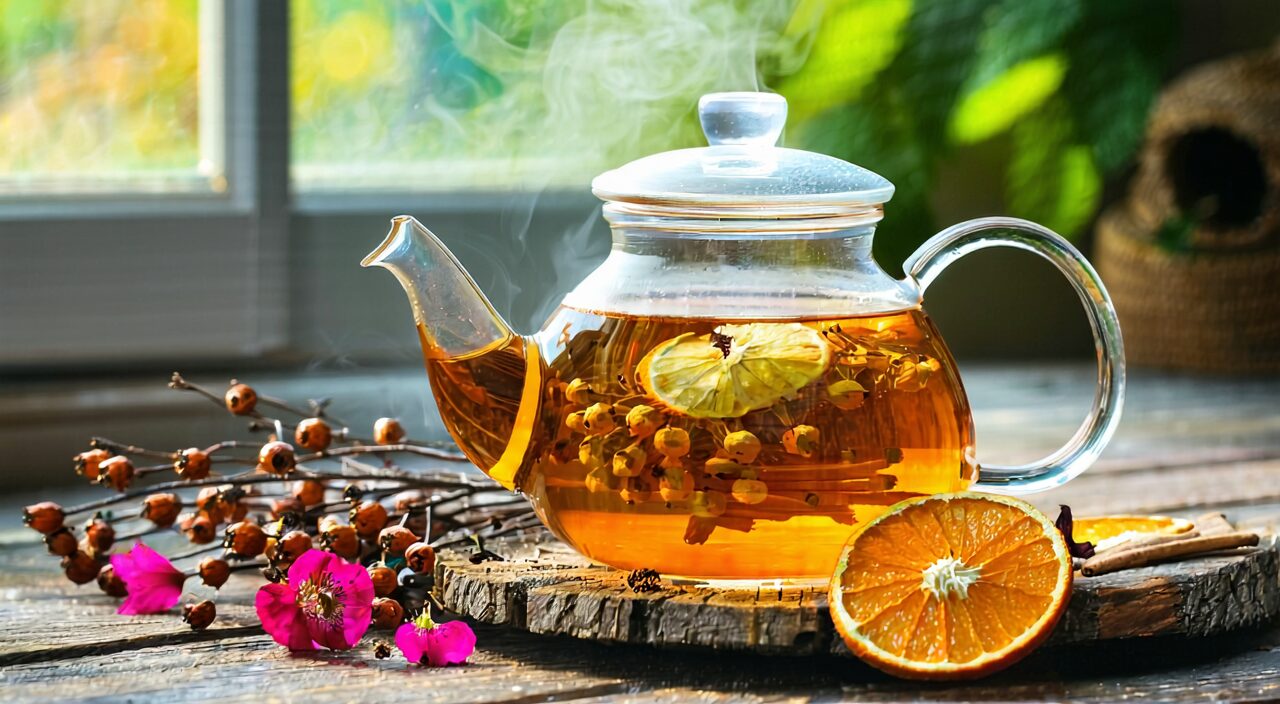
Many people ask “what kind of tea to drink for bloating,” and this is indeed a direction frequently mentioned in TCM dietary therapy. The key to choosing the right tea lies in the specific sensation of bloating and accompanying symptoms.
For different types of bloating, the focus of herbal tea selection also differs:
- Food accumulation type bloating: Often occurs after eating greasy or sweet foods, with pronounced fullness and belching with a sour, rotten odor; the tongue coating is thick, greasy and yellowish. One can try steeping fried malt, fried hawthorn and tangerine peel together in water. The aromatic, charred flavor helps promote transformation and transportation. Fried malt and fried hawthorn are common food ingredients with relatively neutral properties, but they should not be consumed in large amounts on an empty stomach; those with excessive stomach acid or frequent acid reflux and heartburn should reduce the amount of hawthorn or temporarily avoid it.
- Spleen deficiency with dampness type bloating: Persistent but mild bloating, with loose stools, sticky sensation in the mouth, and a thick white tongue coating. In this case, the approach leans more towards regulating qi and resolving dampness, using aromatic and gentle herbs such as tangerine peel, finger citron and Amomum. Amomum has a pungent, aromatic nature and is generally added near the end of steeping, in small amounts; those with yin deficiency, dry mouth, and a red tongue with scanty coating should use it with caution.
- Emotionally related bloating: Bloating triggered by anger, accompanied by discomfort in the sides and rib cage. Traditionally, this is often considered from the perspective of liver-stomach disharmony, and herbs such as rose, finger citron and mint may be used.
Regardless of the type of herbal tea, it is advisable to treat it as part of daily dietary regulation, not as a “medicine” that must be taken. If there is no improvement after continuous consumption for a few days, or if other discomforts appear, one should stop and re-evaluate the approach.
Does a Thick, Greasy Tongue Coating Always Mean Heavy Dampness?

A thick, greasy tongue coating is indeed a common sign of dampness and turbidity rising upward, but it is not the only explanation.
In TCM tongue diagnosis, a thick greasy coating often indicates internal dampness, phlegm, food stagnation, etc., but the specific interpretation must also consider the coating color, thickness, distribution and the tongue body. If the tongue coating is thick, greasy, moist and white, it often points to cold-dampness; thick, greasy and yellow is mostly related to damp-heat; thick, greasy and turbid, somewhat resembling cottage cheese, suggests food accumulation is more likely.
The tongue coating can also be affected by diet, smoking, tongue scraping habits, mouth breathing and certain lozenges. For example, after just drinking milk or soy milk, the coating may temporarily become whiter and thicker, which is a false image. Therefore, one cannot conclude “heavy dampness” based on only one or two tongue observations; it requires a comprehensive assessment combining symptoms such as sticky mouth sensation, bloating, sticky stools and heaviness of the body.
Additionally, some people with yin deficiency constitution may also present with peeling coating or geographic tongue, which is no longer a simple dampness stagnation issue. If the tongue condition remains abnormal for a long time and is accompanied by significant digestive discomfort, it is best to have a face-to-face evaluation by a professional.
Can Chinese Patent Medicines Be Taken Long-Term?
There are many types of Chinese patent medicines on the market for regulating the spleen and stomach, such as the commonly seen Bao He Wan, Xiang Sha Liu Jun Zi Wan, Shen Ling Bai Zhu San, etc., each with a different emphasis. Many people are concerned about “whether they can be taken long-term.” This is actually a question that should not be answered simply.
Traditionally, the use of Chinese patent medicines often follows the principle of “stopping once the illness is resolved,” meaning once symptoms improve to a certain extent, one should consider reducing the dose or discontinuing use, rather than taking them indefinitely. Even for tonic patent medicines with relatively neutral properties, long-term use requires adjustment according to bodily changes, because constitution is not static.
Take Bao He Wan for instance. Its direction tends towards promoting digestion and removing food stagnation, making it more suitable during the stage of food accumulation. Once the accumulation is cleared and appetite and bowel movements return to normal, it is usually no longer needed. If it is taken daily as a digestive aid, it may actually damage the spleen and stomach qi. Similarly, Xiang Sha Liu Jun Zi Wan, which leans towards supplementing qi and invigorating the spleen, regulating qi and resolving phlegm, may be appropriate for cases of spleen deficiency with qi stagnation and internal phlegm-dampness. However, if damp-heat is pronounced, with symptoms such as dry mouth, bitter taste, red tongue and yellow greasy coating, it may not be suitable and could even worsen the distension.
For children, pregnant women, the elderly and people with underlying medical conditions, extra caution is needed before use, and the professional advice of a doctor or pharmacist should be sought. Self-administering any Chinese patent medicine long-term easily leads to the risk of “the medicine not matching the pattern,” and this needs special mention.
Can Chinese Patent Medicines Be Used for Children’s Indigestion?

Children’s spleen and stomach functions are not yet fully developed, making them prone to food accumulation, bloating and irregular bowel movements. However, this does not mean adult experiences can be casually applied.
There are pediatric-specific Chinese patent medicines on the market aimed at promoting digestion and removing food accumulation, such as Xiao Er Hua Shi Wan, Da Shan Zha Wan, etc. Traditionally, they are used for food accumulation and indigestion, bad breath and restless sleep at night. But children’s illnesses can change rapidly: today it may be simple food accumulation, and tomorrow it could transform into heat, or even be accompanied by fever, vomiting and diarrhea. It is difficult for parents to judge accurately based on experience alone, so pediatric Chinese patent medicines should not be treated as household “candies” to be given casually.
If the child has only occasionally eaten too much and shows mild loss of appetite and bloating, one can first help them recover by reducing the amount of the next meal and offering light, bland foods. If there is incessant crying, vomiting, fever, obvious abdominal pain, blood in the stool or listlessness, medical attention should be sought immediately rather than considering medication first.
Furthermore, infants are unable to express themselves, and symptoms can be subtle. Any medication must be administered under professional guidance; this is crucial for safety.
Should You Use Hot or Cold Compresses for Stomach Pain?
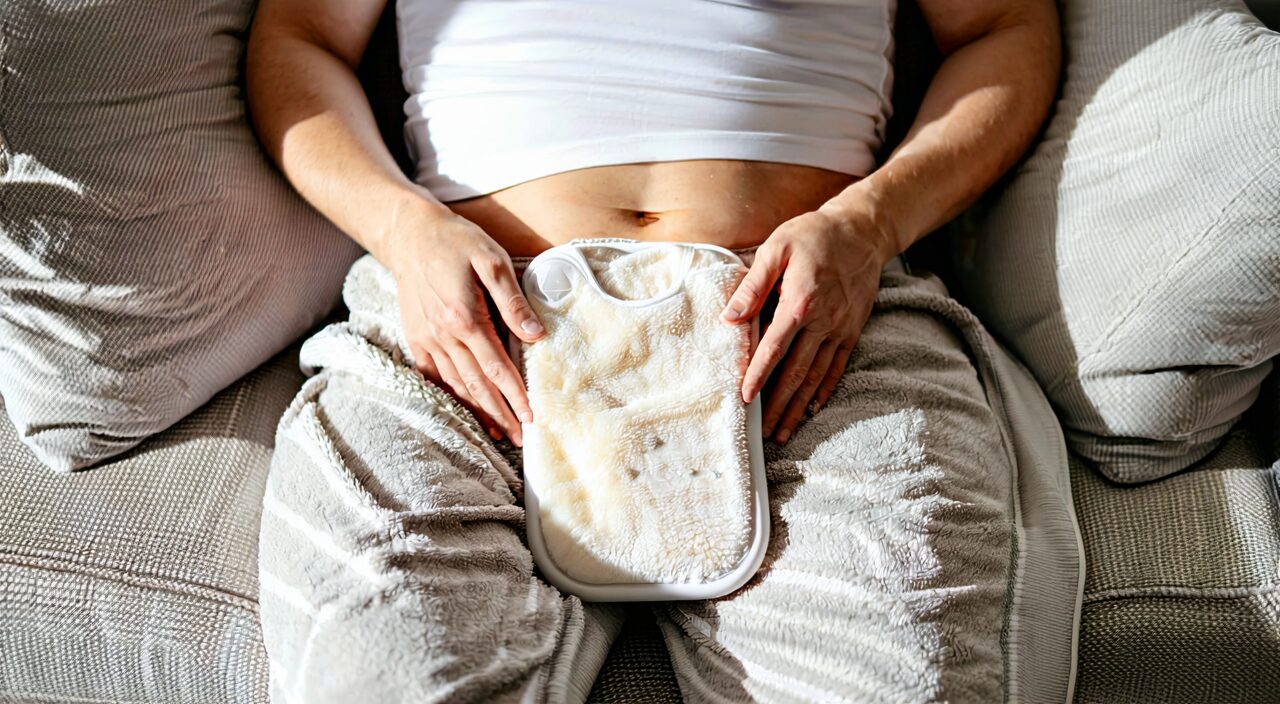
Many people’s first reaction to stomach pain is to apply a hot water bottle. This is indeed effective for some situations, but not all stomach pain is suitable for hot compresses.
From a TCM perspective, stomach pain suitable for hot compresses usually has the following characteristics:
- Worsens with cold, eases with warmth
- Often related to cold pathogen or deficiency-cold, such as occurring after eating raw or cold foods
- Usually accompanied by aversion to cold, cold hands and feet, and loose stools
- Pain is mostly dull and lingering
If the stomach pain presents as a burning sensation, with dry mouth, bitter taste, acid reflux and heartburn, and a red tongue with yellow coating, it is traditionally considered stomach heat or liver-stomach heat stagnation, and applying hot compresses may worsen the discomfort. There is also pain due to qi stagnation and blood stasis, which is stabbing, fixed in location, and cannot be fundamentally resolved by hot compresses alone.
Therefore, hot compresses should not be treated as a universal remedy for stomach pain. When the cause of pain is unclear or the pain is severe, accompanied by black stools, coffee-ground vomit, and persistent without relief, it is imperative to seek medical attention immediately rather than debating between cold or hot compresses.
When Should You See a Doctor Instead of Self-Regulating?

Digestive problems are very common, and most cases of occasional bloating, belching and loose stools can indeed be improved through dietary and lifestyle adjustments. However, some signals require special attention.
If any of the following conditions occur, one should seek medical evaluation as soon as possible and no longer treat them as ordinary digestive problems:
- Unexplained weight loss
- Difficulty swallowing
- Repeated vomiting
- Black stools or blood in stool
- Persistent abdominal pain, even affecting sleep
- A palpable mass in the abdomen
- Accompanied by significant anemia or fever
Emotions are closely related to digestion. When long-term anxiety or depression is present along with stomach bloating, abdominal pain or changes in bowel habits, an integrated approach addressing both mind and body is often needed, rather than relying solely on digestive-regulating teas or Chinese patent medicines. For those with recurrent symptoms that do not improve with self-regulation, professional evaluation is even more necessary to avoid delays.
Children, pregnant women, breastfeeding women and the elderly have different principles for managing digestive issues compared to general adults. “The neighbor’s child got better taking this” cannot be used as a basis. Regulation for special populations must prioritize safety first.
Summary
Digestive issues may appear common, but the underlying specific directions can vary enormously. Self-observation, dietary adjustments, herbal teas and short-term symptomatic use of Chinese patent medicines are only part of daily regulation and cannot replace systematic pattern differentiation and diagnosis.
TCM emphasizes that “the spleen and stomach are the foundation of postnatal constitution,” but nurturing the spleen and stomach does not equate to blind supplementation or long-term reliance on a single Chinese patent medicine. More importantly, one should flexibly adjust according to the signals the body gives and not treat one method of regulation as a universal remedy. When persistent or alarming symptoms appear, seeking professional help in a timely manner is the most reliable way to care for oneself.