
Stomach Sensitivity to Cold (Stomach Cold) in TCM: Approaches to Warming the Center and Dispelling Cold, Plus Chinese Patent Medicine Options

Have you ever had this experience: while others enjoy a refreshing glass of iced water, one sip leaves your stomach feeling cold? When the weather turns chilly, do you find yourself instinctively covering your abdomen with your hands, or only feeling comfortable with a hot water bottle pressed against it? After eating cold dishes or fruits, do you get a dull stomach ache that eases after drinking some hot soup or applying a warm compress?
In traditional Chinese medicine theory, these phenomena are often associated with the concept of “stomach cold.”
Stomach cold is not a single disease name, but rather a general term for a category of stomach functions that lean towards “cold” manifestations. It is more of a reminder that the stomach’s yang qi may not be sufficiently abundant, or that it is being disturbed by cold pathogens. Understanding the ins and outs of stomach cold can help us better choose a conditioning direction that suits us, rather than blindly following trends or mistakenly using heat-clearing products.
What Exactly Does Stomach Cold Mean in TCM?

In Chinese medicine, the “stomach” refers not only to the anatomical stomach pouch, but also encompasses a whole set of functions for receiving and ripening food and fluids. The normal functioning of the stomach depends on the warming and propelling action of “stomach yang.” When stomach yang is insufficient, or when external cold pathogens predominate, the stomach’s warming qi gets suppressed, leading to a series of manifestations characterized by “cold.”
Common Causes of Stomach Cold
The occurrence of stomach cold is usually linked to the following factors:
- Invasion of external cold: Sudden drops in temperature, inadequate abdominal warmth, or exposure of the abdomen during nighttime sleep can allow cold pathogens to directly attack the stomach. For example, during autumn and winter, or when sleeping with air conditioning or a fan all night in summer without covering the belly, cold can easily seize the opportunity to invade.
- Excessive consumption of raw and cold foods: This is one of the most common causes of stomach cold in modern people. Long-term, heavy consumption of ice cream, iced beverages, sashimi, cold salads, or even eating large amounts of fruit on an empty stomach can readily obstruct stomach yang function, allowing cold to enter through the mouth and accumulate in the stomach.
- Insufficient spleen yang involving the stomach yang: In TCM organ theory, the spleen and stomach are interior-exteriorly related; the spleen governs ascending and the stomach governs descending, and both work cooperatively to complete the digestion and absorption of food. If a person inherently has weak spleen yang, for example, being prone to diarrhea, feeling cold, and having cold limbs, it is difficult for the stomach’s function to maintain abundant yang heat. Over time, this can form a pattern of spleen-stomach deficiency cold.
These causes often intertwine. For instance, someone who only occasionally feels discomfort from cold foods may, with the addition of a sedentary lifestyle and excessive stress, experience a further decline in spleen-stomach function, gradually evolving from occasional unease into a chronic state of stomach cold.
Typical Body Language of Stomach Cold
Stomach cold has relatively distinct characteristics. Learning to observe these signals can help you roughly determine whether you lean towards a cold condition. Common manifestations include:
- A chilly sensation in the stomach: Feeling a cold qi in the epigastric region, even as if there is a piece of ice inside, with a constant desire to warm it with your hands or a hot water bottle.
- Cold pain that alleviates with warmth: The pain is often cold pain, dull pain, or cramping pain, worsened by cold and relieved by heat compresses or drinking hot water. This is a fairly characteristic manifestation of stomach cold.
- Bland taste in the mouth without thirst: Frequently feeling a lack of taste in the mouth, with clear, thin, and copious saliva, but without a desire to drink water. Even if drinking, only hot water is preferred.
- Pale and whitish tongue appearance: When looking in the mirror and sticking out your tongue, the tongue body color appears pale, and the tongue coating is white and moist or white and slippery, lacking a vivid, lively color.
- Accompanied by dyspepsia: Prone to poor appetite, fullness after meals, belching, or vomiting clear fluid and thin sputum. Stools may be loose or watery, and in severe cases, undigested food residues may be visible.
These manifestations may not all appear at the same time, but “aversion to cold, preference for warmth, and pain relieved by warmth” are almost the core clues of stomach cold. If you often see yourself reflected in these symptoms, then understanding the direction of warming the center and dispelling cold may be more targeted.
Simple Differentiation Between Stomach Cold and Stomach Heat
When experiencing stomach discomfort, many people tend to buy some Chinese patent medicines on their own. However, if one does not differentiate between cold and heat, it is very easy to use the wrong approach, which may even worsen the discomfort. Therefore, learning to basically distinguish stomach cold from stomach heat is a very valuable step.
Stomach heat (stomach fire) typically manifests characteristics opposite to cold: a burning sensation in the stomach, hunger discomfort (noisy discomfort), acid reflux and heartburn; dry mouth, bitter taste, and a preference for cold drinks; bad breath or mouth sores; the tongue body is reddish, with a yellow or yellow-thick-dry coating; stools may be dry and hard, and urine yellowish. People with stomach heat often prefer cold drinks, feel temporarily comfortable eating cold foods, and find symptoms aggravated by hot, spicy foods.
For easy comparison, the typical manifestations of the two can be summarized as follows:
| Aspect of Comparison | Tendency Toward Stomach Cold | Tendency Toward Stomach Heat |
|---|---|---|
| Sensation in Stomach | Cold pain, dull pain, relieved by warmth; aversion to cold, preference for warmth | Burning sensation, hunger discomfort, acid reflux and heartburn; preference for coolness |
| Drinking Preference | Bland taste, no thirst, or only willing to drink hot water | Dry mouth, bitter taste, preference for cold drinks |
| Tongue Appearance | Tongue body pale, coating white and moist or white and slippery | Tongue body reddish, coating yellow or yellow-thick and dry |
| Bowel Movement | Loose or watery stools, may contain undigested food | Stools tend to be dry, urine yellowish |
In short, one “prefers warmth,” the other “prefers coolness”; one has a “pale tongue with white coating,” the other a “red tongue with yellow coating”; one exhibits “persistent cold pain,” the other “burning hunger discomfort.” By grasping these polar opposites, a preliminary directional judgment can be made in daily life.
However, there are also situations where cold and heat are intermingled, which cannot be clearly distinguished by oneself. If you find that you seem to have both stomach cold and stomach heat, or if symptoms are recurrent and variable, it is not advisable to self-medicate with Chinese patent medicines and you should seek professional help.
Direction for Selecting Traditional Warming and Cold-Dispelling Chinese Patent Medicines
In the long practice of Chinese medicine, some formulas for warming the center, dispelling cold, and harmonizing the stomach to relieve pain have been accumulated and developed into modern, easy-to-use Chinese patent medicines. Here we introduce two commonly mentioned varieties, but it is crucial to understand that they are only a reference direction based on traditional experience, not suitable for everyone, and cannot replace treatment based on syndrome differentiation.
Fuzi Lizhong Wan (Aconite Pill for Regulating the Middle): Often Used for More Severe Spleen-Stomach Deficiency Cold
Fuzi Lizhong Wan comes from the classic Lizhong Wan with modifications, traditionally used for spleen-stomach deficiency cold patterns. In the formula, Fuzi (aconite) and Ganjiang (dried ginger) are strongly acrid and hot substances, combined with Dangshen (codonopsis root), Baizhu (white atractylodes rhizome), and Gancao (licorice root), aiming to warm and tonify spleen-kidney yang and dispel cold pathogens in the middle burner. From a traditional usage perspective, it is often used in cases where stomach cold manifestations are more prominent, even affecting the body’s overall yang qi, such as marked cold pain in the epigastrium, cold hands and feet, fear of cold and chills, vomiting and diarrhea with clear, watery discharge, a pale, swollen tongue that appears watery and smooth, etc.
It is important to note that Fuzi Lizhong Wan has a relatively strong warming and tonifying effect, and is therefore more suitable for those with a deeper degree of deficiency cold and more obvious systemic deficiency cold signs. If one only occasionally feels discomfort from eating cold food, normally has warm hands and feet, or merely has a cold sensitivity in the stomach without obvious systemic deficiency cold, then its scope of application may need to be reevaluated. Moreover, because its warm-hot nature is quite prominent, individuals with heat patterns, yin deficiency with internal heat, or damp-heat accumulation should avoid its use, as misuse may instead cause dry mouth, irritability, constipation, and other discomforts.
Xiangsha Yangwei Wan (Aucklandia and Amomum Stomach-Nourishing Pill): Often Used for Spleen-Stomach Discomfort from Cold-Dampness and Qi Stagnation
Xiangsha Yangwei Wan is another variety commonly used for stomach-cold-related discomfort. Traditionally, it focuses on warming the center and harmonizing the stomach, moving qi and transforming dampness, and is often used for stomach discomfort caused by insufficient stomach yang with dampness obstructing qi movement. Typical applicable directions can be referenced as follows: dull epigastric pain, fullness and distension, poor appetite, vomiting of acid fluid (the acid fluid here tends to be clear and thin rather than hot), noisy discomfort, and the tongue coating often appears white and slimy or white and slippery.
Compared with Fuzi Lizhong Wan, Xiangsha Yangwei Wan, while warming yang and dispersing cold, also adds q i-moving and dampness-transforming herbs such as Muxiang (aucklandia root), Sharen (amomum fruit), Chenpi (tangerine peel), and Banxia (pinellia rhizome). Therefore, it is traditionally considered more for those who, besides fearing cold, also feel a blocked, stuffy, and distended sensation in the stomach, experience belching and difficulty burping, and have a relatively slimy tongue coating. It is more inclined towards cases where cold is mixed with dampness and qi stagnation, rather than purely severe deficiency cold.
Several Reminders for Using Chinese Patent Medicines
Whether it is Fuzi Lizhong Wan or Xiangsha Yangwei Wan, they are all conditioning directions formed based on traditional thought. Whether they are specifically suitable for you depends on a comprehensive judgment combining your individual constitution, current specific symptoms, tongue and pulse presentation, and other information. The following points deserve special attention:
- Do not attempt lightly without clear syndrome differentiation: If you are uncertain about whether your condition is cold or heat, deficiency or excess, or if symptoms are relatively complex, it is recommended not to self-medicate merely based on the term “stomach cold.”
- Read the product instructions carefully: Each type of Chinese patent medicine has clear indications, usage, dosage, and precautions on its label. These must be fully understood before use. Special attention should be paid to whether contraindicated populations, such as pregnant women, children, and those with chronic diseases, are suitable.
- Observe short-term effects and adjust promptly: If after using for a period, symptoms do not improve, or new discomforts even appear, you should pause and reassess whether the direction is correct.
- Be alert to certain warning signals: When stomach pain is severe, recurrent, or accompanied by symptoms such as black stools, weight loss, difficulty swallowing, and intractable vomiting, it may be related to gastric ulcers, atrophic gastritis, or even more serious issues. In such cases, you must see a doctor as soon as possible and undergo modern medical examinations. Do not delay because of your own “stomach cold” judgment.
Key Points for Daily Diet and Lifestyle Care
Before or alongside using external products, lifestyle adjustments are often the foundation for stabilizing stomach conditions. These suggestions are simple and unadorned, but long-term persistence is more important than temporary interventions.
Warm diet, avoid raw and cold foods
For those prone to stomach cold, attention must be paid to both the temperature and nature of food. Try to keep the food and drinks entering your mouth at a warm state, avoiding iced or refrigerated items. Here “raw and cold” refers not only to temperature but also to the nature of foods, such as raw vegetable salads, frozen fruits, sashimi, crab, and other strongly cold-natured ingredients, as well as anything taken directly from the refrigerator. This does not mean you can never eat them, but during periods when stomach cold is pronounced, or during seasonal transitions and times of fatigue, you should exercise particular restraint.
Appropriately choose warming ingredients
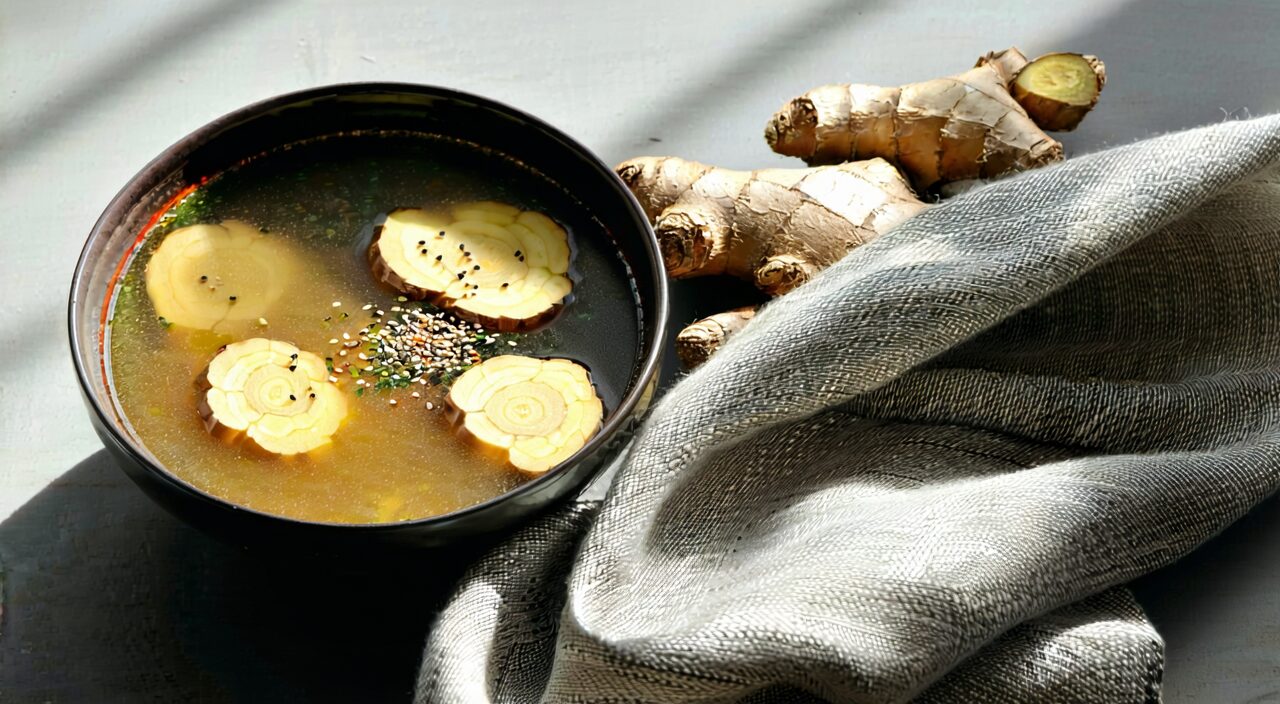
In daily cooking, you may add small amounts of ingredients traditionally considered to have a warming center effect, such as fresh ginger, dried ginger, pepper, cinnamon bark, amomum fruit, and fennel seed. Drinking a bowl of ginger and brown sugar water in the morning, or adding a little shredded ginger when stir-frying, and a few white peppercorns when making soup, can slowly provide warmth during daily meals. Just be aware that such ingredients are warm and drying and should not be used in excess, otherwise they can easily cause “shang huo” (internal heat).
Regular eating habits, chew carefully and swallow slowly
Eating three meals at regular times and in fixed quantities, avoiding extreme hunger and overeating, allows stomach yang to work rhythmically. Slowing down the eating pace and chewing thoroughly also helps reduce the burden on the stomach, indirectly protecting stomach qi.
Abdominal warmth, and do not overlook emotions
During nighttime sleep, ensure the abdomen is properly covered. In cold weather, you can use a belly warmer or abdominal band to prevent cold pathogens from directly attacking. In addition, Chinese medicine holds that “excessive thinking harms the spleen.” Long-term excessive worry, emotional tension, and anxiety can also affect the spleen and stomach’s transportation and transformation functions, potentially worsening stomach cold. Maintaining a calm mindset and appropriately releasing stress are also important aspects of spleen-stomach regulation.
These daily care methods, while not a substitute for professional medical treatment, are fundamentals that everyone can begin to practice. Their role is not to “cure” any problem, but to provide a more friendly environment for the body, allowing the body’s yang qi to unfold comfortably.
Summary
Stomach sensitivity to cold, with a preference for warmth and pressure, is a relatively identifiable clue for stomach cold. From the TCM perspective, it is mostly related to factors such as external contraction of cold pathogens, a cold diet, and insufficient spleen yang. Its essence is that the warming function of stomach yang is somewhat inadequate. Understanding stomach cold helps us find a suitable general direction among the many conditioning methods, while also reminding us to avoid mistakenly using cold-natured, heat-clearing medicines or foods.
Warming and cold-dispelling Chinese patent medicines, such as Fuzi Lizhong Wan and Xiangsha Yangwei Wan, are often used as references for this direction traditionally, but each has its own emphasis and contraindications. They must be selected in combination with specific constitutional and symptomatic presentations, rather than being simply used upon seeing “fear of cold.” More importantly, if stomach discomfort is severe, recurrent, or accompanied by other warning signs, prompt medical attention should be sought to avoid delays.
Daily care, from a warm diet and protecting the abdomen to emotional regulation, is a slow and steady approach. Applying TCM thinking to the details of daily life is more enduring than any single product.