
TCM Understanding and Regulation of Bloating: Spleen Deficiency, Qi Stagnation, or Dampness Obstruction?

Feeling bloated after meals, with a distended abdomen throughout the day—this is a sensation many people know all too well. When faced with bloating, some choose to take a walk to aid digestion, while others reach for digestive or stomachic remedies, but the results often vary from person to person. In Chinese medicine, bloating is not a minor issue that can be resolved with a single approach. It may be related to the spleen’s transportation and transformation capacity, the movement of qi in the body, the retention of dampness and turbidity, or dietary accumulation. Understanding which pattern your condition tends toward may help you gain a little more clarity and a little less aimlessness when trying to regulate it.
It needs to be stated in advance that the following content is only an informational introduction from the perspective of Chinese medicine and cannot replace professional diagnosis. If your bloating persists, recurs repeatedly, or is accompanied by other worrying symptoms, please be sure to consult a doctor promptly.
The Chinese Medicine Perspective on Bloating: More Than Just “Too Much Gas”
Many people simply think of bloating as “too much gas in the belly,” but in Chinese medicine theory, bloating reflects a much more complex picture. Comfort in the abdomen largely depends on the normal transportation and transformation of the spleen and stomach, and on the smooth flow of qi throughout the entire body. The spleen governs raising the clear, and the stomach governs lowering the turbid. It is between this ascending and descending that food can be digested and absorbed, and waste can be passed downward. When this ascending-descending process is disrupted, qi, dampness, and food may stagnate in the middle burner, leading to sensations of abdominal fullness and distension.
Thus, when Chinese medicine looks at bloating, it does not focus solely on “qi.” Instead, it asks further: Why has the qi stopped here? Different backgrounds correspond to markedly different regulatory directions:
- Is it because spleen qi is weak and lacks the strength to propel movement?
- Is it because emotional disturbance has caused qi to become depressed?
- Is it because pathogenic dampness is sticky and obstructs the movement of qi?
- Or is it because a single meal was too large or too mixed, exceeding the spleen and stomach’s processing capacity?
Identifying the Bloating Pattern Through Accompanying Symptoms

To initially differentiate which pattern your bloating tends toward, the most direct method is not to rely on a single manifestation, but to observe the “accompanying symptoms” of bloating. Even if the abdomen is bloated in both cases, the exact quality of the bloating, when it worsens, and what makes it better—these details often provide important clues.
Spleen Deficiency Bloating: Bloating That Feels Better with Pressure, Worsens After Meals, Often Accompanied by Fatigue
Bloating due to spleen deficiency has relatively typical characteristics:
- The degree of fullness is usually not severe, but it lingers and persists.
- Pressing and massaging the area or applying a warm water bottle often brings comfort.
- It is particularly prone to appear or worsen after meals, because the spleen’s transportation capacity struggles even more with newly ingested food and drink.
- It is frequently accompanied by signs of overall “lack of drive”: easy fatigue, low voice, poor appetite, loose or unformed stools, a sallow complexion lacking luster.
- Tongue appearance: The tongue body is usually pale and may appear enlarged with tooth marks; the tongue coating is typically thin and white.
For spleen deficiency bloating, the traditional focus lies on fortifying the spleen, supplementing qi, and aiding transportation and transformation, hoping that by restoring normal function of the spleen and stomach, the qi mechanism can move spontaneously, rather than simply “breaking qi” or “discharging gas.”
Qi Stagnation Bloating: Bloating That Radiates to Both Rib Sides, Relieved by Belching
The sensation of qi stagnation bloating is often different from the lingering distension of spleen deficiency. More often, it is a kind of “attacking and pushing” distension, the location of which is somewhat unfixed, sometimes even involving both sides of the rib cage with dull discomfort.
- The distension easily appears or worsens after emotional fluctuations, nervousness, anxiety, or anger (liver qi invading the stomach or disharmony between liver and spleen).
- Belching or passing gas temporarily relieves the distension, but it may return after a while.
- It may be accompanied by chest tightness, a tendency to sigh, irritability or depression, restless sleep, etc.
- Stools are not necessarily loose, but there may be a sensation of incomplete or difficult defecation, even a feeling of tenesmus.
- Tongue appearance: The tongue coating tends to be thin; the tongue body may be darkish or slightly red on the tip and edges.
For qi stagnation bloating, the regulatory direction in Chinese medicine usually considers soothing the liver and rectifying qi, and harmonizing the stomach to direct rebellious qi downward, so that the constrained qi mechanism can flow freely again. It is worth noting that prolonged qi obstruction can, in turn, affect the function of the spleen and stomach, leading to a mixed condition of deficiency and excess.
Dampness Obstruction Bloating: Fullness Without Appetite, Thick and Greasy Tongue Coating
If the root of spleen deficiency bloating lies in “insufficient motive force,” then the key to dampness obstruction bloating lies in “blocked pathways.” Dampness evil is heavy, turbid, and sticky. When it traps the spleen and stomach, the movement of qi is obstructed, causing persistent sensations of fullness.
- Even before eating, there is often a sensation of dull distension and discomfort in the epigastrium or the entire abdomen, and one rarely feels hungry.
- The body often feels heavy, the head feels foggy as if wrapped, the mouth feels sticky or sweet, and there is no desire to drink water.
- Stools are often sticky and unformed and tend to cling to the toilet bowl.
- Tongue appearance: The tongue coating typically becomes thick and greasy. A white, greasy coating usually indicates cold-dampness or damp-turbidity; a yellow, greasy coating may indicate concurrent damp-heat.
From a regulatory perspective, dampness obstruction bloating requires “transforming dampness and enlivening the spleen.” Through methods such as aromatic dampness-transforming and bitter-warm dampness-drying, the damp-turbidity trapped in the spleen and stomach is resolved, restoring the spleen and stomach’s transportation and transformation ability. Simply moving qi is sometimes not very effective, because as long as the dampness evil remains, the qi mechanism can hardly become truly smooth.
Food Accumulation Bloating: Distension and Pain That Worsens with Pressure, Belching with Putrid Smell and Acid Regurgitation
This pattern is relatively easy to recognize and is most commonly seen after a particular meal or period of overeating, eating too many different kinds of food, or consuming a lot of greasy, hard-to-digest foods.
- The distension is often accompanied by a clear sensation of pain; pressing on the abdomen feels uncomfortable and painful, and the person may resist pressure (completely opposite to the “comfort with pressure” of spleen deficiency bloating).
- Belching carries a foul, acidic, undigested food odor, and there may be sour regurgitation from the mouth.
- Aversion to eating, even feeling uncomfortable at the sight of oily foods.
- Some people may vomit undigested food, have foul-smelling or constipated stools, and show a thick, greasy, curdled tongue coating.
For bloating caused by food accumulation, the focus of regulation usually lies on dispersing food stagnation and guiding it out, helping the accumulated food to be digested quickly and passed downward. Once the stagnation is eliminated and the qi mechanism returns to normal, the feeling of distension and fullness often decreases relatively quickly. However, if the diet remains irregular over a long period and food accumulation occurs repeatedly, it will also further damage the spleen and stomach, planting the seeds of spleen deficiency.
Traditional Application Directions of Common Chinese Patent Medicines in Bloating Regulation
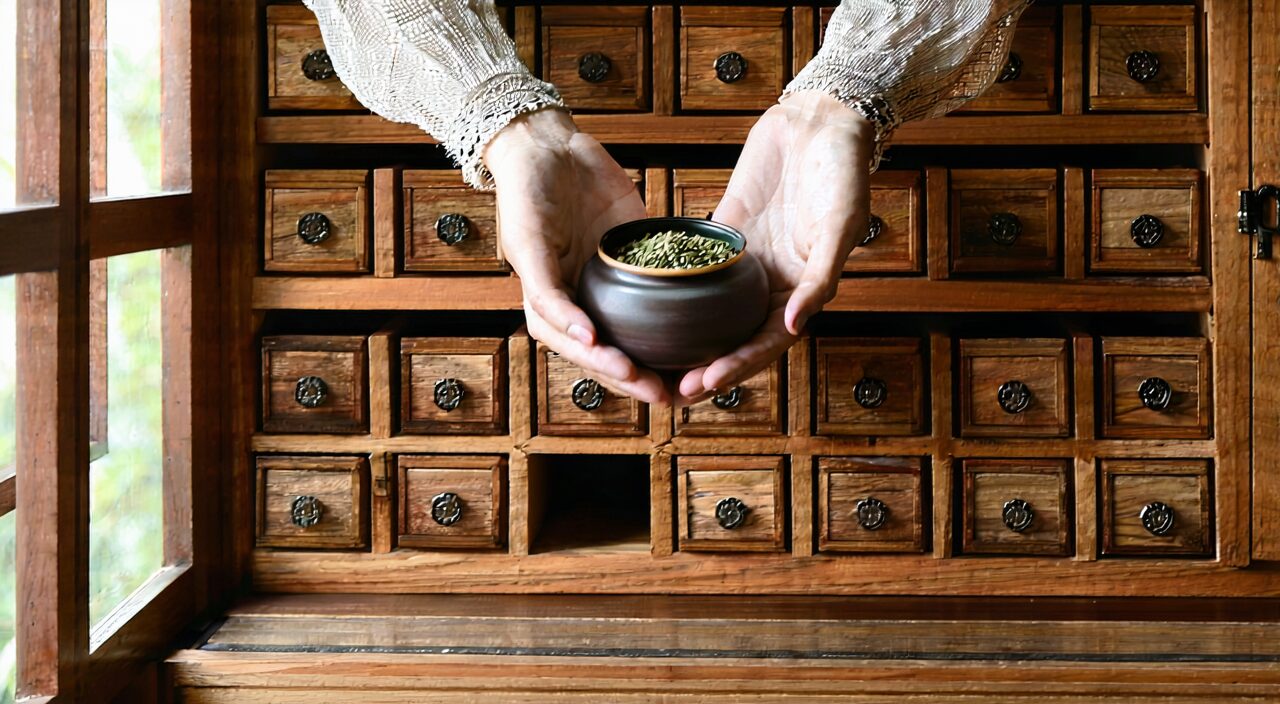
Many people who experience bloating hope to know whether there are suitable Chinese patent medicines that can serve as a management direction. Indeed, several traditional Chinese patent medicines are often mentioned in relation to bloating with different causes, but it must be especially emphasized that they are only “traditional usage directions” corresponding to a certain pattern type and cannot be chosen randomly without differentiation. The following introduction is only for knowledge reference, to help understand the design concepts behind different formulas. Whether a formula is specifically suitable still needs to be determined based on one’s constitution, tongue and pulse presentation, and other symptoms, and when necessary, consultation with a Chinese medicine professional is advised.
Xiangsha Liujun Wan (Six Gentlemen Pill with Aucklandia and Amomum): Commonly Used for Bloating With Spleen Qi Deficiency and Concurrent Qi Stagnation
Xiangsha Liujun Wan can be understood as a combination that supplements qi and fortifies the spleen, then adds ingredients that move qi, harmonize the stomach, transform dampness, and refresh the spleen. Therefore, in traditional application, it is more commonly considered for people whose spleen and stomach tend to be weak, who present with both qi deficiency signs and concurrent qi stagnation.
Manifestations that may be more applicable include:
- Usually easy fatigue, eating little, loose stools
- Significant post-meal bloating that feels better with massage
- Accompanied by mild gas and belching
This type of bloating mostly belongs to a mixed deficiency-excess pattern. Simply moving qi might make the qi deficiency more pronounced, while simply supplementing qi might aggravate the distension. The direction of Xiangsha Liujun Wan is to seek a balance between supplementation and movement.
Muxiang Shunqi Wan (Costus Root Qi-Regulating Pill): Commonly Used for Bloating With Damp-Turbidity Obstructing the Middle and Qi Mechanism Obstructed
The traditional positioning of Muxiang Shunqi Wan leans toward “moving qi and transforming dampness, fortifying the spleen and harmonizing the stomach.” Its composition includes relatively strong qi-moving medicinals and dampness-transforming, spleen-refreshing medicinals. The more commonly mentioned applicable scenarios are:
- Mainly epigastric and abdominal distension and oppression, frequent belching, chest and hypochondriac stuffiness, nausea, or poor appetite
- A white, greasy tongue coating
When qi stagnation and dampness-turbidity coexist and entangle each other, this combined approach of rectifying qi and transforming dampness is traditionally considered helpful in breaking open the obstructed situation. However, Muxiang Shunqi Wan is generally not recommended for long-term continuous use, and caution is needed for those with an obviously weak constitution or without clear dampness stagnation and qi binding.
Baohe Wan (Harmony-Preserving Pill): Commonly Used for Bloating Caused by Food Stagnation
Baohe Wan is a typical dispersing-food and guiding-out formula. Its core directions are “dispersing” and “guiding,” that is, helping to break down food stagnation that has already accumulated and guiding it downward to be eliminated. It is most often chosen as a response to a single episode of dietary indiscretion or binge eating, when the following appear:
- Epigastric and abdominal distension and fullness
- Belching with putrid odor and acid regurgitation
- No desire to eat, even wanting to vomit
This type of bloating often comes on relatively acutely, with distension that worsens with pressure. Once the food accumulation is resolved, the distension significantly decreases. It should be noted that Baohe Wan mainly targets the excess stage of food stagnation. If the bloating is due to weak spleen transportation, relying on dispersing and guiding for a long time may actually damage the spleen and stomach qi.
Huoxiang Zhengqi Wan (Agastache Qi-Correcting Pill): Commonly Used for Bloating With External Contraction of Wind-Cold and Internal Damage From Dampness Stagnation
Huoxiang Zhengqi Wan is a fairly classic traditional formula. Its composition addresses both releasing the exterior and transforming dampness, and rectifying qi and harmonizing the center. The scenarios in which it is more frequently mentioned involve internal damp-turbidity obstruction complicated by external invasion, for example:
- Abdominal distension and discomfort
- Accompanied by nausea, vomiting, diarrhea
- Head heaviness or low-grade fever with aversion to cold
- A white, greasy tongue coating
The bloating it addresses is often not an isolated symptom, but rather part of a broader picture of dampness trapping the spleen and stomach with simultaneous external and internal disease.
The selection of any Chinese patent medicine is never about simply equating a symptom with a product name. The four patent medicines mentioned above have different orientations: some emphasize supplementation, some movement, some dispersion, and some transformation. Using them casually without differentiation may not only be inappropriate for the pattern, but could also bring about contrary discomforts. It is therefore advisable to carefully read the product instructions before use and, as far as possible, combine it with professional Chinese medicine diagnosis when making decisions.
Which Bloating Situations Merit Attention and Medical Consultation?

Although functional bloating is quite common in daily life, bloating can sometimes be a signal of health issues that need to be taken seriously. If any of the following conditions appear, you should seek medical attention as soon as possible rather than continuing to self-manage at home:
- Bloating that persists without relief or progressively worsens
- Accompanied by unexplained weight loss and emaciation
- A palpable mass or hardened area in the abdomen
- Bloating accompanied by severe or progressively worsening abdominal pain
- Blood in the stool, black stools, or a sudden obvious change in bowel habits
- Accompanied by fever, chills, or persistent vomiting
- Bloating that affects food intake, leading to long-term inadequate nutritional intake
These symptoms may indicate the possibility of organic disease and require professional examination to clarify the cause. For bloating that recurs repeatedly and severely affects quality of life, even without the above warning signals, seeking medical consultation should be considered. A doctor can evaluate whether problems such as Helicobacter pylori infection, intestinal flora imbalance, chronic gastritis, functional dyspepsia, or gynecological conditions are present.
Summary
Although bloating appears to be a very ordinary symptom, under Chinese medicine observation it can point toward completely different internal states:
- Spleen deficiency bloating: Often feels better with pressure, worsens after meals, accompanied by fatigue.
- Qi stagnation bloating: Attacking and pushing, variable in location, related to emotions, relieved after belching.
- Dampness obstruction bloating: Fullness without appetite, thick greasy tongue coating, heavy body.
- Food accumulation bloating: Distension and pain that worsens with pressure, belching with putrid odor and acid regurgitation, usually with a history of dietary irregularities.
Chinese patent medicines such as Xiangsha Liujun Wan, Muxiang Shunqi Wan, Baohe Wan, and Huoxiang Zhengqi Wan each correspond to different pattern directions in traditional use and cannot substitute for one another.
When facing bloating, the most important first step is not to hurriedly search for a particular “miracle remedy,” but to carefully review your own diet, emotions, accompanying symptoms, and lifestyle habits, and try to bring more awareness to the body’s real needs. On this basis, if bloating recurs repeatedly or is accompanied by other abnormalities, be sure to prioritize seeking professional medical help. Only after a clear diagnosis and pattern identification is it possible to discuss regulation methods, including Chinese patent medicines, and thereby take care of your digestive health in a safer and more clearly directed manner.