
Differentiating Stomach Cold Pattern and Stomach Heat Pattern in Chinese Medicine: Choosing the Right Patent Remedies – Aversion to Cold or Burning Sensation?

Many people habitually turn to Chinese patent medicines for relief when experiencing stomach discomfort, but the results are sometimes less than ideal, and a major reason is the failure to distinguish between cold and heat patterns.
For the same stomach pain, some people feel much better after applying a hot water bottle, while others feel as if there is a fire burning in their stomach and become more uncomfortable with heat. Traditional Chinese medicine often interprets such differences from the perspective of cold and heat properties, categorizing them into two main types: Stomach Cold pattern and Stomach Heat pattern.
This article aims to help readers develop a preliminary ability to judge the general direction of cold or heat through simple self-observation, and to understand the characteristics of some traditional Chinese patent medicines related to these patterns. However, it must be emphasized that no self-assessment can replace professional face-to-face diagnosis and pattern differentiation by a TCM practitioner.
Different Signals the Body Gives for Stomach Cold and Stomach Heat
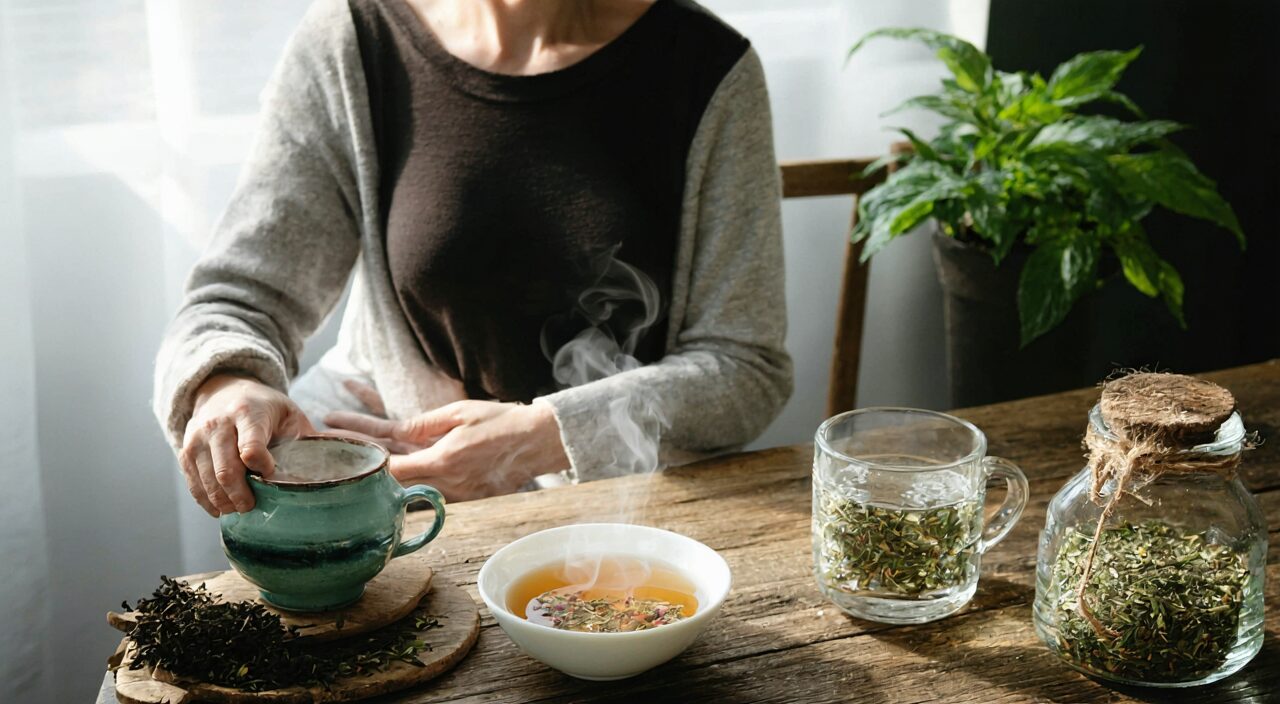
To differentiate between Stomach Cold and Stomach Heat, the most intuitive clues come from the stomach’s own sensations, preferences for hot or cold environments, and changes in tongue appearance. Although both may present with stomach pain, bloating, and reduced appetite, there are distinct differences upon closer examination.
Typical Manifestations of Stomach Cold Pattern
The core feature of the Stomach Cold pattern is “coldness.”
- Stomach sensation: Often presents as cold pain or dull pain, which worsens after exposure to cold or ingestion of cold foods and is alleviated by warmth.
- Preference for warmth: There is an instinctive desire to massage the stomach, drink hot water, or use a heating pad. “Relief with warmth” is an important clue for identifying Stomach Cold.
- Accompanying symptoms: Bland taste without thirst, copious clear and thin saliva, tendency to regurgitate clear fluids, aversion to cold, cold hands and feet, and stools tending to be loose.
- Tongue appearance: The tongue body is pale, the coating is white and moist, and the tongue surface is glossy, lacking heat signs.
Typical Manifestations of Stomach Heat Pattern
The core feature of the Stomach Heat pattern is “burning.”
- Stomach sensation: Often a burning sensation, heartburn, or epigastric discomfort, as if something spicy and hot is churning in the stomach.
- Preference for coolness: Generally dislikes hot foods, prefers cold drinks and cold foods for temporary relief; hot soups may worsen the discomfort.
- Accompanying symptoms: Dry mouth, bitter taste, bad breath, swollen and painful gums, and tendency to develop mouth sores. Some people also experience “rapid digestion with rapid hungering,” meaning they feel hungry again shortly after eating, yet the stomach remains uncomfortable after meals.
- Tongue appearance: The tongue body is red, the coating is yellow or even thick, yellow, and dry, and the tongue surface lacks moisture.
Through the core contrast of “cold pain that prefers warmth” and “burning sensation that prefers coolness,” most people can make an initial rough screening. Of course, in reality, some people’s symptoms are not so typical, which calls for extra caution.
| Comparison Item | Stomach Cold Pattern | Stomach Heat Pattern |
|---|---|---|
| Core Sensation | Cold pain, dull pain | Burning, heartburn |
| Temperature Preference | Prefers warmth and pressure, relieved by warmth | Prefers coolness, dislikes heat, aggravated by heat |
| Common Accompanying Manifestations | Bland taste without thirst, clear and thin saliva, aversion to cold, loose stools | Dry mouth, bitter taste, bad breath, swollen and painful gums, frequent hunger with epigastric discomfort |
| Tongue Appearance | Pale tongue body, white moist coating | Red tongue body, yellow dry coating |
Situations That Can Easily Confuse Cold and Heat Differentiation
Many people hastily judge cold or heat based on reactions after a single meal, but this approach has many pitfalls.
Food Stagnation Transforming into Heat and Transient Reactions
- Misjudgment from a single stimulus: Heartburn, burning sensation, and dry mouth after a spicy hot pot meal may simply be due to food stagnation transforming into heat or a temporary aggravation of damp-heat caused by spicy and greasy foods, and does not necessarily indicate a constitution with Stomach Heat pattern.
- Cold at the root with heat manifestations: If the underlying condition is Stomach Cold, occasional overeating or stimulation may also trigger transient “heat signs.” This situation is considered a mixture of cold and heat, or root cold with branch heat.
Deficiency Fire and True Cold with False Heat
- Characteristics of deficiency fire: People with long-term irregular diet and lifestyle, leading to dual deficiency of stomach qi and yin, may also experience mild burning sensations such as dry mouth and heartburn. However, the tongue body is often pale or tender, rarely with a true thick, yellow, and dry coating, and they often have deficiency signs like easy hunger after meals but inability to tolerate hunger, fatigue, and lack of strength.
- Risk of erroneous heat-clearing: If bitter-cold heat-clearing medicines are used incorrectly over a long period, they may instead damage stomach qi, making the discomfort hard to improve.
For recurrent stomach discomfort, especially when accompanied by weight loss, black stools, persistent distending pain that does not relieve, difficulty swallowing, or unexplained anemia, it is recommended to first consult a gastroenterologist and complete relevant examinations. Then a TCM practitioner can conduct pattern differentiation based on the four diagnostic methods. Simply labeling oneself as having “Stomach Cold” or “Stomach Heat” may delay attention to complex conditions.
Traditional Chinese Patent Medicines Reference: Options for Stomach Cold Tendency
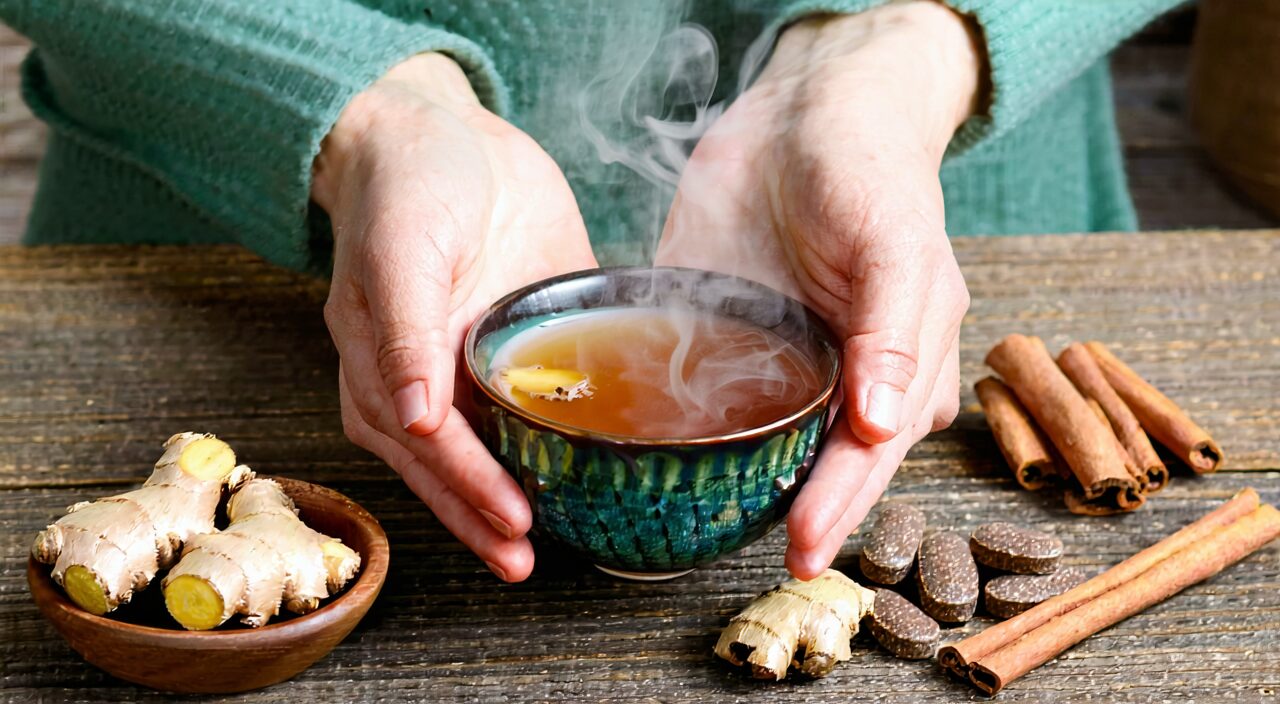
When TCM pattern differentiation clearly indicates a Stomach Cold pattern, or when typical cold pain with a preference for warmth and pressure occurs after catching a chill or overconsumption of cold foods in daily life, some traditional Chinese patent medicines are often used as part of a regulating approach. However, any choice should be made based on an overall assessment of individual constitution, specific symptoms, and product instructions.
Fu Zi Li Zhong Wan
- Application direction: Primarily for relatively severe deficiency-cold of the spleen and stomach, or when accompanied by a certain degree of spleen-kidney yang deficiency.
- Common presentations: Obvious cold pain in the epigastric region, aversion to cold with cold limbs, loose stools, fatigue, a soft abdomen that feels better with pressure, pale tongue with white moist coating.
- Precautions: Because Fu Zi has a strong yang-warming effect, improper use may promote heat. It is essential to consider suitability under the guidance of an experienced TCM practitioner. Those prone to excessive internal heat, who often have dry mouth and irritability, or have patterns of excess heat, damp-heat, or yin deficiency with internal heat, should not self-medicate with it.
Xiang Sha Yang Wei Wan
- Application direction: Warms the middle, harmonizes the stomach, moves qi, and transforms dampness. It is often used for stomach discomfort caused by cold-dampness encumbering the spleen or qi stagnation with cold.
- Common presentations: Epigastric distension, dull pain, belching, slight relief after burping, reduced appetite, white greasy tongue coating; symptoms worsen when the weather turns cold or after eating cold foods.
- Precautions: It is still a warm-natured medicine and is not suitable for those with Stomach Heat or yin deficiency. Its direction differs from Fu Zi Li Zhong Wan; they cannot be simply interchanged.
It should be noted that even within the Stomach Cold pattern, the depth of cold and the proportion of concurrent dampness and qi stagnation vary. These two patent medicines cannot be simply substituted for each other; decisions should be based on specific manifestations and previous medication responses. When in doubt, consult a professional first.
Traditional Chinese Patent Medicines Reference: Options for Stomach Heat Tendency
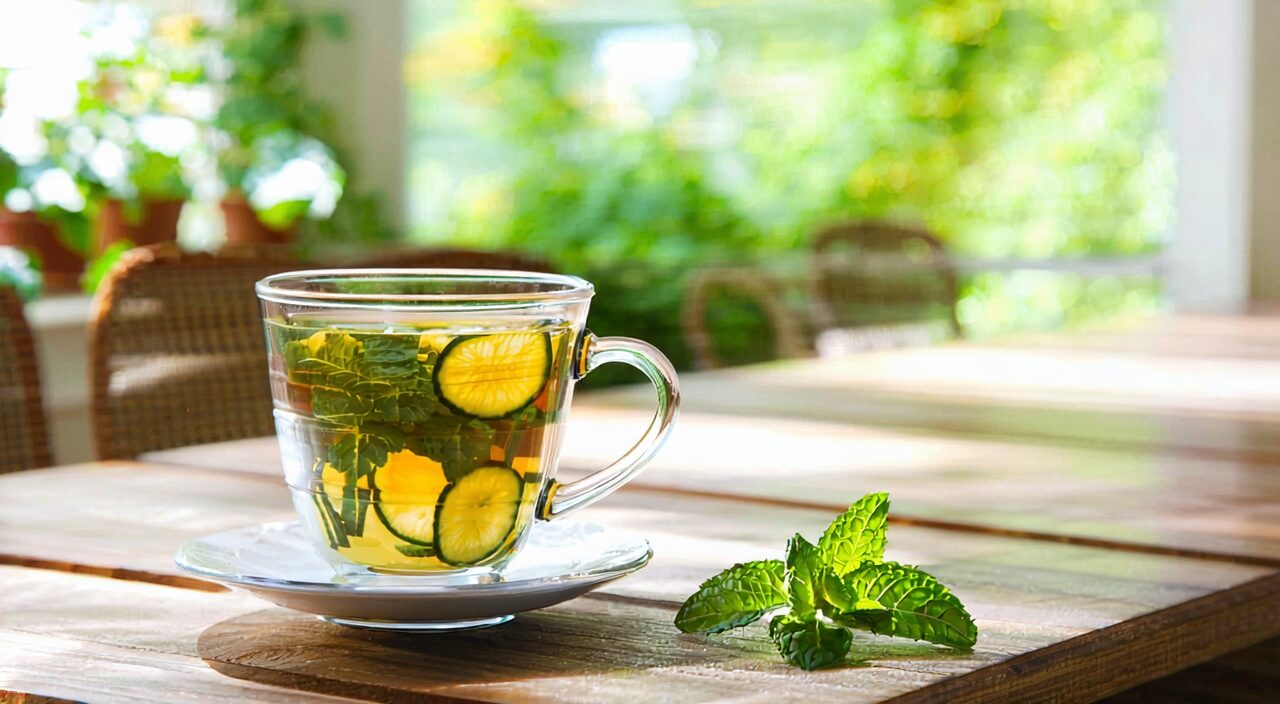
Likewise, only when it is confirmed that the stomach discomfort is primarily due to excess heat or internal damp-heat should heat-clearing Chinese patent medicines be considered, with caution about the risk of excessive heat-clearing damaging stomach yang.
Zuo Jin Wan
- Combination characteristics: A 6:1 ratio of Huang Lian to Wu Zhu Yu, focusing on clearing liver-stomach stagnant fire.
- Suitable scenarios: More appropriate for cases of liver fire invading the stomach with stomach qi rebelling upward. Typical manifestations include epigastric noise and discomfort, burning sensation, acid reflux, bitter taste, distension and fullness in the hypochondrium, irritability and easy anger, red tongue with yellow coating.
- Unsuitable situations: May not be the best choice when there is only food accumulation heat without obvious liver qi depression. Those with weak spleen and stomach constitution and no or minimal heat signs may experience aggravated stomach discomfort or diarrhea after use.
Niu Huang Qing Wei Wan
- Characteristics: Relatively strong heat-clearing and fire-draining action; traditionally used more for exuberant heart-stomach fire and internal binding of excess heat.
- Common presentations: Mouth and tongue sores, swollen and painful gums, sore throat, constipation, pronounced oral malodor, red tongue with thick yellow dry coating.
- Precautions: Should not be used for a prolonged period; the approach should be adjusted once heat signs diminish. People with underlying cold stomach, aversion to cold, loose stools, and without clear excess heat manifestations should not self-select this medicine.
Regardless of which direction is chosen, start with a smaller dose for one or two trials. If there is no improvement or new discomfort appears, stop immediately and prioritize seeking face-to-face diagnosis and pattern differentiation from a TCM practitioner.
The Challenge of Mixed Cold and Heat

Clinical presentations are often far more complex than textbook descriptions.
- Common manifestations: Some people have “cold” signs such as aversion to cold with a preference for warmth and stomach pain triggered by chill, yet also “heat” signs like heartburn, bitter taste, red tongue with yellow coating. This mixed cold-heat pattern is not uncommon.
- Causes: It may originate from spleen-stomach deficiency-cold with subsequent qi stagnation transforming into heat, or from long-term dietary irregularities leading to an alternation of damp-heat and cold-dampness.
- Risk of unilateral medication: Simply applying purely warming or bitter-cold medicines may worsen some symptoms.
- TCM strategies: Often a combination of cold and heat methods is used, such as acrid opening and bitter downbearing, harmonizing liver and spleen. For example, Banxia Xiexin Decoction uses Huang Lian and Huang Qin to clear heat together with Gan Jiang and Ren Shen to warm the middle and tonify qi in the same formula, addressing the mixed state of cold, heat, deficiency, and excess. However, using such formulas requires precise composition and dosage adjustments, and they should not be self-explored by non-professionals.
If you find that you have both cold and heat pattern manifestations, the best approach is to record the symptom details and triggers meticulously, and have a TCM practitioner make a comprehensive assessment by integrating pulse diagnosis and other information. Never self-combine Chinese patent medicines intended for cold and heat patterns, to avoid conflicts in medicinal properties or damage to the spleen and stomach.
Daily Diet and Lifestyle Adjustments
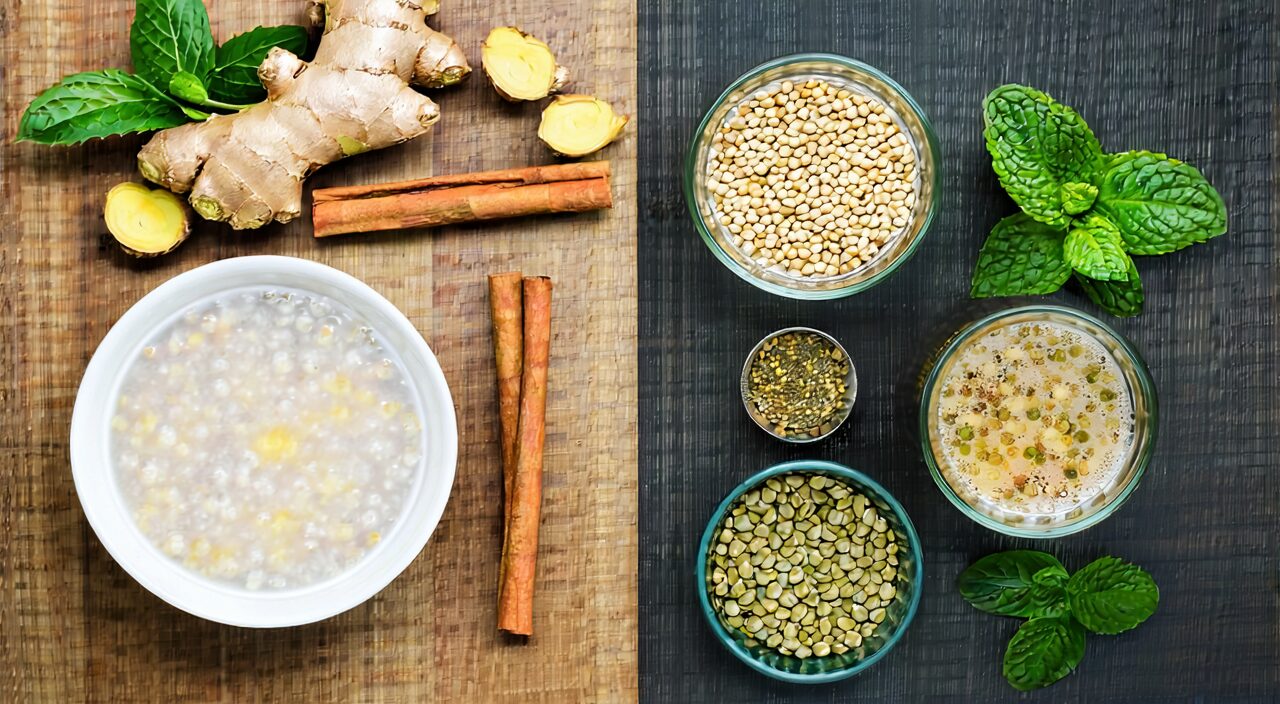
Whether leaning toward cold or heat, dietary and lifestyle adjustments form the foundation, but the direction of regulation is diametrically opposite and must be tailored according to one’s own tolerance and response.
If overall leaning toward Stomach Cold:
- The diet should be warm and easily digestible. Foods that warm the middle and dispel cold can be consumed in moderation, such as fresh ginger, dried ginger, fennel seeds, and a small amount of cinnamon.
- Avoid raw and cold fruits and vegetables, iced drinks, cold salads, and vegetables with cold properties such as bitter gourd and winter melon.
- After meals, gently massage the epigastric region clockwise with the palm. Keep the abdomen and feet warm, and avoid prolonged exposure to cold environments.
If overall leaning toward Stomach Heat:
- Stay away from spicy, deep-fried, barbecued, and excessively hot foods; reduce alcohol and sugary beverages.
- Moderately increase light and refreshing foods like millet porridge, Chinese yam, steamed pumpkin, and mung bean soup, but avoid excessive cold in nature.
- Emotional management is equally important; impatience and anxiety can easily fuel liver-stomach stagnant heat. Try to maintain a regular routine and a calm mindset.
All dietary and lifestyle adjustments should be cultivated as long-term habits, not short-term “treatments.” If after a period of adjustment symptoms still recur or persist, or if warning signs such as a sharp decline in appetite, significant weight loss, or persistent abnormal stool characteristics appear, seek evaluation by both a gastroenterologist and a TCM practitioner as soon as possible.
Summary
The key differentiating points between Stomach Cold and Stomach Heat lie in whether the stomach sensation is cold pain or burning, whether it prefers warmth or coolness, and whether the tongue appearance is pale, white, and moist or red, yellow, and dry. Based on these self-observations, you can establish a preliminary framework of cold and heat orientation and then understand the approximate applicable scenarios of certain traditional Chinese patent medicines. However, this framework should never be equated with a definitive self-diagnosis.
In reality, stomach problems often involve mixed cold and heat, and a combination of deficiency and excess, so blindly using single-nature medicines carries risks. All Chinese patent medicines and regulating directions mentioned in this article are for educational reference only, to help readers be better informed when consulting professionals. Any persistent, severe, or complex and variable discomfort should first seek in-person evaluation by a doctor and TCM practitioner. Treatment decisions should be based on a thorough understanding of one’s individual health condition.