
TCM Regulation for Loose Stools and Diarrhea: Spleen Deficiency with Dampness as a Common Pattern

Many people have this nagging concern: stools that are consistently unformed, soft and loose, sometimes sticky and hard to flush away, and bowel movements that are a bit more frequent than normal. If this only happens occasionally, it’s mostly linked to dietary indiscretions; but once it becomes a chronic state, it easily makes one unsettled — is something wrong with the body?
In modern medicine, chronic unformed stools can involve intestinal dysfunction, chronic enteritis, irritable bowel syndrome, malabsorption, and many other conditions. From the perspective of Chinese medicine, such issues are often categorized as “loose stools” (biantang) or “sloppy diarrhea,” and they are frequently closely related to the functional state of the Spleen and the metabolism of body fluids and dampness. This article does not target any specific disease; rather, it starts from the common understanding of unformed stools in traditional Chinese medicine to help readers clarify their thinking and reduce the troubles that come from blind self-regulation.
Why do stools become unformed? Chinese medicine often starts with the “Spleen” and “Dampness”
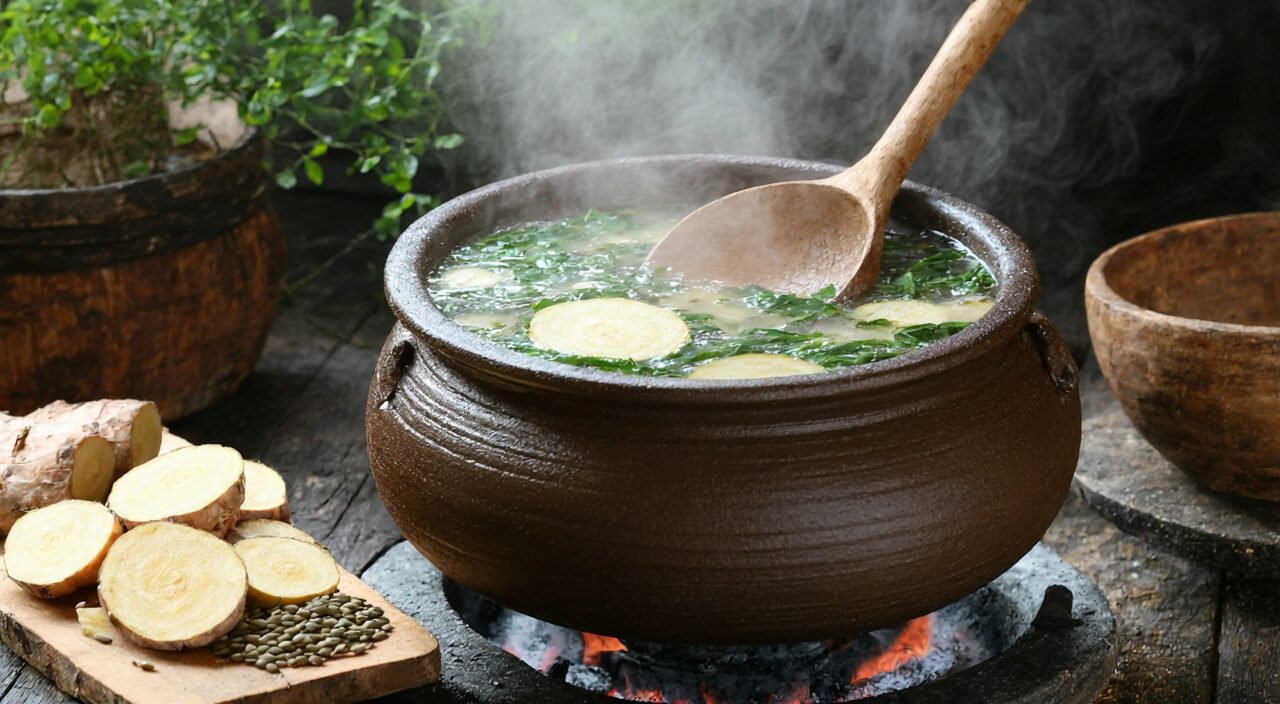
Traditional Chinese medicine’s description of normal stools usually emphasizes well-formed, moderately soft and firm consistency, and smooth elimination. Once stools are persistently loose and unformed over a long period, the first considerations often involve whether the Spleen and Stomach’s transportation and transformation function is weakened and whether there is retained water-dampness in the body.
The Spleen and Stomach are often likened to the “root of postnatal constitution,” primarily responsible for transporting and transforming food essence and water-dampness. If Spleen qi is insufficient, its transporting capacity declines, and water-dampness cannot be normally distributed and discharged, easily lodging in the intestines and leading to increased water content in the stool. This then manifests as unformed, loose stools, sometimes sticky and unpleasant defecation, a heavy body sensation, an enlarged tongue body, and tooth marks on the tongue edges, among other signs.
Therefore, “Spleen deficiency with dampness exuberance” can be seen as a core clue to understanding unformed stools. But it is not the only possible pattern. For the same loose stools, the accompanying symptoms and the regulation strategies can differ markedly depending on whether cold, heat, or yang deficiency is mixed in. If one uniformly applies “drain dampness” and “tonify the Spleen” approaches regardless of cold, heat, deficiency, or excess, it can sometimes lead to more chaos.
How to preliminarily distinguish different patterns? Pay attention to defecation sensations and whole-body manifestations
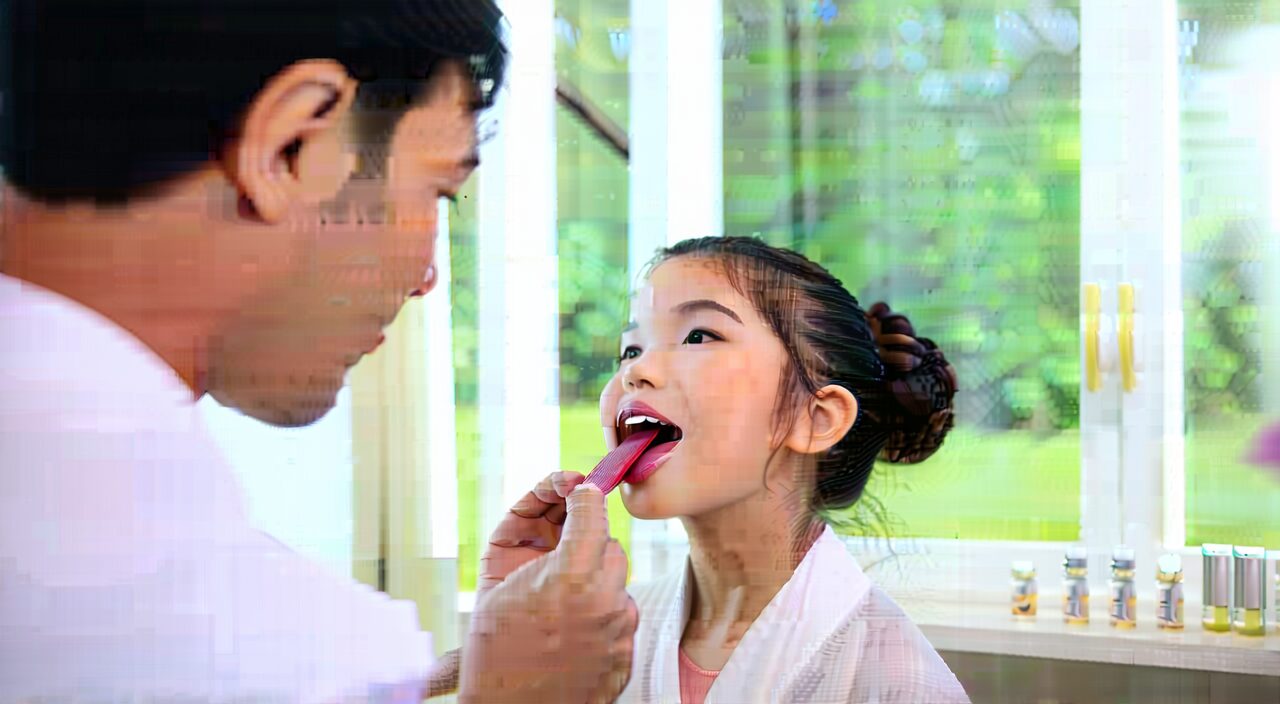
For chronic unformed stools, Chinese medicine typically does not look only at the stool itself but makes comprehensive judgments in combination with the whole-body state. The following sorts out several common patterns to help readers establish a rough differentiation framework. It should be noted that these are just categories based on traditional understanding; actual conditions often present as mixed patterns, self-assessment can easily be biased, and it is more advisable to proceed under professional guidance.
Spleen deficiency with dampness exuberance: loose stools, mental fatigue, lack of strength
This is the most commonly seen pattern. Typical manifestations include:
- Stools that are soft or loose, unformed, often with a residual feeling of incomplete evacuation after defecation, but generally not particularly urgent.
- Everyday proneness to fatigue, shortness of breath, reluctance to speak, and a relatively obvious sense of abdominal bloating after meals.
- Tongue presentation often shows a somewhat pale tongue body, an enlarged tongue with tooth marks on the edges, and a white or white slimy coating.
Traditionally, this type of condition is often addressed with approaches that fortify the Spleen and boost qi, and percolate dampness to stop diarrhea. The corresponding Chinese patent medicine, Shen Ling Bai Zhu San, is commonly used for directions such as poor appetite, loose stools, shortness of breath, and lack of strength stemming from Spleen deficiency with dampness. It leans towards neutral supplementation, and its dampness-drying strength is relatively gentle, making it more suitable as a reference when Spleen deficiency with dampness does not have obvious cold or heat manifestations.
Cold-dampness encumbering the Spleen: clear, watery stools, aversion to cold, preference for warmth
If, in addition to unformed stools, there are clear cold signs, this points more towards the direction of cold-dampness encumbering the Spleen. Typical manifestations include:
- Clear, watery stools, even containing undigested food residues, with a not very strong odor.
- Cold sensation in the abdomen, aversion to cold, cold hands and feet, preference for hot drinks; easily aggravated when the abdomen gets cold.
- Tongue coating is white and slippery or white and slimy, the tongue body is not red.
Traditionally, for cases with obvious Spleen-Stomach vacuity cold and internal cold-dampness retention, approaches of warming the middle and dissipating cold, and fortifying the Spleen and drying dampness may be considered. Fu Zi Li Zhong Wan is one of the formulas frequently mentioned in this direction, suitable for patterns of middle-yang insufficiency and cold-dampness encumbering the Spleen that cause clear, watery diarrhea, cold pain in the abdomen, and cold hands and feet. Because it contains aconite (Fu Zi), its warming-heating nature is quite strong, making it only appropriate for clearly cold patterns; it is not suitable for damp-heat or yin deficiency constitutions.
Damp-heat pouring downward: sticky stools, anal burning
Some people’s stools, while also unformed, feel more sticky, cloying, and unpleasant, with a very strong odor. This situation is often related to damp-heat. Typical manifestations include:
- A burning sensation in the anus during defecation, even tenesmus (a feeling of incomplete evacuation with rectal urgency).
- More prone to occur after excessive consumption of spicy, greasy, or sweet, cloying foods, or when staying in a damp, stuffy environment for a long time.
- Tongue coating is often yellow and slimy, the tongue body tends to be red.
For unformed stools in the damp-heat direction, the regulation thinking focuses on clearing heat and draining dampness, which is distinctly opposite to the Spleen deficiency cold-dampness direction. If warming and supplementing formulas are used by mistake, they may instead aggravate the discomfort. Huo Xiang Zheng Qi Wan is often mentioned in this context; it is more focused on gastrointestinal discomfort caused by external contraction of wind-cold with internal damage from dampness stagnation or summerheat-dampness. It has a certain action of transforming dampness and harmonizing the middle for cold-dampness or turbid dampness encumbering the Spleen. It is important to note that Huo Xiang Zheng Qi Wan leans towards warm transformation, making it more suitable for cases where cold-dampness or turbid dampness is predominant and heat signs are not strong; if damp-heat is relatively severe, other directions more targeted at clearing damp-heat may be needed.
Kidney yang insufficiency: fifth-watch diarrhea, soreness and cold in the lower back and knees
There is another situation that cannot be overlooked. Typical manifestations include:
- Long-term loose stools, especially prone to occur in the early morning before daybreak, known as “fifth-watch diarrhea.”
- Accompanied by marked soreness and weakness of the lower back and knees, aversion to cold with cold limbs, and increased nighttime urination.
- Chinese medicine considers this related to Kidney yang insufficiency and decline of the life gate fire, failing to warm the Spleen earth.
In such cases, simply fortifying the Spleen is often insufficient; traditionally, warming and supplementing Kidney yang must be taken into account concurrently. Directions like Fu Zi Li Zhong Wan combined with Si Shen Wan are also frequently mentioned, but loose stools due to Kidney yang insufficiency usually have a longer disease course and more prominent systemic vacuity cold manifestations. It is recommended to choose regulation methods under professional judgment and not to self-administer warming-hot medicinals over a long period.
Internal exuberance of phlegm-dampness: sticky, cloying unformed stools, tendency to overweight
There is yet another somewhat special type of unformed stools, mainly presenting as extremely sticky and difficult-to-flush bowel movements, though the stool may not necessarily be very loose. Typical manifestations include:
- Sticky stools that are hard to flush away, but the consistency is not necessarily very thin.
- Tendency to overweight body shape, copious phlegm, easy fatigue and sleepiness, thick and slimy tongue coating.
- Chinese medicine holds that internal exuberance of phlegm-dampness can also affect the intestinal conveyance function.
Er Chen Wan is a foundational formula for drying dampness and transforming phlegm, traditionally used for patterns of phlegm-dampness stagnation causing cough with copious phlegm, distension and fullness in the chest and epigastrium, nausea, and vomiting. When loose stools coexist with pronounced phlegm-dampness manifestations, some people, under professional advice, take it as one reference direction for transforming phlegm and drying dampness. Er Chen Wan does not directly aim to stop diarrhea; rather, it indirectly improves the intestinal environment by reducing phlegm-dampness. Whether it is suitable requires comprehensive judgment of the whole picture.
Chinese patent medicines are only directional references; do not blindly self-match patterns
The above-mentioned Shen Ling Bai Zhu San, Fu Zi Li Zhong Wan, Huo Xiang Zheng Qi Wan, and Er Chen Wan are all traditional formulas or patent medicines, often applied in regulation approaches for their corresponding directions. For easier differentiation, their emphatic directions can be organized as follows:
| Chinese Patent Medicine | Emphatic Direction | Applicable Condition Reference | Special Considerations |
|---|---|---|---|
| Shen Ling Bai Zhu San | Tonify Spleen, percolate dampness | Spleen deficiency with dampness exuberance without obvious cold or heat manifestations, often with poor appetite, shortness of breath, lack of strength | Dampness-drying action is gentle; consider when cold or heat signs are absent |
| Fu Zi Li Zhong Wan | Warm the middle, dispel cold | Spleen-Stomach vacuity cold, internal exuberance of cold-dampness, clear watery stools, cold abdominal pain, cold hands and feet | Strong warming nature; unsuitable for damp-heat or yin deficiency constitutions |
| Huo Xiang Zheng Qi Wan | Transform dampness, harmonize the middle | Cold-dampness encumbering the Spleen or summer-dampness causing epigastric and abdominal distension, loose stools | Leans towards warm transformation; for relatively severe damp-heat, other directions may need to be chosen |
| Er Chen Wan | Dry dampness, transform phlegm | Internal exuberance of phlegm-dampness, sticky unformed stools, may accompany cough with copious phlegm, distension in the chest and epigastrium | Does not directly stop diarrhea; requires comprehensive whole-body judgment |
If the pattern is discerned incorrectly — for example, using warming medicinals in a damp-heat constitution, or using heat-clearing and dampness-draining formulas in a cold-dampness constitution — it may bring new discomforts. Therefore, these formulas or patent medicines mentioned in this article can only serve as references for understanding Chinese medicine regulation concepts. Whether they are suitable still requires comprehensive consideration of individual constitution, symptoms, product instructions, and professional advice; it is not recommended to self-choose based on just one or two symptoms.
Diet and lifestyle regulation: Reducing burden is more important than “eating more of something”
Regardless of the pattern, unformed stools signal that the digestive system’s condition deserves attention. Adjusting daily diet and lifestyle habits is often a more fundamental step than medication.
Food types to be mindful of
- Raw, cold, and cooling foods: Iced beverages, refrigerated fruits, raw vegetable salads, etc., easily increase the burden of Spleen-Stomach cold-dampness. They are especially unfriendly for those with cold-dampness encumbering the Spleen or Spleen yang insufficiency causing loose stools.
- Greasy and rich foods: Deep-fried foods, fatty meats, cream products, etc., are relatively hard to digest, easily fostering dampness and generating phlegm, aggravating sticky, cloying stools.
- Sweet and cloying foods: Excessive sweets and refined carbohydrates also assist dampness; some people notice that after eating sweets, stools become stickier and more unformed.
- Pungent and stimulating foods: Chili peppers, strong alcohol, etc., may aggravate anal burning and tenesmus in damp-heat patterns, but for cold-dampness patterns, a small amount of pungent-warm foods can sometimes help warm and disperse. This needs to be treated differently according to individual constitution.
Directions that can be adjusted
- Eat regularly, avoid overeating and gluttony, giving the Spleen and Stomach a relatively stable working rhythm.
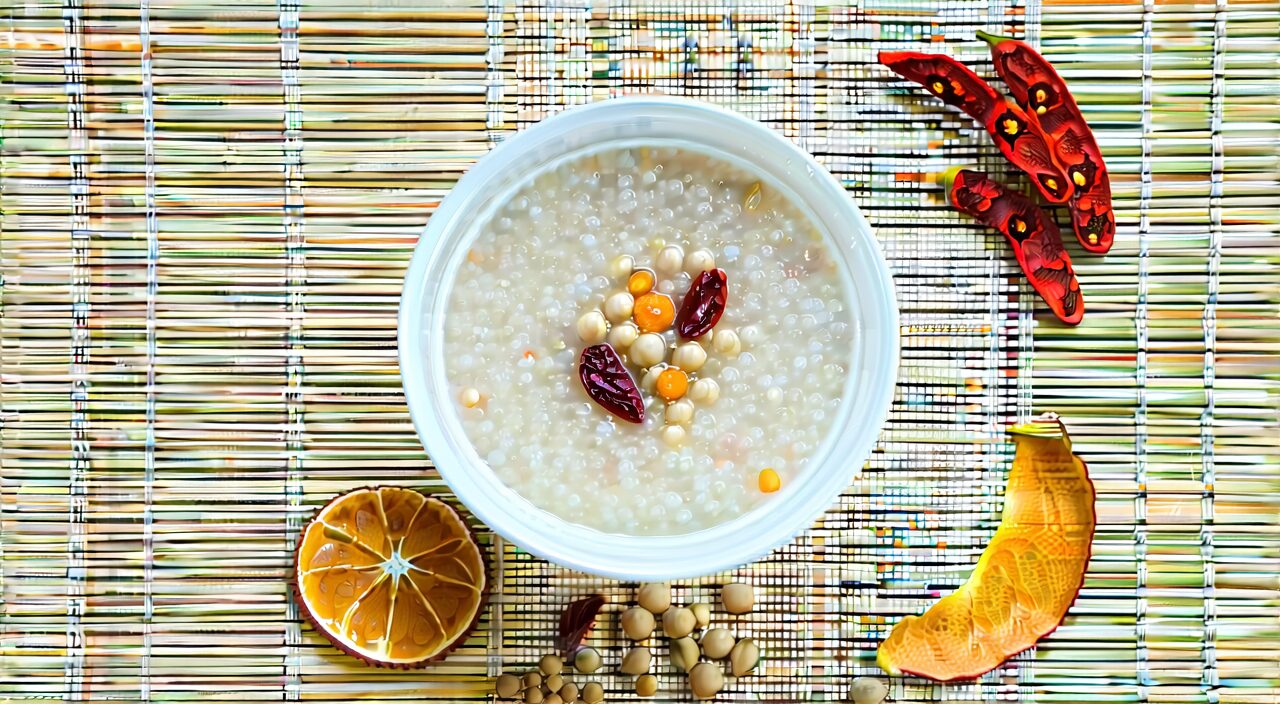
- Appropriately incorporate ingredients traditionally believed to fortify the Spleen and drain dampness, such as Chinese yam (Shan Yao), Poria (Fu Ling), Coix seed (Yi Yi Ren), White hyacinth bean (Bai Bian Dou), and Lotus seed (Lian Zi). These can be made into congee or soup. Coix seed is cool in nature and more suitable for damp-heat or ordinary Spleen deficiency with dampness; for those with pronounced vacuity cold, Coix seed should be used sparingly or dry-fried, and combined with warming ingredients.
- Pay attention to keeping the abdomen warm, especially for people with Spleen-Stomach vacuity cold and aversion to cold; loose stools easily worsen when the abdomen gets cold.
- Moderate exercise helps the circulation of qi and blood and the Spleen-Stomach’s transportation function, but excessive fatigue should be avoided.
When should you prioritize consulting a doctor?

Although chronic unformed stools are often related to functional digestive issues in many cases, they can also be a signal of some chronic intestinal diseases. If any of the following situations occur, it is recommended to consult a doctor early for evaluation rather than searching for self-regulation plans on your own:
- Blood-streaked stools, bloody purulent stools, or tarry black stools;
- A marked change in bowel habits within a short period, such as suddenly becoming thinner, frequency increasing or decreasing significantly;
- Loose stools accompanied by unexplained weight loss, anemia, persistent abdominal pain, or abdominal masses;
- Abdominal pain that is fixed in location, persistent, and does not ease;
- Severe, chronic, recurrent episodes accompanied by pronounced anxiety, depression, palpitations, chest tightness, or breathing abnormalities.
These presentations may indicate the need for further examination to rule out organic diseases. Although Chinese medicine regulation has its value, it cannot replace necessary medical evaluation.
Summary
In Chinese medicine, unformed stools and loose stools often start from the basic direction of Spleen deficiency with dampness exuberance, but when it comes to each individual, the emphasis on cold, heat, deficiency, and excess can be completely different. Spleen deficiency with dampness exuberance mainly features mental fatigue and loose stools; cold-dampness encumbering the Spleen often presents with aversion to cold and preference for warmth; damp-heat pouring downward often accompanies anal burning and sticky, cloying stools; Kidney yang insufficiency often manifests as fifth-watch diarrhea and soreness and cold in the lower back and knees. Chinese patent medicines corresponding to different directions, such as Shen Ling Bai Zhu San, Fu Zi Li Zhong Wan, Huo Xiang Zheng Qi Wan, and Er Chen Wan, each have their applicable scope; misuse may be counterproductive.
In daily regulation, paying attention in the diet to avoid raw-cold, greasy, and excessive sweet foods is a common point that most people with loose stools can be mindful of. And what is more crucial is learning to observe one’s own defecation patterns and systemic accompanying symptoms, and on this basis, developing a preliminary awareness to distinguish cold, heat, deficiency, and excess.
Finally, it must be emphasized that this article is merely a sorting-out and popular science of Chinese medicine knowledge, and cannot substitute for diagnosis or personalized regulation plans. When chronic loose stools are accompanied by warning signs, be sure to seek professional medical opinions to ensure safety.