
Xiangsha Liujun Wan: An Option for Regulating Qi and Harmonizing the Stomach—What Digestive Issues Is It Suitable For?

A lot of people feel gastric distension and fullness after meals, as if food is stuck in the stomach and not moving down, accompanied by frequent belching and a significantly reduced appetite. If such symptoms recur, one often thinks of whether the spleen and stomach functions are weak. In the traditional Chinese medicine (TCM) approach to regulation, a commonly used patent formula is Xiangsha Liujun Wan, which addresses both insufficient transportation and transformation of the spleen and stomach and the problem of obstructed qi movement. This article focuses on the compositional features of Xiangsha Liujun Wan, its applicable directions, and the differences from related formulas, helping readers understand what situations it is better suited for and what to be aware of when using it.
Compositional Approach of Xiangsha Liujun Wan: Supplementing Qi and Strengthening the Spleen While Regulating Qi
Xiangsha Liujun Wan is not a single-function formula; it comes from a flexible modification of classic spleen-strengthening prescriptions. Its foundation is Si Jun Zi Tang (Four Gentlemen Decoction), a highly classic TCM basic formula for supplementing qi and strengthening the spleen, consisting of Ren Shen (Ginseng) (or Dang Shen, Codonopsis), Bai Zhu (Atractylodes), Fu Ling (Poria), and Gan Cao (Licorice). It mainly addresses manifestations caused by spleen and stomach qi deficiency, such as fatigue, poor appetite, and loose stools.
On this basis, the addition of Chen Pi (Tangerine Peel) and Ban Xia (Pinellia) creates Liu Jun Zi Tang (Six Gentlemen Decoction), which enhances the ability to dry dampness, transform phlegm, and harmonize the stomach to descend rebellious qi. This is more targeted for situations where spleen-stomach qi deficiency is accompanied by pronounced phlegm-dampness, with tendencies toward nausea or a sensation of phlegm in the throat.
To Liu Jun Zi Tang, Xiangsha Liujun Wan further adds Mu Xiang (Aucklandia) and Sha Ren (Amomum), highlighting the actions of regulating qi, harmonizing the middle, transforming dampness, and reviving the spleen:
- Mu Xiang: effective in moving qi and relieving pain, capable of alleviating qi stagnation-related distension and fullness in the epigastrium and abdomen.
- Sha Ren: effective in transforming dampness, opening the appetite, warming the spleen, and stopping diarrhea. It helps with epigastric stuffiness and poor appetite caused by dampness obstructing the middle burner.
Thus, the overall direction of the formula becomes clear: it uses supplementing qi and strengthening the spleen as the foundation, while simultaneously regulating qi movement, to address the “qi stagnation” that arises on top of spleen-stomach weakness. Traditionally, such patent formulas are used as supportive measures for conditions like gastric discomfort, belching, and reduced food intake due to spleen-stomach deficiency and dampness obstructing qi stagnation.
Who Might Benefit More? Analyzing Symptom Characteristics
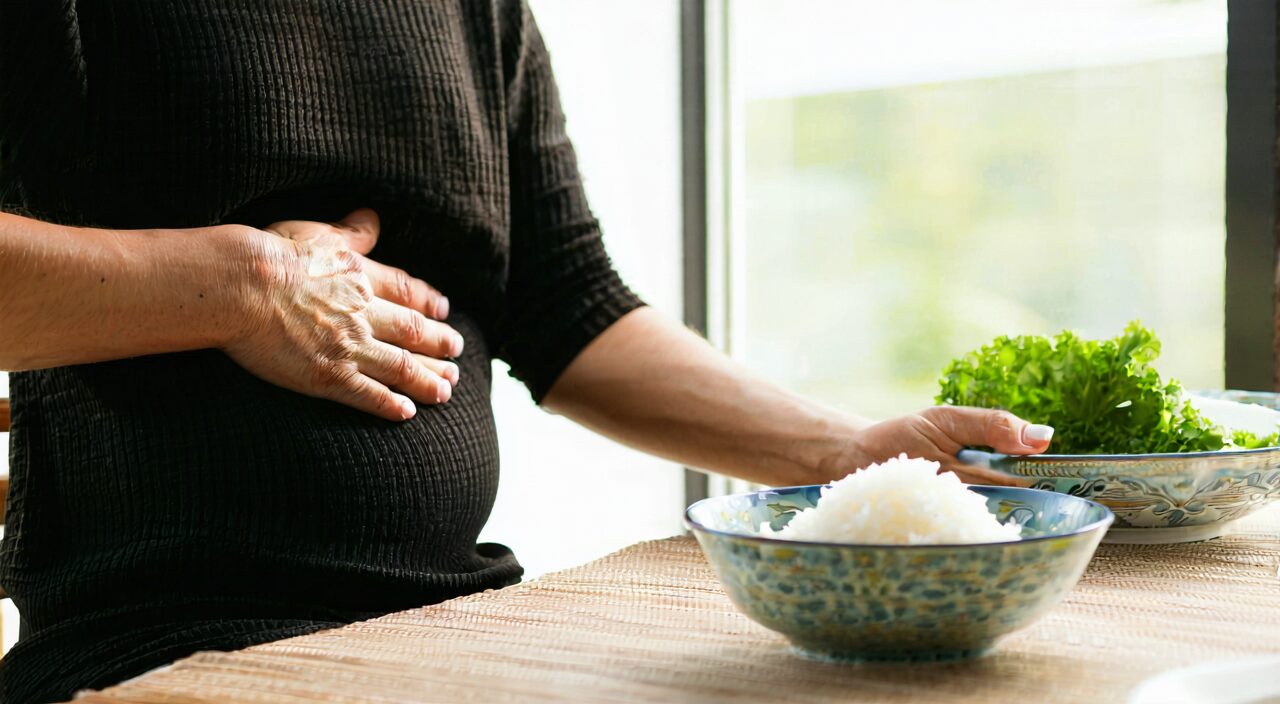
Xiangsha Liujun Wan is not a universal choice for all digestive problems; it has relatively specific user profiles for which it is suited. In TCM, its core applicable direction is “spleen and stomach qi deficiency” combined with “qi stagnation.” It may be more useful to evaluate if the following typical manifestations match.
Post-meal distension that worsens noticeably
Many people may have only a moderate appetite, but the real discomfort occurs after eating. Not long after a meal, the stomach starts to feel distended, with a sensation that food is stagnating and not being digested. This distension may persist for one to two hours, becoming more pronounced even after eating slightly more.
From the TCM perspective, this is often related to insufficient spleen qi and weakened transportation. Coupled with inhibited qi movement, both food and qi become stuck in the middle burner, easily leading to this post-meal worsening distension. If it is also accompanied by belching that temporarily relieves the distension, the “qi stagnation” direction is more likely.
Frequent belching, but not sour or fetid
Because Xiangsha Liujun Wan can move qi, it may be more relevant for belching dominated by “qi stagnation.” This type of belching typically has no particular smell or just the aroma of food, without sourness or fetidity.
Unlike the sour, fetid belching caused by food accumulation, belching from spleen deficiency with qi stagnation is more of a “qi belch,” where qi movement fails to descend and instead ascends. Food accumulation, on the other hand, often involves incomplete decomposition in the stomach. This is, of course, just a simple differentiating point; individual situations vary greatly.
Poor appetite, but not a complete aversion to food
People with spleen and stomach qi deficiency often have a weakened appetite, but it differs from the aversion to the smell of food seen in food accumulation or damp-heat. They do not completely lose the desire to eat but feel “not hungry,” “could eat or not,” or experience satiety and distension after just a little food, gradually losing interest in eating.
At the same time, they may lack physical strength, tire easily, have a sallow complexion, a pale tongue that is enlarged, and a thin white tongue coating—common external signs of spleen qi deficiency.
Stools that are soft or unformed, but not necessarily diarrhea
Spleen deficiency easily leads to loose stools. For some, the daily bowel movement frequency is normal, but the consistency is soft and unformed, or this situation easily arises after eating slightly greasy or cold foods.
The Bai Zhu and Fu Ling in Xiangsha Liujun Wan strengthen the spleen and leach out dampness, while Sha Ren also warms the spleen and transforms dampness, so it has some relevance for such bowel irregularities. However, if there is watery diarrhea or mucus in the stool, one must consider the presence of damp turbidity, damp-heat, or other issues, which may not be suitable for Xiangsha Liujun Wan.
It must be emphasized that the above features are only to help readers think comparatively; possessing all of them simultaneously does not guarantee suitability. TCM regulation emphasizes holistic pattern differentiation; symptoms can be complex, and it is best to analyze under professional guidance.
Differences from Shen Ling Bai Zhu San and Bao He Wan
Among patent formulas for regulating digestive issues, Shen Ling Bai Zhu San and Bao He Wan are also frequently mentioned. Many people feel confused among these options and don’t know how to choose. Here, we differentiate from a compositional perspective, not as a medication recommendation but merely as knowledge reference.
| Formula | Core Direction | Emphasized Characteristics | Typical Reference Manifestations |
|---|---|---|---|
| Xiangsha Liujun Wan | Strengthen spleen, supplement qi, regulate qi, harmonize stomach | Supplementation with movement; leans toward regulating qi | Notable post-meal distension, frequent belching, soft stools, poor appetite, fatigue |
| Shen Ling Bai Zhu San | Strengthen spleen, supplement qi, leach dampness, stop diarrhea | Leans toward dispelling dampness; weak qi-moving action | Undigested food in stools, borborygmus with diarrhea, frequent loose or watery stools, pronounced dampness signs |
| Bao He Wan | Promote digestion, relieve food stagnation | Leans toward promoting digestion; suitable for food accumulation excess patterns | Epigastric and abdominal distension after overeating, sour/fetid belching, aversion to food, foul-smelling stools or constipation |
Simply put, Shen Ling Bai Zhu San is more suitable for spleen deficiency with prominent dampness, mainly manifesting as diarrhea; Bao He Wan is more suitable for temporary food accumulation with distension and sour/fetid symptoms (an excess pattern); whereas Xiangsha Liujun Wan leans more toward qi stagnation on a background of spleen-stomach weakness, a “deficiency with mixed excess” or predominantly deficiency state. Understanding these differences helps you form a clearer picture when checking product instructions. However, in reality, some people may have both spleen deficiency and temporary food accumulation, so judgments must be made based on specific symptoms, severity, and urgency, and cannot be simply pigeonholed.
Situations Where Xiangsha Liujun Wan May Be Less Suitable
Although Xiangsha Liujun Wan is relatively gentle, as a regulatory approach, there are still situations where it is unsuitable. Knowing these can help avoid blind use.
- Signs of stomach heat or yin deficiency
If you often feel burning or noisy sensations in the stomach, dry mouth and bitter taste, or have a reddish tongue with yellowish coating, even accompanied by gum swelling and pain, constipation, or dark urine, there may be stomach heat or damp-heat. Xiangsha Liujun Wan is warm and drying; it is more suitable for spleen and stomach that lean toward deficiency cold or cold-dampness. Using warm, drying medicinals when heat signs are obvious could worsen discomfort. Similarly, if there is stomach yin deficiency manifesting as dull epigastric pain, dry mouth without desire to drink, red tongue with little coating, and dry stools, the priority is to nourish yin and benefit the stomach rather than using a formula like Xiangsha Liujun Wan, which is relatively warm and drying.
- Pronounced dampness turbidity or food accumulation with excess pattern qi stagnation
Some people experience acute abdominal distension and pain, with tenderness and discomfort that does not improve after belching or passing gas, and a thick, greasy tongue coating. This may belong to damp turbidity obstructing the middle or food accumulation excess pattern. In such cases, stronger qi-moving or digestant formulas may be needed, and Xiangsha Liujun Wan, with its many tonifying ingredients, may not be suitable as the main approach.
- When long-term self-regulation yields poor results
If after following the spleen deficiency with qi stagnation direction for some time symptoms show no improvement, or if there is weight loss, black stool, difficulty swallowing, persistent vomiting, etc., it is advisable to consult a professional doctor promptly to rule out gastrointestinal structural problems or other systemic diseases. Traditional patent medicines are more often supportive options after clear pattern differentiation and should not replace necessary medical examinations.
How to Cooperate with Daily Diet
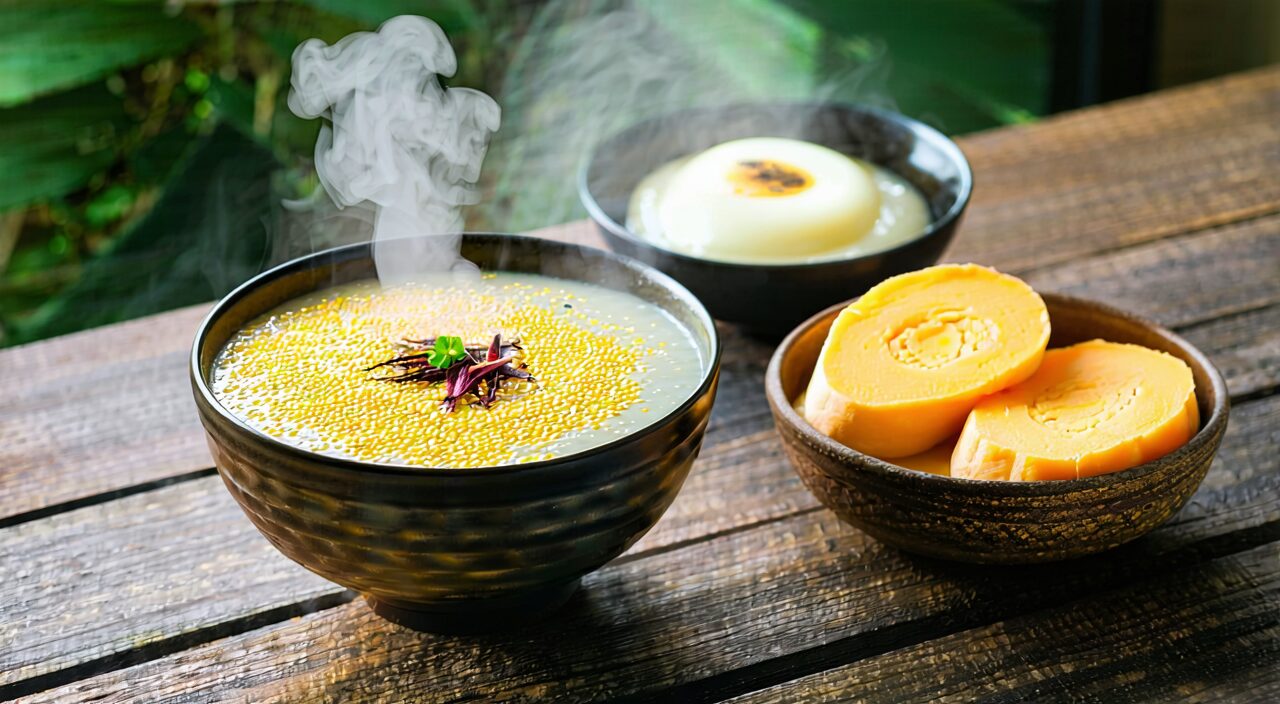
While considering the use of Xiangsha Liujun Wan, dietary adjustments also assist the recovery from spleen-stomach qi deficiency and qi stagnation. TCM places great emphasis on “daily care” of the spleen and stomach; some simple habits may be even more important than using a single product.
- Develop regular, portion-controlled eating habits
Avoid alternating between hunger and overeating, and especially do not skip meals to work faster. People with spleen-stomach qi deficiency need regular eating to sustain qi and blood generation.
- Choose warm, easily digestible foods as much as possible
Such as millet porridge, yam, pumpkin, steamed egg custard, etc. Reduce raw, cold, and chilled foods, including iced beverages and cold salad dishes, as these can easily damage spleen yang.
- Chew slowly and thoroughly, without rushing
Do not eat too quickly at any meal; give the stomach enough time to receive and grind the food. After meals, you can gently massage the abdomen clockwise, starting from the lower right abdomen, moving up, left, and down. This helps promote intestinal peristalsis and reduce post-meal fullness.
Furthermore, the impact of emotions on qi movement should not be underestimated. TCM often says “overthinking harms the spleen.” Excessive worry and mental stress easily lead to qi stagnation, affecting the spleen and stomach’s transportation and transformation. Appropriate relaxation and adequate rest are equally important for improving digestive function. These lifestyle details do not conflict with the regulatory direction of Xiangsha Liujun Wan and can in fact promote each other. Of course, specific dietary plans need to be adjusted based on individual constitution and tolerance, and cannot be generalized.
A Note on Using Based on Pattern Differentiation

Although patent medicines are convenient to purchase, their use is still based on TCM pattern differentiation logic. With the same formula, when used for the right constitution and at the right time, it can be very helpful; when used incorrectly, it may be ineffective or even worsen discomfort. Xiangsha Liujun Wan primarily targets patterns of spleen deficiency accompanied by qi stagnation and a predominance of cold-dampness. If the user actually has internal damp-heat or stomach yin deficiency, taking it may cause sensations of “heatiness” such as dry mouth, irritability, etc.
Therefore, it is advisable that before considering the use of Xiangsha Liujun Wan, one ideally consults a TCM practitioner or an experienced licensed professional for a comprehensive face-to-face assessment, confirming the corresponding pattern through tongue, pulse, and detailed symptoms. Even for suitable individuals, it is not recommended to take it long-term as a daily health supplement; the body’s dynamic changes require adjustments following the pattern.
If symptoms are simple and clear, and short-term use based on the instructions leads to improvement, one may continue to evaluate under observation; however, if symptoms are complex or accompanied by notable anxiety, chest tightness, abdominal pain, blood in the stool, etc., it is imperative to seek medical attention first.
Summary
Xiangsha Liujun Wan is a fairly classic regulatory option among traditional patent medicines. It integrates two directions—supplementing qi and strengthening the spleen, and regulating qi and harmonizing the stomach—offering a reference approach for conditions such as post-meal distension, belching, poor appetite, and soft stools caused by spleen-stomach qi deficiency with qi stagnation.
Compared with other spleen-strengthening and digestion-promoting formulas, its characteristic lies in “movement within supplementation,” addressing both deficiency and obstructed qi movement. However, it is not a universal solution covering all digestive issues.
Understanding the TCM theory behind it, its differences from formulas like Shen Ling Bai Zhu San and Bao He Wan, and the situations where it is not suitable helps us remain clear-headed among the myriad products. The body’s signals are always the most direct reminders; when symptoms persist, recur, or new changes appear, seeking professional guidance is far more important than self-diagnosis.