
Traditional Chinese Medicine Overview of Spleen-Stomach and Digestive Issues: Regulating Approaches from Spleen Deficiency to Food Stagnation

Post-meal bloating, poor appetite despite eating little, year-round loose stools, or frequent heartburn and acid reflux. These seemingly minor, fragmented complaints often recur in many people, yet medical tests frequently fail to reveal any clear organic disease. This “can’t quite explain it, but just feel unwell” state is exactly the kind of situation TCM pays special attention to when discussing spleen-stomach and digestive issues.
Within the cognitive framework of traditional Chinese medicine, digestive problems are seldom seen as isolated local phenomena; they are more often connected to the overall state of “transformation and transportation.” This article aims to present, in as clear a way as possible, TCM’s fundamental understanding of spleen-stomach and digestive issues, common pattern differentiation directions, and the traditional application of select Chinese patent remedies, helping you gain a more systematic understanding of “why my digestion is always off.”
Why TCM Places the Spleen and Stomach at the Core of Digestive Issues
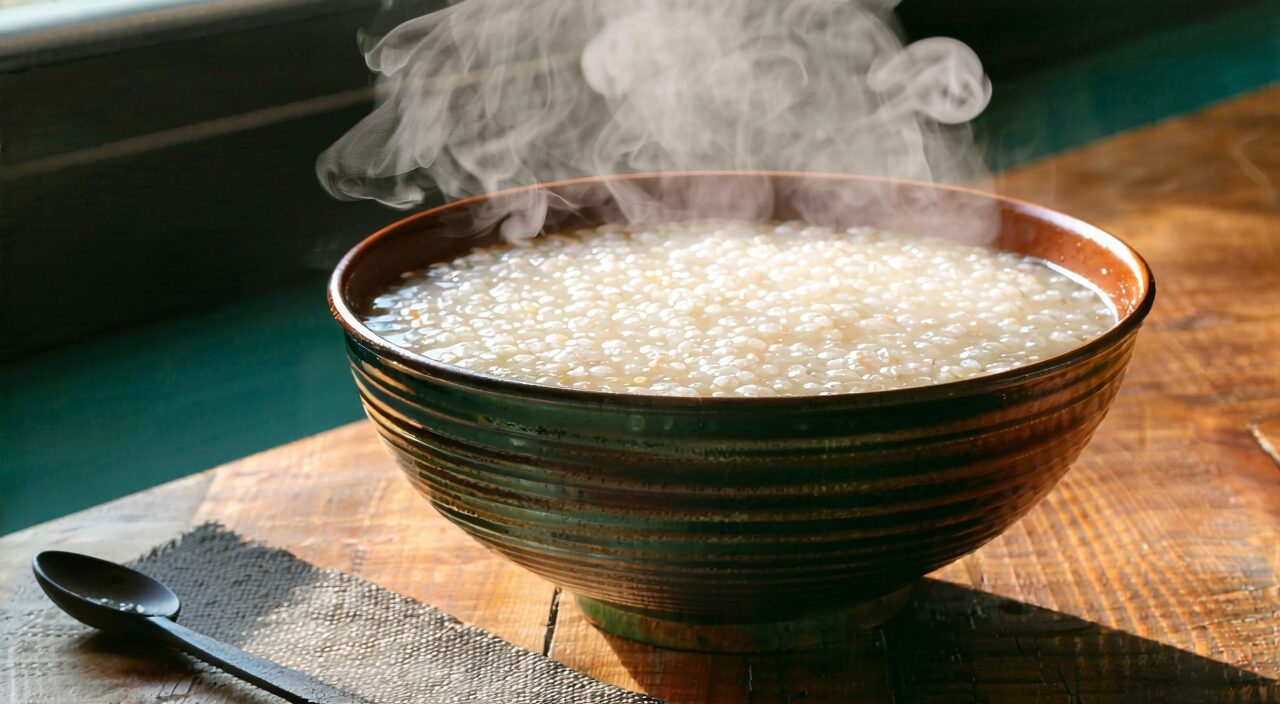
In TCM’s zang-fu theory, the spleen and stomach are jointly called the “root of postnatal life (hou tian zhi ben),” a designation that underscores their crucial role in digestion and absorption. However, the “spleen” and “stomach” here do not exactly correspond to the anatomical spleen and stomach in modern medicine. Rather, they refer to a functional system primarily involving the receiving, ripening, transformation, transportation, and distribution of food and drink.
Specifically, the stomach governs reception, taking in ingested food and performing initial ripening. The spleen governs transformation and transportation, handling the more refined task of converting the food’s grain-and-water essence (shui gu jing wei) into qi, blood, and body fluids that the body can use, and transporting them throughout the body. In this process, the movement of spleen qi is primarily ascending, distributing clear yang qi and essence upward and outward; stomach qi movement primarily descends, smoothly sending food residue and turbid qi downward. Through this ascending-descending dynamic, the whole digestive process flows smoothly.
For this reason, from a TCM perspective, recurrent digestive discomfort in modern individuals is often not merely a problem of the “stomach” itself, but may be closely related to the spleen’s transformative capacity, the coordination between spleen and stomach in ascending and descending, and the presence of pathogenic influences such as dampness, food stagnation, cold, or heat. This viewpoint directly shapes subsequent regulating strategies. The same symptom can stem from entirely different underlying directions. Take post-meal bloating, for example:
- Some may have spleen qi deficiency, where transformation is too weak to move things along;
- Others may have food stagnation, where accumulated food blocks the way;
- Still others may have heat in the stomach, causing turbid qi to rush upward.
Understanding Different Patterns of Spleen-Stomach Problems through Common Symptoms

For recurring bloating, indigestion, poor appetite, loose stools, and acid reflux or heartburn in daily life, TCM typically synthesizes overall information—such as tongue appearance, pulse condition, dietary habits, stool characteristics, and preferences for warmth or cold—to identify a relatively predominant constitutional tendency or pattern. Below are several commonly seen types in clinical practice; they do not represent all possibilities and cannot replace an in-person diagnosis, but rather help you gain a rough sense of “which direction your condition might lean toward.”
Bloating, Poor Appetite, and Loose Stools: Often Linked to Spleen Qi Deficiency
If you often feel abdominal bloating after meals—not the marked fullness and sour belching associated with food stagnation, but more of a persistent, dull distension—along with weak appetite, small food intake, soft, loose or unformed stools, and general fatigue with a tendency toward shortness of breath and disinclination to speak, this pattern is often closely related to spleen qi deficiency from a TCM perspective.
Spleen qi deficiency can be colloquially understood as the spleen’s transformative “horsepower” being insufficient. With inadequate driving force, food cannot be transformed and moved in a timely manner, easily causing gas and bloating in the abdomen. Dampness and fluids, likewise unprocessed, tend to descend, resulting in unformed stools or even diarrhea. This type of digestive problem usually has a long course, lingering and recurrent—not a burst of intense discomfort, but rather a persistent sense that something is “just not quite right.”
Among traditional formulas and patent medicines, Shen Ling Bai Zhu San (Ginseng, Poria, and Atractylodes Macrocephala Powder) is a classic prescription frequently mentioned for this direction. Its focus is on fortifying the spleen and boosting qi, while also gently leaching out dampness. For cases of spleen deficiency with concurrent dampness, it has traditionally been used to improve symptoms like poor appetite, bloating, and loose stools. It should be emphasized that this is merely a traditional application direction; whether it matches an individual’s current constitution still requires a holistic assessment based on tongue presentation, cold-heat signs, and other factors.
Pronounced Post-Meal Bloating and Sticky, Incomplete Bowel Movements: Mostly Related to Dampness Stagnation Encumbering the Spleen
Compared to simple spleen qi deficiency, those with dampness stagnation encumbering the spleen often feel a greater sense of “heaviness” throughout the body on top of the bloating—head feels heavy and foggy, the mouth feels sticky, and while stools may be unformed, the defining feature is a sense of incomplete evacuation, never feeling fully emptied, and the stool tends to stick to the toilet bowl. The tongue coating is usually thick and greasy.
In this state, the spleen’s transformative function is not only weak but also burdened by the heavy load of “dampness.” Dampness is inherently sticky and stagnant, further obstructing the ascending-descending movement of qi, so the sensation of bloating can be very pronounced—especially after meals and in the afternoon. Xiang Sha Liu Jun Wan (Six Gentlemen Pill with Aucklandia and Amomum) is composed by adding Mu Xiang (Aucklandia) and Sha Ren (Amomum) to the base formula Liu Jun Zi Tang. It has traditionally been used for spleen qi deficiency accompanied by dampness obstruction and qi stagnation. For epigastric fullness, post-meal bloating, and belching caused by qi stagnation and dampness encumbrance, it is often referenced as a regulating approach.
Of course, dampness itself further divides into cold-dampness and damp-heat, which is important to watch for:
- If accompanied by pronounced aversion to cold, preference for warm drinks, and a white, greasy tongue coating, it may lean toward cold-dampness;
- If there is bitter taste in the mouth, foul breath, yellow urine, and a yellow, greasy tongue coating, it may lean toward damp-heat.
The regulating paths for cold-dampness and damp-heat differ considerably, and this particularly requires judgment based on specific circumstances. Huo Xiang Zheng Qi Wan (Agastache Qi-Correcting Pill) is more often used for nausea, vomiting, bloating, and diarrhea caused by external contraction of wind-cold and internal damage from dampness stagnation—leaning toward cold-dampness or cold-dampness with external invasion, usually in acute or subacute stages—rather than as a choice for daily long-term regulation.
Acid Reflux, Heartburn, and Bad Breath: Commonly Seen in Food Stagnation or Stomach Heat Patterns
Acid reflux, heartburn, and bad breath are a particularly uncomfortable cluster of symptoms, often more pronounced when lying down at night. In TCM, this is frequently related to stomach qi failing to descend and turbid qi rebelling upward. What hinders the descent of stomach qi? Two common factors are food stagnation and stomach heat, which are often interrelated.
Food stagnation means that ingested food is not promptly digested and emptied, instead staying in the stomach and generating acid and gas. There are usually clear dietary triggers, such as overeating a heavy, greasy meal or consuming hard-to-digest foods. In addition to acid reflux and heartburn, symptoms often include epigastric fullness that resists pressure, sour belching, and foul-smelling flatulence. For this direction, Bao He Wan (Preserve Harmony Pill) is a highly representative traditional formula for promoting digestion and removing stagnation. It is commonly used for symptoms like epigastric distension and fullness, sour belching, and aversion to food following food retention. It’s worth noting that Bao He Wan leans toward “dispersing and eliminating accumulations,” making it relatively more suitable for excess-type patterns in the food stagnation stage. If a person’s constitution is deficient to begin with, it is not suitable to rely on this approach for long-term resolution.
Stomach heat can be understood as excess heat in the stomach, which may originate from a diet rich in spicy, heavy foods or from food stagnation transforming into heat. People with stomach heat typically have more pronounced heartburn, a preference for cold drinks, dry mouth with bad breath, and a red tongue with yellow coating. Regulating stomach heat differs from the approach of promoting digestion and removing stagnation; it often requires formulas that clear heat and harmonize the stomach, something that usually needs to be assessed and managed by a physician.
Digestive Discomfort Caused by Stomach Cold: Often Accompanied by Aversion to Cold and Preference for Warmth and Pressure
In contrast to stomach heat, another group presents with stomach cold. The common characteristics of stomach cold include aversion to cold in the stomach area—pain, bloating, and diarrhea worsen with cold exposure or consumption of raw, cold foods—while applying a hot water bottle or drinking warm ginger water brings relief. People with stomach cold generally have a bland taste in the mouth without thirst, and their stools tend to be loose; undigested food particles may even be visible.
For cases where spleen-stomach yang deficiency and cold are obvious, traditional approaches often consider warming the middle and dispersing cold to help restore spleen yang. Fu Zi Li Zhong Wan (Aconite Pill for Regulating the Middle) is a classic patent medicine for warming the middle and fortifying the spleen, commonly used for epigastric and abdominal cold pain, vomiting, diarrhea, and cold hands and feet due to spleen-stomach yang deficiency. However, Fu Zi Li Zhong Wan is relatively warm and drying in nature; its appropriate use presupposes a confirmed cold-deficiency constitution. If there are concurrent heat signs or yin deficiency, taking it may instead worsen the discomfort. Therefore, it is presented merely as a traditional direction to be aware of, and it is not suitable for self-administration at will.
The Role of Chinese Patent Medicines in Spleen-Stomach Regulation and Selection Considerations

The formulas mentioned above—Shen Ling Bai Zhu San, Xiang Sha Liu Jun Wan, Bao He Wan, Fu Zi Li Zhong Wan, Huo Xiang Zheng Qi Wan—are all classic Chinese patent medicines developed through long-term TCM practice for regulating the spleen and stomach. It is important to recognize that they are not “digestive aids” targeting single symptoms, but each has its own more suitable pattern tendencies. To present this more clearly, here is a brief comparison (all based on traditional understanding):
| Chinese Patent Medicine | Traditionally Used For | Brief Reference Direction |
|---|---|---|
| Shen Ling Bai Zhu San | Spleen deficiency with dampness | Poor appetite, bloating, loose stools, fatigue |
| Xiang Sha Liu Jun Wan | Spleen qi deficiency with dampness obstruction and qi stagnation | Post-meal bloating, belching, epigastric stuffiness |
| Bao He Wan | Food stagnation (dietary retention) | Epigastric distension and fullness resisting pressure, sour belching, foul flatulence |
| Fu Zi Li Zhong Wan | Spleen-stomach yang deficiency cold | Epigastric/abdominal cold pain, vomiting, diarrhea, cold extremities, preference for warmth and pressure |
| Huo Xiang Zheng Qi Wan | External wind-cold with internal dampness stagnation (cold-damp bias) | Nausea, vomiting, bloating, diarrhea; mostly used in acute or subacute stages |
In other words, the same symptom of “bloating after meals” may correspond to entirely different regulatory directions for different people. If one simply uses “fortify the spleen” as a blanket approach for all cases, it is very common to find that Shen Ling Bai Zhu San doesn’t work—or even makes bloating worse—because it only addresses one specific direction and cannot cover every scenario.
Therefore, when considering these Chinese patent medicines, a safer approach is to treat them as “subjects for further understanding” rather than “ready-to-use solutions.” Whether a specific individual can use them, and how they should be used, needs to be determined by integrating long-term constitutional characteristics, current tongue and pulse presentations, and whether there are concurrent issues (such as qi stagnation, blood stasis, or damp-heat, etc.), as well as referring to the product’s labeled indications and precautions. Ideally, this selection should be made under the guidance of an experienced TCM practitioner.
Situations That Signal You Should Consult a Healthcare Professional Early

Although many spleen-stomach and digestive issues are functional, some signals should not be simplistically dismissed as “spleen deficiency” or “food stagnation” for self-regulation. If the following conditions recur over a relatively long period, it is advisable to seek help from a gastroenterologist or a TCM internal medicine doctor as soon as possible, rather than waiting longer or self-selecting Chinese patent medicines:
- Persistent digestive discomfort accompanied by noticeable unintentional weight loss without deliberate dieting;
- Blood in the stool, black stools, or a significant and persistent change in stool form over a short period;
- A sensation of obstruction or pain behind the breastbone when swallowing food;
- Persistent, relatively fixed pain in the upper abdomen that is closely related to eating rhythm;
- Acid reflux and heartburn severe enough to disturb normal nighttime rest, or accompanied by chest tightness, palpitations, or other retrosternal discomfort, necessitating the exclusion of cardiac issues;
- Long-term extremely poor appetite and frequent nausea leading to markedly inadequate nutritional intake;
- Digestive issues accompanied by pronounced and persistent low mood, anxiety, or sleep disturbances that significantly affect overall daily functioning.
These situations typically require more systematic examination and diagnosis. In such complex issues, TCM pattern differentiation and treatment still need to be based on a thorough understanding of modern medical test results, with comprehensive judgment made by professionals—rather than being resolvable through constitution assessment alone.
Summary
TCM’s understanding of spleen-stomach and digestive issues consistently revolves around the two core concepts of “transformation and transportation” and “ascending-descending,” placing common symptoms like bloating, poor appetite, loose stools, and acid reflux within a holistic framework of constitution and pathological factors. Different pattern differentiations—spleen deficiency, dampness stagnation, food accumulation, stomach cold, stomach heat, etc.—can help us tease out relatively clear cognitive clues from chaotic symptoms, and understand why the same presentation may require different regulatory approaches behind the scenes.
Of course, this pattern-based understanding is only a preliminary differentiation tool and is far from equivalent to a diagnosis itself. For this reason, the classic formulas and patent medicines mentioned—such as Shen Ling Bai Zhu San, Xiang Sha Liu Jun Wan, and Bao He Wan—are more appropriately used as reference information for “traditionally commonly used in certain types of situations,” rather than as a substitute for professional judgment based on individual specifics. The choice of any regulating method should be made prudently, on the basis of fully understanding one’s own condition, referring to product labeling, and integrating advice from professionals.
If digestive distress has significantly impacted your quality of daily life—especially if it is recurrent, progressively worsening, or accompanied by warning signs—seeking a doctor’s help promptly remains the safest course of action. After a systematic evaluation, using TCM thinking to understand your body’s state may offer more lasting help than agonizing alone over “which spleen-tonifying pill should I take.”