
Baohe Wan: A Commonly Used Chinese Patent Medicine for Digesting Food Stagnation – When to Use It

Many people have had this experience: after a big meal, the stomach feels stuffed and distended, belching brings up a sour, rancid taste, there is no appetite, and the stools are loose, sour‑smelling, and unformed.
In traditional Chinese medicine, this is often not simply “overeating” but is viewed as a condition called “food accumulation” or “food stagnation.” Baohe Wan (Harmony‑Preserving Pill) is a well‑known Chinese patent medicine formulated precisely for this situation.
But what type of food stagnation is it suited for? Can it be used as a digestive health supplement? These questions require a closer look at its formula design.
What Baohe Wan Does: Promotes Digestion, Relieves Stagnation, and Harmonizes the Stomach
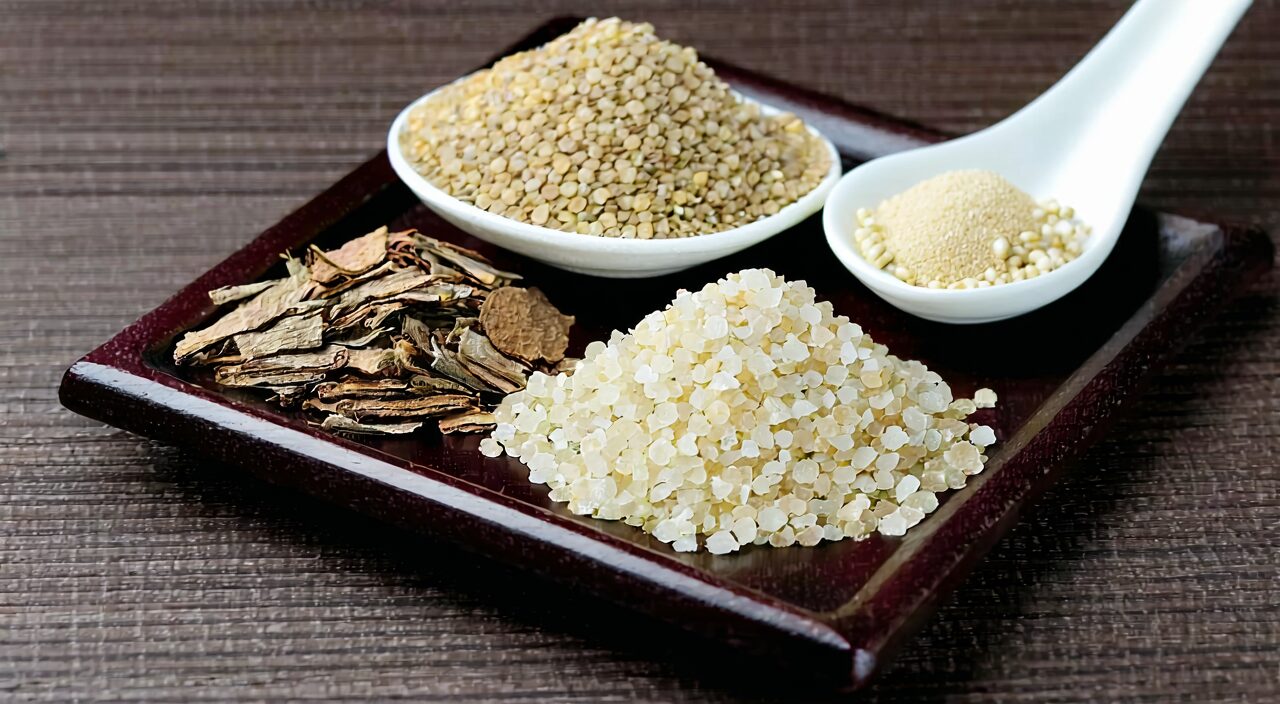
Baohe Wan originates from Danxi’s Experiential Methods (Danxi Xin Fa), written by the Yuan‑dynasty physician Zhu Danxi, and was originally designed to address food stagnation.
Traditionally, it is believed that irregular eating, overindulgence, or consuming too much rich, fatty, sweet, or hard‑to‑digest food can overwhelm the spleen and stomach’s transportation and transformation functions, causing food to become stuck in the gastrointestinal tract and form food stagnation. Food accumulation not only creates a distended, uncomfortable sensation but may also generate heat and dampness, further disturbing the flow of qi.
The approach of Baohe Wan can be summarized as threefold: promote digestion, relieve stagnation, and harmonize the stomach. It does not simply break down food; it helps restore the stomach and intestines’ normal downward‑descending and clearing function.
The formula uses hawthorn (Shanzha), medicated leaven (Shenqu), and radish seed (Laifuzi) as its main digestive ingredients, each with a different emphasis:
- Hawthorn is especially good at resolving stagnation from meat and greasy foods.
- Medicated leaven excels at resolving stagnation from grains, noodles, and alcoholic beverages.
- Radish seed targets stagnation from starchy foods and phlegm‑qi accumulation, and can also descend qi to relieve distension.
These three ingredients work together to address a relatively broad range of food stagnation patterns.
In addition to promoting digestion, the formula includes tangerine peel (Chenpi), pinellia (Banxia), and poria (Fuling) to move qi, transform dampness, direct rebellious qi downward, and harmonize the stomach, along with a small amount of forsythia (Lianqiao) to prevent food stagnation from transforming into heat.
Overall, the emphasis of Baohe Wan is on “unblocking” and “descending,” propelling the stagnation downward and outward so that the gastrointestinal tract can regain its comfortable, unobstructed sensation.
Situations Where Baohe Wan May Be Appropriate as a Reference
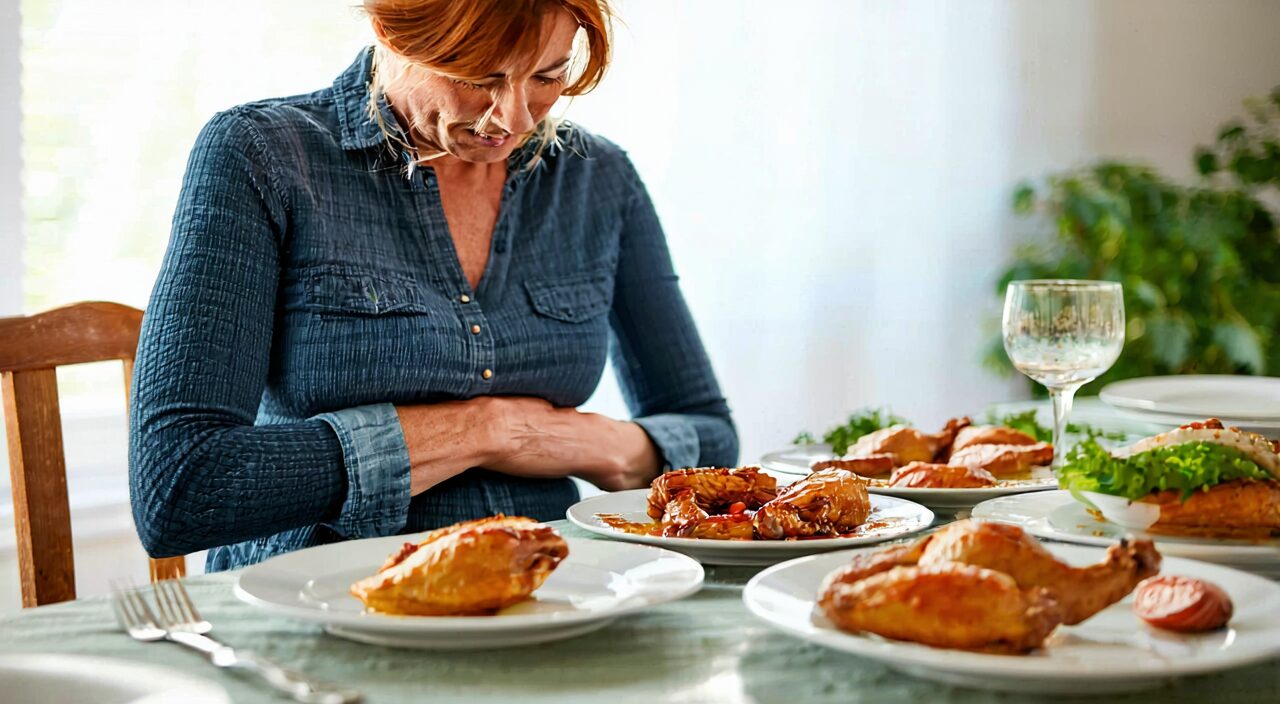
The indications for Baohe Wan are relatively clear, mainly centered on the stage of food stagnation and stomach‑qi imbalance. The following types of presentations are often regarded as reference points, but they should still be evaluated in the context of an individual’s specific condition.
Post‑meal fullness and discomfort, belching with a sour, rancid smell
Whenever someone eats too much, or consumes greasy, sticky, hard‑to‑digest food, and soon develops epigastric fullness and even mild pain, belching that smells foul or sour, together with a lack of appetite, these signs in traditional pattern differentiation are often associated with food stagnation. The digestive and stagnancy‑relieving direction of Baohe Wan corresponds well to this scenario.
Thick, greasy tongue coating and foul‑smelling breath
Food stagnation often manifests on the tongue. If the tongue coating becomes thick and greasy, with a white or slightly yellow color, and the mouth feels sticky or has a sour, foul odor, this may also indicate accumulation of food in the stomach and intestines. These signs are commonly used in TCM as one of the references for diagnosing food stagnation.
Abnormally sour‑smelling stools, difficult or loose bowel movements
Food stagnation can alter stool characteristics. Some people notice stools with an especially strong sour or rancid odor, even resembling the smell of spoiled eggs; others may have loose, unformed stools containing undigested food residues. These are all signs that food has not been properly transformed and absorbed. Baohe Wan may help promote digestion and relieve stagnation at this stage, thereby improving the abnormal stool pattern.
It should be noted that the above presentations usually occur after dietary indiscretion and have a clear trigger of “eating too much, eating a mixed variety of foods, or consuming hard‑to‑digest items.” If the symptoms are not diet‑related, or if they persist over a long period and recur repeatedly, they may not fall within the appropriate scope of Baohe Wan use.
Differences Between Baohe Wan and Zhishi Daozhi Wan: One Favors Digesting Food, the Other Favors Descending and Purging
When discussing Chinese patent medicines for promoting digestion and relieving stagnation, many users also think of Zhishi Daozhi Wan (Immature Bitter Orange Stagnation‑Moving Pill). These two formulas do have some overlap, but their emphasis differs. If they are confused, the expected results may sometimes not be achieved.
| Aspect of Comparison | Baohe Wan | Zhishi Daozhi Wan |
|---|---|---|
| Main stage targeted | Early‑stage food stagnation, mainly presenting with epigastric and abdominal fullness, belching with rancid regurgitation, aversion to food, and a thick, greasy tongue coating. | Stagnation that has transformed into heat, with damp‑heat binding in the intestines. |
| Predominant disease location | More focused on the middle and upper abdomen; no obvious large‑intestinal dryness‑heat or severe stagnation‑transformed‑heat. | Intestines, with manifestations such as epigastric and abdominal fullness, distension and pain, constipation or tenesmus, and a yellow, greasy tongue coating. |
| Action characteristics | Promotes digestion and harmonizes the stomach, moves qi and directs rebellion downward, pushing stagnation gradually downward; the force is relatively gentle. | While promoting digestion and moving stagnation, it also combines clearing heat, draining dampness, and purging the bowels; the force is stronger. |
| Simple understanding | Helps “digest and shift” | More inclined toward “clearing and expelling” |
In actual practice, it is best to make a comprehensive judgment based on stool characteristics, the tongue appearance, and specific abdominal sensations, rather than deciding which formula to use based solely on the single clue of “having eaten too much.” When necessary, a TCM practitioner can be consulted for differentiation.
Several Points to Note When Using Baohe Wan
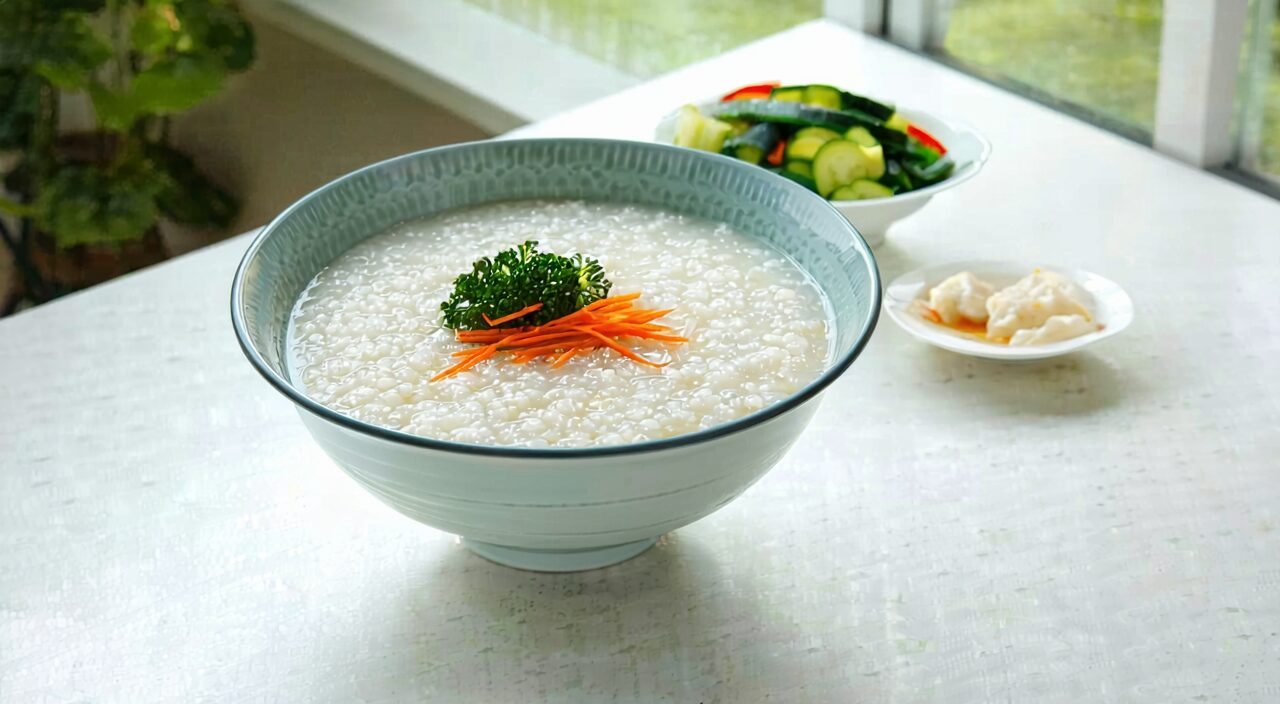
Even if the symptoms appear to match, using Baohe Wan does not mean you can take it whenever you want. The following issues deserve special attention.
Not suitable for long‑term use; stop once food stagnation resolves
The action of Baohe Wan is directed at promoting digestion and relieving stagnation; it is not a formula for daily supplementation or tonification. Relying on it over the long term to deal with every episode of overeating may gradually weaken the spleen and stomach’s own transportation and transformation ability. In traditional use, it is generally stopped once symptoms are noticeably improved, the tongue coating has become thinner, and the abdominal distension has resolved. It is not meant to be used as a routine “after‑meal digestive aid.”
Dietary moderation is more important than any digestive formula
After food stagnation occurs, while using Baohe Wan it is even more important to take the load off the spleen and stomach. Temporarily avoid greasy, sweet, sticky, raw, cold, and hard‑to‑digest foods, and choose light, warm, soft, and easily digestible meals, while appropriately reducing the amount of food eaten. Wait until the spleen and stomach functions have recovered before gradually resuming a normal diet.
If you use Baohe Wan to promote digestion on one hand while continuing to eat without restraint on the other, the results will often be greatly diminished, and food stagnation may even recur.
Dosage should be reduced for children and professional advice sought
Children’s spleens and stomachs are relatively delicate and prone to food stagnation problems. Baohe Wan is indeed used in TCM pediatrics, but the dosage for children differs from that for adults and must be adjusted based on age, weight, and constitution; it must not be given to a child by simply halving the adult dose and then halving it again.
Generally, children should use it under the guidance of a doctor or pharmacist to ensure appropriate usage and dosage. At the same time, it is even more important to reduce the occurrence of food stagnation by improving dietary habits.
Seek medical attention promptly if symptoms persist without relief
If after using Baohe Wan or following a corresponding dietary approach for several days, symptoms such as abdominal distension, pain, loss of appetite, and abnormal bowel movements still do not improve, or if severe abdominal pain, fever, persistent vomiting, complete cessation of bowel movements and gas, obvious weight loss, black stools, or other signs appear, be alert to problems beyond simple food stagnation.
Such situations may involve acute pancreatitis, cholecystitis, intestinal obstruction, peptic ulcer disease, or more complex gastrointestinal dysfunctions, and require prompt medical evaluation. Relying solely on a digestive medicine is no longer appropriate at that point.
Understanding Baohe Wan’s Place in Traditional Chinese Medicine
In traditional formula classification, Baohe Wan belongs to the category of digestants and stagnancy‑relieving formulas, designed for patterns of “excess.” Here, “excess” refers to the temporary stagnation caused by dietary indiscretion, a state of surplus pathogenic factors coming from outside. Thus, it addresses what might be called “trouble brought on by eating,” rather than inherent spleen‑stomach weakness.
Some people are prone to recurrent food stagnation. The root cause often lies in a weak spleen and stomach, whose transportation and transformation power is insufficient to begin with, so that stagnation develops at the slightest negligence. If such cases are repeatedly treated simply with Baohe Wan, the stagnation may be cleared temporarily, but the spleen and stomach are not strengthened; over time, this may even make the person more susceptible to food accumulation.
At that point, it may be necessary to turn to approaches that fortify the spleen and boost qi, promoting transportation and transformation—for example, formulas such as Xiangsha Liujunzi Wan or Jianpi Wan. Naturally, these must be used under proper pattern differentiation. Therefore, distinguishing whether the food stagnation reflects “true excess” or “weakness‑induced stagnation” is crucial for choosing the correct formula direction.
Read the Product Instructions and Make a Thorough Judgment Before Use
Baohe Wan is available on the market in various dosage forms, such as large honey pills, water pills, and concentrated pills. Different manufacturers may have slight differences in the specific ingredient proportions and excipients. It is advisable to read the product’s accompanying instructions carefully before use—checking the ingredients, indicated functions and main treatments, usage, dosage, and precautions—confirm that you have no relevant contraindications, and observe your body’s response.
Furthermore, traditional Chinese medicine emphasizes “pattern differentiation and treatment.” The same symptom of abdominal distension may correspond to completely different treatment directions depending on the pattern type. For example, some people experience post‑meal fullness, but at the same time have cold intolerance, loose stools, fatigue, and other tendencies pointing to spleen‑stomach yang deficiency. In such cases, using Baohe Wan alone may not be suitable and could even worsen the discomfort.
Therefore, if you are unsure about your constitution and symptom pattern, it is still best to seek the help of a TCM professional rather than relying on a particular Chinese patent medicine by yourself over the long term.
Summary
Baohe Wan is a classic formula for promoting digestion and relieving stagnation. It mainly targets the state of food accumulation that occurs after overeating or dietary indiscretion, with typical manifestations including epigastric and abdominal fullness, belching with rancid regurgitation, aversion to food, a thick greasy tongue coating, and abnormally sour‑smelling stools.
Through its combined actions of promoting digestion, moving qi, directing rebellion downward, and harmonizing the stomach, it helps restore the gastrointestinal tract’s smooth flow. However, this clearing effect is temporary; Baohe Wan is not suitable as a daily health supplement for long‑term use.
Compared with Zhishi Daozhi Wan, Baohe Wan is gentler and more focused on promoting food digestion, while the latter emphasizes clearing heat, promoting bowel movements, and draining dampness to move stagnation. The key is to recognize that food stagnation is a temporary problem brought about by dietary irregularities, and daily care should still be based on moderate and well‑balanced eating.
If symptoms persist without relief, recur repeatedly, or are accompanied by other worrying signs, it is necessary to seek professional diagnosis and treatment in a timely manner to avoid delay.