
Who is Xing Su San Suitable For? Composition, Effects, and Contraindications Explained

Every autumn and winter, many people experience dry cough, nasal congestion, and throat dryness, yet without the obvious fever typical of summer wind-heat colds. This is when the name “Xing Su San” (Apricot Kernel and Perilla Powder) often comes up. For those seeking to understand this formula from a traditional Chinese medicine perspective, the most common questions are: What types of conditions is it really suitable for? What are its ingredients? And how does it differ from well-known formulas like Sang Ju Yin?
This article provides a way of understanding, but it does not mean everyone can use it directly. Whether it is appropriate still needs to be judged based on individual constitution and the actual situation at the time.
General Composition of Xing Su San
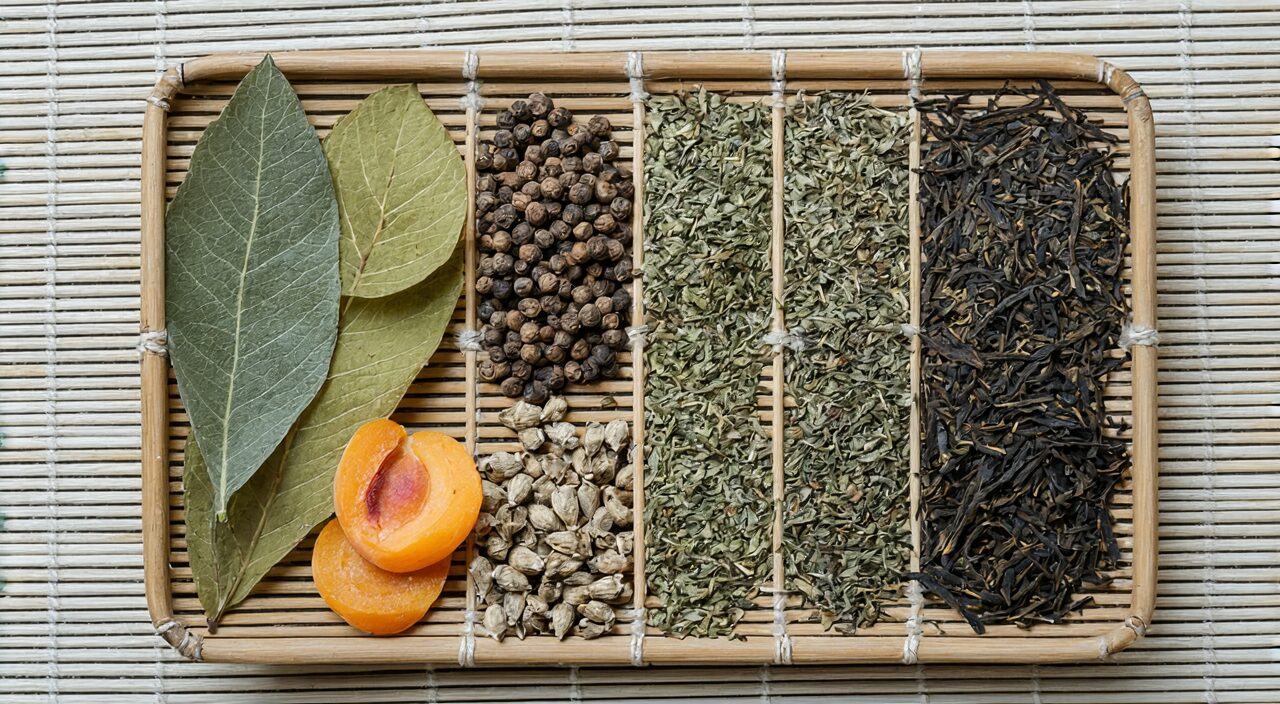
Xing Su San is a traditional formula frequently applied to address “cool-dryness” conditions, originating from the Systematic Differentiation of Warm Diseases by Qing dynasty physician Wu Jutong. The core of its formulation strategy lies in gently dispersing cool-dryness and regulating the lungs to resolve phlegm.
For easy understanding, the table below lists its common ingredients and their directional actions:
| Herb | Directional Action |
|---|---|
| Zi Su Ye (Perilla Leaf) | Disperses external coolness, ventilates lung qi |
| Xing Ren (Apricot Kernel) | Directs lung qi downward, moistens dryness and stops cough |
| Qian Hu (Peucedanum Root) | Disperses wind and directs qi downward, transforms phlegm |
| Jie Geng (Platycodon Root) | Opens and ventilates lung qi, expels phlegm and benefits the throat |
| Ban Xia (Pinellia Rhizome) | Dries dampness and transforms phlegm, directs rebellious qi downward |
| Fu Ling (Poria) | Strengthens the spleen and percolates dampness, facilitates phlegm resolution |
| Chen Pi (Tangerine Peel) | Regulates qi and harmonizes the middle, dries dampness and transforms phlegm |
| Zhi Qiao (Bitter Orange) | Regulates qi and loosens the chest |
| Gan Cao (Licorice) | Harmonizes the other herbs, moistens the lungs and stops cough |
| Sheng Jiang (Fresh Ginger) | Disperses cold and releases the exterior, harmonizes stomach qi |
| Da Zao (Jujube) | Tonifies the middle and supplements qi, harmonizes the properties of the herbs |
Together, the main purpose of these herbs is not simply to stop coughing, but by ventilating and promoting lung qi, and dispersing and transforming phlegm-dampness, to restore the normal disseminating and descending functions of lung qi, thereby helping to relieve cough and nasal congestion.
Understanding the Directional Action of Xing Su San from a TCM Perspective
Traditional Chinese medicine does not view cough as a single problem; instead, it differentiates between external contraction and internal damage, and between cold, heat, dryness, and dampness. The focus of Xing Su San is on the direction of “externally-contracted cool-dryness.”
The characteristics of cool-dryness are: external cool pathogenic factors invading, causing lung qi to be constrained and body fluids unable to be properly distributed. This leads to manifestations like nasal congestion, a dry throat, cough, and thin phlegm, yet without the severe chills and high fever of a severe wind-cold condition, and without the dry, hot sensation in the nasal passages and obvious throat pain of warm-dryness.
In this situation, using strongly warming and dispersing methods might paradoxically aggravate the dryness aspect; using overly moistening methods might cause lung qi to become even more stagnant. Thus, Xing Su San is designed to mildly disperse while simultaneously moistening the lungs and transforming phlegm, belonging to the “gentle dispersion” style.
Who Might Xing Su San Be Suitable For

Here, “suitable” only refers to traditional recognition of formula-pattern correspondence, and is not an absolute classification. It should not be arbitrarily applied to oneself. The following manifestations are only for directional reference:
- Cough with thin, white sputum, or little sputum but a sense of obstruction in the throat
- Aversion to cold without sweating, or mild sensitivity to cold
- Nasal congestion, dry throat, but the throat may not be very red
- Possible mild, heavy sensation in the head without high fever
- Tongue body tends to be pale or pale-red with a thin white or slightly dry coating
Overall, this group of manifestations more closely matches the state of cool-dryness attacking the lungs. Traditionally, it is considered that at this time lung qi is obstructed and phlegm-dampness lingers, and Xing Su San can help restore function to some extent.
If accompanied by obvious fever, yellow sputum, a red, swollen, sore throat, and thick, purulent sputum, it is likely biased towards wind-heat or phlegm-heat, and Xing Su San would not be the appropriate approach to consider.
Common Situations Where Xing Su San Is Not Suitable
Every formula has its contraindications, and Xing Su San is no exception. The following types of conditions usually require avoidance:
- Wind-heat cough: Primarily manifesting with obvious fever, thirst, sticky yellow sputum, and sore throat, these often require dispersing wind-heat. Xing Su San, tending towards warm dispersing effects, may worsen the discomfort.
- Warm-dryness injuring the lungs: Dry cough without sputum, dry and sore throat, dry, hot sensation in the nasal passages, and a relatively red tongue body with scant fluids. This type of state requires moistening dryness and clearing heat, so the warm dispersing herbs in Xing Su San are not very appropriate.
- Phlegm-heat congesting the lungs: Cough with yellow, thick sputum, chest oppression, a red tongue with a yellow, greasy coating. This situation usually requires clearing heat and transforming phlegm. Xing Su San, which tends to warm and dry dampness, can easily fuel heat.
- Special populations: During pregnancy, breastfeeding, for infants and young children, or for those with long-term constitutional weakness, self-use is not recommended without specific evaluation by a professional.
Furthermore, for severe, prolonged, or recurrent cough, or when accompanied by chest tightness or pain, difficulty breathing, blood-stained sputum, persistent fever, or unexplained weight loss, timely medical attention should be sought rather than choosing a formula based on informational articles by oneself.
Differences Between Xing Su San and Several Common Formulas
Many people compare these formulas together because they are all well-known in the context of cough management. Here, a brief description of their directional differences helps build awareness of distinctions.
| Comparison Formula | Direction for Xing Su San | Direction for the Other Formula | Key Differences Briefly Described |
|---|---|---|---|
| Sang Ju Yin (Mulberry Leaf and Chrysanthemum Decoction) | Cool-dryness invading the lungs, aversion to cold, nasal congestion, dry throat, thin sputum | Early-stage wind-warmth, body heat, slight thirst, red throat, cough | Xing Su San tends towards warm-dispersion; Sang Ju Yin tends towards acrid-cool dispersion of wind-heat |
| Qing Zao Jiu Fei Tang (Dryness-Clearing Lung-Rescuing Decoction) | Cool-dryness, sputum tends to be thin, mild exterior signs | Warm-dryness injuring the lungs, dry cough without sputum, qi rushing upward with panting, irritability and thirst | Xing Su San gently disperses with warmth and moisture; Qing Zao Jiu Fei Tang clears and moistens, directing qi downward |
| Zhi Sou San (Stop Coughing Powder) | Cool-dryness with exterior pattern (aversion to cold, no sweat, nasal congestion) | No obvious exterior pathogen influence, chronic cough, white sticky sputum, focus on stopping cough and transforming phlegm | Xing Su San emphasizes releasing the exterior and ventilating the lungs; Zhi Sou San is more generally applicable and milder |
| Xiao Qing Long Tang (Minor Bluegreen Dragon Decoction) | Mild exterior pattern of cool-dryness, sputum quantity not necessarily large but thin | External cold and internal retained fluid, aversion to cold, fever, cough and panting, profuse clear thin sputum, white slippery tongue coating | Xing Su San is gentle dispersion; Xiao Qing Long Tang strongly disperses cold and transforms retained fluid |
These distinctions only provide a basic analytical framework. In practical application, a detailed judgment needs to be made by combining tongue and pulse findings and the overall individual condition.
Summary
Xing Su San is a formula frequently used in traditional Chinese medicine when dealing with externally-contracted cool-dryness. By gently dispersing cool-dryness and regulating the lungs to transform phlegm, it helps restore the disseminating and descending of lung qi, thus alleviating discomfort such as cough with thin sputum, nasal congestion, and throat dryness.
However, it is not suitable for heat-biased or dryness-biased patterns such as wind-heat, warm-dryness, or phlegm-heat. There are clear directional differences from other formulas like Sang Ju Yin, Qing Zao Jiu Fei Tang, Zhi Sou San, and Xiao Qing Long Tang. Whether one needs to be regulated in the direction of Xing Su San requires a comprehensive judgment combining specific symptoms, constitution, and professional advice; it should not be self-applied arbitrarily.
This article is for informational reference only and cannot replace professional diagnosis or treatment advice. If a cough persists without improvement, or is accompanied by abnormal signs such as chest tightness, fever, or weight loss, it is recommended to consult a doctor or qualified professional in a timely manner.