
Who is Qing Shu Yi Qi Tang Suitable For? Ingredients, Benefits and Precautions

During the hot season, many people experience noticeable fatigue, dry mouth, shortness of breath, and reduced appetite after prolonged exposure to heat or heavy sweating.
If these discomforts persist, traditional Chinese medicine (TCM) often interprets them from the perspective of “summer heat damaging qi and consuming body fluids.” Among many classic formulas, Qing Shu Yi Qi Tang is one of the regulating approaches developed around this mechanism.
This article will provide a relatively systematic overview of its ingredients, traditional effects, suitable and unsuitable groups, and its differences from similar formulas such as Sheng Mai San.
Understanding the Formula’s Intention from “Summer Heat Damaging Qi and Consuming Fluids”
In the summer season, high temperatures cause the body to sweat profusely to dissipate heat. In TCM theory, sweat is derived from body fluids, and excessive sweating not only depletes fluids but also easily dissipates “qi” along with sweat. When both fluids and qi are excessively consumed, symptoms such as body heat, excessive sweating, thirst, fatigue, shortness of breath, and even restlessness often appear.
This state is not simply heatstroke, nor is it exactly the same as summer-dampness encumbering the spleen; it leans more toward a “deficiency” pattern. Qing Shu Yi Qi Tang is precisely formulated with the traditional approach of clearing summer heat, nourishing yin and generating fluids, and tonifying qi and strengthening the spleen.
Therefore, the key to understanding this formula lies in giving equal weight to “clearing summer heat” and “replenishing qi and generating fluids,” addressing both the unresolved summer heat and the already damaged qi and yin. It is not simply for reducing fever or releasing the exterior, nor is it suitable for all summer discomforts.
Ingredients of Qing Shu Yi Qi Tang and Traditional Understanding of Each Component
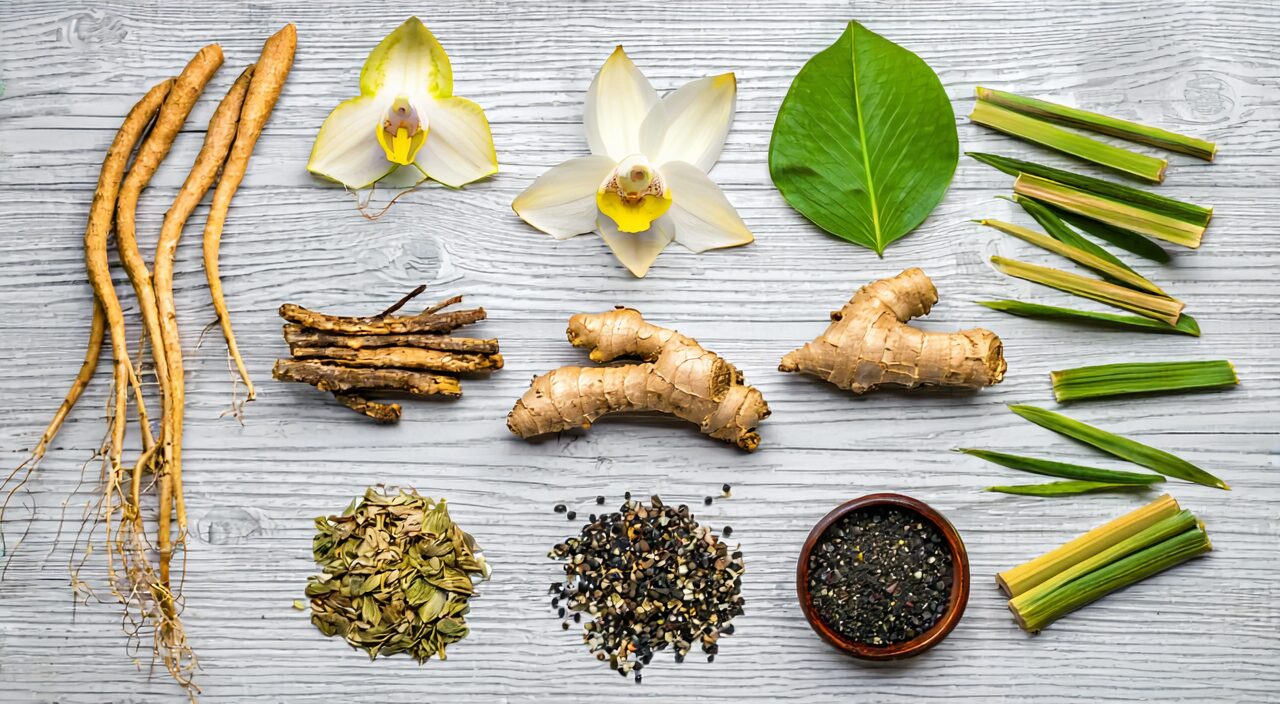
There are several versions of Qing Shu Yi Qi Tang, with the most commonly cited source being the “Wen Re Jing Wei” (Compendium of Warm Heat Diseases) by Wang Mengying. The formula is composed of watermelon rind (Xi Gua Cui Yi), American ginseng (Xi Yang Shen), Dendrobium (Shi Hu), Ophiopogon (Mai Dong), Coptis (Huang Lian), Anemarrhena (Zhi Mu), bamboo leaf (Zhu Ye), lotus stem (He Geng), licorice (Gan Cao), and polished rice (Jing Mi). Its formulating idea is to clear summer heat without harming the right qi, and to tonify qi and nourish yin without retaining pathogenic factors.
| Ingredient | Traditional Action |
|---|---|
| American Ginseng | Tonifies qi and nourishes yin, clears fire and generates fluids |
| Dendrobium | Nourishes yin and clears heat, benefits the stomach and generates fluids |
| Ophiopogon | Nourishes yin and moistens the lungs, benefits the stomach and generates fluids |
| Coptis | Clears heat and dries dampness, drains fire and detoxifies |
| Anemarrhena | Clears heat and drains fire, nourishes yin and moistens dryness |
| Bamboo Leaf | Clears heat and relieves restlessness, promotes urination |
| Lotus Stem | Clears summer heat and resolves dampness, regulates qi and eases the chest |
| Watermelon Rind | Clears summer heat, generates fluids and quenches thirst |
| Licorice | Tonifies the spleen and augments qi, harmonizes all medicinals |
| Polished Rice | Tonifies the middle and augments qi, harmonizes the stomach and generates fluids |
Different versions may have slight variations, but overall they remain within the scope of clearing summer heat, tonifying qi, nourishing yin, and generating fluids. American ginseng, Dendrobium, and Ophiopogon work together to emphasize nourishing yin and tonifying qi; Coptis, Anemarrhena, bamboo leaf, and watermelon rind collectively clear summer heat; lotus stem regulates qi without being warm and drying; licorice and polished rice harmonize the middle and protect the stomach, making the entire formula clearing without being overly cold, and tonifying without causing stagnation.
Traditional Effects and Application Directions of Qing Shu Yi Qi Tang
Based on its composition, the traditional effects of Qing Shu Yi Qi Tang can be summarized as clearing summer heat, tonifying qi and nourishing yin, generating fluids and quenching thirst. It is often used for various summer discomforts resulting from summer heat damaging both qi and fluids, with a focus on “regulation” rather than “emergency treatment.”
In some traditional formula literature, it is more often regarded as a reference formula for the recovery period, especially when, after summer heat, there is still residual heat with accompanying fatigue, profuse sweating, thirst, and shortness of breath. Only then is it considered for use.
If summer heat is still intense, or if there are obvious signs of summer-dampness encumbering the spleen such as chills, heavy head, chest tightness, and diarrhea, this formula is generally not the first consideration. This point will be further explained in the contraindications section later.
Who Might Be Suitable for Qing Shu Yi Qi Tang

From the perspective of traditional Chinese medicine, suitable individuals for Qing Shu Yi Qi Tang generally exhibit the following characteristics of “dual damage to qi and fluids.” Note that “suitable” here only refers to a common direction within the traditional theoretical framework and should not be equated with specific personal recommendations.
People with Persistent Fatigue After Summer Heat
Those who work or live in high-temperature environments for extended periods and, after profuse sweating, still feel heavy-bodied, weak in the limbs, and mentally exhausted even after leaving the heat, and find it difficult to recover quickly through normal rest.
Traditionally, this is thought to be due to qi escaping with sweat, and qi deficiency failing to nourish the limbs. It may be suitable for regulation through the approach of clearing summer heat, tonifying qi, and generating fluids.
People with Obvious Dry Mouth, Thirst, and Desire for Cold Water Without Relief
After excessive sweating depletes body fluids, the mouth and tongue become dry, and drinking water frequently still feels insufficient. Sometimes this is accompanied by restlessness and a sensation of heat in the palms.
If, in such cases, the tongue body is reddish, lacks moisture, or has a thin yellow and dry coating, it may indicate yin damage with internal heat, and the yin-nourishing and fluid-generating combination in Qing Shu Yi Qi Tang is often used as a reference.
People with Profuse, Unrelenting Sweating That Worsens with Slight Activity
Sweating more in the summer heat is a normal thermoregulatory response, but if the sweat volume far exceeds normal levels and is accompanied by qi deficiency failing to restrain sweating, with profuse sweating and shortness of breath and palpitations upon slight movement, it is often seen as a manifestation of dual qi and yin deficiency with weakened defensive exterior. Such individuals may fall within the consideration range for this formula.
People with Mild Restlessness, Poor Appetite, Shortness of Breath, and Reluctance to Speak
After summer heat damages qi and fluids, the middle qi is impaired, and the spleen and stomach’s transformative ability weakens. Not only is there a lack of appetite, but even a small amount of food causes bloating and fullness, along with a sensation of restless unease due to fluid damage.
Traditionally, the aim is to help restore the state by tonifying qi, nourishing yin, clearing heat, and relieving restlessness, and the formulating approach of Qing Shu Yi Qi Tang may be referenced at this time.
Mild to Moderate Qi and Yin Deficiency That Needs Distinction from Sheng Mai San
This type needs to be carefully distinguished from Sheng Mai San. Sheng Mai San leans toward purely tonifying qi and yin, and is often used for qi and yin deficiency of the heart and lungs, primarily characterized by shortness of breath, profuse sweating, and a weak pulse. Qing Shu Yi Qi Tang, on the other hand, adds the strength of clearing summer heat, making it more suitable for qi and fluid damage when summer heat still lingers.
If heat signs are not obvious, Sheng Mai San may be preferred; if residual summer heat is more pronounced, Qing Shu Yi Qi Tang is more likely to be considered. Detailed differences can be found in the dedicated comparison section later.
It must be emphasized that the above are merely common manifestation directions summarized from traditional formula meanings and are not diagnostic criteria. Whether it is suitable must be judged by a professional skilled in pattern differentiation based on tongue appearance, pulse, and overall condition.
Contraindications and Unsuitable Conditions for Qing Shu Yi Qi Tang
Although Qing Shu Yi Qi Tang is a classic formula for regulating dual damage to qi and fluids in summer, it is by no means suitable for all summer discomforts. The following conditions are generally not appropriate or require extra caution.
Not Suitable for Those with Cold-Dampness Encumbering the Spleen or Unresolved Summer-Dampness
If, in summer, due to seeking coolness and consuming cold drinks, or contracting external summer-dampness, symptoms such as a heavy head as if wrapped, chest tightness, abdominal distension, nausea, vomiting, loose stools, and a thick white greasy or yellow greasy tongue coating appear—indicating heavy dampness—the yin-nourishing and fluid-generating herbs in Qing Shu Yi Qi Tang may promote dampness and retain pathogens, worsening the spleen’s encumbrance.
In this case, traditional approaches would first consider aromatic transformation and diffusing, disinhibiting dampness and strengthening the spleen, such as formulas like Huo Xiang Zheng Qi San, which are more appropriate.
Should Not Be Used During Excessive Heat Syndrome or Active High Fever
If one is in the stage of high fever, great thirst, profuse sweating, and a large and forceful pulse—indicative of Excess Heat at the Yangming Qi aspect—traditional practice often selects Bai Hu Tang (White Tiger Decoction) type formulas to clear Qi aspect excess heat. Since the tonifying strength of Qing Shu Yi Qi Tang outweighs its heat-clearing power, using it prematurely at this stage may “lock the door and leave the bandit inside,” hindering the expulsion of heat pathogens.
Caution for Those with Yang Qi Deficiency and Spleen-Stomach Deficiency Cold
Ingredients like Coptis and Anemarrhena are cold in nature, American ginseng is cool, and Ophiopogon and Dendrobium are cloying. For individuals with habitual spleen-stomach deficiency cold, prone to diarrhea, averse to cold, and experiencing stomach pain when consuming cool foods, caution is needed even in summer. Improper use may damage yang qi and exacerbate digestive discomfort.
Pregnant Women, Children, and Special Health Conditions
For pregnant women, infants, the frail elderly, and those with chronic diseases, their physical conditions are more complex, and any formula reference should be limited to professional guidance. Self-matching based on symptoms is not recommended.
Not Suitable for Early-Stage Cold or Concurrent Exterior Syndrome
If symptoms like chills, fever, headache, and nasal congestion appear in summer—indicating an exterior syndrome with pathogens still at the body surface—it is not advisable to use tonifying and yin-nourishing substances too early, to avoid drawing pathogens inward. The priority should be releasing the exterior and diffusing, and only after the exterior syndrome is resolved should adjustments be made according to the situation.
Differences Between Qing Shu Yi Qi Tang and Sheng Mai San, Huo Xiang Zheng Qi San, Bai Hu Tang, and Yu Ping Feng San
The causes of summer discomfort are diverse, and Qing Shu Yi Qi Tang is just one approach. Comparing it with several similar yet directionally different formulas makes it easier to understand their respective scopes of application.
Qing Shu Yi Qi Tang vs. Sheng Mai San
Sheng Mai San is composed of ginseng, Ophiopogon, and Schisandra, leaning toward pure tonification of qi and yin, astringing and stopping sweating. It is commonly used for shortness of breath, profuse sweating, and weak pulse due to heart-lung qi and yin deficiency, and basically does not involve heat-clearing herbs. Qing Shu Yi Qi Tang, in contrast, addresses both clearing summer heat and tonifying qi and nourishing yin.
Simply put, if residual summer heat is slight but qi and yin damage is obvious, Sheng Mai San may be preferred; if summer heat still exists with profuse sweating accompanied by restlessness and thirst, Qing Shu Yi Qi Tang is more targeted.
Qing Shu Yi Qi Tang vs. Huo Xiang Zheng Qi San
Huo Xiang Zheng Qi San mainly consists of patchouli, perilla, angelica root, magnolia bark, pinellia, etc., oriented toward aromatic transformation of dampness, releasing the exterior, and harmonizing the middle. It is commonly used for summer-dampness external contraction or internal damage from dampness stagnation causing chills and fever, chest and epigastric fullness, abdominal distension, vomiting, and diarrhea, often with a white greasy tongue coating.
This is the exact opposite of the dual qi and fluid damage with red tongue and scant fluids addressed by Qing Shu Yi Qi Tang. One leans toward dampness, the other toward dryness; they must be clearly distinguished and not confused.
Qing Shu Yi Qi Tang vs. Bai Hu Tang
Bai Hu Tang (White Tiger Decoction), composed of gypsum, Anemarrhena, polished rice, and licorice, is a representative formula for clearing intense heat at the Yangming Qi aspect, commonly used for high fever, extreme thirst, profuse sweating, and a large forceful pulse seen in excess heat patterns. Although Qing Shu Yi Qi Tang also contains heat-clearing herbs, it is still a formula that clears and tonifies simultaneously, suitable for the mixed deficiency and excess stage where summer heat has already damaged qi and fluids, with heat far less intense than in Bai Hu Tang presentations.
If excess heat has not yet been cleared, the Bai Hu Tang approach is more appropriate. Only after clearing heat should one consider whether to tonify qi and nourish yin based on the condition.
Qing Shu Yi Qi Tang vs. Yu Ping Feng San
Yu Ping Feng San (Jade Windscreen Powder) is composed of astragalus, white atractylodes, and siler, aimed at tonifying qi and securing the exterior, used for exterior deficiency with spontaneous sweating and susceptibility to wind pathogens, often in those with a constitutionally weak body who sweat with slight movement and fear drafts, and is not directed at summer heat. Qing Shu Yi Qi Tang, on the other hand, is limited to qi and fluid damage in the context of summer heat, and its usage scenarios are greatly limited without the summer season and environmental factors.
Although both involve “profuse sweating,” the causes and accompanying manifestations are usually markedly different.
Points Worth Noting Before Using This Formula
- Even if pattern differentiation suggests symptom correspondence, it is advised not to self-prescribe and fill a formula. The dosage ratios, modifications according to patterns, and individual constitutional differences can all significantly affect suitability.
- Traditionally, when using Qing Shu Yi Qi Tang, it is often modified based on the severity of summer heat, degree of yin damage, and whether dampness is intermingled. For example, if dampness signs slightly appear, herbs like Poria or Coix seed may be added or subtracted. These adjustments require judgment by systematically trained professionals.
- This article provides only informational explanation of traditional formulas and does not constitute a recommendation or purchase guide for any specific product. The choice of prepared medicine dosage forms, brand differences, and commercial information are also beyond the scope of this article.
- In daily health management, if symptoms persist without relief, recur repeatedly, or are accompanied by chest pain, palpitations, altered consciousness, unremitting high fever, or other conditions requiring emergency treatment, seek medical attention promptly.
Summary
In traditional Chinese medicine, Qing Shu Yi Qi Tang mainly targets the common pattern of summer heat damaging qi and consuming fluids. Through its combination of clearing summer heat, nourishing yin and generating fluids, and tonifying qi and strengthening the spleen, it provides a regulating approach for fatigue, thirst, profuse sweating, shortness of breath, and decreased appetite after summer heat.
It is more suitable for the later stage of febrile disease where both qi and fluids are damaged but summer heat has not completely cleared, often manifesting with a reddish tongue with scant moisture. In contrast, those with cold-dampness encumbering the spleen, unresolved summer-dampness, exuberant excess heat, or spleen-stomach deficiency cold are generally not suitable for this formula.
Although Sheng Mai San, Huo Xiang Zheng Qi San, Bai Hu Tang, and Yu Ping Feng San each involve superficially similar symptoms like sweating and fatigue, their underlying mechanisms and orientation of indications are fundamentally different and should not be conflated.
If you need to further understand whether you are suited for a similar regulating approach, it is recommended that you consult a qualified TCM professional familiar with formula pattern differentiation, after clearly describing your symptoms, tongue appearance, and triggers. Make judgments based on complete information rather than self-matching based on a single symptom.