
Who Is Suitable for Tongxie Yao Fang? Composition, Effects, and Contraindications

Among Chinese herbal formulas, some are designed for specific patterns of discomfort, and Tongxie Yao Fang is one of them. Many people experience sudden abdominal pain when nervous, angry, or under stress, followed by diarrhea, with the pain easing after defecation. This condition may be related to dysfunction of the liver and spleen.
For overseas friends interested in TCM health regulation, understanding who Tongxie Yao Fang is suitable for, what herbs it consists of, its characteristics, and precautions is the basis for deciding whether this approach merits further investigation.
The Origin and Traditional Understanding of Tongxie Yao Fang
Tongxie Yao Fang first appeared in Danxi Xinfa (Danxi’s Experiential Therapy), originally named “Baizhu Shaoyao San” (Atractylodes and Peony Powder), and later generations commonly refer to it as Tongxie Yao Fang.
Traditional Chinese medicine believes that this type of diarrhea differs from simple spleen deficiency with dampness or intestinal damp-heat. It is more related to “liver hyperactivity and spleen deficiency.” Simply put: emotional fluctuations, stress, and other factors cause excessive liver qi, which overcomes the spleen’s transportation function, leading to abdominal pain and diarrhea. Therefore, the core idea of this formula is to supplement the spleen, soften the liver, dispel dampness, and stop diarrhea.
What Herbs Compose Tongxie Yao Fang
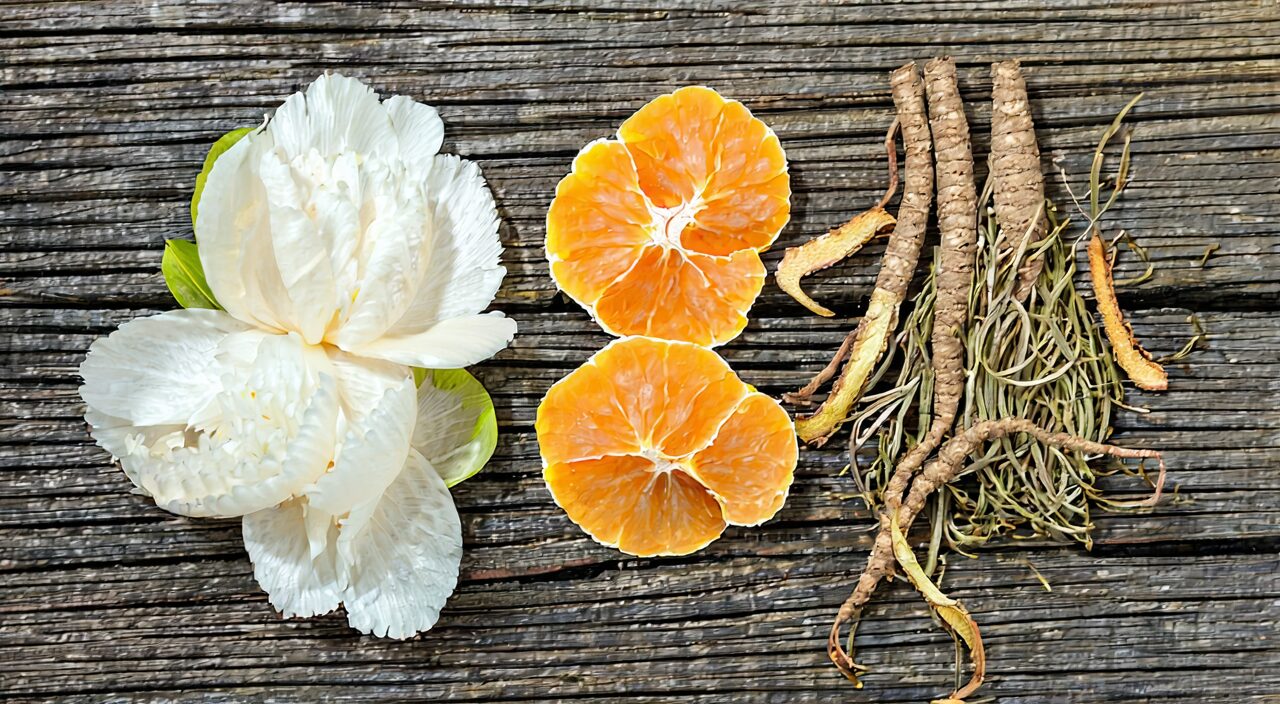
The composition of Tongxie Yao Fang is not complex, mainly four herbs, each with a clear role. Below are the usual ingredients and their primary roles in the formula:
| Drug Name | Primary Role in the Formula |
|---|---|
| Atractylodes (Baizhu) | Tonifies spleen and dries dampness, consolidates the middle burner |
| White Peony Root (Baishao) | Softens the liver and relieves spasms, alleviates pain |
| Tangerine Peel (Chenpi) | Regulates qi and harmonizes the middle, awakens the spleen and transforms dampness |
| Saposhnikovia (Fangfeng) | Disperses and soothes the liver, overcomes dampness and stops diarrhea |
The uniqueness of this combination lies in using Atractylodes to supplement the spleen and dispel dampness, White Peony Root to soften the liver and relieve pain, Saposhnikovia to help disperse liver qi, and Tangerine Peel to harmonize qi movement. The overall approach leans toward harmonizing the liver and spleen rather than simply stopping diarrhea.
The Therapeutic Direction of Tongxie Yao Fang: Supplementing the Spleen, Softening the Liver, Dispelling Dampness, and Stopping Diarrhea
From the perspective of classical actions, Tongxie Yao Fang is not an ordinary antidiarrheal formula. It focuses more on treating “painful diarrhea” caused by a combination of constrained liver qi, spleen deficiency, and dampness stagnation. Specifically:
- Supplement the Spleen: Atractylodes is a key spleen-tonifying herb that enhances the spleen’s transformation and transportation ability, reducing internal dampness.
- Soften the Liver: White Peony Root, sour and sweet, nourishes yin, supports liver blood, softens the liver body, and relieves spasmodic pain.
- Soothe the Liver: Saposhnikovia, acrid and dispersing, guides constrained liver qi outward; together with White Peony Root, one astringes and the other disperses, preventing liver qi from attacking transversely.
- Transform Dampness: Tangerine Peel moves qi and dries dampness, helping restore the spleen’s ascending and stomach’s descending mechanism.
Hence, this formula is often considered in the context of liver-spleen disharmony and earth deficiency with wood overacting, with manifestations such as abdominal pain, diarrhea, pain relief after defecation, borborygmus, loose stools, and increased flatulence as reference indicators. It is not suitable for all types of diarrhea, and this must be emphasized.
Who Is Suitable for Tongxie Yao Fang?

Because Tongxie Yao Fang targets the specific pattern of liver hyperactivity and spleen deficiency, the suitable population is relatively concentrated. If you match the following situations, traditional Chinese medicine may take it into consideration:
- Emotions are clearly related to diarrhea: Each time you experience anger, nervousness, anxiety, stress, or emotional fluctuation, abdominal cramping appears, followed by the urge to defecate, and after bowel movement the pain is relieved.
- Accompanied by borborygmus and increased flatulence: During abdominal pain, bowel sounds can be heard, and after defecation there is often more flatulence, with a sensation of qi moving inside the abdomen.
- Epigastric and abdominal discomfort without obvious heat signs: Abdominal distension, stools are generally unformed, but without marked anal burning, thirst for cold drinks, yellow greasy tongue coating, or other damp-heat manifestations.
- Recurrent course, mostly functional: This type of diarrhea is often not caused by infection; examinations may show no abnormality, but it is easily triggered by life events.
It should be noted that this suitability is only a directional reference. Whether an individual truly belongs to the liver-spleen disharmony pattern requires comprehensive assessment by a professional, integrating tongue and pulse diagnosis and the overall condition. Especially if abdominal pain and diarrhea persist, if there is blood in the stool, significant weight loss, fever, or other symptoms, one should not self-treat but seek medical evaluation promptly.
Situations Where Tongxie Yao Fang Is Not Suitable
Every formula has its limitations, and Tongxie Yao Fang is no exception. The following conditions are typically unsuitable or require extreme caution:
- Damp-heat diarrhea: Characterized by foul-smelling stools, anal burning, tenesmus, red tongue with yellow greasy coating. This mostly pertains to intestinal damp-heat and requires clearing heat and drying dampness formulas, such as the Gegen Qin Lian Tang approach.
- Cold-damp diarrhea: Diarrhea is watery and clear, with cold abdominal pain that prefers warmth and pressure, pale tongue with white slippery coating. This is cold-damp encumbering the spleen and is not suitable for a formula focused on softening the liver.
- Acute infectious diarrhea: Accompanied by fever, nausea, vomiting, stools with pus, blood, or mucus, possibly bacterial or viral infection; the cause must first be investigated, and one should not rely solely on Tongxie Yao Fang.
- Special physiological stages: Pregnant women and breastfeeding women, due to their special physiological states, require strict risk evaluation before using formulas and should not self-select. Children, the elderly, and those with extreme debility should also consider suitability under professional guidance.
- Severe spleen deficiency or pure deficiency pattern: If only spleen deficiency is present without obvious liver qi hyperactivity, such as chronic poor appetite, fatigue, sallow complexion, loose stools without abdominal pain or borborygmus, spleen-strengthening and qi-boosting formulas like Si Jun Zi Tang or Shen Ling Bai Zhu San may be more appropriate. Simply softening the liver could affect spleen yang.
Distinguishing Tongxie Yao Fang from Similar Formulas
Overseas users often compare Tongxie Yao Fang with formulas such as Shen Ling Bai Zhu San, Xiao Yao San, Si Jun Zi Tang, and Gegen Qin Lian Tang. Here, distinctions are made from a traditional understanding to help form a clearer picture.
Difference from Shen Ling Bai Zhu San
Shen Ling Bai Zhu San focuses on strengthening the spleen, boosting qi, and percolating dampness to stop diarrhea. It is suited for chronic diarrhea caused by spleen deficiency with dampness, often accompanied by fatigue and poor appetite, without prominent abdominal pain or emotional triggers. Tongxie Yao Fang emphasizes liver involvement, with abdominal pain immediately followed by diarrhea and relief after defecation as typical features. If diarrhea belongs to spleen deficiency with dampness and almost no liver depression signs, Shen Ling Bai Zhu San may be a more appropriate direction to explore.
Difference from Xiao Yao San
Xiao Yao San is mainly used for liver depression with blood deficiency and spleen weakness, commonly presenting as emotional depression, chest and rib-side distension and pain, bitter taste, dry throat, mental fatigue, and poor appetite. Its regulatory focus is soothing the liver, resolving depression, nourishing blood, and strengthening the spleen, without specifically stopping diarrhea. While both formulas harmonize the liver and spleen, Xiao Yao San leans toward resolving depression and nourishing blood, whereas Tongxie Yao Fang leans toward relieving spasms, stopping diarrhea, and dispelling dampness.
Difference from Si Jun Zi Tang
Si Jun Zi Tang is a basic formula for strengthening the spleen and boosting qi, composed of ginseng (or codonopsis), Atractylodes, Poria, and licorice. It is used for pure spleen-stomach qi deficiency with shortness of breath, fatigue, poor appetite, and loose stools. It does not involve softening the liver or prominent liver-soothing herbs. If diarrhea is entirely due to spleen deficiency without abdominal pain, borborygmus, or emotional triggers, Si Jun Zi Tang’s approach may be more fitting.
Difference from Gegen Qin Lian Tang
Gegen Qin Lian Tang is a formula that releases both the exterior and interior while clearing heat and stopping diarrhea. It suits diarrhea caused by damp-heat brewing internally with heat pressing on the large intestine, characterized by body heat, dry mouth, anal burning, foul stools or mucus, and a red tongue with yellow coating. This is a completely different direction from Tongxie Yao Fang, which treats liver-spleen disharmony without heat signs.
The above comparisons are intended to show that each formula has its own emphasis and cannot replace one another. Whether to use a formula and which direction to prioritize must be comprehensively assessed based on individual circumstances.
Summary
As a traditional formula, Tongxie Yao Fang is mainly suitable for specific manifestations of liver-spleen disharmony such as abdominal pain and diarrhea after emotional fluctuation, pain relief after defecation, and borborygmus. Its composition adjusts the disharmony between the liver and spleen by supplementing the spleen, softening the liver, dispelling dampness, and stopping diarrhea.
However, damp-heat diarrhea, cold-damp diarrhea, infectious diarrhea, and other diarrheas not caused by liver hyperactivity with spleen deficiency are not suitable for using Tongxie Yao Fang as a therapeutic direction.
The use of any Chinese herbal formula requires assessment based on constitution, symptoms, and lifestyle. This article is for educational reference only. If symptoms persist, recur, or are accompanied by weight loss, blood in the stool, fever, etc., priority should be given to professional medical evaluation to avoid delaying diagnosis and treatment. We hope readers can use this information to gain a more rational understanding of Tongxie Yao Fang and avoid indiscriminate application.