
Who Is Da Qing Long Tang Suitable For? Composition, Efficacy, and Contraindications

Many people experience an obvious aversion to cold, fever, and general muscle aches, yet at the same time feel irritability, agitation, and thirst with a desire for cold drinks. This state of “cold on the exterior, heat in the interior” often confuses people: should one induce sweating or clear heat? In classical Chinese herbal medicine, Da Qing Long Tang (Major Bluegreen Dragon Decoction) is precisely a classic formula aimed at this pattern of external cold with internal heat. This article will outline the overall picture of Da Qing Long Tang from the perspectives of composition, traditional understanding, suitable populations, contraindications, and differences from similar formulas.
Composition of Da Qing Long Tang and Formula Analysis
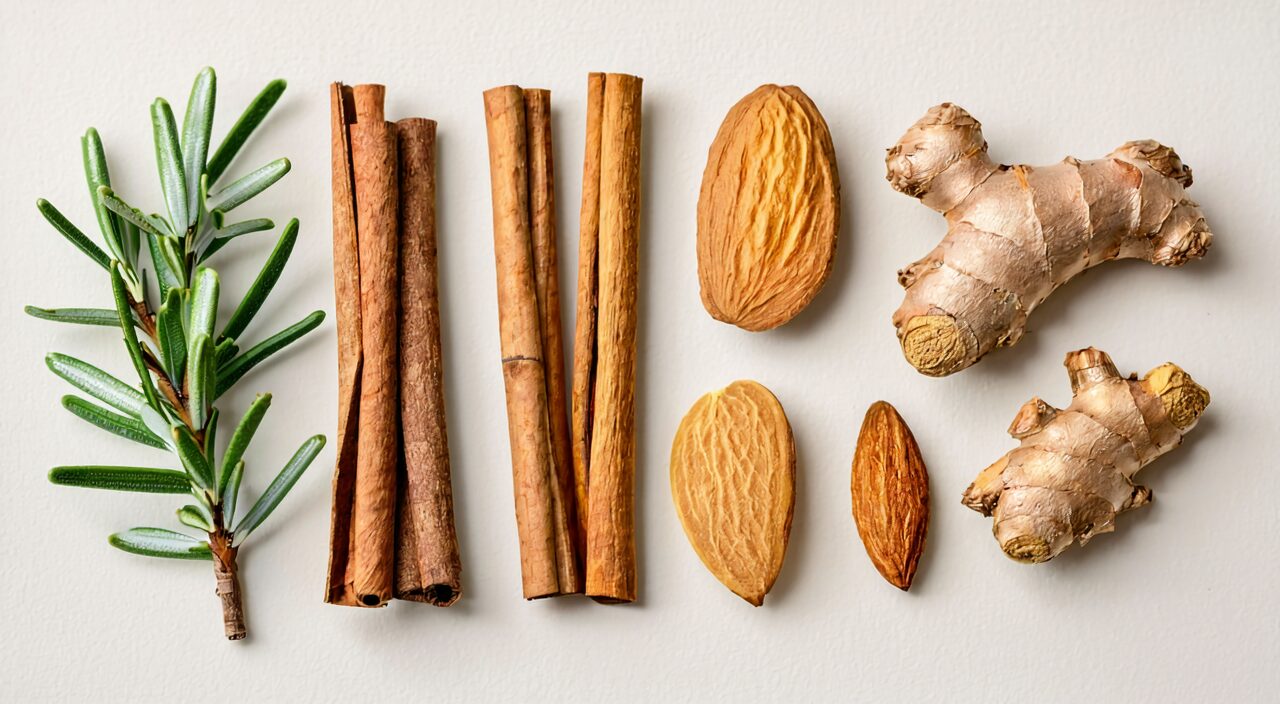
Da Qing Long Tang originates from the Treatise on Cold Damage. It is a potent sweat-inducing formula designed to simultaneously release external cold and clear internal heat. The formula contains only a few herbs but has a very clear therapeutic direction.
Composition Overview
The traditional reference composition is as follows; specific dosages must be determined by a professional based on individual conditions. The table below lists the herb names and their main functional directions within the formula:
| Herb | Traditional Functional Direction |
|---|---|
| Mahuang (Ephedra) | Induces sweating to release the exterior, diffuses the lung to relieve asthma |
| Guizhi (Cinnamon Twig) | Assists Mahuang in inducing sweating, warms and unblocks the channels |
| Xingren (Apricot Kernel) | Directs lung qi downward, stops coughing and asthma |
| Gancao (Licorice) | Harmonizes the medicinal nature, moderates spasm and regulates the middle |
| Shigao (Gypsum) | Clears and drains internal heat, eliminates irritability and quenches thirst |
| Shengjiang (Fresh Ginger) | Assists sweating, harmonizes the stomach and stops vomiting |
| Dazao (Jujube) | Supplements the middle and boosts qi, protects and cares for the spleen and stomach |
It can be seen that Da Qing Long Tang is essentially Mahuang Tang (Mahuang, Guizhi, Xingren, Gancao) with the addition of Shigao, Shengjiang, and Dazao. Mahuang Tang predominantly attacks and disperses wind-cold, while the addition of Shigao specifically targets internal constrained heat. Shengjiang and Dazao work together to care for and protect the correct qi, preventing heavy sweating from damaging the stomach qi.
Formula Analysis
Traditional Chinese medicine often understands the intent of Da Qing Long Tang from the perspective of “external cold with internal heat.”
When wind-cold pathogens bind and constrain the body surface, the pores become blocked, and sweat cannot be expelled smoothly. This leads to symptoms of external cold excess such as aversion to cold, fever, absence of sweating, and body pain.
Simultaneously, the body’s yang qi becomes depressed and constrained internally, unable to be diffused. Over time, it transforms into heat, disturbing the heart spirit upward and scorching body fluids internally, producing manifestations of internal heat such as irritability, thirst, and dark yellow urine.
In the formula, the combination of Mahuang and Guizhi disperses external cold and opens up an exit route. Shigao directly breaks down internal heat and eliminates irritability. Xingren assists in directing qi downward, while Sheng Jiang and Dazao harmonize the spleen and stomach. The whole formula simultaneously releases the exterior and clears the interior, belonging to the category of a drastic remedy that treats both exterior and interior.
Who Is Suitable for Da Qing Long Tang
Da Qing Long Tang is not suitable for everyone with externally contracted discomfort. Traditionally, it is more inclined to be used in cases where the following manifestations of the “external cold, internal heat pattern” are relatively typical:
- Clear aversion to cold and high fever, but no sweating from the body
- Headache and general heaviness, soreness, and aching in the muscles and joints
- A feeling of oppression or vexation in the chest or heart, restlessness when sitting or lying down, or even pronounced irritability
- Thirst with a desire for cold drinks, or a subjective sensation of internal heat and dry mouth
- The throat may be red and painful, but the symptoms of wind-cold binding the exterior are more prominent
These types of presentations are often summarized as “absence of sweating with vexation.” Among them, aversion to cold and absence of sweating are important bases for judging the direction of Da Qing Long Tang.
If there is only fever without aversion to cold, or sweating is already unobstructed, this formula is usually not within the scope of consideration. In addition, the sweating-inducing strength of Da Qing Long Tang is relatively strong. Traditionally, once sweating has been achieved and the exterior is resolved, the formula is either discontinued or the dosage is reduced; it is not used long-term. Whether it is suitable must be determined by an experienced Chinese medicine professional, taking into account individual constitution, tongue appearance, pulse condition, and other factors.
Who Should Not Use Da Qing Long Tang
Precisely because Da Qing Long Tang has a strong dispersing force and considerable heat-clearing strength, specific populations need to be extra cautious. Traditionally, these are often listed as contraindications or not advisable:
- Those with body deficiency and excessive sweating: People who sweat easily on ordinary days, break into heavy sweat with slight activity, or are already in a state of profuse sweating. Using a drastic sweating agent may deplete qi and damage fluids, worsening the discomfort instead.
- Those with wind-heat exterior pattern predominance: If fever is pronounced, the throat is sore, red, and swollen, thirst is present, but there is minimal aversion to cold, or sweating is present, these mostly belong to a wind-heat direction, which differs from the pathogenesis of wind-cold binding the exterior. Da Qing Long Tang is not suitable for this.
- Those with yin deficiency constitution or insufficient fluids: People who usually have dry mouth and tongue, night sweats, hot palms, and a red tongue with little coating. The acrid, warm, dispersing property and the heat-clearing action of Shigao in Da Qing Long Tang may further damage yin fluids.
- Those with palpitations, hypertension, or conditions requiring cardiac attention: Mahuang has a certain blood-pressure-elevating and heart-rate-increasing effect. For individuals with heart insufficiency, severe hypertension, hyperthyroidism, etc., self-use of formulas containing Mahuang should be avoided.
- Pregnant and breastfeeding women, and the elderly and debilitated: These special populations are relatively more sensitive to the reactions of medicinals. Drastic sweat-inducing formulas are not suitable for self-selection and must be decided only after careful evaluation by a physician.
- Those with severe gastrointestinal symptoms: Such as severe vomiting, diarrhea, obvious dehydration, or already presenting internal deficiency-cold manifestations; simple dispersing is also not advisable.
If severe, prolonged, or recurrent externally contracted discomfort occurs, or if it is accompanied by obvious palpitations, chest tightness, breathing difficulty, persistent high fever unrelieved, etc., one should seek medical attention promptly rather than self-selecting a formula for management.
Differences between Da Qing Long Tang and Other Formulas
Many friends interested in classical formulas compare Da Qing Long Tang with Mahuang Tang, Guizhi Tang, Maxing Shigan Tang, and even Yin Qiao San. Below, a table briefly outlines the characteristics and applicable directions of each, for clearer differentiation:
| Formula | Core Direction | Key Applicable Manifestations | Main Points Distinguishing from Da Qing Long Tang |
|---|---|---|---|
| Mahuang Tang | Disperses wind-cold, targeting exterior excess pattern | Aversion to cold, fever, absence of sweating, body pain, dyspnea and cough, without obvious internal heat and irritability | No internal heat, irritability, or thirst; Shigao is not added in the formula |
| Guizhi Tang | Harmonizes the constructive and defensive, targeting exterior deficiency pattern | Presence of sweating, aversion to wind, floating and relaxed pulse, relatively weak constitution | Characterized by sweating (opposite to absence of sweating and exterior excess), without internal heat and irritability |
| Maxing Shigan Tang | Clears lungs and calms asthma primarily, with secondary exterior release | Cough and dyspnea, fever, sweating, thirst, exterior cold symptoms have lessened | Sweating present, exterior cold mild; mainly lung heat cough and dyspnea; Da Qing Long Tang involves absence of sweating and severe exterior cold |
| Yin Qiao San | Acrid-cool exterior release, targeting wind-heat | Fever, slight aversion to wind-cold, sore throat, thirst, red tip of tongue | Acrid-cool versus acrid-warm drastic sweating: directions differ; suitable for wind-heat, not external cold with internal heat |
From the comparison above, it can be seen that although these formulas may all be used for externally contracted feverish conditions, the specific directions differ greatly depending on factors such as exterior cold, internal heat, presence or absence of sweating, and constitutional deficiency or excess. It is recommended not to apply formulas on one’s own but to use this as a reference for recognizing one’s constitution and symptoms. The final choice of approach requires thorough communication with a Chinese medicine professional.
Summary
Da Qing Long Tang is a classic drastic formula that releases the exterior through sweating and concurrently clears internal heat. Traditionally, it is often used in situations where external cold binds the exterior and there is constrained heat internally, with prominent manifestations such as aversion to cold, fever, absence of sweating, body pain, irritability, and thirst. Precisely because its sweating and heat-clearing actions are relatively strong, populations with body deficiency and profuse sweating, yin deficiency, wind-heat, unstable cardiovascular or cerebrovascular states, and those in special physiological stages are generally not suitable for its use.
Compared with formulas like Mahuang Tang, Guizhi Tang, Maxing Shigan Tang, and Yin Qiao San, the unique point of Da Qing Long Tang lies in the key syndrome differentiation characteristic of “absence of sweating with vexation.” Grasping this core helps better differentiate these different directions.
Finally, it must be emphasized that this article is for pharmaceutical cultural education reference only and cannot replace professional diagnosis or treatment advice. The selection of any formula should be carefully decided under the guidance of a professional, taking into account individual constitution, symptoms, and actual circumstances.