
Who Is Zhi Zhu Wan Suitable For? Composition, Effects and Contraindications

Many people experience post-meal epigastric fullness and a sensation of blockage after even slight dietary indiscretions, yet they hesitate to use digestive remedies for fear of harming the spleen and stomach. As a classic formula for fortifying the spleen and relieving stuffiness, Zhi Zhu Wan is traditionally used as one of the directions for regulating this type of condition. This article will examine the composition, traditional actions, suitable populations, and contraindications of Zhi Zhu Wan, and compare several common digestive formulas to help readers gain a clearer understanding of its scope of application.
Composition and Formula Analysis of Zhi Zhu Wan
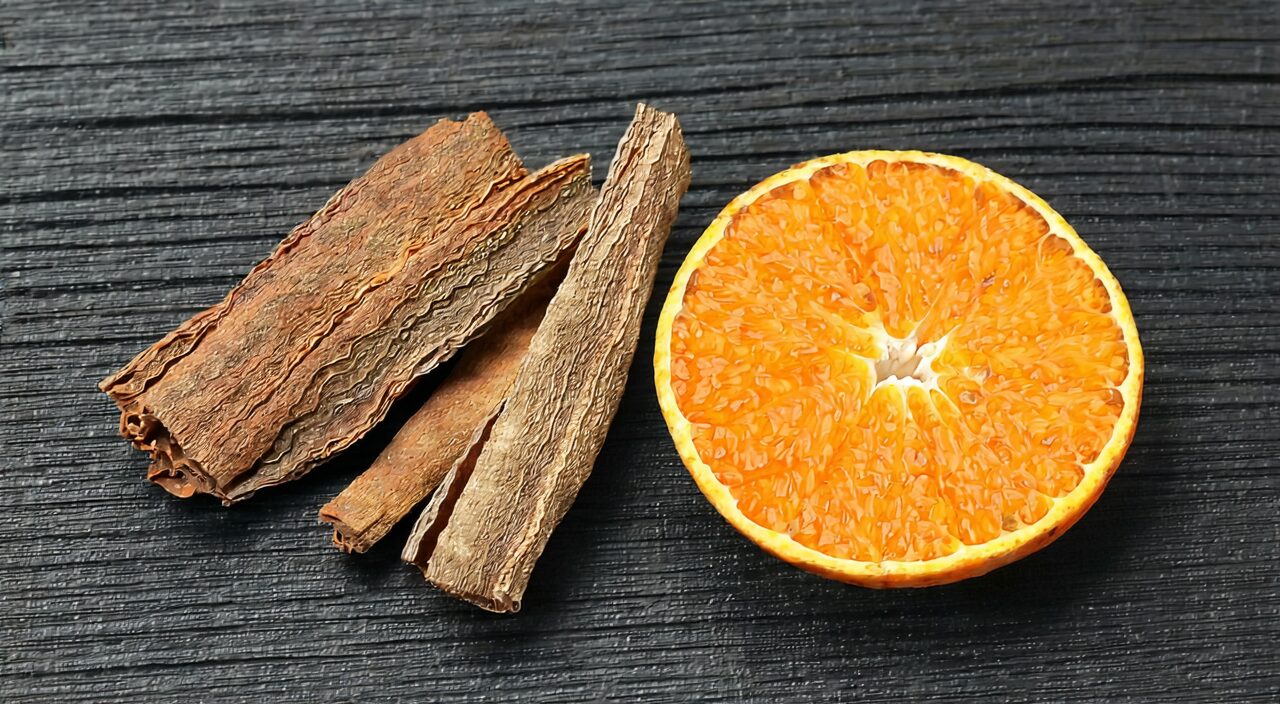
The composition of Zhi Zhu Wan is extremely simple, containing only two medicinal ingredients, but its combination embodies the principle of “simultaneous dispersion and supplementation.” Traditionally, this formula uses Bai Zhu as the sovereign and Zhi Shi as the minister, emphasizing fortifying the spleen to assist transportation and transformation while also moving qi and dispersing accumulations.
Basic Composition of Zhi Zhu Wan
| Medicinal | Reference Dosage (traditional ratio) | Role in the Formula |
|---|---|---|
| Bai Zhu | 2 liang | Fortifies the spleen and dries dampness, tonifies deficiency of the spleen and stomach; sovereign medicinal |
| Zhi Shi | 1 liang | Moves qi and relieves stuffiness, breaks stagnant qi and disperses accumulations; minister medicinal |
The larger dosage of Bai Zhu is intended to protect the middle burner and the spleen and stomach; the lighter dosage of Zhi Shi avoids excessive qi-breaking that could damage the righteous qi. This structure reflects the principle that “the spleen functions well when ascending and the stomach functions well when descending.” By fortifying the spleen, clear qi ascends; by moving qi, turbid qi descends, thereby improving the state of stuffiness and discomfort.
Who Is Zhi Zhu Wan Suitable For

From the perspective of traditional pattern differentiation, Zhi Zhu Wan is not intended for all types of abdominal fullness, but mainly for the pattern of “spleen deficiency with qi stagnation complicated by food accumulation.” The following manifestations can serve as references:
- Post-meal epigastric stuffiness and discomfort, a sensation of something gathering in the stomach, without obvious pain, or with fluctuating severity.
- Chronic poor appetite, easily bloated even after eating small amounts, with loose or unformed stools.
- General lassitude and fatigue, a sallow complexion, a pale or slightly enlarged tongue with a thin white or slightly greasy coating, and a pulse that tends to be weak.
- Epigastric and abdominal fullness that worsens after eating, sometimes accompanied by mild belching, but without obvious heartburn or acid reflux.
Such individuals are often interpreted in traditional Chinese medicine as having “a spleen that is too deficient to carry out transportation, leading to deranged ascent and descent of the qi mechanism and food stagnation in the middle burner.” Zhi Zhu Wan, by fortifying the spleen with Bai Zhu and moving qi with Zhi Shi, may help restore the normal functioning of the spleen and stomach.
However, whether it is appropriate to use still requires assessment based on individual constitution, specific symptoms, and tongue and pulse manifestations. Consultation with a Chinese medicine professional is advisable, and one should not self-diagnose and use it.
Situations Where Zhi Zhu Wan Is Not Suitable
Although Zhi Zhu Wan has a simple composition, there are still situations where it is unsuitable or requires caution:
- Excess-heat constipation with obvious abdominal distension
If the abdomen is distended and tense with refusal of pressure, accompanied by constipation, dry mouth, halitosis, and a red tongue with a yellow, thick, dry coating, the main contradiction is excess-heat accumulation in the stomach and intestines. Zhi Zhu Wan tends to warm and tonify the spleen, which may not address the pattern.
- Constitution with yin deficiency and stomach dryness
When there is a gnawing sensation in the stomach, dry mouth with a desire for cold drinks, dry lips and throat, and a red tongue with little or no coating, the fullness stems from insufficiency of stomach yin. Using warming, drying qi-moving and spleen-fortifying medicinals can easily aggravate the yin damage.
- Acute abdomen or unexplained severe abdominal pain
Sudden onset of severe abdominal pain, a board-like rigid abdomen, accompanied by nausea, vomiting, or failure to pass flatus or stool warrants prompt medical evaluation. No formula should be self-administered in such cases.
- Special populations
Pregnant or breastfeeding women, children, and those with specific underlying diseases require thorough assessment before use; self-selection is not recommended.
- Long-term recurrent abdominal distension with significant weight loss or black stools
Such symptoms may be associated with various organic pathologies; timely medical examination to identify the cause is necessary.
If abdominal distension persists for a long time, or is accompanied by significant anxiety, sleep disturbances, chest tightness, palpitations, acid reflux, or heartburn, it is advisable to consult a physician or Chinese medicine professional to rule out other possible health issues.
Differences Between Zhi Zhu Wan and Common Digestive Formulas
When choosing digestive and purgative formulas on their own, many people easily confuse Zhi Zhu Wan with Bao He Wan, Jian Pi Wan, Xiang Sha Liu Jun Zi Tang, and Zhi Shi Dao Zhi Wan. Below, they are differentiated by their therapeutic focus to help clarify the distinctions.
Zhi Zhu Wan vs. Bao He Wan
Bao He Wan focuses on dispersing food stagnation, harmonizing the stomach, and directing rebellious qi downward. It is commonly used for epigastric and abdominal fullness, sour belching with putrid smell, and nausea with a desire to vomit caused by overeating and food accumulation, where the excess pattern predominates.
Zhi Zhu Wan emphasizes simultaneous fortification of the spleen and movement of qi, and is more suitable for mixed deficiency–excess states where spleen deficiency is the root and qi and food stagnation is the branch. Pure excess-type food accumulation is generally not its primary indication.
Zhi Zhu Wan vs. Jian Pi Wan
Jian Pi Wan contains more spleen-fortifying and qi-tonifying ingredients such as Bai Zhu, Dang Shen, and Fu Ling, along with digestive medicinals like Shan Zha, Mai Ya, and Shen Qu. Its tonifying strength is stronger than Zhi Zhu Wan, making it suitable for cases of pronounced spleen–stomach weakness with weak transportation leading to poor appetite, difficult digestion, and loose stools.
Zhi Zhu Wan has a refined composition that combines tonification with movement, and its bloating-relieving power is relatively gentle. It is suitable for milder spleen deficiency with more noticeable qi stagnation and stuffiness.
Zhi Zhu Wan vs. Xiang Sha Liu Jun Zi Tang
Xiang Sha Liu Jun Zi Tang is Liu Jun Zi Tang plus Mu Xiang and Sha Ren. It warms the middle burner, fortifies the spleen, moves qi, and resolves dampness. It is often used for dull stomach pain, vomiting of clear fluids, poor appetite, and loose stools due to spleen–stomach qi deficiency complicated by cold–damp qi stagnation. Its qi-moving action carries a warming and drying nature, and its food-dispersing effect is not prominent.
Zhi Zhu Wan is more concentrated on fortifying the spleen and relieving stuffiness, with stronger targeting of post-meal fullness and bloating.
Zhi Zhu Wan vs. Zhi Shi Dao Zhi Wan
Zhi Shi Dao Zhi Wan primarily unblocks the bowels, guides out stagnation, and clears and drains damp-heat. It is suitable for damp-heat and food accumulation obstructing the interior, epigastric and abdominal distension and pain, tenesmus, or constipation—patterns of excess heat and damp stagnation. Its purgative action is relatively strong.
Zhi Zhu Wan lacks heat-clearing and bowel-unblocking power, leaning instead toward gentle regulation. The pattern differentiation directions are entirely different and the two formulas cannot substitute for each other.
The selection of the above formulas essentially requires judgment based on specific constitution and pattern presentation. The same symptom of abdominal distension may correspond to completely different regulatory pathways from different differentiation angles, so one should never directly match a formula based on a single symptom alone.
Summary
Zhi Zhu Wan is a concise and classic formula for fortifying the spleen and relieving stuffiness. Traditionally, it is often used for spleen deficiency with qi stagnation, post-meal bloating, poor appetite, and abdominal distension. Its emphasis lies in the combination of spleen-fortifying and qi-moving, with a relatively gentle medicinal nature. However, it is not suitable for excess-heat accumulation, yin deficiency with stomach dryness, or unexplained abdominal pain.
When dealing with common discomforts such as abdominal bloating, understanding the differences between Zhi Zhu Wan and Bao He Wan, Jian Pi Wan, Xiang Sha Liu Jun Zi Tang, and Zhi Shi Dao Zhi Wan helps form a clearer understanding from the perspective of traditional Chinese medicine.
Nevertheless, the use of any formula should be based on individual constitution, specific symptoms, and professional advice to avoid blindly self-matching. If symptoms persist or worsen, timely medical help should be sought.