
Who Is Puji Xiaodu Yin Suitable For? Ingredients, Effects, and Contraindications Explained

Many people first hear about “Puji Xiaodu Yin” when they are looking into TCM approaches for facial redness, swelling, and sore throat. It is not a daily health beverage, but a classic formula designed for specific pathogenic patterns and body states. For Chinese-speaking users overseas, when they encounter information about this kind of formula, they usually have three core questions:
- Who exactly is it suitable for?
- What herbs does it contain?
- In what situations is it not appropriate to use?
This article will explore these aspects, helping readers build a relatively clear cognitive framework.
Understanding Puji Xiaodu Yin through “Da Tou Wen” (swollen head epidemic) and heat-toxin attacking upward
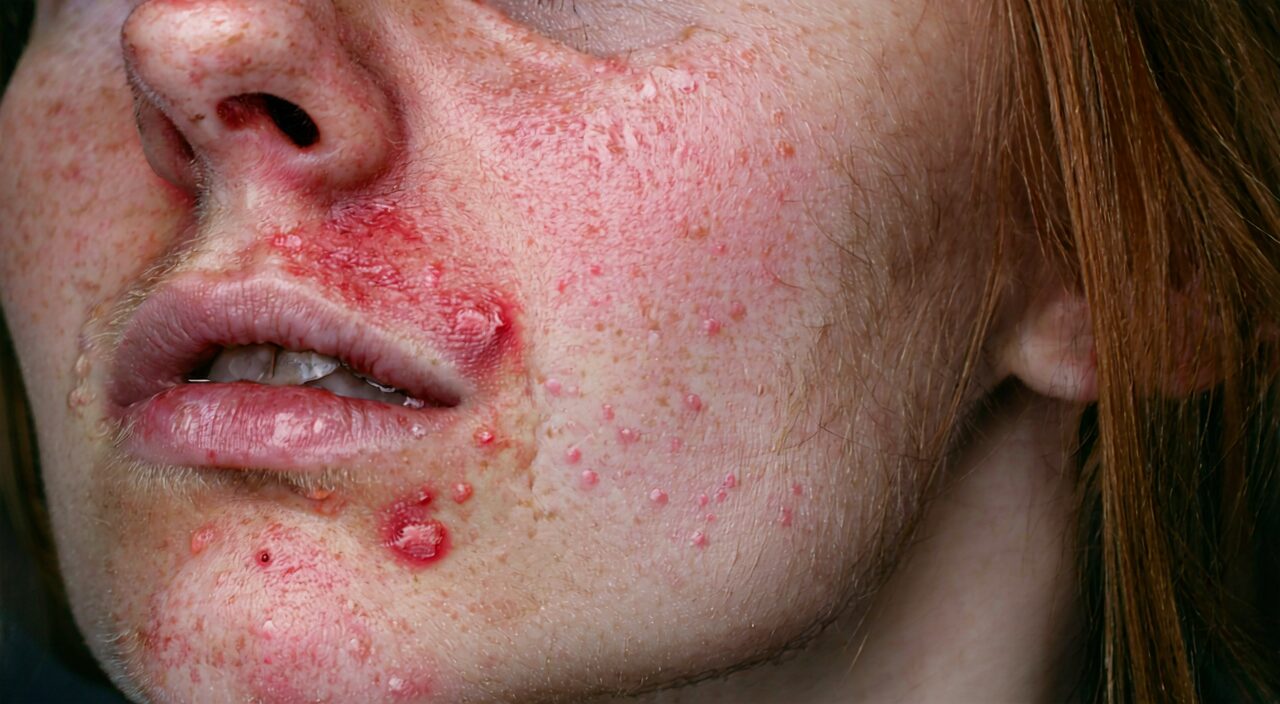
In traditional Chinese medicine there is a fairly specific disease concept called “Da Tou Wen” (swollen head epidemic). Modern people may find the term unfamiliar, but the presentation is not rare. It is often described as sudden redness, swelling, heat sensation, and pain on the head and face, sometimes accompanied by fever, throat discomfort, thirst, red tongue with yellow coating, and other features. From a TCM perspective, this type of condition usually involves wind-heat epidemic toxin attacking upward to the head and face, stagnating in the upper jiao, causing local obstruction of qi and blood and accumulation of heat toxin.
Puji Xiaodu Yin is specifically designed around this pathogenesis. Its approach is not simply to clear heat, nor only to disperse wind. Instead, it simultaneously addresses “clearing heat and resolving toxin” and “dispersing wind and scattering pathogen,” targeting the heat-toxin congestion in the upper jiao, especially the head and face. For this reason, it is often categorized in traditional formula classifications as a heat-clearing formula that emphasizes dispersing wind-heat toxin in the upper body.
To put it in more common terms: when the upper part of the body has been invaded by relatively strong wind-heat pathogen, and the heat toxin gathers in the head, face and throat area, this formula may be considered as a reference direction. It cannot be casually applied to just any sore throat or facial swelling.
Puji Xiaodu Yin Ingredients: Typical Combination Logic
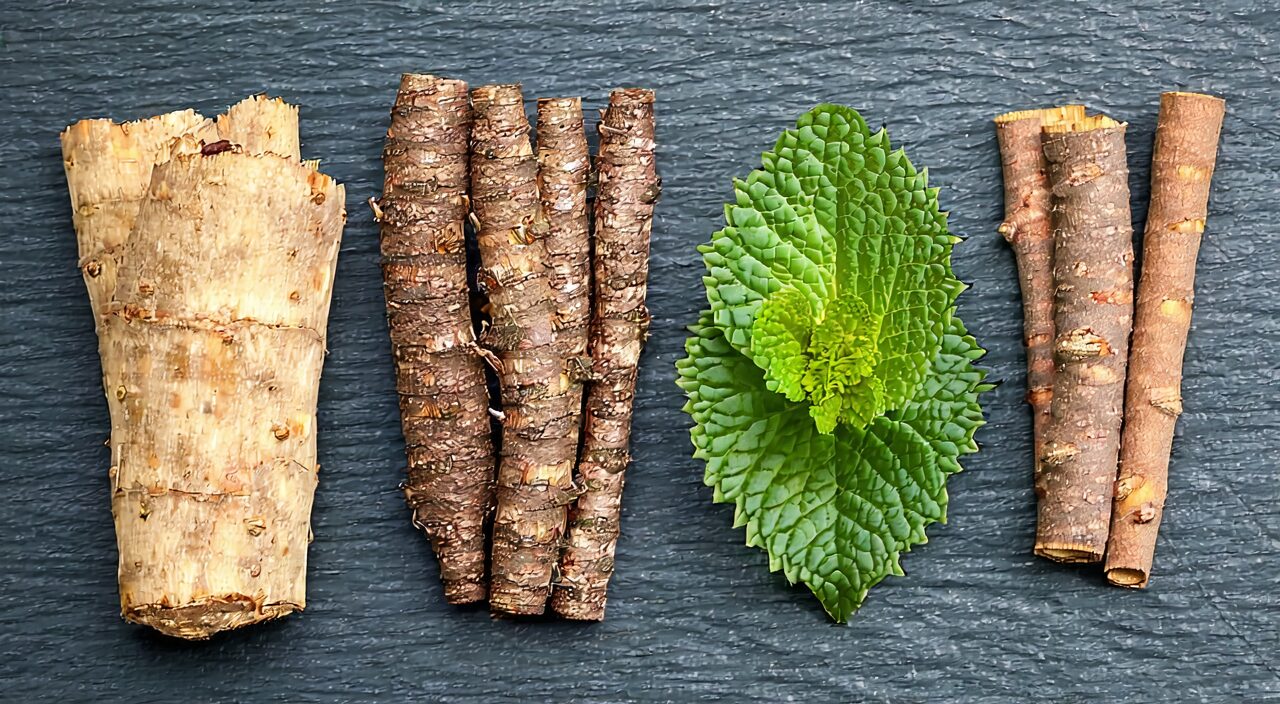
To understand a formula, you need to look at its composition. The herbal combination of Puji Xiaodu Yin is highly representative. It includes bitter-cold herbs that directly attack heat toxin, acrid-cool herbs that vent and disperse wind pathogen, and a small amount of guiding components that upwardly lift the medicine. Below is a table listing its core ingredients and common reference dosages for easy reference.
| Herb | Traditional Reference Dosage (g) | General Direction of Action in the Formula |
|---|---|---|
| Scutellaria (Huang Qin) | 15 | Clears heat and dries dampness, drains fire and resolves toxin, mainly clears upper jiao heat |
| Coptis (Huang Lian) | 15 | Clears heat and dries dampness, drains fire and resolves toxin, mainly clears middle jiao heat |
| Arctium (Niu Bang Zi) | 10 | Disperses wind-heat, benefits the throat and disperses swelling |
| Forsythia (Lian Qiao) | 10 | Clears heat and resolves toxin, dissipates masses and reduces swelling |
| Mint (Bo He) | 6 | Disperses wind-heat, clears and benefits the head and eyes |
| Silkworm (Jiang Can) | 6 | Dispels wind, transforms phlegm and dissipates masses |
| Scrophularia (Xuan Shen) | 10 | Nourishes yin and subdues fire, cools blood and resolves toxin |
| Isatis Root (Ban Lan Gen) | 15 | Clears heat and resolves toxin, cools blood and benefits the throat |
| Puffball (Ma Bo) | 6 | Clears the lung and benefits the throat, resolves toxin and reduces swelling |
| Platycodon (Jie Geng) | 6 | Diffuses the lung and benefits the throat, carries medicine upward |
| Cimicifuga (Sheng Ma) | 6 | Up-raises and disperses to vent pathogen, guides medicine upward |
| Bupleurum (Chai Hu) | 6 | Releases the exterior and reduces fever, up-raises clear yang |
| Tangerine Peel (Chen Pi) | 6 | Regulates qi and harmonizes the middle, prevents bitter-cold herbs from damaging the stomach |
| Licorice (Gan Cao) | 6 | Harmonizes all herbs, also helps to resolve toxin |
The dosages in the table are only reference ranges from historical texts and do not represent practical usage recommendations. The herb proportions and specific gram amounts will be adjusted for different periods and different body constitutions. You should not self-prescribe based on this table.
From the combination logic, bitter-cold toxin-resolving herbs such as Scutellaria, Coptis, Isatis Root, and Forsythia serve as the main force, directly attacking fire-heat toxin pathogens. Herbs like Mint, Arctium, Silkworm, Bupleurum, and Cimicifuga are responsible for venting and dispersing the wind-heat pathogen congested in the upper jiao. Platycodon carries the medicine upward so that the medicinal force acts better on the head, face and throat. Tangerine peel and Licorice support and protect the spleen and stomach, preventing the many cold-cool herbs from damaging the middle jiao. This structure of “including dispersion within clearing, with ascending and descending mutually supporting each other” is an important feature that distinguishes Puji Xiaodu Yin from other heat-clearing formulas.
Who Is Puji Xiaodu Yin Suitable For? Common Directions of Use
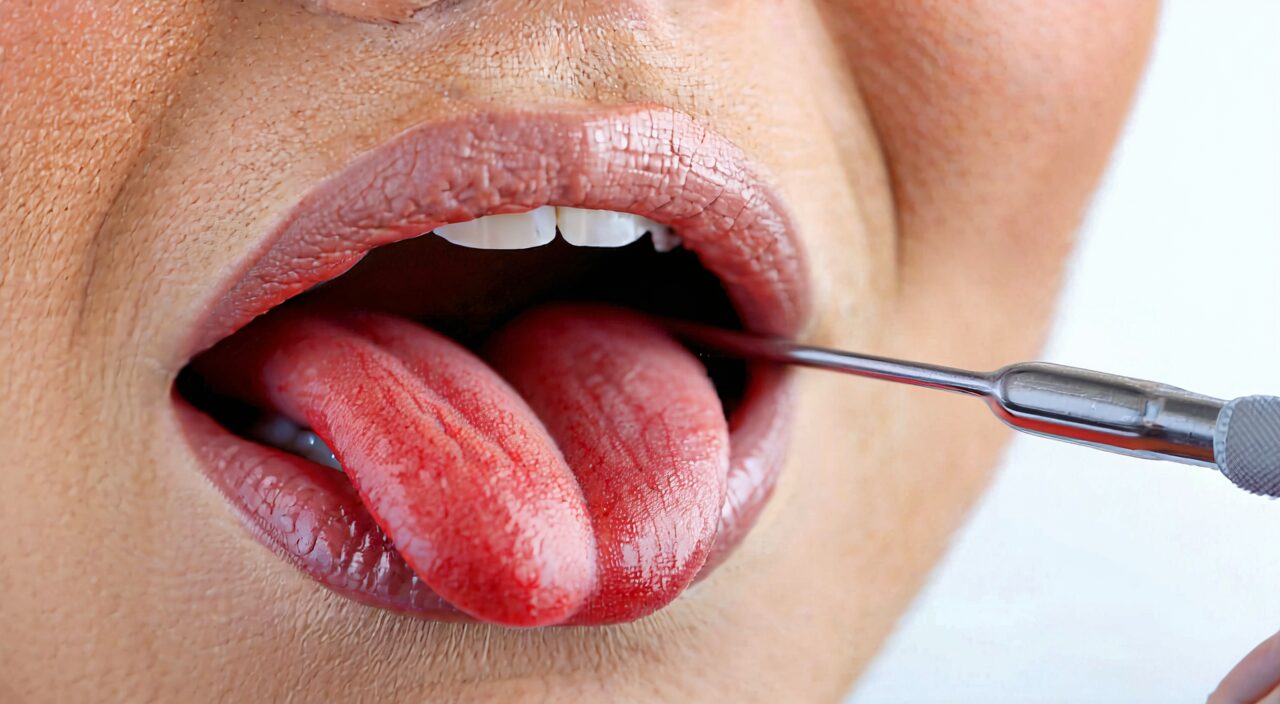
This is the issue users care most about. Based on its traditional scope of application, Puji Xiaodu Yin may be suitable for reference in people with the following types of presentations. However, meeting just one of these criteria does not necessarily mean it is appropriate; a holistic assessment of the entire condition is still required.
Those with obvious redness, swelling, heat and pain of the head and face
Typical signs include:
- Obvious redness, swelling, and burning sensation on the head and face, with skin feeling tight and shiny
- Accompanied by fever, irritability, red tongue with yellow coating, etc.
In traditional TCM thinking, such conditions are often attributed to heat-toxin attacking upward. Similar presentations can be seen in diseases like acute parotitis, facial erysipelas, head and face cellulitis, etc., but you should not self-apply the formula. Especially when infection is severe, seek medical attention immediately.
Those with red, swollen, painful throat and swollen tonsils
For acute throat pain with red, swollen tonsils, even purulent, accompanied by high fever, bad breath, relatively dry stools, red tongue with thick yellow coating, many TCM practitioners consider it from the angle of heat-toxin congestion in the throat. Puji Xiaodu Yin is used in some literature for such directions, but the premise is that the syndrome belongs to excess heat. If the throat is red and swollen but the pattern is cold or deficiency fire flaring upward, it is not suitable.
Those with fever accompanied by local heat-toxin symptoms of the head and face
When fever occurs simultaneously with localized redness, swelling, burning heat on the head and face, or painful swelling of cervical lymph nodes, it is traditionally categorized as wind-heat with toxin. At this time, both reducing fever and resolving local heat-toxin congestion are needed. The approach of Puji Xiaodu Yin, which combines dispersing wind and scattering pathogen with clearing heat and resolving toxin, may serve as a reference choice.
Boundaries that need to be clarified
There is a very critical prerequisite for the “suitable population” of Puji Xiaodu Yin: it must be an excess heat, heat-toxin syndrome, and it is mainly located in the upper jiao, head and face. If it is just an ordinary mild sore throat, slight dry mouth, or an occasional pimple on the face, far from reaching the degree of severe heat-toxin congestion, there is normally no need to use such a strongly cold-cool formula.
For people who tend to be cold-deficient in constitution—long-term aversion to cold, cold hands and feet, loose stools, pale complexion, pale swollen tongue, etc.—this formula may actually be unsuitable.
Contraindications and Situations Where Puji Xiaodu Yin Is Unsuitable
Every formula has its boundaries, and Puji Xiaodu Yin is no exception. Below are several common situations where self-administration is unsuitable, to help readers increase their vigilance.
- Cold pattern or deficient-cold constitution: If the head and face are swollen and painful but the color is pale red, without burning heat, accompanied by aversion to cold, cold limbs, pale tongue, it is generally not applicable. Cold-cool formulas may aggravate internal cold.
- Upward flaming symptoms due to yin deficiency fire hyperactivity: Some people have recurrent mouth ulcers, dry and sore throat that is worse in the afternoon and at night, hot palms, red tongue with scanty coating. This belongs to deficiency fire, not excess heat-toxin fire, so this type of predominantly bitter-cold formula is not suitable.
- Spleen and stomach weakness or loose stools: The large amount of cold-cool herbs in the formula can easily affect spleen-stomach function. If one usually tends to diarrhea, abdominal bloating, poor appetite, extra caution is needed.
- Early stage of wind-cold external contraction: Severe aversion to cold, mild fever, clear runny nose, throat not red. This is mostly wind-cold fettering the exterior, and heat-clearing toxin-resolving formulas are unsuitable.
- Pregnant women, those preparing for pregnancy, and breastfeeding women: The formula is relatively cold-cool and contains multiple herbs. Such special populations should not self-experiment.
- Children and the elderly and debilitated: Use in these populations must be under highly professional guidance. Ordinary mild conditions should not be casually matched to this formula.
- Self-application for ordinary mild symptoms: If it is only slight throat discomfort or a pimple on the face, far from the degree of heat-toxin congestion, it is not advisable to blindly use this formula.
If the head and face redness, swelling and pain are severe, or accompanied by persistent high fever, blurred consciousness, breathing difficulty, intense pain, etc., seek medical attention as soon as possible. The formula can only serve as auxiliary knowledge and cannot replace emergency management.
Difference Between Puji Xiaodu Yin and Yinqiao San
Many readers compare these two formulas because they are both commonly used in the early stages of warm-heat diseases when there are heat signs, but they have clearly different emphases.
| Comparative Dimension | Puji Xiaodu Yin | Yinqiao San |
|---|---|---|
| Core action | Clears heat and resolves toxin, disperses wind and scatters pathogen, dissipates masses and reduces swelling | Acrid-cool to vent the exterior, disperses wind-heat |
| Depth of disease location | Heat-toxin level, concentrated in upper jiao head and face | Early warm disease, pathogen in the defense (wei) aspect (relatively superficial) |
| Intensity of heat clearing | Relatively strong, bitter-cold directly attacks heat toxin | Relatively mild |
| Typical presentation reference | Red, swollen, burning head and face, purulent tonsils, painful swollen lymph nodes | Fever, slight aversion to wind-cold, sore throat, thirst, red tip of tongue |
To simply understand: if a warm-heat disease is in its early stage, mainly with fever and mild sore throat, and the head and face do not have obvious red swelling and heat toxin, it is probably closer to the direction of Yinqiao San. If there are already clear signs of head and face redness, swelling, burning heat, purulent tonsils, cervical lymph node swelling, etc., that is when Puji Xiaodu Yin enters the consideration. The two should not be interchanged.
Comparison of Puji Xiaodu Yin with Huanglian Jiedu Tang, Wuwei Xiaodu Yin, and Qingwei San
These formulas all involve clearing heat, but their targeted zang-fu organs, disease locations and suitable indications differ greatly. Below, a table first summarizes their respective focuses, followed by brief individual explanations.
| Formula | Main Target | Disease Location and Focus |
|---|---|---|
| Huanglian Jiedu Tang | Clears diffuse heat toxin in the triple burner | Severe general heat-toxin syndrome, not confined to head and face |
| Wuwei Xiaodu Yin | Clears heat, resolves toxin, eliminates furuncles | Skin-level furuncles, carbuncles and swellings |
| Qingwei San | Clears the stomach, subdues fire, cools blood and resolves toxin | Accumulated heat in the stomach attacking upward to the oral cavity |
Huanglian Jiedu Tang
Huanglian Jiedu Tang primarily targets blazing heat toxin in the triple burner. It clears diffuse heat toxin, commonly seen in severe general heat-toxin syndromes such as high fever, irritability, dry mouth and throat, mental confusion, nosebleeds, etc. Its disease location is not concentrated on the head and face like Puji Xiaodu Yin. It lacks the structure of dispersing wind and scattering pathogen, purely using bitter-cold to directly attack fire toxin. Its action is stronger and broader, but its focus on local head and face redness and swelling is less targeted than Puji Xiaodu Yin.
Wuwei Xiaodu Yin
Wuwei Xiaodu Yin leans more toward clearing heat, resolving toxin, and eliminating furuncles. It is commonly used for localized skin redness, swelling, heat and pain such as furuncles and carbuncles, especially manifestations of heat toxin at the skin level. Although Puji Xiaodu Yin also has the effect of dissipating masses and reducing swelling, it additionally both disperses wind and scatters pathogen and focuses on the upper jiao head and face, paying more attention to the relationship between systemic fever and local heat toxin. Deep skin furuncles and head and face throat heat-toxin congestion belong to different levels in TCM pattern differentiation thinking.
Qingwei San
Qingwei San cools blood and resolves toxin, clears the stomach and subdues fire. It focuses on clearing accumulated heat in the stomach, manifested as toothache, red swollen bleeding gums, oral malodor, dry mouth and tongue, etc. Its disease location is in the stomach, with fire flaring up to the oral cavity. The disease location of Puji Xiaodu Yin is higher, predominantly in the head, face and throat, and is often related to epidemic toxin and external wind-heat pathogen, not simply stomach heat attacking upward. The “fire” source and route involved in the two are different.
These comparisons are only for reference. In reality, pathogenesis can be mixed and complex, and comprehensive judgment combining specific symptoms, tongue and pulse manifestations is still required.
How to Rationally View Classic Formulas Like Puji Xiaodu Yin
Overseas, many people encounter this type of formula while searching for symptoms online. What most needs to be avoided is “matching symptoms to formulas”. TCM treatment is not based on matching single symptoms, but on determining the syndrome type, disease location and disease tendency through observation, listening, inquiry and palpation, and then considering formula and herb selection.
In traditional literature, Puji Xiaodu Yin is mainly used for excess patterns of heat-toxin attacking the head and face, falls under the acute category, and generally is stopped once the effect is achieved and not used long-term. It is not a formula for daily regulation or preventing “shang huo” (heatiness). For those who do not understand their body constitution, self-administration merely upon seeing the words “clear heat and resolve toxin” carries relatively high risk.
If symptoms such as head and face redness and swelling, sore throat, and fever do exist, it is recommended to first have a physician evaluate and rule out severe infection or acute pathology. Daily regulation should start with adjustments in diet and daily routines, not rely on potent cold-cool formulas.
Summary
Puji Xiaodu Yin is a traditional Chinese medicine classic formula for clearing heat, resolving toxin, dispersing wind and scattering pathogen. Its typical application is concentrated in conditions of upper-jiao heat-toxin congestion causing head and face redness and swelling, sore throat, fever and similar directions. Its composition combines bitter-cold toxin-resolving herbs with acrid-diffusing pathogen-venting herbs, forming a structure of clearing and dispersing in parallel. However, its cold-cool nature also determines that it cannot be used for deficient-cold, yin fire, wind-cold or ordinary mild conditions.
When understanding a formula, the most valuable thing is not memorizing what diseases it can treat, but understanding under what pathogenesis it may be selected, and when it is not suitable. Comparisons with formulas such as Yinqiao San, Huanglian Jiedu Tang, Wuwei Xiaodu Yin, and Qingwei San also help to understand, from the perspectives of disease location depth and heat-toxin scope, the logic of TCM thought: “the same fire syndrome, but different formulas are chosen”.
This article is for informational reference only and cannot replace professional diagnosis or treatment advice. Specific use should still be carried out under professional guidance based on individual circumstances.