
What Is Fu Zi? Medicinal Parts, Identification, and Common Formulas
For many overseas readers new to Chinese medicine, the name “Fu Zi” (aconite) may sound unfamiliar and somewhat mysterious. Some have heard it can “restore yang and rescue from collapse,” while others know it is related to “Wu Tou” (aconite mother root), or vaguely sense that it is a herb requiring extreme caution. This article will focus on “what is Fu Zi,” offering a clearly structured reference covering its origin, how to identify standardized processed products, traditional uses, modern safety concerns, its differences from Chuan Wu and Cao Wu, and the formulas in which it commonly appears.
What Does Fu Zi Look Like and How to Identify It?
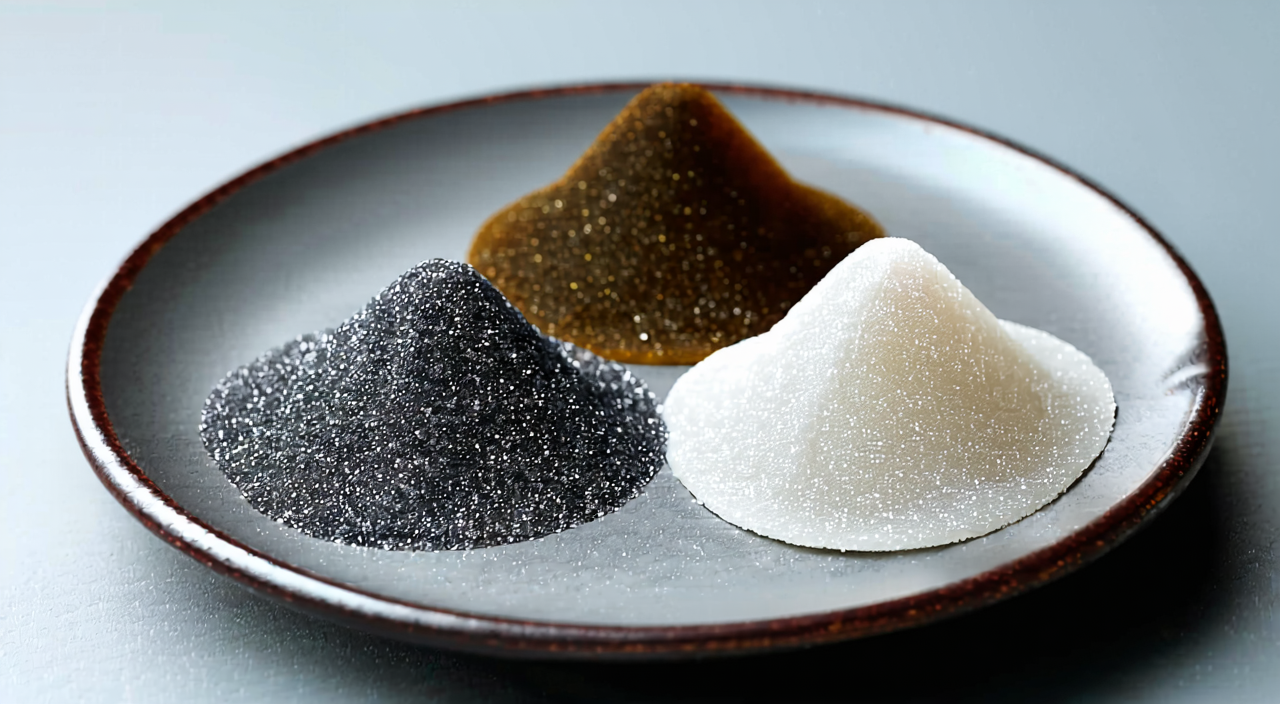
What we typically encounter is not fresh Fu Zi just dug out of the soil, but processed products that have undergone standardized preparation. Using unprocessed raw Fu Zi is extremely dangerous; therefore, almost all products circulating in the market and used in formulas are processed. The most common standardized products are Yan Fu Zi (salt-processed aconite), Hei Shun Pian (black slices), and Bai Fu Pian (white slices), each with distinctive visual characteristics.
Yan Fu Zi (salt-processed aconite) is generally conical or irregularly shaped, with a grayish-black or dark brown surface covered by a salt frost. It is relatively heavy and moist in texture. Because it is soaked for a long time in a mixture of bittern and salt, it tastes extremely salty, and visible salt crystals can be seen on the surface. When cut, the cross-section is grayish-brown or dark yellow, often with irregular vascular bundle patterns along the edges. Yan Fu Zi is frequently used as the raw material for further processing into Hei Shun Pian or Bai Fu Pian.
Hei Shun Pian (black slices) are made from uniformly sized Yan Fu Zi that are rinsed in water, boiled thoroughly, cut lengthwise into thick slices, soaked in a color-adjusting liquid, and then sun-dried or oven-dried. The finished product consists of irregular longitudinal thick slices that are wider at the top and narrower at the bottom. The outer skin is blackish-brown or dark brown, while the cut surface is dark yellow or yellowish-brown, oily and glossy with a vitreous luster, semi-transparent, hard, and brittle. It has a faint smell; the taste is mild or slightly numbing to the tongue.
Bai Fu Pian (white slices) are processed similarly to Hei Shun Pian, but without color-adjusting soaking; the outer skin is removed and the slices are thoroughly bleached, sometimes using sulfur fumigation. The finished product is similar in shape to Hei Shun Pian, but the outer skin is generally absent, and the entire piece appears yellowish-white or nearly white, semi-transparent, with a lighter luster and equally hard texture. In some regions, Bai Fu Pian is also called “Ming Fu Pian” or “Shu Fu Pian.”
All three of these processed products are the result of standardized manufacturing and must never be imitated at home. When identifying them, one can compare their shape, color, cut-surface luster, and texture. It is essential to remember that even processed Fu Zi retains strong medicinal properties and is classified as a specially regulated herb. You must not purchase raw products or attempt any processing on your own.
What Is the Medicinal Part of Fu Zi?
The medicinal part of Fu Zi is very specific: it is the processed lateral (daughter) root of Aconitum carmichaelii (Chinese aconite). The main (mother) root of the plant is called “Chuan Wu” or “Wu Tou,” while the small rootlets growing laterally from it are Fu Zi. In other words, on a single aconite plant, the mother root is Wu Tou, and the lateral daughter roots that grow beside it become Fu Zi after processing.
After harvest, fresh Fu Zi must be processed immediately at the place of origin; common methods include salting, boiling, rinsing, slicing, and drying. These procedures not only alter the appearance but also significantly affect the herb’s properties and safety. Because Fu Zi is a daughter root rather than the main root, its appearance, texture, and traditional therapeutic positioning also differ from those of Chuan Wu. Importantly, not just any root from an Aconitum species can be considered Fu Zi – both the correct botanical source and the proper processing are indispensable.
How Does Chinese Medicine Understand Fu Zi?
In traditional Chinese medicine theory, Fu Zi is not a daily health supplement but a “potent remedy” used in specific conditions. Historically, physicians have understood its actions from the following three perspectives.
Restoring Yang and Rescuing from Collapse (Hui Yang Jiu Ni): This is one of the best-known traditional applications of Fu Zi, mainly for the condition referred to as “yang collapse.” In situations such as severe exposure to cold, intense vomiting and diarrhea, or profuse sweating that lead to cold extremities, an extremely faint pulse, mental fatigue, and a drop in body temperature, ancient practitioners might add processed Fu Zi to a formula to replenish yang. This type of use is extremely urgent and precise, and modern clinical practice also emphasizes that it must be administered under close monitoring.
Boosting Fire and Assisting Yang (Bu Huo Zhu Yang): Traditionally, Fu Zi is considered acrid and hot, capable of warming and supplementing the “gate of life fire” within the body. It is often used for certain constitutions characterized by long-term yang deficiency, such as soreness and weakness of the lower back and knees, aversion to cold with cold limbs, clear and copious urine, impotence, or uterine coldness. However, it is crucial to note that whether such manifestations are truly linked to yang deficiency must be assessed comprehensively by a professional; Fu Zi should never be self-prescribed based on a single sensation.
Dispersing Cold and Relieving Pain (San Han Zhi Tong): For bodily pain caused by an excess of cold pathogens, such as cold joint pain or cold abdominal pain, Fu Zi also frequently appears in certain traditional formulas, using its warming power to dispel cold and unblock painful obstruction. This is especially applicable in chronic manifestations of wind-cold-dampness bi (painful obstruction) where joints become swollen and deformed and worsen with cold. However, any cold-related pain requires a clear constitutional diagnosis first; mistakenly using Fu Zi for heat patterns or for those with yin deficiency and internal heat may instead bring harm.
What Are the Main Areas of Focus in Modern Research?
Modern pharmacological research has largely focused on the diester-type diterpenoid alkaloids contained in Fu Zi, the most prominent being aconitine. Aconitine-like compounds possess strong physiological activities; they can affect the cardiovascular system and also damage the nervous system.
Risk of Arrhythmia: Aconitine can affect ion channels in cardiomyocytes, leading to various arrhythmias such as premature ventricular contractions, ventricular tachycardia, and even ventricular fibrillation. This is one of the most serious safety issues arising from unprocessed or improperly used Fu Zi. One purpose of processing is to hydrolyze diester-type alkaloids into monoester-type or amine alcohol–type alkaloids, which have much lower toxicity, thereby greatly reducing the impact on the heart, through the application of water and heat.
Neurotoxic Manifestations: Aconitine-type compounds first excite sensory nerve endings and then cause paralysis. Poisoning may present with numbness of the mouth and tongue, limbs, or even the whole body, accompanied by nausea, vomiting, abdominal pain, and diarrhea. In severe cases, respiratory depression can occur. Therefore, under no circumstances should one trust folk methods that involve taking homemade “aconite medicinal wine” with alcohol or ingesting raw fresh Fu Zi.
Anti-inflammatory and Analgesic Research: In addition to safety concerns, some studies are exploring the potential anti-inflammatory and analgesic mechanisms of Fu Zi and its extracts. However, these are mostly in experimental stages and cannot be equated with proven safety for human use. These modern findings also remind us that Fu Zi is a double-edged sword; its use must be weighed by a professional only after a thorough understanding of the risks.
What Are the Differences Between Fu Zi, Chuan Wu, and Cao Wu?
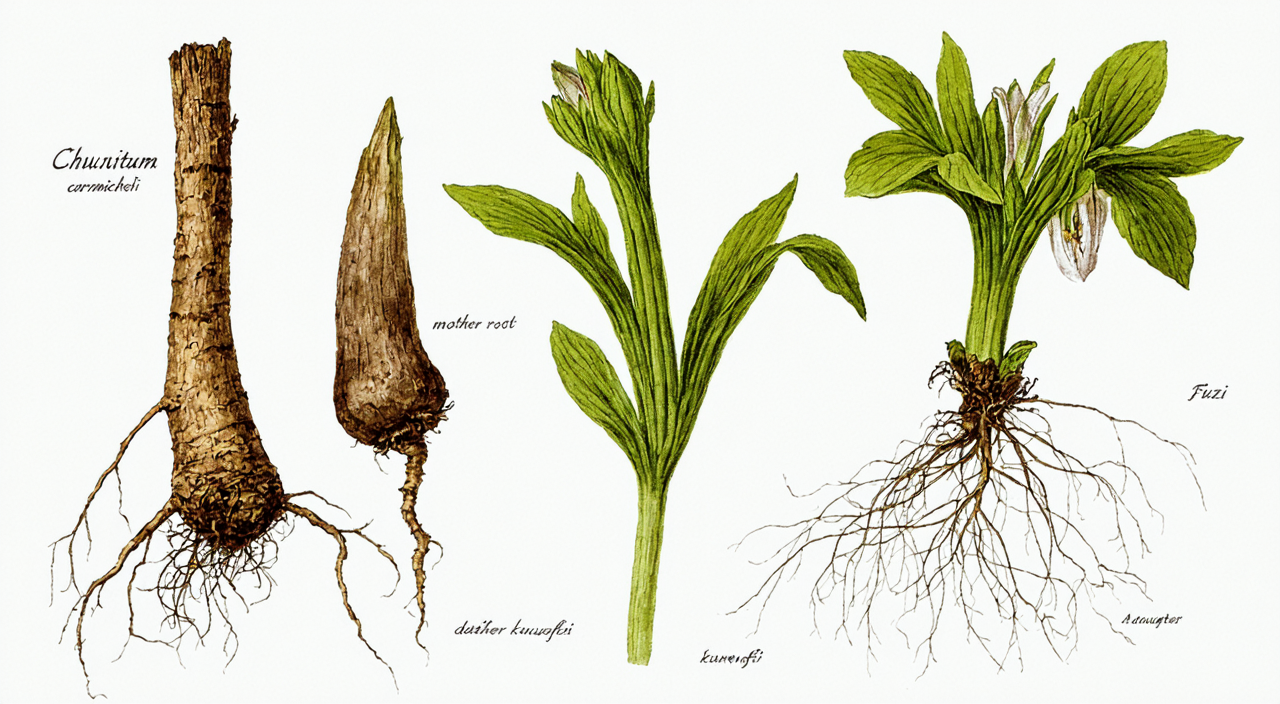
Many readers tend to confuse Fu Zi, Chuan Wu, and Cao Wu, but there are clear distinctions among them regarding their source, medicinal part, and traditional therapeutic orientations.
Fu Zi and Chuan Wu: Both come from the same plant, Aconitum carmichaelii, but their medicinal parts differ. Chuan Wu is the dried mother root of the plant, whereas Fu Zi is the processed daughter root. Although they share similar chemical constituents, Chuan Wu is traditionally more oriented toward dispelling wind and dampness and relieving pain, commonly used for wind-damp painful obstruction, joint pain, and numbness. Fu Zi, by contrast, is more focused on restoring yang, rescuing from collapse, and boosting fire to assist yang. Chuan Wu is also highly toxic and must undergo standardized processing. Each has its own emphasis and should not be used interchangeably.
Cao Wu: Cao Wu generally refers to the dried tuberous roots of Aconitum kusnezoffii (Bei Wu Tou) or various other wild Aconitum species. Its source is more complex and its toxicity is often much stronger. Compared with Chuan Wu (from A. carmichaelii), Cao Wu contains more impurities and is more difficult to control for quality. In some regions, there is a folk tradition of using Cao Wu for traumatic injuries or rheumatic pain, but because of its prominent safety concerns, it is strictly controlled in many countries. In short, Fu Zi comes from the daughter roots of cultivated Aconitum carmichaelii, Chuan Wu is its mother root, and Cao Wu is the tuberous root of other wild Aconitum species; these three must never be confused.
Which Formulas Use Fu Zi?
Fu Zi is often used as an important component in certain traditional compound formulas rather than alone. Below are several formulas commonly referenced in relevant literature, provided solely for understanding traditional therapeutic thinking and should not be interpreted as recommendations for specific symptoms.
Sini Tang (Frigid Extremities Decoction): Composed of Fu Zi, Gan Jiang (dried ginger), and Zhi Gan Cao (honey-fried licorice), this is one of the representative formulas for “restoring yang and rescuing from collapse.” Traditionally it is used for severe conditions such as yang qi declination, cold extremities, and a barely perceptible pulse. In modern clinical settings, it may be used in the form of prepared products under emergency monitoring.
Zhen Wu Tang (True Warrior Decoction): From the Treatise on Cold Damage (Shang Han Lun), it consists of Fu Zi, Fu Ling (poria), Bai Zhu (atractylodes), Bai Shao (white peony root), and Sheng Jiang (fresh ginger). It is commonly used for patterns of yang deficiency with water flooding, such as edema, difficult urination, dizziness, and palpitations, and is a classic formula for warming yang and promoting urination.
Fu Zi Li Zhong Wan (Aconite Pills for Regulating the Middle): Based on Li Zhong Wan with added Fu Zi, it focuses more on warming the middle, strengthening the spleen, and boosting fire to assist yang. Traditionally it is used for more pronounced spleen-stomach deficiency cold, with epigastric and abdominal cold pain, vomiting, diarrhea, and cold hands and feet. It is now available as a ready-made Chinese patent medicine; when purchasing, you should still consider the product instructions and your individual situation.
Gui Zhi Jia Fu Zi Tang (Cinnamon Twig Decoction plus Aconite): This is Gui Zhi Tang (Cinnamon Twig Decoction) with added Fu Zi, used for conditions resulting from excessive sweating in a taiyang disorder, such as persistent leaking sweat, aversion to wind, difficult urination, and slight stiffness of the limbs, reflecting Fu Zi’s ability to consolidate yang qi.
These formulas all demonstrate the use of Fu Zi in different combinative contexts. However, each formula has very specific indications and is by no means a general tonic. In cases of organ prolapse, bleeding tendencies, high fever, or excess heat patterns, formulas containing Fu Zi should not be used. Suitability must be evaluated by a professional based on your constitution, specific symptoms, and overall condition.
What Precautions Should Be Taken When Using Fu Zi?
Fu Zi is a high-risk medicinal herb, and under all circumstances you must adhere to one bottom line: never use unprocessed raw Fu Zi, and never self-decoct or arbitrarily increase the dosage. All Fu Zi intended for oral use must be standardized processed products, and decoction must strictly follow the directions for usage and dosage recommended by a professional. When decocting, it is often required to pre-decoct or boil for an extended time to further reduce the potential risks from aconitine-type compounds.
Purchasing unregulated Fu Zi products or following folk remedies to make your own preparations can very easily lead to acute poisoning. Early signs of poisoning often include numbness of the lips, tip of the tongue, and fingertips or toes, followed by nausea, vomiting, diarrhea, palpitations, chest tightness, and irregular pulse. If any of these symptoms occur, you must stop use immediately and seek emergency medical attention without delay.
Pregnant women, breastfeeding mothers, infants, and individuals with serious heart conditions should in principle avoid contact with Fu Zi. For those with chronic diseases who are considering using related formulas, professional evaluation is also necessary; self-prescribing or adjusting the dosage is strictly prohibited. Classical texts frequently combine Fu Zi with licorice and dried ginger to harmonize its harsh nature and reduce risk, but even so, it must not be regarded as a remedy for daily health maintenance.
Summary
Fu Zi is a traditional medicinal herb processed from the daughter roots of Aconitum carmichaelii. In terms of visual identification, it mainly relies on standardized processed products such as Yan Fu Zi, Hei Shun Pian, and Bai Fu Pian, and it must never be confused with Chuan Wu or Cao Wu. In Chinese medicine theory, it belongs to the category of potent remedies for restoring yang and rescuing from collapse, boosting fire and assisting yang, and dispersing cold to relieve pain. Modern research has also clearly highlighted the arrhythmia and neurotoxicity risks brought by compounds such as aconitine. No matter how you understand it, Fu Zi should be used only when a professional deems it appropriate in a limited number of specific situations, after a full awareness of the risks. Individuals should not purchase, decoct, or change the dosage form on their own. The content of this article is for informational reference only and cannot replace professional diagnosis or treatment advice.