
What Is Ku Shen (Sophora flavescens)? Medicinal Part, Identification, and Common Formulas
When mentioning Ku Shen (Sophora flavescens root), many people immediately think of its intense bitterness. In Chinese medicine, extremely bitter herbs are often traditionally associated with special descending and drying actions, and Ku Shen is a prime example. For Chinese people living overseas, Ku Shen is occasionally encountered in Chinese herbal shops or health foods, but many are not fully aware of what its root actually looks like, or how it differs from similarly heat-clearing and dampness-drying herbs such as Huang Bai (Phellodendron bark) and Bai Xian Pi (Dictamnus root bark). This article offers a systematic science-based introduction to Ku Shen covering its visual identification, medicinal part, traditional understanding, common formulas, and safety precautions, aiming to provide an objective reference for interested readers.
What Does Ku Shen Look Like? How to Identify It
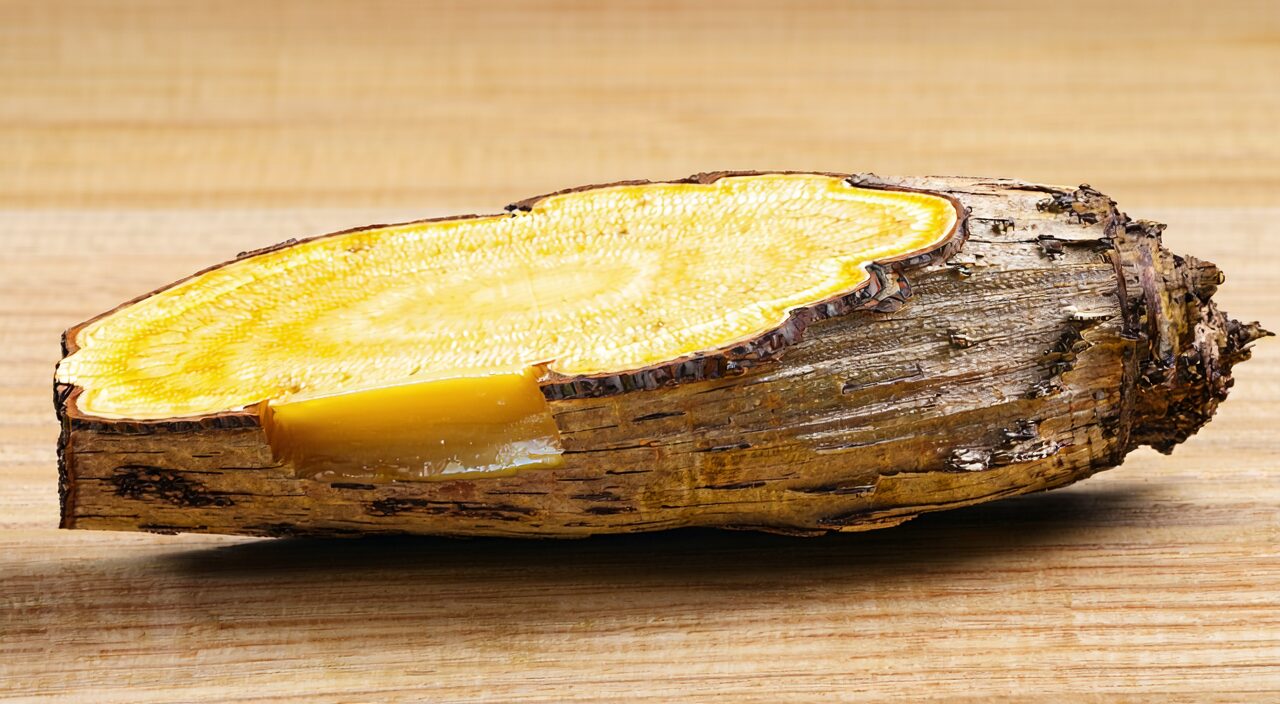
The medicinal part of Ku Shen primarily comes from its root, so identification focuses on the appearance of the dried root. In herbal slices, Ku Shen typically appears as long cylindrical pieces, often branched in the lower part, ranging from a few centimeters to over ten centimeters in length, with a diameter of about one to two centimeters. Occasionally you may also see thicker chunks or thick-cut slices.
The most distinctive features are the surface color and texture. The outer surface is mostly grayish-brown or brownish-yellow, sometimes with a yellowish-brown tinge, featuring prominent longitudinal wrinkles and transverse lenticel-like protrusions. Older roots may show patchy marks where the cork layer has fallen off. Upon close inspection, remnants of fine root scars or branch root stubs may be visible on the surface. When broken or cut, the cross-section is usually yellowish-white or pale yellow, relatively tough and fibrous. The most critical aspects are the odor and taste: Ku Shen has a characteristic bean-like smell, and its taste is extremely bitter—strong and persistent—which directly accounts for the ‘bitter’ in its name. In identification, this intensely bitter taste and the legume-family odor are important clues for distinguishing Ku Shen from similar herbs. However, tasting should be treated as general knowledge only; one should not casually taste large amounts of unidentified herbs.
Moreover, under a magnifying glass, the cut surface of Ku Shen exhibits radial lines and fairly conspicuous vascular pores. These details help differentiate it from easily confused species.
What Is the Medicinal Part of Ku Shen?
Official records state that Ku Shen comes from the dried root of the legume plant Sophora flavescens. That is, the part used as medicine is primarily the root, not the aerial stems, leaves, or seeds. The roots are usually harvested in spring or autumn, with autumn harvest being more common. After harvesting, the root head, small branch roots, and mud are removed; the clean root is then sliced or cut while fresh and dried, producing the Ku Shen slices (decoction pieces) seen in herbal pharmacies. In some regions, the whole root is sun-dried or dried by heat and then cut into pieces as needed before use. In terms of processing, aside from raw use, stir-frying with bran (Fu Chao) is sometimes applied, which is traditionally believed to moderate its bitter-cold nature. Therefore, when understanding the medicinal part of Ku Shen, remember one key point: it uses the root, processed as dried root or root slices. If you encounter Ku Shen powder or extract, it also typically derives from the root. Knowing this will help when identifying related products or reading ingredient labels.
How Does Traditional Chinese Medicine Understand Ku Shen?
In TCM, Ku Shen is understood mainly through its nature and flavor, and its meridian tropism. It is cold in nature, bitter in taste, and enters the Heart, Liver, Stomach, Large Intestine, and Bladder meridians. The directions of these organs and meridians define the scope of its traditional usage. From a functional perspective, Ku Shen is most commonly categorized as a heat-clearing and dampness-drying herb. ‘Clearing heat and drying dampness’ means it is believed to help address body conditions related to damp-heat. For example, when damp-heat contends in the skin, leading to recurrent itching, eczema, damp sores, scabies, or tinea, Ku Shen has traditionally been considered an option, sometimes applied externally and sometimes taken internally. Additionally, Ku Shen is thought to possess parasiticidal properties. Historically, it was used for some gynecological leukorrheal disorders, as well as childhood nutritional impairment (gan) and intestinal parasitic diseases, although such uses require extreme caution today and must be based on professional judgment; self-use is not advised. Because Ku Shen enters the Bladder meridian, it has also traditionally been understood from the perspective of promoting urination and relieving strangury, used for damp-heat strangury, difficult urination, and red-and-white vaginal discharge. Overall, TCM’s understanding of Ku Shen revolves around the basic points: ‘cold can clear heat, bitterness can dry dampness, and it can kill parasites and promote diuresis.’ Whether a person is suited for its use depends on a comprehensive assessment of their constitution and specific presentation.
Directions in Modern Research
In modern research, Ku Shen has also attracted considerable attention, mainly due to its alkaloid constituents such as matrine and oxymatrine. A significant amount of basic research and in vitro experiments has been conducted around these compounds. Some studies suggest that these alkaloids exhibit activity in areas like anti-inflammatory, antimicrobial, and anti-fibrotic effects. There have also been animal studies exploring the influence of Ku Shen extracts on the proliferation of certain cell types. At present, this research remains largely at the stage of mechanistic investigation and laboratory study and cannot be directly equated to clinical efficacy. For general readers, understanding this modern research may help explain why Ku Shen, a traditional herb, has drawn scientific interest. However, on a personal use level, it is recommended to treat these studies as background knowledge and not simply interpret them as ‘it can treat a certain disease.’ Any related extract or product should be used according to its specific instructions and in consultation with professional advice.
How Does Ku Shen Differ from Huang Bai and Bai Xian Pi?
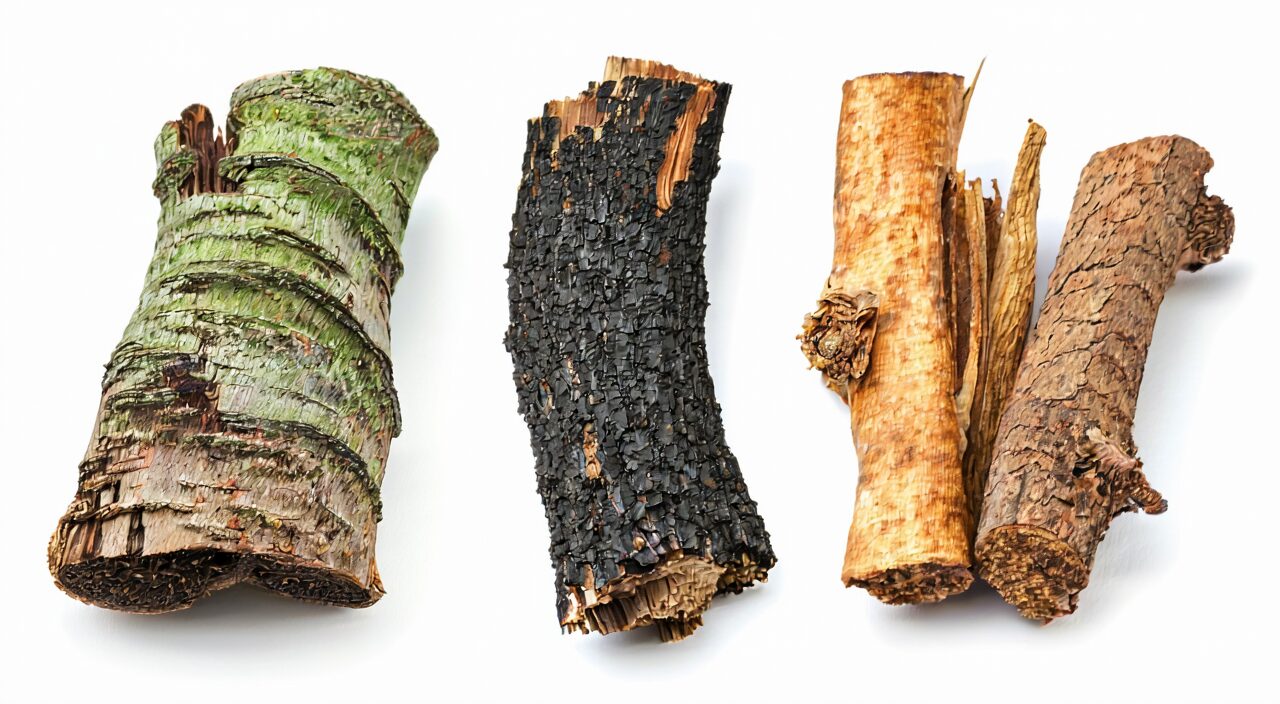
In Chinese herbal medicine, Ku Shen, Huang Bai, and Bai Xian Pi are all bitter-cold substances associated with clearing heat and drying dampness, which can cause confusion. In reality, they differ clearly in origin, medicinal part, and application emphasis. First, regarding source and part: Ku Shen is the dried root of the legume Sophora flavescens; Huang Bai is the dried bark of the rutaceous tree Phellodendron chinense; Bai Xian Pi is the dried root bark of the rutaceous plant Dictamnus dasycarpus. Simply put, one is a root, one is bark, and one is root bark—completely different plant parts. Visually, Huang Bai appears as plate-like pieces; its outer surface is yellowish-brown or yellowish-tan, the inner surface dark yellow or light brown, and the fracture is highly fibrous with layered splits, more yellowish in color. Bai Xian Pi is thinner, with a grayish-white or light grayish-yellow outer surface bearing fine wrinkles; its fracture is lamellar, with a faint odor and slightly bitter taste. Ku Shen is a root, cylindrical or cut into pieces, with a light yellow cross-section and an extremely bitter taste. When compared side by side, the visual differences are quite straightforward. In terms of traditional application focus, Huang Bai leans more toward clearing damp-heat from the lower burner, often used for damp-heat diarrhea, jaundice, leukorrhea, and strangury, and its ability to abate deficiency-heat and drain fire is also frequently mentioned. Bai Xian Pi is more associated with skin damp-heat, sores, tinea, itching, and wind rash, and also has wind-dispelling action. Ku Shen, although also used for skin and damp-heat conditions, is additionally linked to ‘parasite killing’ and ‘diuresis,’ appearing in gynecological, dermatological, and intestinal contexts. Thus, while they overlap broadly, their specific approaches and selections are not identical. When understanding these herbs, one should not assume they are interchangeable; usage must be determined based on individual circumstances.
Which Herbal Formulas Contain Ku Shen?
Ku Shen appears multiple times in classical formula collections. Below are several common examples to provide readers with a more concrete idea of its traditional application scenarios. Ku Shen Tang (Sophora Decoction) is one of the most representative formulas containing Ku Shen. Originating from the ‘Jingui Yaolue’ (Essential Prescriptions of the Golden Cabinet), it was originally used for ‘Hu Huo’ syndrome, particularly ulceration of the anterior and posterior orifices. The formula uses concentrated decoction of Ku Shen alone or combined with other heat-clearing, dampness-drying herbs, traditionally applied as an external wash. This reflects Ku Shen’s external use for damp-heat conditions of the skin and mucous membranes. Xiaofeng San (Wind-Dispersing Powder) also includes Ku Shen. It is a classic formula for wind rash, eczema, and other skin issues, containing Ku Shen, Fang Feng (Saposhnikovia), Chan Tui (Cicada moult), Zhi Mu (Anemarrhena), Sheng Di Huang (Rehmannia), and others. Here, Ku Shen takes on the role of clearing heat and drying dampness, working synergistically with other wind-dispelling, blood-nourishing, and moistening herbs to address skin conditions involving wind, dampness, and heat. Another formula related to Ku Shen is Dang Gui Bei Mu Ku Shen Wan (Angelica, Fritillaria, and Sophora Pill). This formula from the ‘Jingui Yaolue’ consists of Dang Gui (Angelica sinensis), Bei Mu (Fritillaria), and Ku Shen. It was traditionally used for gestational urinary difficulty with normal appetite. In this formula, Ku Shen clears heat and promotes diuresis, Dang Gui nourishes and harmonizes the blood, and Bei Mu opens constraint and disperses stagnation. The three together target urinary difficulty caused by internal damp-heat and qi stagnation, illustrating Ku Shen’s use in the ‘diuresis’ direction. In addition, there is Ku Shen Wan (Sophora Pill), recorded in different versions in texts such as the ‘Taiping Huimin Hejiju Fang.’ Most versions include Ku Shen, Sheng Di Huang (Rehmannia), Fang Feng, etc., commonly used for skin itching and sores, with the main approach still being clearing heat, drying dampness, dispelling wind, and killing parasites. The above formulas are only a few examples of Ku Shen in classical texts and do not mean they can be directly applied to individuals. People’s constitutions and disease patterns vary greatly, and the same formula can produce very different effects in different situations. Readers interested in such formulas can use them as an entry point to understand Ku Shen’s traditional applications, but should never self-prescribe. Whether a formula is suitable must be judged based on product instructions, personal constitution, and professional advice.
Precautions When Using Ku Shen
While Ku Shen is a traditional herb, there are several important precautions, especially in the following situations. First, people with spleen-stomach deficiency cold need to be particularly cautious. Ku Shen is strongly bitter and cold, traditionally considered liable to damage the yang qi of the spleen and stomach. If you often experience diarrhea, abdominal cold, poor appetite, or unformed stools, internal use of Ku Shen or Ku Shen–containing formulas is generally not recommended; otherwise, it may worsen spleen-stomach discomfort. Second, pregnancy should be avoided. Due to its intense bitter-cold nature, Ku Shen traditionally falls into the category of herbs used with caution or contraindicated during pregnancy. Whether for internal or external use, pregnant women should consult a doctor or professional TCM practitioner before using any product containing Ku Shen ingredients and must not decide on their own. Third, if during use, nervous system–related discomforts such as numbness, fatigue, drowsiness, or dizziness occur, stop use immediately and seek professional help. Some components of Ku Shen, if used in overdose or inappropriately, may affect the nervous system, making dosage control very important. It should not be used long-term or in large quantities on one’s own. Another easily overlooked issue is that products for internal and external use must not be confused. Some Ku Shen preparations are designed exclusively for external wash or topical application, with concentrations and excipients completely different from internal products. Using an external product internally could lead to unforeseen risks. Therefore, always read product labels and instructions carefully and clearly distinguish the categories. Furthermore, if skin problems or other discomforts persist without improvement, or are accompanied by pain, redness, swelling, marked exudation, or systemic symptoms, one should not solely rely on a single herb or product. Instead, seek timely medical attention to identify the clear cause and receive proper treatment.
Summary
As a traditional heat-clearing and dampness-drying herb, Ku Shen has three fundamental characteristics: its root is the medicinal part, it tastes extremely bitter, and it is cold in nature. This article has outlined a relatively comprehensive framework for understanding Ku Shen, from visual identification and medicinal parts to its differences from Huang Bai and Bai Xian Pi, and its traditional use in formulas such as Ku Shen Tang and Xiaofeng San. It must be emphasized that although Ku Shen has a long history of traditional use, it is not an herb for casual daily consumption. Its bitter-cold nature and usage boundaries require due attention, especially for those with a weak spleen-stomach, during pregnancy, or under other uncertain conditions; it should be approached based on individual circumstances and professional judgment. This article is for informational reference only and cannot replace professional diagnosis or treatment advice.