
What Is Qiang Huo? Introduction to the Medicinal Part, Identification, and Common Formulas
Many overseas friends interested in Chinese medicine, when they first hear the name “Qiang Huo,” often associate it with its origin and its use for dispelling wind and dispersing cold. What exactly is Qiang Huo, what does it look like, which part is used, and how is it distinguished from Du Huo? These are often the first questions people have when encountering formulas or Chinese medicinal materials. This article addresses these questions by sorting out the visual identification, medicinal part, traditional understanding, and common uses of Qiang Huo. It does not involve claims of disease treatment and serves only as a scientific reference for understanding this medicinal.
What Does Qiang Huo Look Like? How to Identify It?
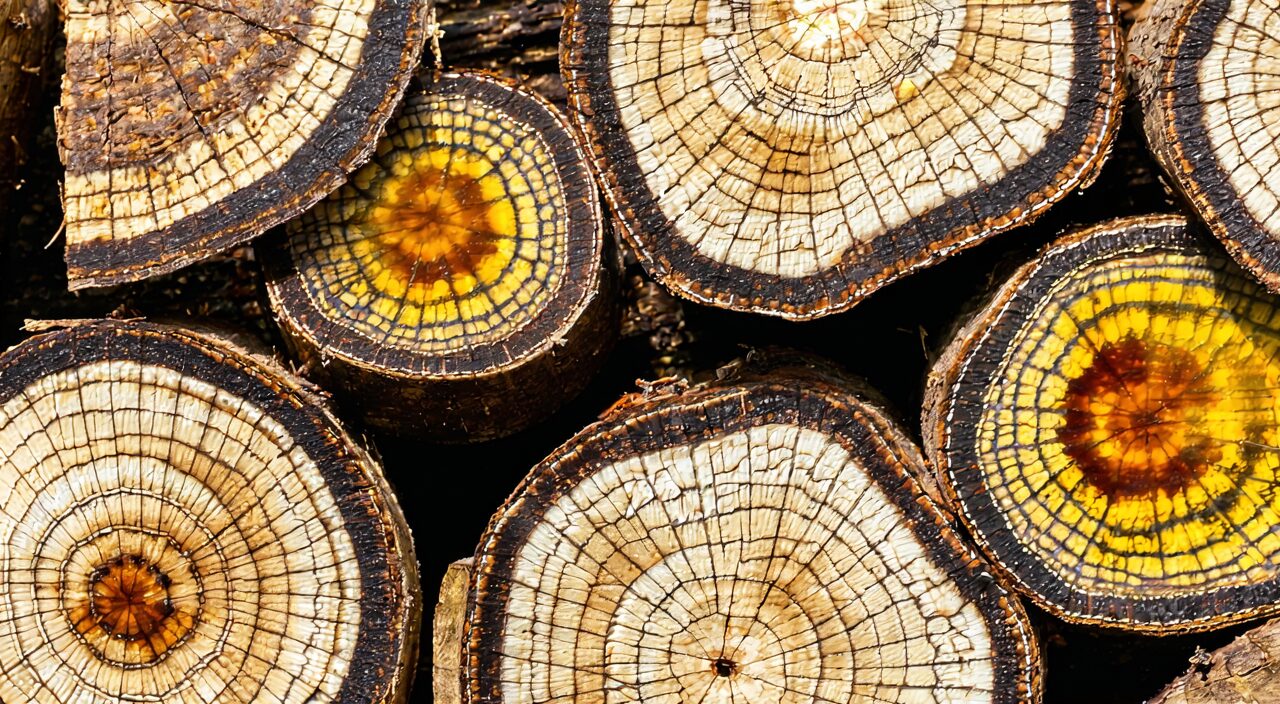
To accurately identify Qiang Huo, one must first look at the morphology of its rhizome. The medicinal part of Qiang Huo is primarily the dried rhizome and root. Due to differences in growing environments and processing methods, it is traditionally divided into two typical forms: “silkworm Qiang” and “bamboo-joint Qiang.” The silkworm Qiang is plump and stout, with closely spaced nodes that slightly resemble a domestic silkworm. Its surface is brown or dark brown, with raised ring-like markings and protruding rootlet scars. The texture is loose and spongy, and when broken, the cross-section is uneven, showing obvious cracks and oil spots. Bamboo-joint Qiang is more slender, with noticeably swollen nodes and constricted internodes, resembling bamboo joints, and has an equally strong aroma.
In addition to shape, the smell of Qiang Huo is key to identification. Genuine Qiang Huo has a special pungent aroma, relatively sharp, with a slight bitterness and an oily quality. When held under the nose, a distinct volatile oil scent can be detected. If the smell is weak or musty, it may indicate improper storage or poor quality. In terms of color, the cross-section is typically yellowish-white to light brown, often with cinnabar spots (oil chambers). These characteristics can provide overseas users with basic visual and olfactory references when purchasing or identifying Qiang Huo.
What Is the Medicinal Part of Qiang Huo?
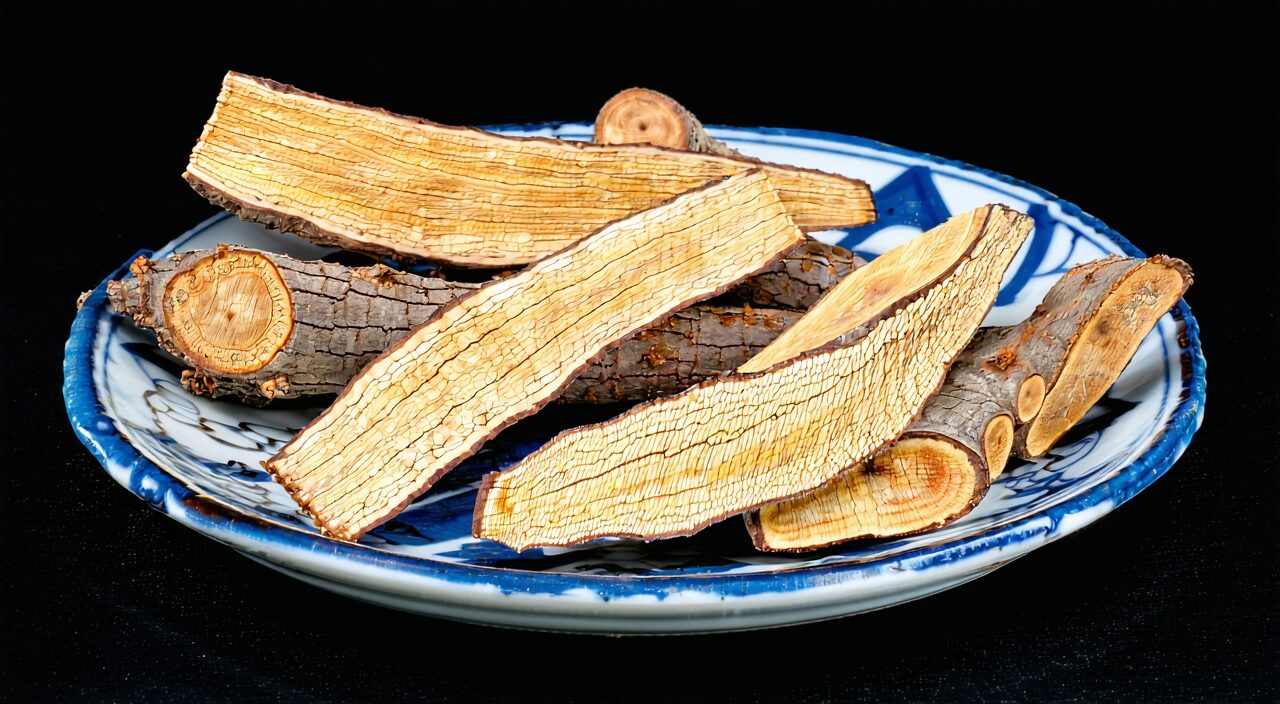
The medicinal part of Qiang Huo is the dried rhizome and root of the umbelliferous plant Notopterygium incisum or Notopterygium franchetii. Harvesting typically occurs in spring and autumn. After digging out, the soil and fibrous roots are removed, and the material is sun-dried or heat-dried. Commercially available Qiang Huo slices are mostly transversely or obliquely cut thick pieces. On the cut surface, the bark region shows a yellowish-brown to brown cambium ring, the wood region is yellowish-white, and the texture is relatively loose, sometimes with visible cracks. In some traditional production areas, the rhizome is directly dried after removing the reed head and fine roots to preserve its original shape, facilitating identification and storage.
Regarding processing, raw use of Qiang Huo is the most common, involving cleaning and cutting before directly adding to formulas. In some regions, methods like moistening with rice wine and stir-frying or honey-frying may be employed to reduce its drying and harsh nature, but these are further adjustments rather than mandatory procedures. As a raw medicinal material, high-quality Qiang Huo slices are generally considered those with a brownish outer skin, many oil spots on the cut surface, and a strong aroma. Understanding this information can help form a basic judgment of the raw material when purchasing or learning about products containing Qiang Huo.
How Does TCM Understand Qiang Huo?
In traditional Chinese medicine theory, Qiang Huo belongs to the category of acrid-warm exterior-releasing medicinals. It is generally considered to be acrid, bitter, and warm, and to enter the Bladder and Kidney meridians. Acridity can disperse, warmth can dispel cold, and bitterness can dry dampness. Thus, ancient practitioners commonly understood its actions in terms of releasing the exterior and dissipating cold, dispelling wind and eliminating dampness, and relieving pain.
Specifically, when the body is invaded by wind-cold-dampness pathogens, presenting with aversion to cold, fever, headache, generalized heavy and aching sensations, Qiang Huo is often regarded as a commonly used option. Especially for tight and painful sensations in the upper body, shoulder and back soreness, and occipital headaches, Qiang Huo has traditionally been one of the choices for guiding the medicine to the affected area and dispersing the pathogens. For external contraction of wind-cold with dampness, meaning there are both exterior cold symptoms and a heavy, sluggish body, Qiang Huo is often combined with medicinals like Fang Feng, Xi Xin, and Bai Zhi. For limb and joint soreness due to wind-dampness obstruction, particularly when the soreness is more pronounced in the upper body, Qiang Huo is also considered for inclusion in traditional formulas.
It must be emphasized that these understandings are based on traditional summaries of pathogenic factors’ movement locations and medicinal properties and meridian tropism according to TCM theory, not pharmacological conclusions of modern medicine. Whether it is suitable for an individual still requires consideration of constitution, specific manifestations, and professional judgment.
What Have Modern Studies Observed About Qiang Huo?
Modern scientific research has explored Qiang Huo from a different angle. Experimental studies have found that Qiang Huo contains components such as volatile oils, coumarins, and phenolic acids, with nodakenin and isoimperatorin being important marker compounds. Some in vitro or animal experiments have shown that these components exhibit certain anti-inflammatory, analgesic, and antipyretic activities, providing some modern data references for Qiang Huo’s traditional use in pain relief and dispersing external pathogens. Additionally, some studies have indicated that Qiang Huo extracts have certain inhibitory effects on specific bacteria and fungi. However, most of these are laboratory studies and cannot be equated to clinical effects in humans, nor can related products directly claim to have these functions. For overseas readers, this information can serve as a supplementary perspective for understanding the traditional applications of Qiang Huo, but it cannot replace professional medical advice.
How to Distinguish Qiang Huo from Du Huo?
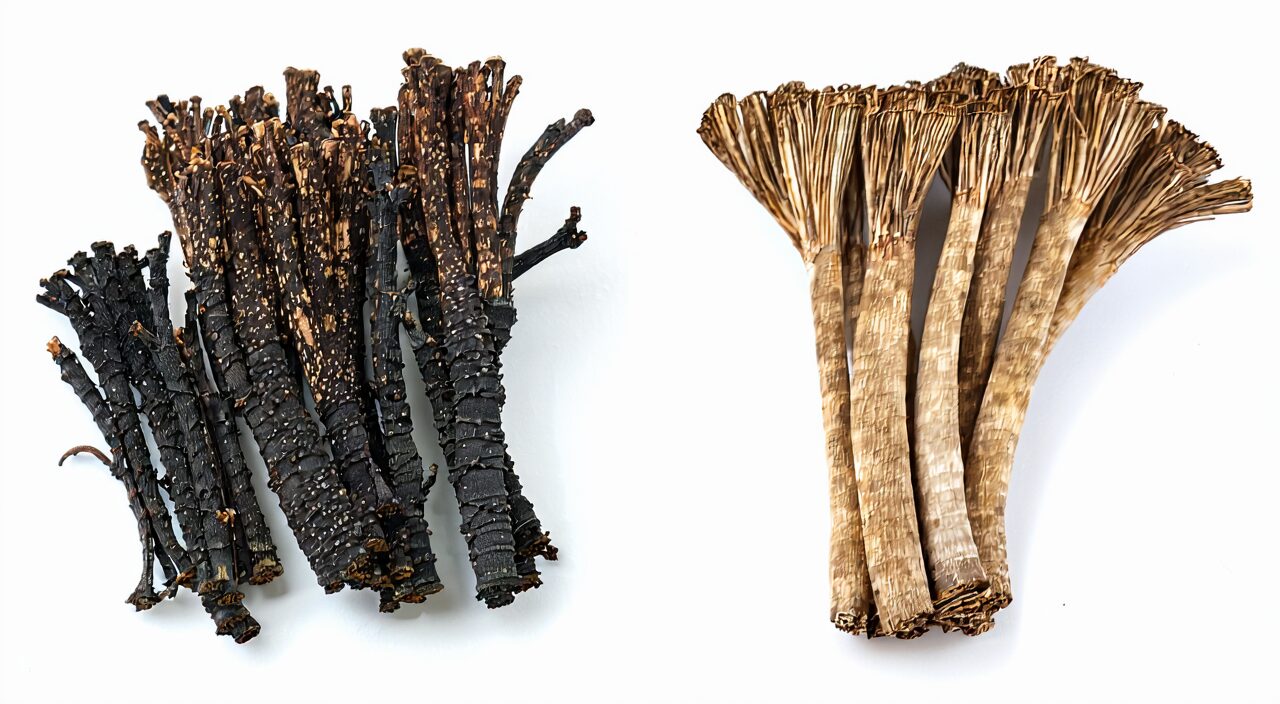
Qiang Huo and Du Huo are often compared because both can dispel wind, eliminate dampness, and relieve pain, but traditional Chinese medicine has different application focuses for them. From the perspective of botanical origin, Qiang Huo is the rhizome and root of Notopterygium incisum or Notopterygium franchetii, while Du Huo is the root of Angelica pubescens f. biserrata. There are obvious morphological differences between the two. The rhizome of Qiang Huo has many branches, prominent nodes on the surface, numerous oil spots on the cross-section, and a sharp, pungent aroma. In contrast, Du Huo has a thick, cylindrical main root with few branches, a relatively solid texture, fewer oil spots on the cross-section, and a milder smell.
In terms of traditional application directions, there is a common saying: Qiang Huo is more suitable for wind-dampness in the upper body, while Du Huo is more for the lower body. Specifically, for stiffness and pain in the neck and shoulders, back soreness, and headaches—conditions of constraint and discomfort in the upper body—TCM practitioners tend to prefer Qiang Huo. For wind-dampness painful obstruction below the waist and knees, and heavy sensations in the legs, Du Huo is more often considered. However, this is only a tendency summary based on meridian tropism and historical experience, not an absolute division. In actual clinical practice, they are often used in combination based on specific pattern presentations. For overseas users who want to understand these two medicinals, an initial distinction can be made from morphological features and traditional usage tendencies, but it is not advisable to rely solely on this for self-diagnosis or medicinal selection.
Which Classic Formulas Use Qiang Huo?
Qiang Huo, as a medicinal for dispersing wind, cold, and dampness, appears in many traditional formulas. Listed below are a few relatively common formula names and their primary directions, for informational understanding only and not as treatment recommendations.
Jiu Wei Qiang Huo Tang (Nine-Ingredient Qiang Huo Decoction) originates from the text Ci Shi Nan Zhi. It consists of Qiang Huo, Fang Feng, Cang Zhu, Xi Xin, Chuan Xiong, Bai Zhi, Sheng Di Huang, Huang Qin, and Gan Cao. This formula is traditionally used for a series of manifestations caused by external invasion of wind-cold-dampness with internal heat accumulation, such as aversion to cold with fever, headache, limb soreness, bitter taste in the mouth, and slight thirst. Qiang Huo serves as one of the lead medicinals, aiming to disperse the wind-cold-dampness pathogens on the exterior.
Qiang Huo Sheng Shi Tang (Qiang Huo Dampness-Dispelling Decoction) comes from Nei Wai Shang Bian Huo Lun. Led by Qiang Huo and Du Huo, it is combined with Fang Feng, Gao Ben, Chuan Xiong, Man Jing Zi, and Gan Cao. Its traditional focus is on wind-dampness in the exterior layer, causing shoulder and back pain severe enough to prevent turning, headache, and heavy body. Here, Qiang Huo emphasizes dispelling wind-dampness from the upper body and often works synergistically with Du Huo.
Da Qin Jiao Tang (Major Gentiana Macrophylla Decoction) is found in Su Wen Bing Ji Qi Yi Bao Ming Ji. The formula combines Qin Jiao, Qiang Huo, Du Huo, Fang Feng, Bai Zhi, Xi Xin, Huang Qin, Shi Gao, Sheng Di Huang, Shu Di Huang, Dang Gui, Chuan Xiong, Bai Shao, Bai Zhu, Fu Ling, and Gan Cao. This formula has a more complex rationale and is commonly used in traditional understanding for wind pathogens striking the meridians, leading to qi and blood obstruction, facial deviation, tongue stiffness with speech difficulty, and inability to move the limbs. Qiang Huo’s role here remains to disperse wind pathogens and unblock the collaterals to move stagnation.
Juan Bi Tang (Remove Painful Obstruction Decoction) comes from Yi Xue Xin Wu. It is composed of Qiang Huo, Du Huo, Qin Jiao, Dang Gui, Chuan Xiong, Gui Zhi, Mu Xiang, Ru Xiang, Sang Zhi, Hai Feng Teng, and Gan Cao. This formula is traditionally used for wind-cold-dampness painful obstruction, limb and joint soreness, and sinew and vessel spasms. By using Qiang Huo and Du Huo together, the intention is to dispel wind and eliminate dampness, unblock the collaterals, and relieve pain throughout the entire body.
The above formulas each have different focuses. Whether they are applicable must be comprehensively judged based on individual symptoms, constitution, product descriptions, and professional advice; do not apply them routinely.
What Precautions Should Be Noted When Using Qiang Huo?
Any medicinal has its indications and precautions, and Qiang Huo is no exception. Traditionally, Qiang Huo is considered warm and drying. Therefore, for individuals with yin blood deficiency or insufficient body fluids, such as those who often experience heat in the palms, dry mouth and tongue, night sweats, or a flushed complexion, caution is usually advised, or it may need to be balanced in a formula with yin-nourishing and blood-enriching medicinals to moderate its drying nature. Additionally, the acrid-dispersing nature of Qiang Huo may potentially irritate the gastrointestinal tract. People with spleen and stomach deficiency who are prone to diarrhea and abdominal pain are traditionally advised to observe more carefully when using formulas containing Qiang Huo.
Another relatively practical reminder concerns storage. Qiang Huo contains a high amount of volatile oils, and its aroma can dissipate easily. If not stored properly, the scent weakens, and traditionally, its dispersing power is considered to diminish. Therefore, whether it is the raw medicinal or products containing Qiang Huo, they should be sealed and kept in a cool, dry place, avoiding high temperatures and prolonged light exposure. For individuals with special constitutions, during pregnancy and lactation, or those taking other medications, it is a safer approach to consult a professional before using products containing Qiang Huo.
Summary
Qiang Huo is a medicinal used in traditional Chinese medicine for dispersing wind, cold, and dampness, unblocking the collaterals, and relieving pain. Its typical forms are silkworm Qiang and bamboo-joint Qiang, with the medicinal part being the rhizome and root, which have a strong, pungent aroma. It is distinguished from Du Huo in botanical origin and traditional application tendency, often summarized as “Qiang Huo treats the upper body, Du Huo treats the lower body.” Common formulas containing Qiang Huo, such as Jiu Wei Qiang Huo Tang and Qiang Huo Sheng Shi Tang, each have corresponding regulatory approaches, but specific use requires consideration of individual circumstances and professional advice. This article serves only as basic scientific knowledge and cannot replace professional diagnosis or treatment advice. If you have persistent discomfort, it is recommended to seek help from a licensed TCM practitioner or doctor.