
What Is Qing Dai? Medicinal Parts, Identification, and Common Formulas
When mentioning Qing Dai, many people may think of a deep blue pigment or a traditional dyeing material. In fact, Qing Dai is also a commonly used traditional Chinese medicine and occasionally appears in certain clearing and resolving formulas. For friends living overseas, you may sometimes hear the older generation talk about the uses of Qing Dai, but not be entirely clear about what it actually looks like or how it relates to Da Qing Ye and Ban Lan Gen. This article will discuss its visual identification, medicinal origin, traditional understanding, and common formulas to help readers build a more comprehensive knowledge of Qing Dai.
What does Qing Dai look like? How to identify it?
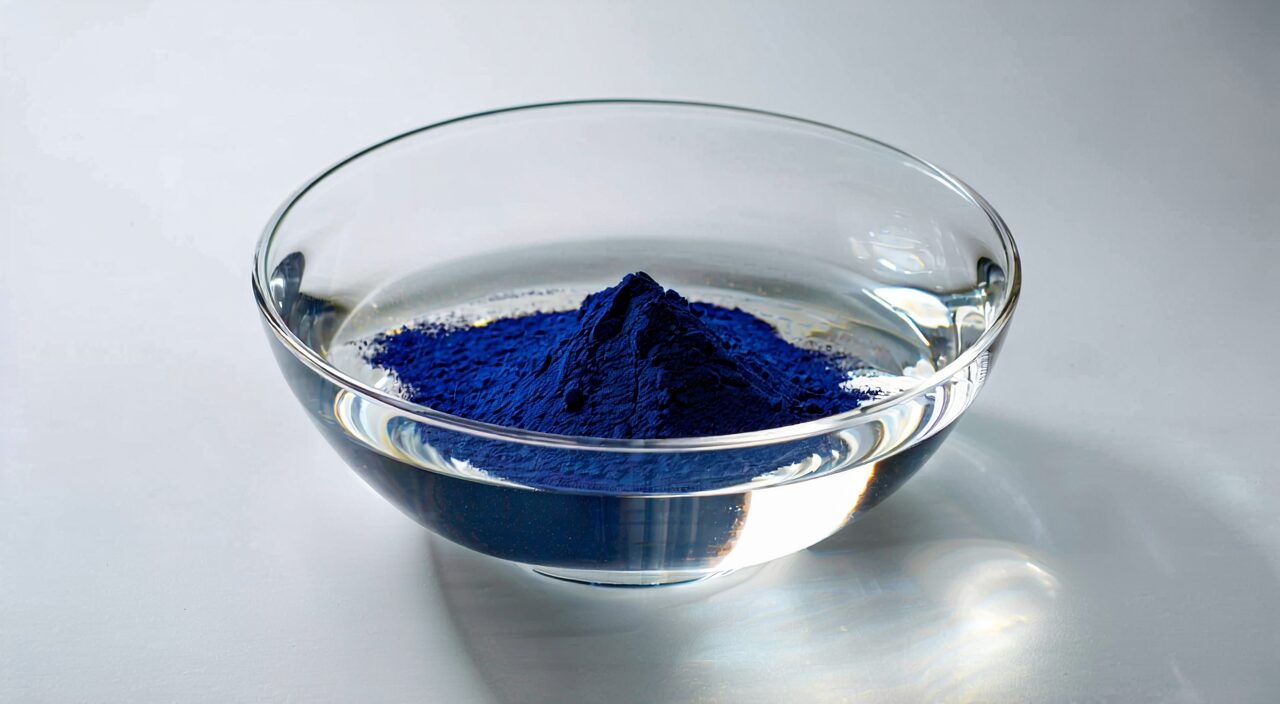
The typical appearance of Qing Dai is an extremely fine deep blue powder with a steady color. When placed on white paper or a porcelain dish for observation, it reveals a clear indigo tone. Because its texture is very light, it easily becomes airborne with slight stirring or tilting of the container, so careful handling is generally needed. Occasionally, Qing Dai can also be found compressed into irregular lumps on the market. The surface of these lumps may have small pores, and gently scraping with a fingernail will reveal the deep blue fine powder inside.
Sprinkling a small amount of Qing Dai powder onto the water surface allows one to observe that most of the powder floats on the water, with only a very small amount slowly sinking. This is one of the common traditional empirical methods for judging the properties of Qing Dai. If the color appears grayish or blackish, or if almost all of it sinks rapidly after entering the water and feels astringent to the touch, it may indicate that the material is more adulterated. In such cases, more characteristics can be combined for a comprehensive judgment.
For Qing Dai in lump form, the cross-section also displays a uniform deep blue color, sometimes with a slight luster, and touching it with a moist fingertip will leave a staining sensation. It should be noted that Qing Dai is a processed product, and slight variations in color depth between different batches are understandable, but it should generally not deviate far from a blue-purple tone.
What is the medicinal part of Qing Dai?
Many friends unfamiliar with Qing Dai may mistakenly assume that, like ordinary herbal medicines, it is made by directly harvesting a specific part of a plant and drying it. This is not the case. Qing Dai is not directly derived from a single medicinal part of one specific plant; rather, it is a dried powder or lump produced by taking the leaves or stems of plants such as Isatis indigotica (woad), Polygonum tinctorium (indigo plant), and Strobilanthes cusia, which undergo processes like moderate soaking, fermentation, stirring, and separation to extract the indigo-type components, which are then processed and dried.
In other words, Qing Dai is a processed product, not a dried herbal decoction piece obtained by simply drying plant leaves. To put it in a more accessible way, it is closer to “a purified powder extracted from plant leaves,” distinct from the dried leaves (Da Qing Ye) or roots (Ban Lan Gen) we commonly see in Chinese herbal pharmacies. Precisely because of this processing, Qing Dai differs in texture, color, and traditional understanding of its effects from other parts of the same source plant.
How does traditional Chinese medicine understand Qing Dai?
From the perspective of traditional Chinese medicine, Qing Dai is often categorized as an herb that clears heat, resolves toxins, cools the blood, and eliminates macules. It is salty in flavor and cold in nature, traditionally believed to mainly enter the Liver and Lung meridians. When conditions such as high fever with irritability, skin eruptions, red and swollen throat, and certain mouth ulcers related to blood heat arise, Qing Dai may be considered as a heat-clearing component in a formula based on pattern differentiation.
The concepts of “clearing heat” and “cooling the blood” here need to be understood from the holistic view of Chinese medicine. TCM holds that certain heat manifestations are not isolated local problems but reflect a state of internal imbalance. The cold and cool nature of Qing Dai may help calm such heat-biased states, thereby alleviating the redness, swelling, and burning sensations in the corresponding areas. Additionally, Qing Dai has traditionally been used in the approach of draining fire and settling fright, especially when fever is accompanied by irritability, convulsions, or twitching. Some ancient formulas combine it with medicinals that clear heat, resolve phlegm, or calm the spirit.
However, this kind of usage highly depends on a careful assessment of an individual’s constitution and the nature of the disease. People with a constitution marked by deficiency cold or those whose spleen and stomach are averse to cold are generally not advised to try it casually. Therefore, whether Qing Dai is suitable as part of a therapeutic approach needs to be seriously weighed based on one’s actual situation and professional advice.
What supporting information does modern research provide?
Modern research on Qing Dai has mainly been concentrated in experimental stages and a small number of clinical observations. Some studies have focused on components such as indirubin and indigo found in Qing Dai, discovering that they may exhibit certain activities like anti-inflammatory effects and inhibition of abnormal proliferation in cell or animal models. However, overall, these studies are insufficient to fully explain the effects of Qing Dai in long-term or complex situations within the human body, and there is still a considerable distance to go before establishing clear application standards.
On the safety front, sporadic reports have indicated that after long-term or inappropriate internal consumption of Qing Dai preparations, a small number of individuals have experienced abnormal liver function indicators, gastrointestinal discomfort, and even rarer occurrences like increased pulmonary artery pressure. This information suggests that as a type of processed product, Qing Dai requires more caution than ordinary herbs before use, and it must never be arbitrarily taken internally or used in increased doses simply because it comes from a natural source.
What are the differences between Qing Dai, Da Qing Ye, and Ban Lan Gen?
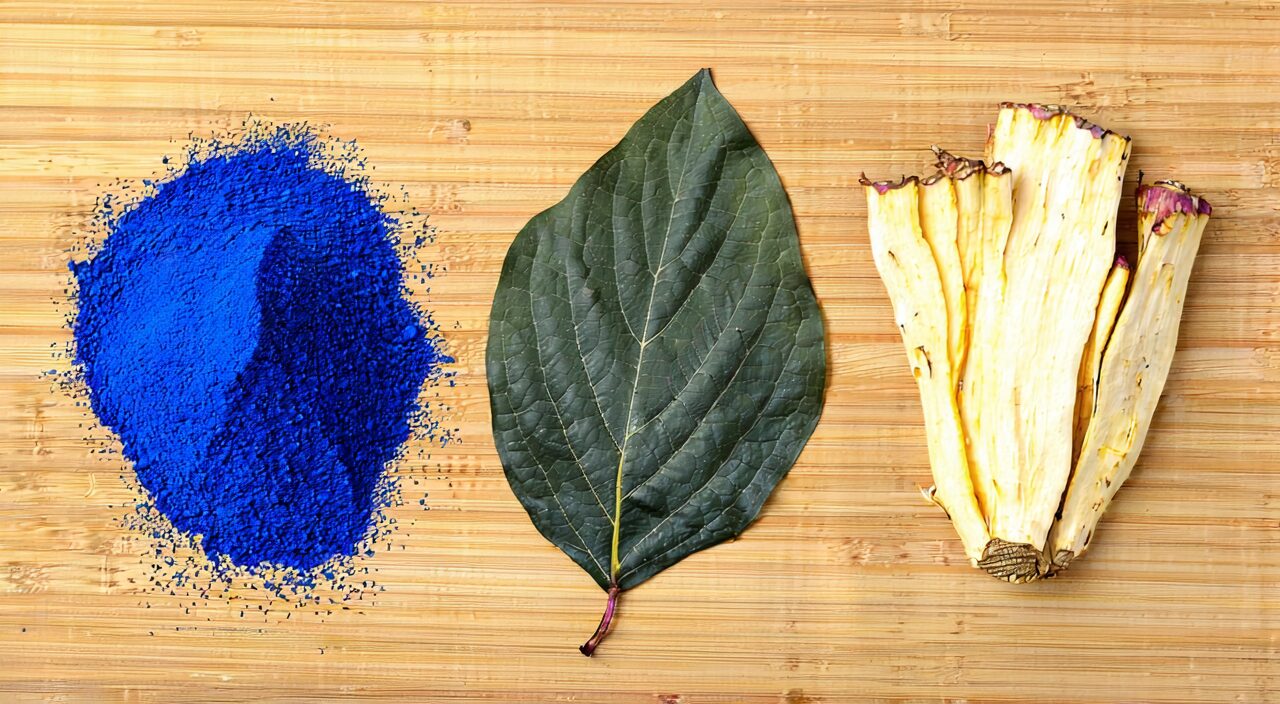
Many people easily confuse Qing Dai, Da Qing Ye, and Ban Lan Gen, after all, they often come from the same or closely related plants such as Isatis indigotica. The biggest difference among the three lies in their harvesting and processing methods.
Da Qing Ye is the dried leaf of plants like Isatis, retaining the original leaf form, mostly appearing as crumpled gray-green or dark green leaves with a slightly bitter smell. Ban Lan Gen is the dried root of Isatis, roughly cylindrical, with a pale grayish-yellow outer bark, transverse striations and rootlet scars, and a slightly sweet taste when chewed followed by a bitter aftertaste. Qing Dai, as previously mentioned, is a deep blue fine powder or lump, barely showing the original plant form, obtained entirely through deep processing.
In traditional understanding, although all three are related to “clearing heat,” their emphases differ. Da Qing Ye tends to cool the blood and eliminate macules, especially suitable for fever accompanied by sore throat and skin rashes. Ban Lan Gen excels at benefiting the throat and dispersing nodules, often used in the early stages of wind-heat colds with pronounced throat discomfort. Qing Dai, on the other hand, leans more toward clearing heat from deeper internal levels, draining liver fire, and settling fright, commonly used in complex situations where heat pathogens are deeper, accompanied by irritability, skin eruptions, coughing of blood, etc. Therefore, in actual selection, these three medicinals generally should not be simply substituted for one another.
Which formulas use Qing Dai?
The application of Qing Dai in ancient formulas is not extremely widespread, but it holds a position that cannot be ignored in formulas for specific directions. Below are a few traditional formulas that would use Qing Dai, which can serve as directions for understanding.
Ke Xue Fang (Coughing of Blood Formula)
Ke Xue Fang is a classic formula commonly used in the direction of lung heat cough with blood-streaked sputum. In the formula, Qing Dai is combined with herbs like Zhi Zi (Gardenia) and Gua Lou Ren (Trichosanthes Seed). The traditional approach is to clear heat, resolve phlegm, cool the blood, and stop bleeding. Qing Dai is used here with the intention of clearing and draining liver fire to prevent liver fire from invading the lungs, thereby assisting in relieving manifestations like cough and hemoptysis. It should be noted that the use of this type of formula presupposes accurate pattern differentiation. There are many types of cough, and not all cases of coughing blood are suitable for Ke Xue Fang; differentiation and use must be carried out under professional guidance.
Qing Dai San (Indigo Powder)
Qing Dai San is often used primarily for external application. It is made by combining Qing Dai with Bo He (Mint), Huang Lian (Coptis), Er Cha (Catechu), and others to form a powder. Traditionally, it is used for conditions such as oral and tongue sores, red and swollen throat, as well as some sores caused by skin heat toxins. Applying a small amount of the medicinal powder by dusting it onto ulcerated areas in the mouth can produce a cooling sensation. This usage has a certain prevalence in folk practice. However, if oral or skin problems do not improve continuously, or are accompanied by systemic fever, expanding ulceration, etc., one should not continue self-treatment and must consult a professional.
Bi Yu San (Jade Powder)
Bi Yu San is composed of Qing Dai along with Hua Shi (Talcum) and Gan Cao (Licorice), belonging to the category of small formulas that clear heat and drain dampness. Traditionally, it is suitable for conditions of internal damp-heat causing generalized fever, thirst, dark yellow and scanty urine, and is sometimes used for mild discomfort associated with summerheat compounded by dampness. Qing Dai plays a certain heat-clearing role in it, complementing Hua Shi’s dampness-percolating function. However, Bi Yu San is likewise not recommended to be viewed as a daily preventive health supplement, especially for those without significant dampness or with a cold-damp constitution, where its use may instead cause discomfort.
In these formulas, the dosage of Qing Dai is often relatively small, and it is mostly used in combination with multiple other medicinals, rarely used alone. This again illustrates that whether Qing Dai needs to be used, how much to use, and for how long, all need to be judged based on individual circumstances and product instructions.
What precautions should be taken when using Qing Dai?
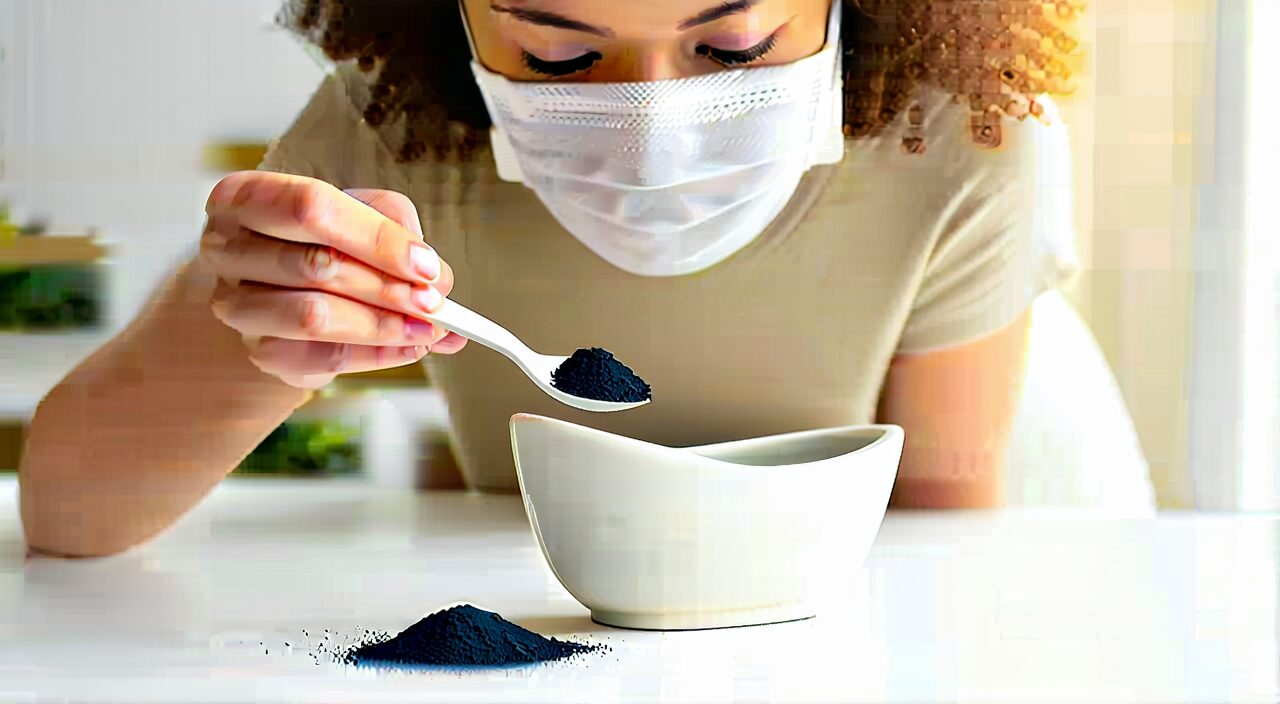
Although Qing Dai is a traditional Chinese medicinal, the precautions for its use must not be overlooked.
Firstly, because Qing Dai powder is extremely light and fine, it easily becomes dusty during weighing, sieving, or blending. If directly inhaled into the respiratory tract, it may cause coughing, throat irritation, or even trigger airway hyperresponsiveness. It is recommended to operate in a well-ventilated environment, wear a mask as much as possible, and avoid directly facing the wind when taking the powder.
Secondly, special attention needs to be paid to the potential risks Qing Dai may pose to the liver and circulatory system. Case reports have suggested that long-term or high-dose internal consumption of preparations containing Qing Dai has led to a very small number of individuals experiencing elevated transaminase levels, fatigue, poor appetite, and other signs related to liver injury. Isolated literature has also reported the phenomenon of increased pulmonary artery pressure. Although these situations are not universally encountered, and traditionally Qing Dai is not commonly used in large doses for short-term pattern-based treatments, it is precisely these potential risks that remind us that internal consumption of Qing Dai must be carried out under the guidance of experienced professionals. One should not self-administer it by steeping in water, adding it to meals, or taking it long-term as a dietary supplement.
Furthermore, pregnant women, lactating women, children, and individuals with pre-existing chronic liver disease or underlying cardiopulmonary conditions are generally not advised to casually use preparations related to Qing Dai. If symptoms such as unexplained chest tightness, difficulty breathing, increased sense of fatigue, or yellowing of the skin and sclera occur during usage, one should immediately discontinue use and seek medical attention as soon as possible.
Regarding specific dosage, this article does not provide any dosage advice. Different dosage forms, different formulas, and individual variations all influence the actual amount used, and this should be left to professionals to judge based on the specific situation.
Summary
Qing Dai is a deep blue powder or lump made from the leaves or stems of plants through deep processing. When identifying it, one can focus on features such as its color, light and airy texture, and the water-floating characteristic. Traditional Chinese medicine mainly understands it from the angles of clearing heat, cooling the blood, and draining fire. Although it shares similar plant sources with Da Qing Ye and Ban Lan Gen, there are significant differences in nature and application directions due to different processing methods. Formulas containing Qing Dai, such as Ke Xue Fang, Qing Dai San, and Bi Yu San, each have their own main indications, but all internal use situations require cautious handling, especially vigilance against dust inhalation and potential adverse reactions. This article is for popular science reference only and cannot replace professional diagnosis or individualized advice. If needed, one should first consult a qualified professional.