
What Is Sang Zhi? Medicinal Part, Identification, and Common Formulas
Many overseas Chinese readers encounter “Sang Zhi” when browsing Chinese herbal formulas, soup packet ingredients, or wind-dispelling tea blends. What is Sang Zhi? Simply put, Sang Zhi is the dried young branch of the mulberry plant, Morus alba. It comes from the same mulberry tree as the more commonly mentioned Sang Ye (mulberry leaf), Sang Bai Pi (mulberry root bark), and Sang Shen (mulberry fruit), but its medicinal part and traditional uses are different. This article explains what Sang Zhi looks like, its medicinal part, how it differs from Gui Zhi and Sang Ji Sheng, common formulas containing Sang Zhi, and precautions for use, helping readers build a clearer understanding.
What Does Sang Zhi Look Like? How to Identify It
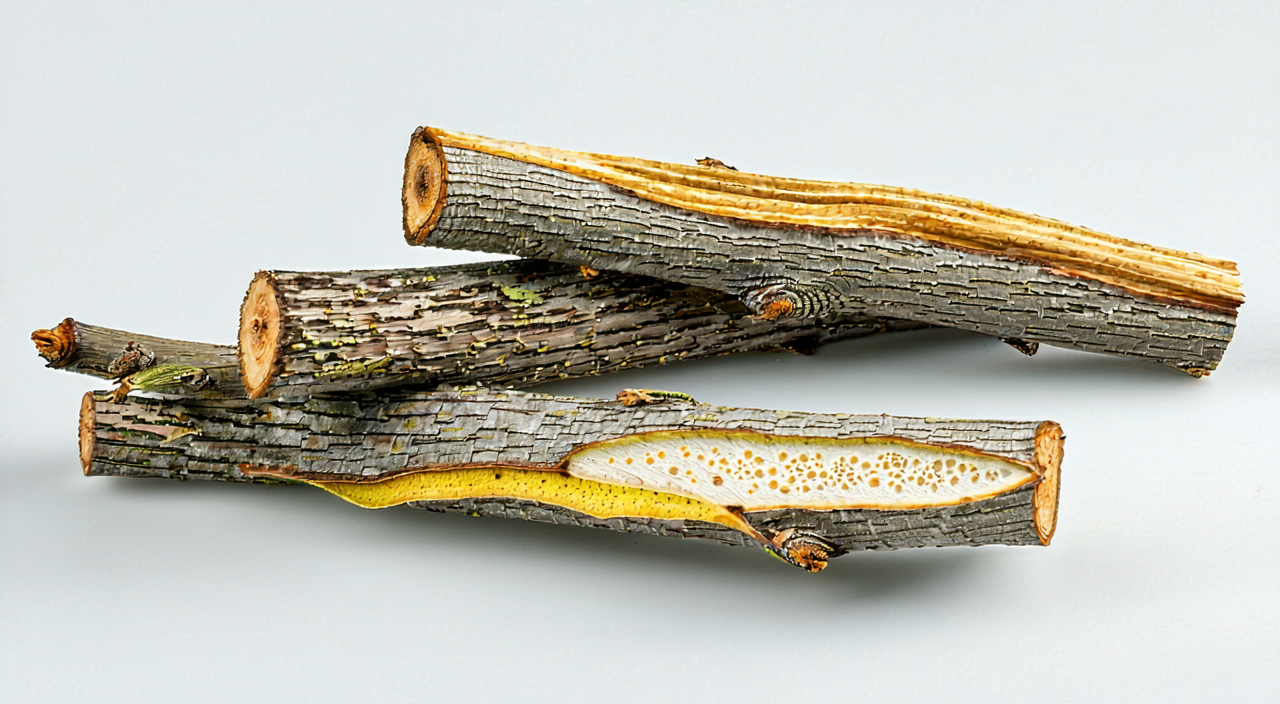
Among Chinese herbal decoction pieces, Sang Zhi belongs to the stem and branch category and has relatively distinctive appearance features. Traditional materia medica describes it as a slender cylindrical branch segment, often cut into oblique slices or short sections. The diameter is generally thin. The surface is mostly grayish-yellow or yellowish-brown, although some batches may lean grayish-brown or light brown. Scattered dot-like lenticels can be seen on the surface; these lenticels are small and slightly darker in color, a common surface feature of stem and branch medicinal materials. Upon closer inspection, leaf scars and fine longitudinal striations may be visible, and the nodes are sometimes slightly swollen. Sang Zhi is solid and highly fibrous, so it does not break easily when cut. The bark on the cut surface is relatively thin, while the xylem is broad and yellowish-white. A pith may sometimes be seen in the center, but it is not always obvious. The cut surface of decoction pieces usually appears yellowish-white with relatively rough fiber texture. If the color is abnormally blackened, or if there are mold spots, signs of insect damage, or a sour musty smell, it should be identified with caution and is not recommended for use. Because growing region, harvest time, and cutting specifications differ, Sang Zhi decoction pieces can vary in thickness and color depth, so quality should not be judged by appearance alone. Understanding these appearance features can help with preliminary identification when purchasing or checking soup ingredients, but for formal use it is still recommended to choose decoction pieces from reputable sources.
What Is the Medicinal Part of Sang Zhi?
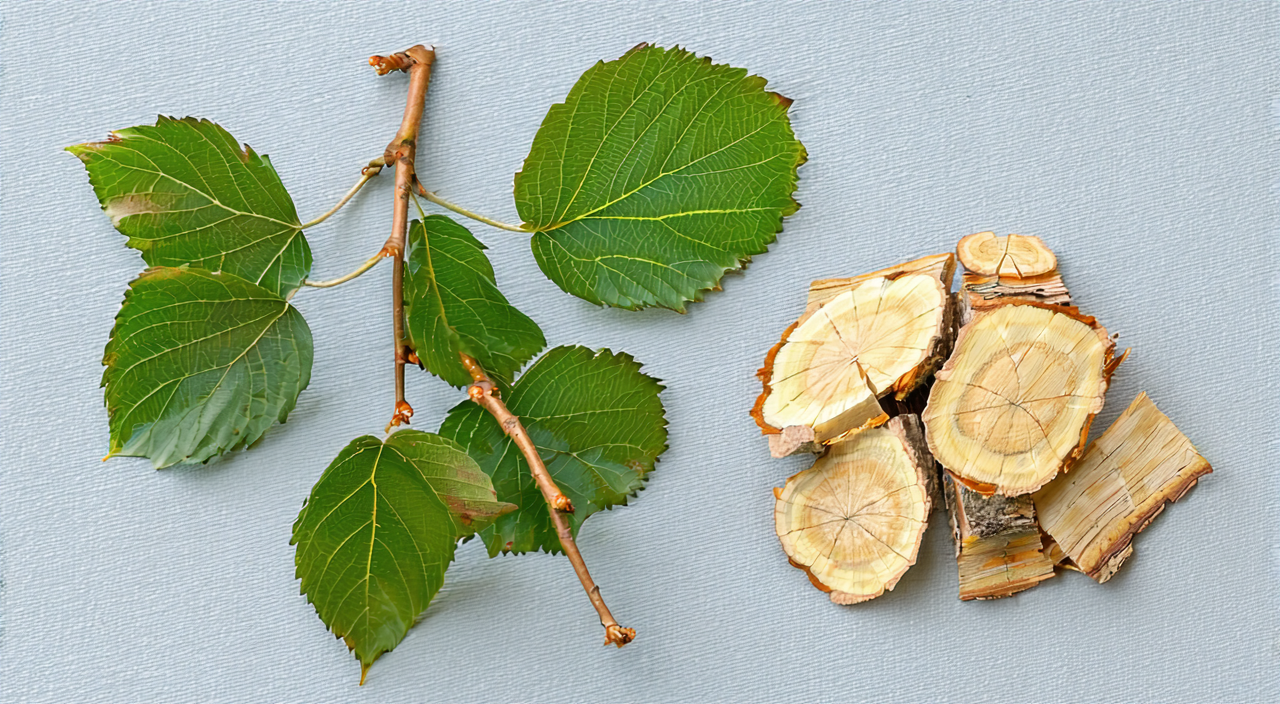
The medicinal part of Sang Zhi is the dried young branch of the mulberry plant, Morus alba. It should be emphasized that the medicinal part is the young branch, not the old trunk, root bark, or leaves. It is usually harvested in late spring to early summer, when the young branches are growing vigorously and their fiber content and texture are relatively moderate. After harvesting, the branches are cut while fresh into oblique slices or short sections, and then sun-dried or dried at low temperature. Why does traditional practice emphasize using young branches? Because older branches have a higher degree of lignification, making them too hard after slicing, with coarse tough fibers that are inconvenient for processing and decocting. Young branches are relatively flexible and have a yellowish-white cut surface, which better matches the customary use of decoction pieces. Different parts of the mulberry tree differ considerably in their traditional action: Sang Ye is often used to dispel wind-heat and clear the lungs and moisten dryness, Sang Bai Pi comes from the root bark, and Sang Shen is the fruit, each with its own traditional uses. Therefore, when seeing “Sang Zhi,” it should not automatically be equated with Sang Ye or Sang Bai Pi. In Chinese herbal classification, Sang Zhi belongs to the vine, wood, stem, and branch category. During harvesting and processing, residual leaves, thin twigs, and overly thick old stems should be removed to keep the decoction pieces clean.
How Does Traditional Chinese Medicine Understand Sang Zhi?
In traditional Chinese medicine, Sang Zhi is mainly understood in the traditional direction of dispelling wind-dampness and benefiting the joints. The term “dispelling wind-dampness” comes from traditional theory and suggests that Sang Zhi may be used for manifestations such as impaired joint movement and heaviness of the limbs caused by wind, cold, dampness, and other external pathogenic factors obstructing the meridians. It is not an anti-inflammatory or analgesic drug in the modern medical sense, but rather a regulating approach based on holistic pattern differentiation. Traditional sources often consider Sang Zhi to be neutral in nature, slightly bitter in taste, and to enter the Liver channel, with relatively mild medicinal properties. Because branch-type medicinal materials are often regarded in traditional analogical thinking as having the ability to reach the four limbs, Sang Zhi is more commonly used as a reference option for impaired movement of the upper limb joints. Clinically, it is often combined with other herbs that dispel wind and unblock collaterals, nourish and invigorate blood, or supplement the liver and kidney, with modifications based on the specific pattern. It should be noted that whether Sang Zhi is suitable depends on individual constitution, symptom presentation, and professional advice. It is not recommended to use it on a long-term basis simply because of the term “dispelling wind-dampness.”
What Has Modern Research Focused on Regarding Sang Zhi?
Modern research interest in Sang Zhi mainly focuses on its chemical constituents and preliminary activities. Sang Zhi contains flavonoids, polysaccharides, alkaloids, and other components. Some experimental studies suggest that these constituents may have potential in antioxidant activity, regulation of glucose metabolism, and inhibition of certain inflammation-related signaling pathways. Other studies have explored the effects of Sang Zhi extracts in animal arthritis models, but most of these are exploratory experiments, and there is still a considerable distance from translating them into clear clinical conclusions in humans. Laboratory results cannot be directly equated with the same effects in the human body, nor can they be used to infer that “Sang Zhi can treat a certain disease.” Therefore, when evaluating Sang Zhi-related products, one should remain rational and avoid over-interpreting individual research reports. The use of Chinese herbal medicines emphasizes source, processing, dosage, combination, and individual variation. Simply emphasizing the activity of a single component is not enough to explain the overall effect.
What Are the Differences Between Sang Zhi, Gui Zhi, and Sang Ji Sheng?
These three medicinal materials all have a stem-and-branch appearance and can be easily confused, but their sources and traditional uses differ considerably.
Sang Zhi comes from the young branches of the mulberry plant, Morus alba. Its surface is commonly grayish-yellow or yellowish-brown, and its texture is highly fibrous. Traditionally, it is often used to dispel wind-dampness and benefit the joints. Gui Zhi comes from the young branches of Cinnamomum cassia in the Lauraceae family. Its surface is reddish-brown to brown, with fine longitudinal striations and branch scars, and it has a distinctive aroma. Traditionally, it tends to warm and unblock the channels, assist yang and transform qi, and it is often used for external wind-cold and cold congealing with blood stagnation. Sang Ji Sheng comes from the leafy stem and branches of parasitic plants in the Loranthaceae family. It often attaches to other trees. Its surface is grayish-brown or reddish-brown, with visible branches and leaf scars, and sometimes it carries leaves and short twigs. Traditionally, it tends to supplement the liver and kidney, strengthen sinews and bones, and dispel wind-dampness, and it is suitable for soreness and weakness of the lower back and knees, and lack of strength in sinews and bones, which tend to be deficiency patterns.
A simple distinction: Sang Zhi is neutral in nature and is more used for impaired joint movement; Gui Zhi is warm in nature and is more used for cold stagnating in the channels; Sang Ji Sheng also has a supplementing action and is more used for liver and kidney deficiency. The three materials have different sources and traditional functional directions, so they should not be substituted for one another merely because of a similar appearance. When purchasing and using them, it is recommended to check the name and source of the decoction pieces.
Which Formulas Commonly Contain Sang Zhi?
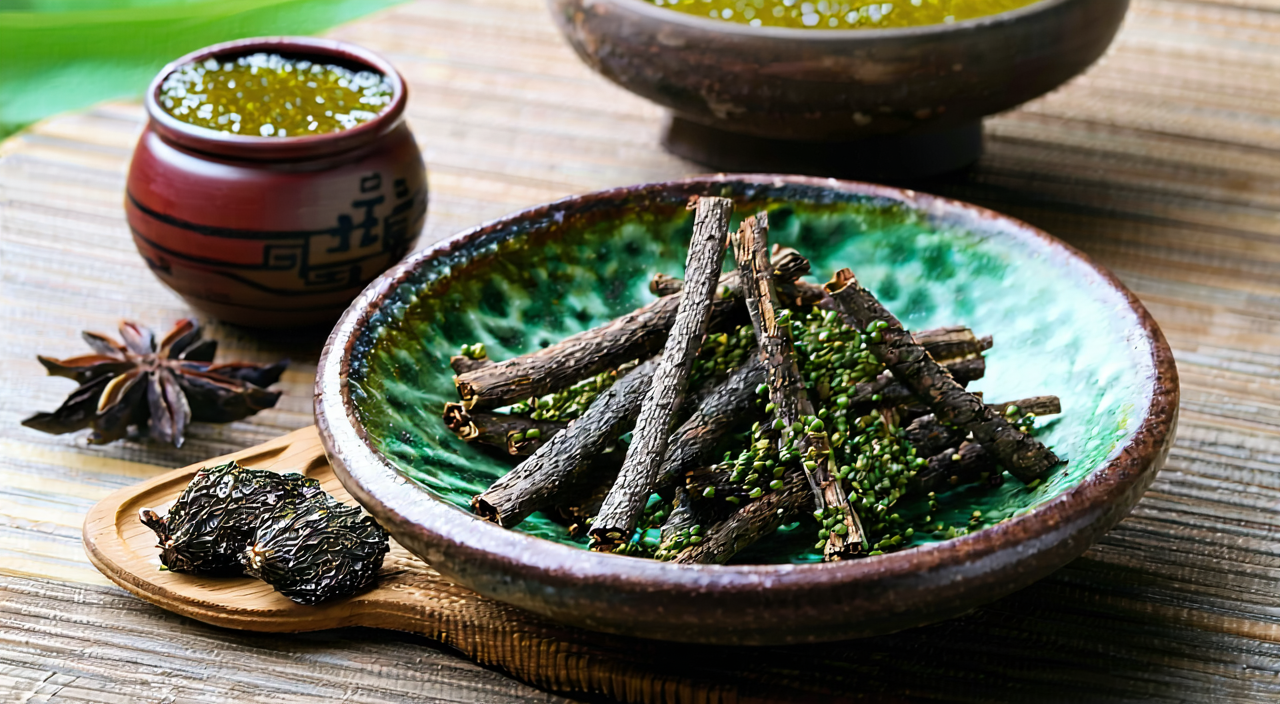
In traditional formulas and modern Chinese patent medicines, Sang Zhi is often used for regulating joint discomfort, impaired limb movement, and related conditions. The following are several common types for reference only, not as recommendations for use.
Sang Zhi Tang
Sang Zhi Tang is one of the representative traditional formulas for dispelling wind and unblocking collaterals. Its composition may vary among different texts and regional versions. Its core direction usually centers on manifestations such as limb pain and difficulty bending and extending the joints. Because the combinations differ among versions, the specific source, composition, and usage should be based on formal literature or product instructions.
Sang Zhi Gao
Sang Zhi Gao is commonly seen in traditional paste formulas or modern Chinese patent medicine preparations. It generally uses Sang Zhi as the main ingredient and is sometimes combined with other herbs to make a paste. Traditionally, paste preparations are considered convenient to take and suitable for people who need longer-term regulation. Note that Sang Zhi Gao products from different brands and manufacturers may differ in raw materials, excipients, concentration, and intended use. Before use, read the product instructions carefully and consult a professional.
Wind-Dispelling and Collateral-Unblocking Formulas
Some wind-dispelling and collateral-unblocking formulas may include Sang Zhi when appropriate to strengthen the traditional action of benefiting the joints. Such formulas usually do not use Sang Zhi alone as the chief herb; instead, multiple herbs are combined. Whether it is suitable depends on the individual’s cold, heat, deficiency, and excess patterns. It is recommended to make a comprehensive judgment based on the product instructions, personal circumstances, and professional advice, and not to choose a formula simply by its name.
What Precautions Should Be Taken When Using Sang Zhi?
Although Sang Zhi is traditionally considered relatively mild, it is not suitable for everyone. First, people with spleen-stomach deficiency-cold, prone to diarrhea, or with loose stools should consult a Chinese medicine practitioner or professional before use. Sang Zhi tends to have an unblocking and promoting effect, so it may not be suitable for obvious deficiency-cold conditions such as abdominal cold pain and poor appetite. Second, people with low blood pressure should be cautious. Some stem and branch medicinal materials have a certain unblocking effect. If a person already has low blood pressure and is prone to dizziness and fatigue, large amounts or long-term use should be avoided. Third, Sang Zhi decoction pieces should be obtained from reputable sources, and branches cut from roadsides, green belts, or orchards should be avoided. These branches may have pesticide residues, vehicle exhaust pollution, unclear variety, and other problems, so they should not be carelessly boiled in water or used as self-prepared medicine. Branches pruned from urban landscaping may have undergone pest control or preservation treatment, and their safety cannot be guaranteed. Fourth, pregnant and breastfeeding women, children, older adults, and people taking other medications should consult a doctor or pharmacist before use. If discomfort occurs during use, stop using it promptly and seek professional help.
Summary
Sang Zhi is the dried young branch of the mulberry tree. Although it shares the same source as Sang Ye and Sang Bai Pi, the medicinal part is different. In appearance, it is characterized by a slender cylindrical shape, a grayish-yellow or yellowish-brown color, dot-like lenticels, and a yellowish-white xylem. Traditional Chinese medicine mostly understands it from the perspective of dispelling wind-dampness and benefiting the joints. Distinguishing Sang Zhi from Gui Zhi and Sang Ji Sheng can help reduce confusion, and formulas containing Sang Zhi should be selected carefully according to individual circumstances. Overall, Sang Zhi can serve as an entry point for learning about Chinese medicine culture, but this article is for general informational reference only and cannot replace professional diagnosis or treatment advice.