
What Is Tai Zi Shen? Medicinal Parts, Identification, and Common Formulas
When thinking of qi-tonifying herbs in Chinese medicine, many people immediately recall ginseng and astragalus, yet Tai Zi Shen (Pseudostellaria root) is another qi-nourishing herb frequently used in traditional practice. For readers outside China who want to understand the differences between various qi-tonifying herbs, or to learn about the specific appearance and traditional applications of Tai Zi Shen, clarifying its origin, distinguishing features, and usage directions can help avoid confusion when purchasing or studying it. This article provides a systematic introduction to Tai Zi Shen from the perspectives of identification, medicinal part, traditional understanding, and common formulas.
What Does Tai Zi Shen Look Like? How to Identify It
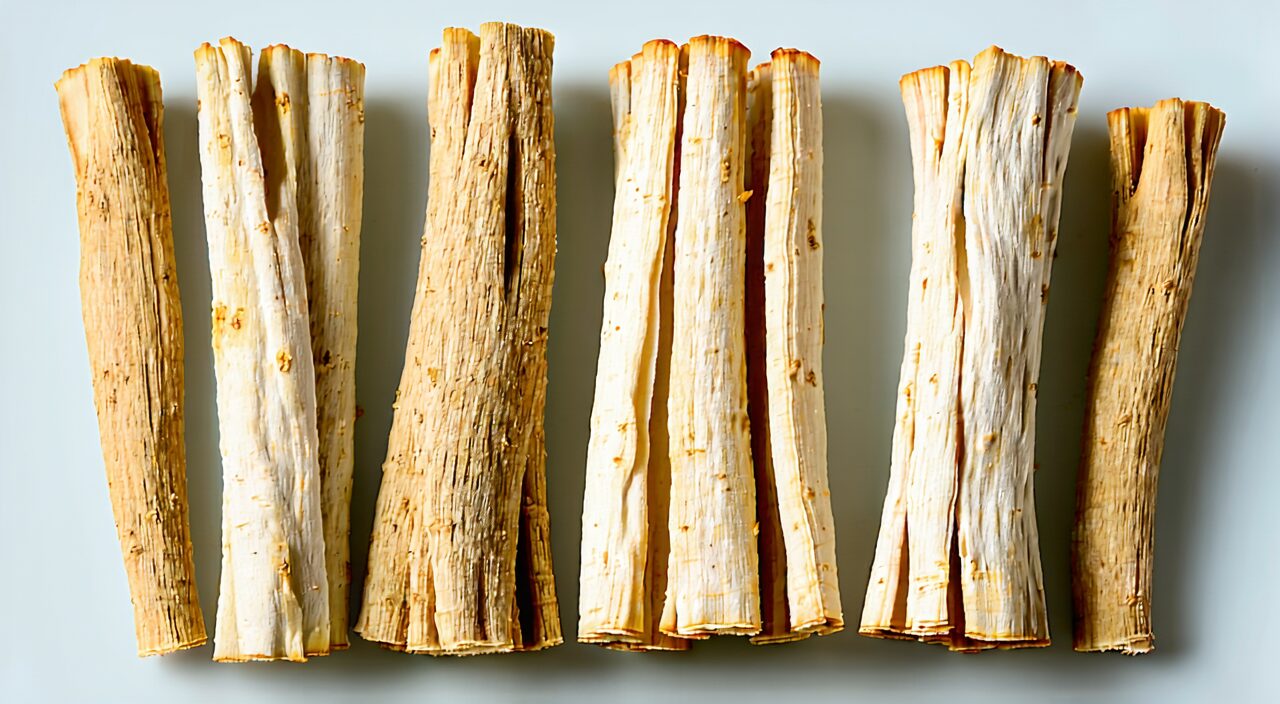
The medicinal part of Tai Zi Shen is its root tuber. After drying, it appears slender-spindle-shaped or narrowly elongated, slightly curved, generally 3–10 cm long and about 2–6 mm in diameter.
- The surface is pale yellowish white or light brownish yellow, with slight longitudinal wrinkles; fine rootlet scars may remain in the depressions.
- The texture is hard and brittle, breaking easily.
- The cut surface is flat, whitish or pale yellowish white, and starchy.
- The cambium ring is usually indistinct; the cortex and xylem are similar in color, showing no obvious fibrous nature macroscopically.
For routine identification, focus on these key points:
- The shape tends to be slender rather than short and thick.
- The overall color is pale yellowish white, never excessively dark brown.
- When snapped, it feels crisp, and the break surface is relatively flat, without noticeable woody fibers or coarse granules.
- It has a faint bean-like odor and a slightly sweet, slightly bitter taste, with a sticky consistency when chewed—this is often used as one distinguishing characteristic.
On the market, sulfur-fumigated Tai Zi Shen may appear overly white, with a tougher rather than brittle texture, and may carry a pungent sour smell. Such products deserve caution when selecting. Traditionally, superior-quality Tai Zi Shen is considered to have relatively thick, plump, yellowish-white roots without fibrous root remnants.
What Is the Medicinal Part of Tai Zi Shen?
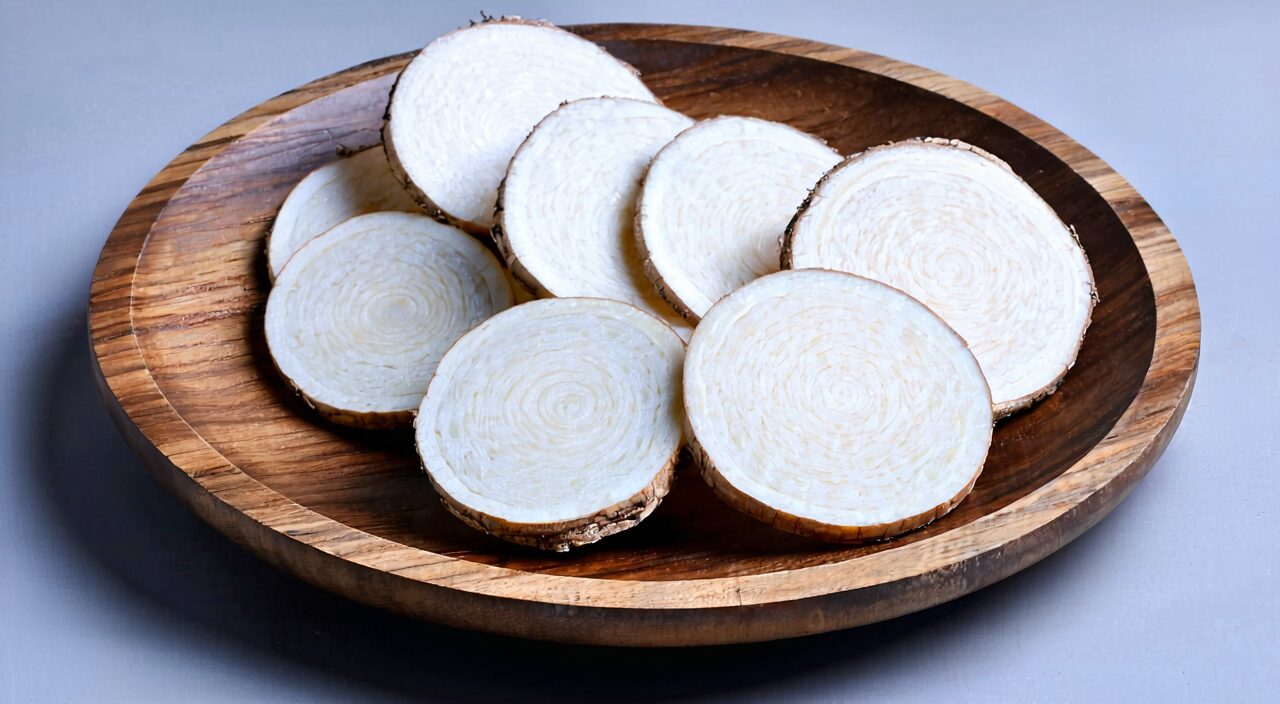
The medicinal part of Tai Zi Shen is the dried root tuber of Pseudostellaria heterophylla (Miq.) Pax ex Pax & Hoffm., a plant in the Caryophyllaceae family. It is usually harvested in summer when most of the aerial parts have withered. The fibrous roots and soil are removed; the roots are washed, then sun-dried or dried at low temperature. Sometimes the roots are briefly blanched in boiling water before drying, which gives the surface a paler yellowish-white color and makes the texture more brittle.
As a prepared herbal medicine, the most common form is the cleaned whole root, that is, the intact dried tuber. There are also cut forms, such as short sections or oblique slices, which are convenient for dispensing and decocting. Regardless of the form, the origin is the root tuber of the same plant; no other plant parts are included.
In terms of slice characteristics, the transverse cut surface of Tai Zi Shen shows no unusual markings, though scattered small vascular bundle dots may occasionally be seen. It has a faint, characteristic odor. After decoction, the liquid is light in color and the taste is sweet-bland with a slight bitterness, which is one reason it is selected for many qi-tonifying and yin-nourishing formulas.
How Does Traditional Chinese Medicine Understand Tai Zi Shen?
In traditional Chinese medicine, Tai Zi Shen is generally categorized as a qi-tonifying and yin-nourishing herb. Its nature and flavor are mostly described as sweet and slightly bitter, neutral, and it enters the spleen and lung channels. Classical Chinese medical texts tend to explain its actions from the perspective of “replenishing qi and fortifying the spleen, generating fluids and moistening the lungs.”
Specifically, for symptoms such as fatigue, lack of strength, and poor appetite due to insufficient spleen and stomach qi, as well as dry cough with little phlegm, dry throat, and thirst caused by dual deficiency of lung qi and yin, Tai Zi Shen can be considered as a gentle regulating substance.
Because its qi-tonifying strength is milder than that of ginseng or Dang Shen (Codonopsis root), while it also provides a certain degree of yin-nourishing and fluid-generating effect, it is traditionally included in formulas for conditions with slight qi and yin deficiency that cannot tolerate strong warming tonics.
Precisely because its action is relatively gentle, it is frequently combined in clinical practice with herbs such as Mai Dong (Ophiopogon root), Wu Wei Zi (Schisandra fruit), Shan Yao (Chinese yam), and Bai Zhu (Atractylodes rhizome) to jointly replenish qi and yin or to fortify the spleen and lungs. Such combination strategies are often used when regulating the constitution of children or adults with post-illness weakness, but suitability must still be assessed based on specific presentations and constitution.
What Components and Activities Are of Interest in Modern Research on Tai Zi Shen?
Modern research on the constituents of Tai Zi Shen has primarily focused on polysaccharides, saponins, amino acids, and cyclic peptides. In experimental studies, these components have shown potential activities such as immune modulation, anti-fatigue effects, and antioxidant properties, providing some reference directions for the traditional use of Tai Zi Shen.
It should be noted that most of this research remains at the stage of in vitro experiments or animal studies, and there is currently a lack of large-scale, high-quality human clinical research evidence. Therefore, it is not appropriate to directly equate laboratory findings with clinical therapeutic conclusions for humans. The inclusion of Tai Zi Shen in health products is based more on traditional usage experience and preliminary research interest; any specific effects still need to be supported by rigorous scientific evaluation.
For the average consumer, understanding such research information offers an additional perspective, but when making actual choices, the primary considerations should remain product quality and rational use. One should not assume a definite function simply because “a certain active component is present.”
How Does Tai Zi Shen Differ from Similar Herbs?
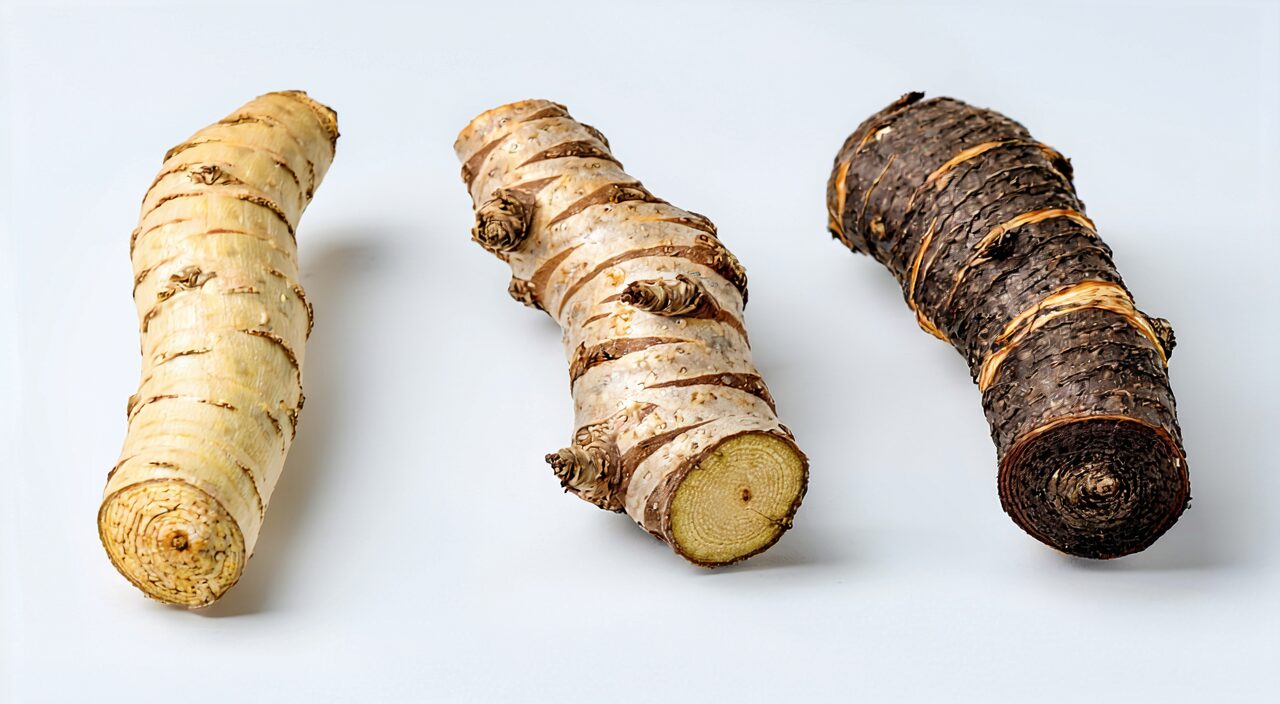
In daily selection, Tai Zi Shen is easily confused with related herbs such as Dang Shen (Codonopsis root) and Xi Yang Shen (American ginseng). Their origins, appearances, and traditional application emphases are distinctly different.
| Feature | Tai Zi Shen | Dang Shen (Codonopsis) | Xi Yang Shen (American Ginseng) |
|---|---|---|---|
| Plant source | Root tuber of Pseudostellaria heterophylla (Caryophyllaceae) | Root of Codonopsis pilosula, C. pilosula var. modesta, or C. tangshen (Campanulaceae) | Root of Panax quinquefolius (Araliaceae) |
| Appearance | Slender spindle shape, no “lion’s head” at the crown, generally smaller and lighter | Long cylindrical, slightly curved, with a “lion’s head”–like cluster of tubercular stem scars at the crown | Spindle-shaped, cylindrical, or conical |
| Surface | Pale yellowish white or light brownish yellow | Yellowish brown to grayish brown | Pale yellowish brown or yellowish white |
| Texture and cut surface | Hard and brittle, easily broken; cut surface pale white, starchy, cambium ring indistinct | Slightly tough; cut surface shows fissures and a “chrysanthemum-heart” pattern | Firm; cut surface flat, slightly starchy, cambium ring clearly visible |
| Odor and taste | Mild odor; taste slightly sweet, slightly bitter, somewhat sticky when chewed | Aromatic odor; sweet taste | Characteristic odor; taste bitter at first, then sweet aftertaste |
From the perspective of traditional application focus: Dang Shen primarily tonifies the middle and replenishes qi, and fortifies the spleen and lungs; its nature is warmer than that of Tai Zi Shen, and its qi-tonifying strength is stronger. Xi Yang Shen is especially adept at replenishing qi and yin, clearing heat, and generating fluids; it is often used for dual qi and yin deficiency with deficiency-fire. Tai Zi Shen’s qi-tonifying action is relatively gentle, and its fluid-generating and lung-moistening power is moderate; it is traditionally used differently, particularly in situations where strong warming tonics are not tolerated or where slow, gentle regulation is needed.
Which Formulas Include Tai Zi Shen?
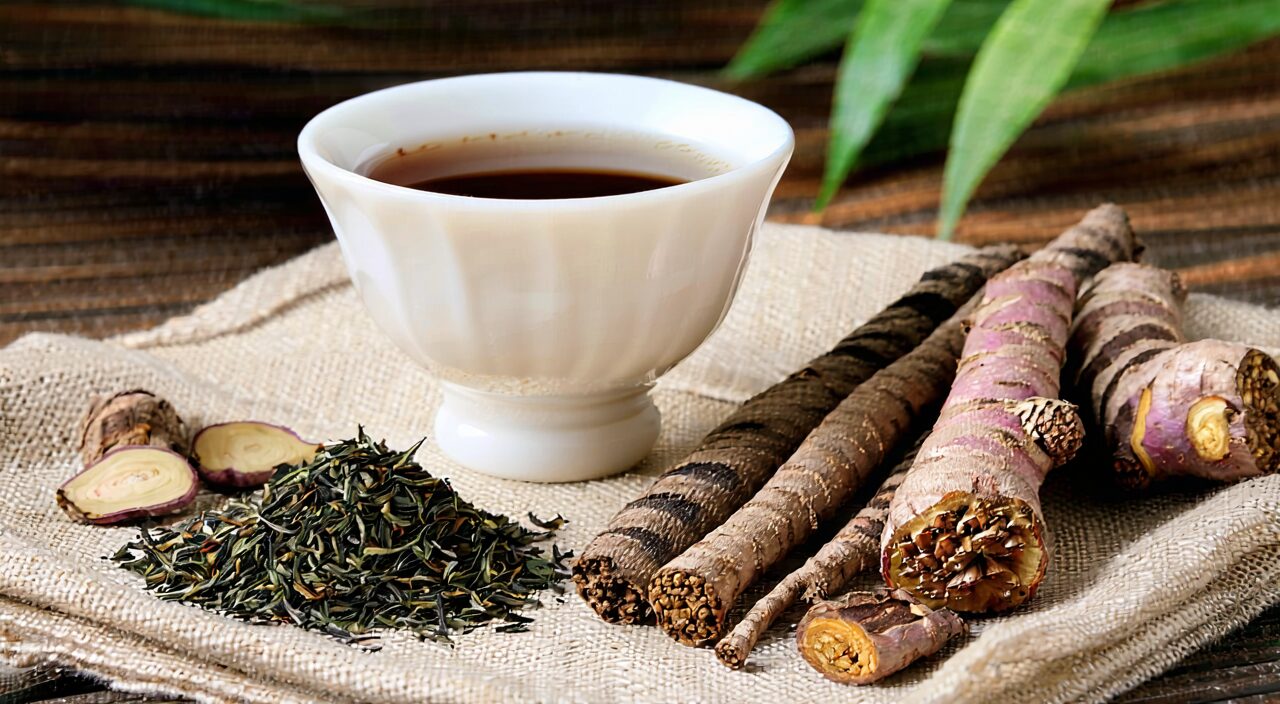
In traditional formulas, Tai Zi Shen often appears as an ingredient that replenishes qi and yin, fortifies the spleen, and moistens the lungs. Below are some common directions; specific application must be evaluated in the context of the overall formula and the individual’s constitution.
- Tai Zi Shen Decoction: This is a typical formula with Tai Zi Shen as the chief herb. It is usually combined with Mai Dong (Ophiopogon root) and Wu Wei Zi (Schisandra fruit), mainly addressing fatigue, dry mouth, and palpitations due to dual qi and yin deficiency. In this formula, Tai Zi Shen gently supplements qi, while Mai Dong and Wu Wei Zi nourish yin and astringe qi, keeping the overall action mild and non-drying.
- Modified Sheng Mai San (Pulse-Generating Powder) Variants: Tai Zi Shen is sometimes used to replace or be combined with ginseng in cases of qi and yin deficiency that do not require heavy tonification of the original qi. For example, in late stages of febrile disease or when summer heat damages qi and fluids, it is used together with Mai Dong and Wu Wei Zi. Such formulas are traditionally employed to replenish qi and yin, astringe sweating, and generate the pulse.
- Qi-Tonifying and Yin-Nourishing Formulas: It is often combined with Shan Yao (Chinese yam), Bai Zhu (Atractylodes rhizome), Fu Ling (Poria), and Yi Yi Ren (coix seed) to regulate spleen and lung qi and yin deficiency, manifested as poor appetite, loose stools or unformed stools, and dry cough with little phlegm. In these formulas, Tai Zi Shen usually plays a mild, gentle supplementing role without causing stagnation or easily generating heat, making it a relatively gentle choice for regulation.
It is worth reminding that whether a particular formula is suitable for an individual must be comprehensively assessed based on constitution, severity of symptoms, and patterns of cold, heat, deficiency, and excess. One should not self-prescribe a formula based solely on herb names or formula names.
What Precautions Should Be Taken When Using Tai Zi Shen?
Many people believe that because Tai Zi Shen has a gentle nature, it can be used casually over the long term—a view that requires caution. Although its qi-tonifying strength is milder than that of ginseng or Dang Shen, Tai Zi Shen is still ultimately a qi-supplementing substance. Long-term, large-dose use may still cause discomfort such as abdominal distension, reduced appetite, or chest tightness, especially in the absence of clear qi and yin deficiency.
Before using Tai Zi Shen or products containing it, the following groups should especially undergo professional evaluation:
- Children, pregnant women, and breastfeeding women
- Individuals taking other medications
- Conditions with external pathogenic excess syndromes, internal excess heat, or damp-heat stagnation—traditionally, the isolated use of qi-tonifying herbs is generally not recommended, and Tai Zi Shen is no exception.
Furthermore, some persistent fatigue and weakness may be related to various modern health issues. If symptoms do not improve after dietary and lifestyle adjustments, or if they are accompanied by significant weight loss, low-grade fever, severe night sweats, etc., a doctor should be consulted promptly for further investigation rather than relying solely on Tai Zi Shen for regulation.
Summary
As a traditional Chinese medicinal herb, Tai Zi Shen is widely recognized for its slender spindle-shaped appearance, gentle qi-tonifying and yin-nourishing properties, and its use in various formula combinations. Accurately identifying its macroscopic features and understanding its medicinal part and processing methods helps avoid confusion with similar herbs such as Dang Shen and Xi Yang Shen. In practice, Tai Zi Shen mostly appears in formula strategies addressing qi and yin deficiency that require slow, gentle regulation. However, its use should still be determined according to individual constitution, clinical presentation, and professional guidance; one should not assume that because its nature is relatively mild, it can be used casually or long-term. This article is for informational reference only and cannot replace professional diagnosis or treatment advice.