
What Is Wang Bu Liu Xing? Medicinal Part, Identification Methods, and Common Formulas
Many people who are new to Chinese medicine hear the name “Wang Bu Liu Xing” and often assume it is related to an animal. In fact, it comes from the dried mature seeds of Vaccaria hispanica, a plant in the Caryophyllaceae family, and is a botanical medicinal with a long history. Because of its actions of activating blood and unblocking menstruation and promoting lactation, it frequently appears in traditional formulas. This article will help overseas Chinese readers build a basic understanding of Wang Bu Liu Xing from the perspectives of appearance identification, medicinal part, traditional Chinese medicine understanding, and common formulas.
What Does Wang Bu Liu Xing Look Like? How Is It Identified?
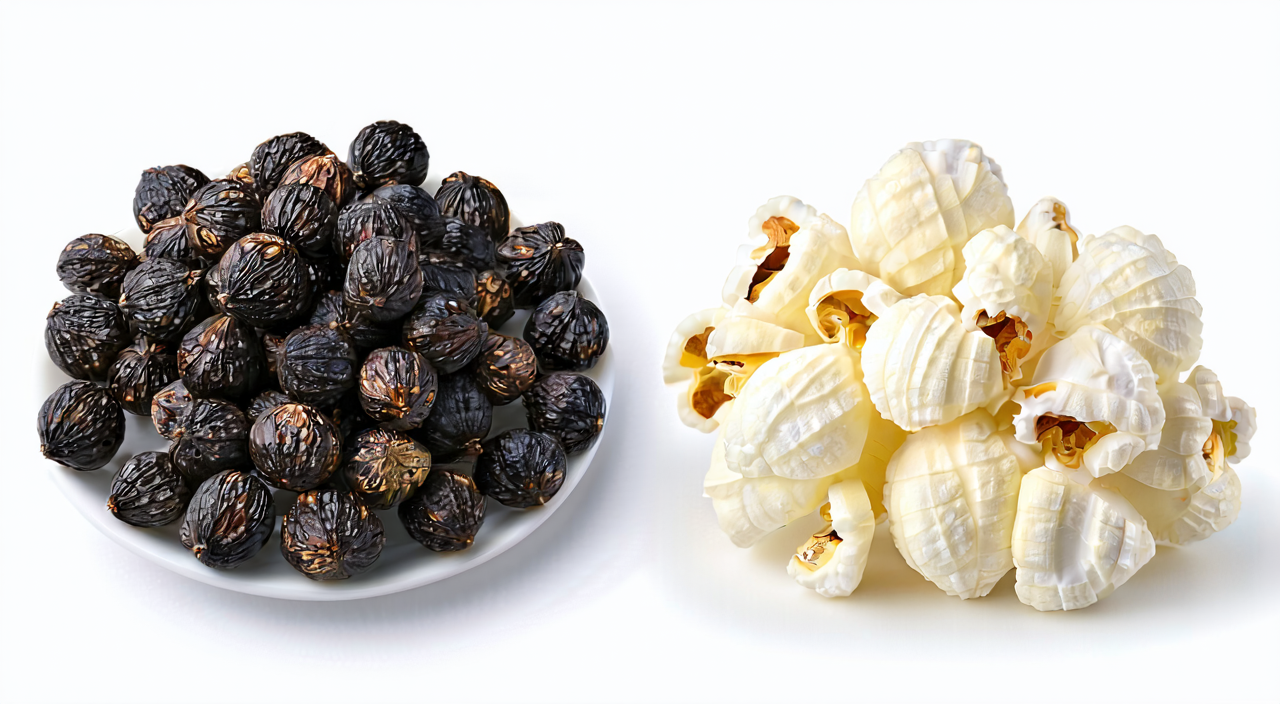
The macroscopic features of Wang Bu Liu Xing are quite distinctive. The dried seeds are nearly spherical, about 1.5 to 2 mm in diameter, with a jet-black or reddish-black surface. Although the granules are small, their boundaries are clearly distinct. Under a magnifying glass, the seed surface is densely covered with fine granular protrusions, as if coated with a layer of tiny warts; this is an important feature distinguishing it from many other black seeds. On one side of the seed there is a round hilum, slightly lighter in color and somewhat depressed. The raw product is relatively hard. After stir-frying, Wang Bu Liu Xing often bursts into white flower-like pieces, expands in volume, and becomes loose, crisp, and brittle; this is commonly called “stir-fried Wang Bu Liu Xing.” The bursting rate after stir-frying is usually regarded as a simple reference for the quality of prepared slices. In addition, Wang Bu Liu Xing has a bean-like smell when chewed, and the raw product is slightly sticky, which can also aid identification.
What Is the Medicinal Part of Wang Bu Liu Xing?
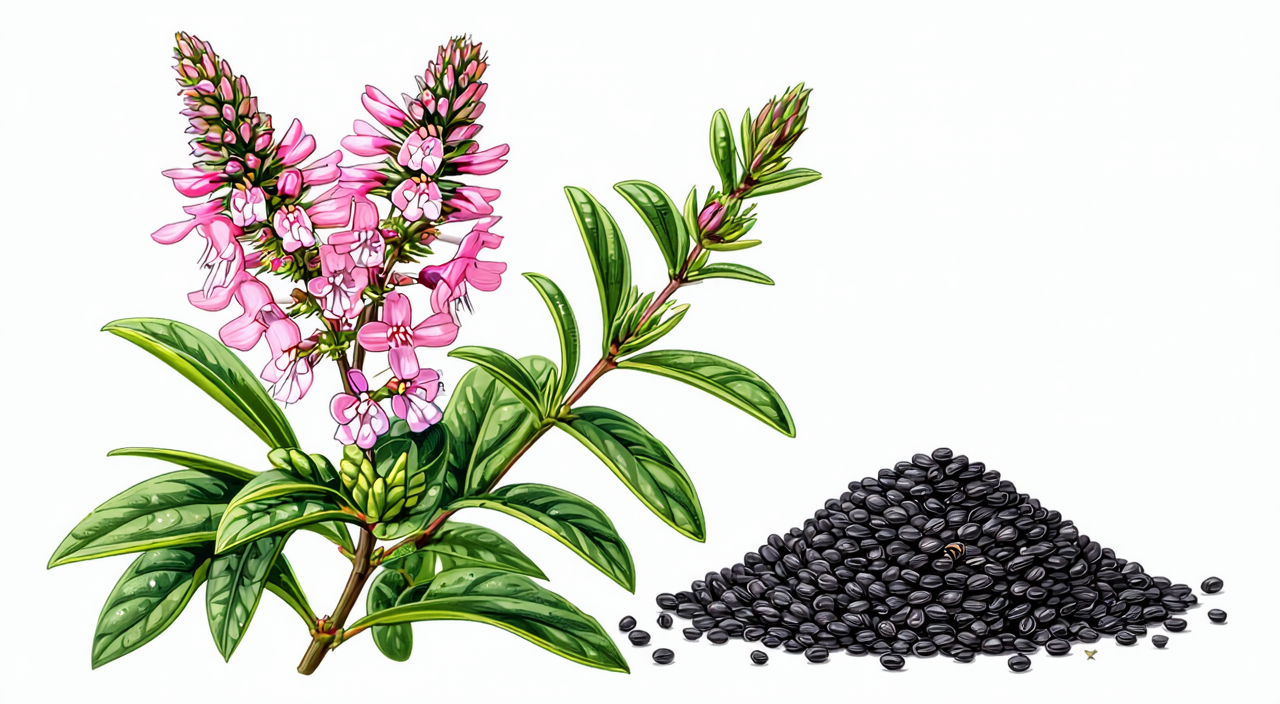
The medicinal part of Wang Bu Liu Xing is the mature seed of Vaccaria hispanica. Generally, the whole plant is harvested in summer when the fruits are mature but before the pericarp splits. It is dried to a semi-dry state, and then the seeds are threshed, cleaned of impurities, and dried again to produce the commercial medicinal material. On the market, plump seeds with a black, shiny color and no impurities are preferred. Improper harvesting or processing at the place of origin can easily result in shriveled seeds or mixed impurities, which affects the quality of the medicinal material. Before decoction or preparation, the seeds are usually cleaned and stir-fried. Stir-fried Wang Bu Liu Xing releases its constituents more easily during decoction and is also relatively less irritating to the stomach and intestines, so the stir-fried form is more commonly used in clinical practice.
How Does Traditional Chinese Medicine Understand Wang Bu Liu Xing?
In traditional Chinese medicine theory, Wang Bu Liu Xing is bitter in flavor and neutral in nature, and it enters the liver and stomach meridians. Its actions are summarized as activating blood and unblocking menstruation, promoting lactation and reducing swelling, and promoting urination and relieving strangury. Ancient medical texts describe it as “moving without staying,” meaning it is good at unblocking and promoting the free flow of blood vessels. Therefore, it is often considered for blood-stasis patterns of irregular menstruation, amenorrhea, and dysmenorrhea. For postpartum obstructed lactation, breast distension and pain, or even the formation of breast lumps, Wang Bu Liu Xing is often combined with pangolin scales. There is a saying: “Chuan Shan Jia and Wang Bu Liu, after taking them a woman’s milk will flow.” Nowadays, other plant-based medicinals that unblock collaterals and promote lactation are often used instead. In addition, Wang Bu Liu Xing also appears as an auxiliary medicinal in the management of strangury patterns such as heat strangury and blood strangury with difficult urination. It should be noted that these applications derive from traditional experience. Whether they are suitable for an individual must be determined by combining constitution, pattern identification, and the judgment of a professional, and the medicinal should not be selected solely on the basis of isolated symptoms.
What Directions Are Modern Studies Focusing On?
Modern phytochemical studies have found that Wang Bu Liu Xing contains flavonoid glycosides, triterpenoid saponins, cyclic peptides, polysaccharides, and other components. Some animal experiments suggest that Wang Bu Liu Xing extracts may have activities such as promoting milk secretion, influencing hemorheological indicators, and improving microcirculation. There are also some preliminary reports of anti-inflammatory and antitumor activities, but the evidence is very limited. This provides a modern perspective for its traditional use in promoting lactation and activating blood. However, most research is still in an early stage, and the results cannot be directly taken as a guarantee of efficacy in humans. They are more useful as supplementary information for understanding this medicinal and for readers who are interested.
How Is Wang Bu Liu Xing Different from Ting Li Zi and Lai Fu Zi?
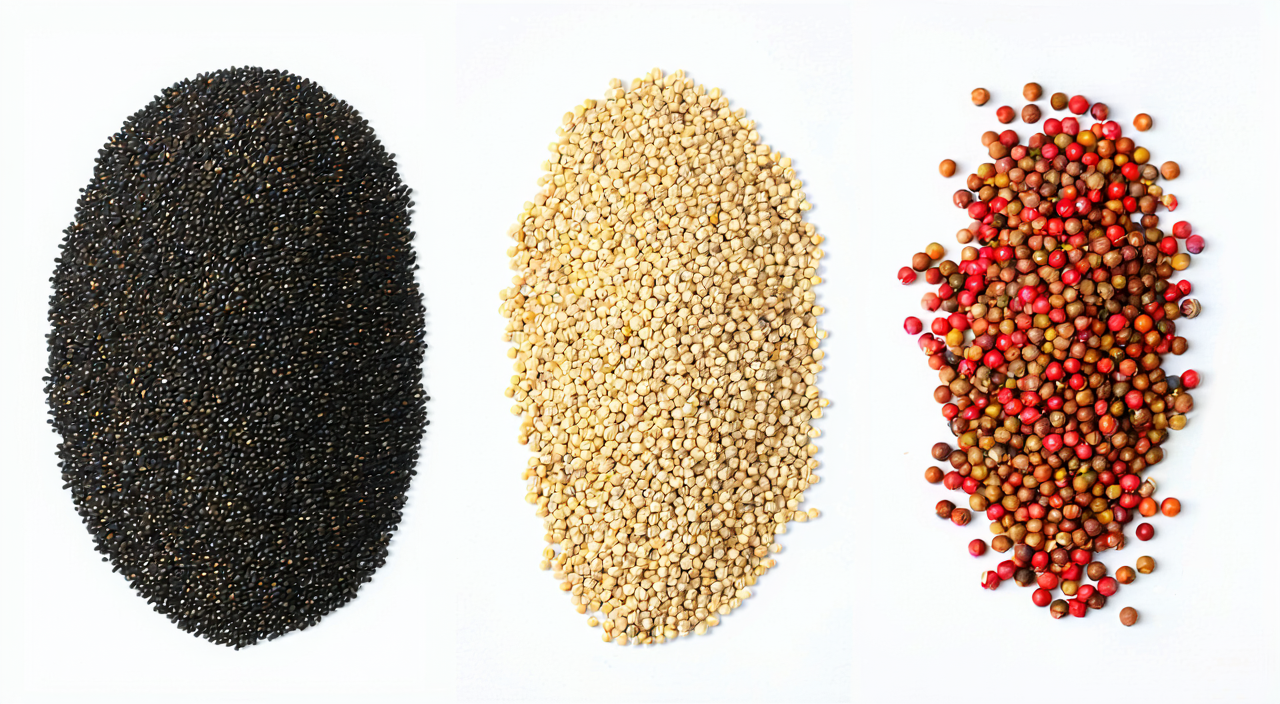
Among seed-based medicinals, Wang Bu Liu Xing, Ting Li Zi, and Lai Fu Zi are sometimes easily confused, but they can be distinguished by shape, size, and surface texture. Wang Bu Liu Xing is nearly spherical, about 1.5 to 2 mm in diameter, with a jet-black surface and fine granular protrusions. Ting Li Zi comes from Descurainia sophia or Lepidium apetalum; its shape is oblong or melon-seed shaped, only about 1 mm long and less than 0.5 mm wide, with a yellowish-brown or reddish-brown surface and fine reticulate markings, without granular protrusions. Lai Fu Zi is the seed of radish, oval or round, larger in size, 2 to 3 mm in diameter, with a yellowish-brown, reddish-brown, or grayish-brown surface that is relatively smooth or slightly wrinkled. The differences in functions are even greater: Wang Bu Liu Xing activates blood and unblocks menstruation and promotes lactation; Ting Li Zi drains the lungs to relieve wheezing and moves water to reduce swelling; Lai Fu Zi eliminates food retention and distension and descends qi to resolve phlegm. The three come from different sources and treat completely different disease patterns, so they cannot be substituted for one another, and special care is needed in identification.
Which Formulas Use Wang Bu Liu Xing?
In clinical practice, Wang Bu Liu Xing often appears in formulas that activate blood and unblock menstruation and promote lactation. Here are several common examples:
- Wang Bu Liu Xing San: Originating from Taiping Shenghui Fang, it is traditionally used for postpartum lochia retention and abdominal pain that worsens with pressure, indicating blood stasis. In this formula, Wang Bu Liu Xing activates blood and unblocks menstruation, combined with Dang Gui and Chuan Xiong to strengthen blood-stasis dispelling effects. This formula is mostly used when blood stasis obstruction is relatively obvious, but whether it is appropriate requires pattern identification.
- Xia Ru Yong Quan San: This is one of the commonly used formulas for postpartum obstructed lactation or low milk supply, mainly targeting the type of qi stagnation and impaired lactation ducts. In this formula, Wang Bu Liu Xing unblocks collaterals and promotes lactation, combined with Chai Hu and Qing Pi to soothe the liver and regulate qi, and Jie Geng to guide the medicinals upward.
- Tong Ru Dan: It is more suitable for insufficient qi and blood complicated by obstructed lactation. In this formula, Ren Shen and Huang Qi replenish qi, Dang Gui nourishes blood, and Wang Bu Liu Xing unblocks menstruation and promotes lactation, addressing both unblocking and supplementing, unlike formulas that purely unblock.
- Wang Bu Liu Xing Pian: A modern preparation based mainly on Wang Bu Liu Xing extract. It is often used for blood-stasis-related irregular menstruation and postpartum low milk supply. As a patent Chinese medicine, the package insert should be read carefully before use to understand its indications and contraindications.
The above formulas and patent medicines each have different emphases. Their selection should be based on comprehensive judgment of constitution and symptoms, and they should be used under the guidance of a TCM practitioner. Avoid matching a formula merely by disease name.
What Precautions Should Be Taken When Using Wang Bu Liu Xing?
Wang Bu Liu Xing is generally moving and unblocking in nature, so the following groups need to pay special attention. First, pregnant women should not use it, because its blood-activating and menstruation-unblocking nature may harm the fetus. Second, people with heavy menstrual bleeding, bleeding disorders, or those using anticoagulant medications should also use it cautiously to avoid increasing the risk of bleeding. In addition, there are many causes of postpartum low milk supply. If milk shortage is due to qi and blood deficiency, using Wang Bu Liu Xing to unblock may actually consume qi and damage blood, which is not conducive to milk production, so deficiency and excess must be distinguished first. Furthermore, if symptoms such as breast redness, swelling, heat, pain, and fever are present, this suggests mastitis and has gone beyond simple obstructed lactation, and prompt medical attention should be sought. In all cases, it is recommended to use it under the guidance of a professional TCM practitioner or pharmacist, and to pay attention to the source and quality of the medicinal. If other medications are being taken at the same time, it is best to consult a physician in advance to avoid unnecessary interactions.
Summary
As a plant seed medicinal with distinctive characteristics, Wang Bu Liu Xing has a long history of use for activating blood and unblocking menstruation and promoting lactation. Recognizing its granular protrusions on the surface and its appearance after bursting, and distinguishing it from Ting Li Zi and Lai Fu Zi, helps with correct selection of the medicinal. Although related formulas such as Wang Bu Liu Xing San and Xia Ru Yong Quan San are widely known, their indications and contraindications vary, and they should not be tried blindly. This article is for educational purposes only and is not a substitute for professional diagnosis and treatment advice. Before using Wang Bu Liu Xing, be sure to consult a qualified TCM practitioner.