
TCM Syndrome Differentiation of Indigestion and Self-Observation: Is It Spleen Deficiency or Food Stagnation?

Many people have experienced this: after a meal, food seems to sit in the stomach, with constant bloating and belching, and a feeling of fullness even after eating very little. These symptoms are generally labeled as indigestion, but from a TCM perspective, different accompanying details often point to different internal conditions.
Understanding these patterns is not meant to give yourself a definite diagnosis, but to establish a clearer observation framework when seeking regulation or choosing a direction for traditional formulas.
Why Understand Indigestion from a TCM Perspective

Functional dyspepsia may not show obvious organic abnormalities in routine examinations, but the symptoms do affect comfort. Through long-term practice, TCM developed a method to assess the body’s condition by observing digestive rhythms, tongue coating, accompanying emotions, and dietary responses.
This approach does not view the stomach as an isolated organ, but connects it with the spleen’s transportation and transformation, the liver’s free flow, and the overall balance of cold and heat. Therefore, when post-meal indigestion, early satiety, and bloating occur, the traditional approach does not simply target the stomach, but tries to differentiate the underlying “pattern,” and then choose a corresponding regulating direction.
Several Common TCM Patterns of Indigestion
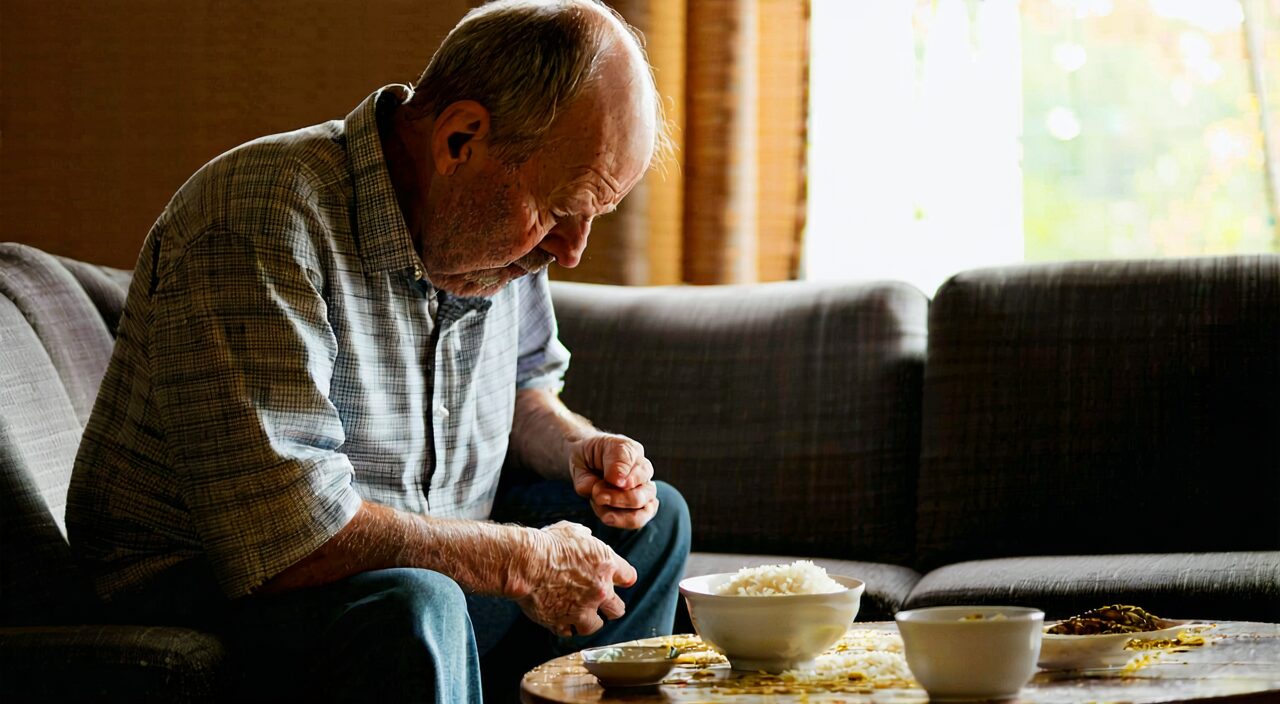
Spleen Qi Deficiency Type
This type is more common in people with long-term irregular eating habits, excessive overthinking, or high physical exertion. When spleen qi is deficient, the ability to transport and transform weakens, and the body’s vitality seems insufficient.
Typical manifestations:
- Easy bloating after meals, but the distension is not severe; often a dull pain that prefers warmth and pressure.
- Stools tend to be loose or unformed, frequency may increase; easily fatigued, with a sallow complexion.
- Tongue appears pale, enlarged with tooth marks on the sides, and a thin white coating.
- Appetite is average or weak; feeling full after eating a little, rarely feeling strong hunger.
In such cases, the traditional direction is often to tonify spleen qi and promote the transformation in the middle burner. Among traditional patent medicines:
- Xiangsha Liujun Wan: Based on the Four Gentlemen Decoction with added herbs, it tends to boost qi and strengthen the spleen, move qi and resolve phlegm, and is often used for digestive discomfort related to spleen deficiency and qi stagnation.
- Jianpi Wan: Focuses more on strengthening the spleen and promoting appetite. For situations with poor appetite due to spleen deficiency and lingering post-meal bloating, it may also be considered a choice according to traditional understanding.
The two have slightly different emphases; whether they are suitable still depends on the individual’s constitution and current specific manifestations.
Food Stagnation Type
Food stagnation is a relatively easy pattern to recognize, usually occurring after eating too much, too quickly, or consuming a large amount of greasy, sticky, and hard-to-digest foods.
Typical manifestations:
- Epigastric distension and even pain, discomfort worsens with pressure; belching has a sour, fetid smell, or there is nausea/regurgitation.
- Sticky sensation in the mouth or bad breath; thick greasy tongue coating that may turn yellow; stools may be dry or sticky and unsatisfying, and the bloating tends to lessen after bowel movements.
- Appetite is significantly reduced, even aversion to food.
When food stagnation is prominent and the tongue coating is thick and greasy, the traditional approach is to promote digestion and remove stagnation. Baohe Wan is a well-known patent medicine of this approach, mainly used to digest food and harmonize the stomach, often for temporary bloating and putrid belching caused by dietary indiscretion.
It should be noted that Baohe Wan is more about resolving food stagnation and is not intended for long-term nourishment. If food stagnation occurs only occasionally, recovery follows dietary adjustment; but if obvious stagnation recurs with dietary lapses, it may indicate a fundamentally weak spleen-stomach transportation function, requiring a more fundamental approach.
Liver-Stomach Disharmony Type
Indigestion is not always caused by food itself; emotional fluctuations can also significantly affect digestion. In TCM, this type of stomach discomfort closely linked to emotions is called liver-stomach disharmony.
Typical manifestations:
- Stomach bloating or pain fluctuates with emotional changes. Symptoms worsen with tension, anxiety, or anger, and ease when mood is cheerful.
- Often accompanied by chest tightness, frequent belching, distension or migratory discomfort in the rib sides.
- Tongue is often pale red or slightly dusky, with a thin white or thin yellow coating; the pulse tends to be wiry.
- Appetite may be normal, but bloating easily occurs after eating, sometimes with acid reflux or heartburn.
For this type, the traditional regulation direction is to soothe the liver and regulate qi, harmonize the stomach and descend rebellious qi. Jiawei Xiaoyao Wan is an augmented version of Xiaoyao Wan, often used for patterns related to liver constraint with blood deficiency and liver-spleen disharmony. For chest tightness, post-meal bloating, and belching due to emotional tension, it is often taken as a direction to learn about and understand.
Of course, if emotional distress has seriously affected daily life or sleep, dietary adjustment alone is far from enough, and seeking professional evaluation is more reliable.
Intermingled Cold and Heat Type
Some people have quite complex manifestations: they are both averse to cold and prone to heat symptoms. The stomach may sometimes feel cool and uncomfortable when exposed to cold, yet at other times they have dry mouth, bitter taste, acid reflux, and heartburn. This coexistence of cold and heat signs is traditionally understood as intermingled cold and heat.
Typical manifestations:
- Epigastric stuffiness and blockage; aversion to both cold foods and spicy, warming foods.
- May simultaneously have bitter taste, dry mouth, yellow greasy tongue coating, yet cold hands and feet and loose stools.
- Symptoms fluctuate in severity, often with multiple intertwined factors.
Assessing the intermingled cold and heat type is more complex; single-direction patent medicines tend to lose one thing for another. Therefore, traditional formulas often adopt a combination of acrid opening, bitter descending, and simultaneous use of cold and warming herbs. In such cases, there is less room for self-assessment, and consulting a TCM professional for detailed syndrome differentiation before choosing a direction is strongly advised.
How to Initially Establish a Self-Observation Framework

To roughly determine which type you lean toward, pay attention to the following dimensions:
- Time factor: Do symptoms appear suddenly and short-term, or have they persisted for a long time?
- Dietary correlation: Are they obviously related to the amount or type of a particular meal?
- Emotional influence: Does emotion act as an obvious “switch” factor?
- Tongue and stool: Observe the tongue body, coating, and the nature and regularity of stools.
Combining these clues is more meaningful than focusing solely on the single symptom of “bloating.”
For example:
- Long-term slight post-meal bloating, fatigue, loose stools, and pale, enlarged tongue point more to spleen qi deficiency.
- Distention and pain after overeating that refuses pressure, putrid belching, bad breath, and thick coating lean toward food stagnation.
- Bloating that fluctuates with emotions, chest tightness, and rib pain are mostly related to liver-stomach disharmony.
These are only preliminary directional distinctions, not absolute; in practice, patterns may overlap.
Overall Coordination of Diet and Lifestyle Regulation

Regardless of the pattern type, adjusting lifestyle and eating habits is the necessary foundation.
- When food stagnation is obvious: Moderately reduce meal portions, chew thoroughly, avoid talking while eating, and let food mix well with saliva to reduce the burden on the stomach.
- When spleen deficiency is obvious: Avoid long-term consumption of raw, cold, greasy, and hard-to-digest foods; opt for warm, soft, and well-cooked meals that are more gentle.
- For those who easily get bloated when nervous: Spend a few minutes before meals to regulate breathing, relax the shoulders, and put away the phone and work while eating; this is often more effective than relying solely on dietary therapy.
It is important to note that if indigestion symptoms persist, or are accompanied by unexplained weight loss, a sensation of obstruction when swallowing, black stools, frequent vomiting, or fixed and worsening pain, you should no longer stay in the self-observation stage but promptly consult a gastroenterologist to rule out problems requiring further intervention.
Cautious Approaches to Selecting Chinese Patent Medicines

The patent medicines mentioned, such as Baohe Wan, Jianpi Wan, Xiangsha Liujun Wan, and Jiawei Xiaoyao Wan, are all made from traditional formulas and have a long history of use. They each have different focuses:
- Baohe Wan: Focuses on promoting digestion and removing food stagnation.
- Xiangsha Liujun Wan: Focuses on boosting qi, strengthening the spleen, and moving qi.
- Jianpi Wan: Focuses on fortifying the spleen, improving appetite, and reducing bloating.
- Jiawei Xiaoyao Wan: Focuses on soothing the liver, strengthening the spleen, and resolving constraint.
However, these are only general directions and do not represent a one-to-one “symptom-to-medicine” relationship. Each product may vary with different manufacturers and dosage forms; whether it matches the current pattern must be judged comprehensively based on product instructions, individual constitution, and professional advice.
Especially when the pattern is complex or self-regulation does not bring noticeable improvement, prioritize consulting a TCM practitioner or relevant professional; do not self-medicate with the same patent medicine long-term while ignoring other signals from the body.
Summary
From a TCM perspective, common indigestion patterns can be categorized as spleen qi deficiency, food stagnation, liver-stomach disharmony, and intermingled cold and heat, each with different characteristic manifestations and regulating directions.
By observing post-meal sensations, tongue coating, stool conditions, and emotional correlations, one can establish a preliminary self-distinction framework. Traditional patent medicines such as Xiangsha Liujun Wan, Baohe Wan, Jianpi Wan, and Jiawei Xiaoyao Wan correspond to different regulating approaches, but all must be chosen cautiously based on a thorough understanding of one’s own constitution and symptoms, and with reference to professional advice.
Most importantly, persistent, recurrent, or warning-sign accompanied indigestion cannot replace medical consultation; a systematic evaluation at a formal medical institution should be sought.