
Who Is Buyang Huanwu Decoction Suitable For? Composition, Effects and Precautions Explained

Buyang Huanwu Decoction is a highly classic formula in traditional Chinese medicine, frequently mentioned especially for issues such as post-stroke hemiplegia and impaired limb mobility. Many friends interested in Chinese medicine often ask: who exactly is this formula suitable for? How does it differ from Xuefu Zhuyu Decoction? Can it be used whenever there is fatigue or numbness in the hands and feet? This article addresses these questions, sorting out the composition, therapeutic directions, applicable situations and necessary precautions of Buyang Huanwu Decoction from the perspective of traditional Chinese medicine, to help readers establish a relatively clear understanding.
How traditional Chinese medicine understands the thinking behind Buyang Huanwu Decoction
Buyang Huanwu Decoction originates from Corrections on the Errors of Medical Works by the Qing dynasty physician Wang Qingren. The original formula mainly targets presentations such as hemiplegia, deviation of the eye and mouth, slurred speech, drooling, dry stool, and frequent urination caused by qi deficiency and blood stasis.
According to traditional Chinese medicine, qi is the driving force that propels blood circulation. If the genuine qi is deficient and insufficient to push, blood stagnation is very likely to occur. This state of “qi deficiency as the root and blood stasis as the branch” is precisely the core target of Buyang Huanwu Decoction.
Therefore, the formulation approach of Buyang Huanwu Decoction is not simply activating blood and resolving stasis. Rather, it heavily doses qi-tonifying medicinals, greatly supplementing the original qi to drive blood circulation, combined with a small amount of blood-activating and collateral-dredging substances, to achieve the purpose of “abundant qi leading to smooth blood flow.” This determines that it differs significantly in its application emphasis from other formulas that primarily focus on activating blood and resolving stasis.
Composition of Buyang Huanwu Decoction
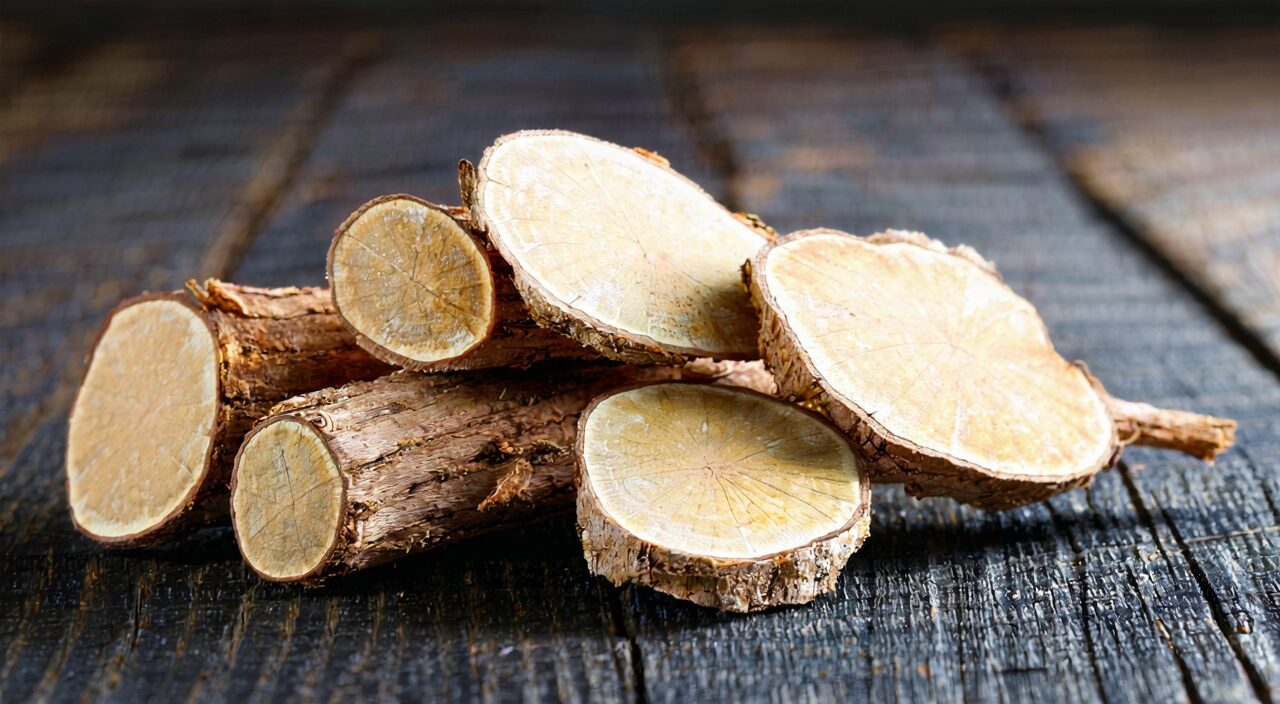
The composition of Buyang Huanwu Decoction is very distinctive, with the dosage of qi-tonifying medicinals far exceeding that of blood-activating medicinals. The classic composition is as follows:
| Medicinal | Traditional functional direction |
|---|---|
| Raw Astragalus (Sheng Huangqi) | Greatly supplements original qi, making qi abundant to promote blood circulation |
| Angelica Sinensis Tail (Danggui Wei) | Nourishes and activates blood, resolves stasis without damaging the integrity |
| Red Peony Root (Chishao) | Cools blood and dissipates stasis, unblocks collaterals and relieves pain |
| Earthworm (Dilong) | Unblocks meridians and collaterals, calms the liver and extinguishes wind |
| Sichuan Lovage Root (Chuanxiong) | Activates blood and moves qi, known as a qi-moving medicinal within blood medicinals |
| Safflower (Honghua) | Activates blood and unblocks collaterals, dissipates stasis and relieves pain |
| Peach Kernel (Taoren) | Activates blood and dispels stasis, moistens intestines and promotes bowel movements |
As can be seen from the table, the dosage of Astragalus dominates the formula, while the blood-activating medicinals are diverse in type but used in relatively light doses. The characteristic of this combination is that it focuses on restoring the body’s qi deficiency state, and on this basis, gently resolves stasis, rather than strongly breaking blood.
Who or which presentations Buyang Huanwu Decoction may be suitable for
Determining whether one may potentially be suited for Buyang Huanwu Decoction requires a comprehensive assessment of both “qi deficiency” and “blood stasis” presentations, rather than looking at a single symptom alone. Traditionally, the following presentations are likely to be categorized within the reference range of qi deficiency and blood stasis:
- Long-term fatigue and lack of strength, easily becoming short of breath and sweating upon slight activity
- Numbness, weakness and impaired mobility on one side of the body, or during the sequela stage of hemiplegia
- Sallow or dull complexion, darkened color of the lips
- A dull-pale tongue body or one with stasis spots/petechiae, possibly slightly enlarged
- A thready, choppy pulse or a large-deficient and forceless pulse
- Post-stroke sequelae such as impaired speech, deviation of the eye and mouth, especially when accompanied by obvious signs of deficiency
It must be especially emphasized that the above presentations serve only as a reference for understanding the application direction of this traditional formula. Even if typical qi deficiency and blood stasis manifestations exist, whether this formula can be used and how it should be adapted still requires comprehensive assessment based on individual constitution, disease stage and overall condition. Particularly, during the acute phase of stroke, such primarily tonifying formulas are traditionally not the first choice; acute-phase management follows different pattern differentiation approaches.
Situations not suitable or requiring extra caution

Buyang Huanwu Decoction leans toward warm supplementation and primarily acts on the qi aspect; it is not suitable for all blood stasis problems. The following situations require special attention:
- When acute cerebrovascular events have not been medically evaluated: In the early stage of onset, if cerebral hemorrhage or cerebral infarction is not yet stable, blindly using qi-tonifying and blood-activating formulas may pose risks and must first be professionally assessed.
- Individuals with bleeding tendencies or those taking anticoagulant medications: Although the blood-activating medicinals in the formula are not large in dosage, combined with the driving force of a large amount of Astragalus, it may still affect coagulation function. Judgment must be made with full understanding of the individual’s circumstances.
- Those with obvious excess heat pattern or yin deficiency with effulgent fire: For example, subjective sensations of feverishness, dry mouth and bitter taste, red tongue with little coating, constipation, yellow urine, and rapid pulse. Buyang Huanwu Decoction is relatively warm and may exacerbate internal heat.
- Pregnant women and those with excessively heavy menstruation: Blood-activating and collateral-unblocking formulas should not be used casually.
- When symptoms such as limb numbness, weakness or headache recur chronically and the cause is unknown: Professional diagnosis should be sought first to rule out organic diseases; do not self-prescribe formulas based on assumptions.
Furthermore, if limb symptoms are accompanied by significant chest tightness, palpitations, severe dizziness or persistent vomiting, timely medical attention is needed, and one should not rely solely on formula-based regulation.
Differences between Buyang Huanwu Decoction and several similar formulas
To understand the positioning of Buyang Huanwu Decoction more accurately, we can compare it with several formulas that have overlapping therapeutic directions. Here, Xuefu Zhuyu Decoction, Huangqi Jianzhong Decoction, Danggui Buxue Decoction and Guizhi Fuling Pill are selected to analyze their differences from the perspective of therapeutic principles.
Difference from Xuefu Zhuyu Decoction
Xuefu Zhuyu Decoction also originates from Corrections on the Errors of Medical Works and is commonly used for blood stasis patterns, but its core lies in “qi stagnation and blood stasis” rather than “qi deficiency and blood stasis.” The formula contains qi-moving medicinals such as Bupleurum and Bitter Orange, emphasizing dredging qi mechanism and activating blood to resolve stasis. It is suitable for stabbing pain in the chest and hypochondrium, chronic headache, insomnia and dream-disturbed sleep caused by inhibited qi movement, and overall leans toward moving qi and resolving depression.
Buyang Huanwu Decoction, on the other hand, leans toward supplementing qi to move blood. Simply put, if blood stasis manifestations are prominent without obvious deficiency, or even with obvious qi stagnation, Xuefu Zhuyu Decoction may be a more common regulation direction; if deficiency signs are evident and limb weakness is prominent, the direction of Buyang Huanwu Decoction is more likely to be considered.
Difference from Huangqi Jianzhong Decoction
Huangqi Jianzhong Decoction is formed by adding Astragalus to Xiaojianzhong Decoction, primarily featuring warming the middle burner and supplementing qi, and relieving spasm and pain. It is commonly used for abdominal pain, fatigue, poor appetite and other issues caused by spleen-stomach deficiency cold. Its qi-tonifying strength is concentrated in the spleen and stomach (middle burner) and essentially does not involve activating blood and unblocking collaterals.
Although Buyang Huanwu Decoction also uses Astragalus, its focus is on the qi of the whole body to drive blood vessels, operating at a different level. Huangqi Jianzhong Decoction is generally not used for problems like limb numbness or hemiplegia.
Difference from Danggui Buxue Decoction
Danggui Buxue Decoction consists only of Astragalus and Angelica Sinensis, and similarly uses Astragalus in a dosage far exceeding Angelica. It emphasizes supplementing qi to generate blood, improving sallow complexion, fatigue, low-grade fever and other manifestations caused by dual deficiency of qi and blood. It has no blood-activating and collateral-unblocking combination and does not directly target blood stasis patterns.
Buyang Huanwu Decoction can be said to add a group of blood-activating and collateral-unblocking medicinals on the foundation of supplementing both qi and blood, shifting the focus from merely generating blood to propelling already stagnated blood, managing issues such as hemiplegia.
Difference from Guizhi Fuling Pill
Guizhi Fuling Pill originates from Essentials from the Golden Cabinet and is a classic formula for activating blood and resolving stasis, but it leans toward warming meridians and resolving stasis, and dispersing masses. It is often used for amenorrhea, abdominal pain, uterine fibroids and other gynecological issues caused by blood stasis. It uses Cinnamon Twig to warmly unblock blood vessels, and Moutan Cortex, Peach Kernel and others to activate blood and disperse stasis, without large amounts of qi-tonifying medicinals.
Compared to it, Buyang Huanwu Decoction places greater emphasis on the premise of qi deficiency and is commonly used for post-stroke limb mobility disorders, differing in location of action and emphasis.
Through these comparisons, it is not difficult to see that the unique feature of Buyang Huanwu Decoction lies in “activating blood and unblocking collaterals on the premise of greatly supplementing original qi”—this is the key to understanding it.
Key points to note from a safety perspective
Whether one is interested in Buyang Huanwu Decoction or considering similar formulas, the following safety reminders are worth bearing in mind:
- The use of formulas is not a simple matter of “what symptom uses what formula”; inaccurate pattern differentiation may instead worsen the problem.
- Traditional formulas are usually adjusted in dosage and modified with additions or subtractions under the guidance of a professional TCM practitioner based on individual conditions; self-administration carries certain risks.
- If severe, persistent or recurrent physical discomfort occurs, especially stroke warning signs, severe headache, unilateral weakness, dysarthria, etc., one must seek medical attention immediately and not rely on formulas at the expense of delaying diagnosis and treatment.
Summary
Buyang Huanwu Decoction, as a famous formula centered on supplementing qi and activating blood, is mainly used for limb numbness, hemiplegia, fatigue and other conditions related to qi deficiency and blood stasis. Its characteristic is the heavy use of Astragalus to supplement qi, combined with low-dose blood-activating medicinals, differing from formulas that purely move qi and activate blood. However, whether it is suitable requires strict assessment of whether it fits the basic pattern of qi deficiency and blood stasis, and cannot be judged autonomously based on a single symptom. It is unsuitable for populations such as those with acute cerebrovascular diseases, bleeding tendencies, excess heat patterns, or special constitutions to try casually.
This article further clarifies the scope of application and boundaries of Buyang Huanwu Decoction through comparisons with Xuefu Zhuyu Decoction, Huangqi Jianzhong Decoction, Danggui Buxue Decoction, and Guizhi Fuling Pill. It is hoped that this information can help readers have a relatively clear framework when seeking further understanding. Any health choices are recommended to be made under professional guidance; this article serves only as popular science on traditional Chinese medicine knowledge and does not constitute personal medication advice.