
Who Is Ling Gui Zhu Gan Tang Suitable For? Composition, Benefits, and Precautions

Many people turn to traditional formulas when experiencing dizziness, palpitations, chest tightness, or early-morning eyelid puffiness, and Ling Gui Zhu Gan Tang is frequently mentioned. Originating from the Jin Gui Yao Lue (Synopsis of the Golden Chamber), it primarily addresses the pattern of “internal phlegm-fluid retention with middle-yang deficiency” in traditional Chinese medicine. This article explains how it may assist those with certain presentations through warming yang, transforming retained fluid, and strengthening the spleen to drain dampness. It also covers its composition, contraindications, and how it differs from Wu Ling San, Fang Ji Huang Qi Tang, Er Chen Tang, and Xiao Qing Long Tang—giving you a clearer reference when learning about traditional formulas.
Understanding “Phlegm-Fluid” and Middle-Yang Deficiency
In traditional Chinese medicine, “phlegm-fluid” (Tan Yin) refers not only to coughed-up sputum but to pathological accumulations resulting from impaired fluid metabolism. When spleen-stomach yang is insufficient, the transportation and transformation of water-dampness weakens, easily generating internal fluid retention. This can invade the upper orifices or lodge in the chest and diaphragm, causing symptoms such as dizziness, palpitations, epigastric coldness, and copious thin-clear phlegm.
Ling Gui Zhu Gan Tang is designed precisely for such middle-yang deficiency with internal water-fluid retention, aiming to warm yang to transform retained fluid and strengthen the spleen to drain dampness. Rather than directly attacking the pathogen, it restores the middle burner’s transporting ability, allowing accumulated fluids to dissipate naturally.
Composition of Ling Gui Zhu Gan Tang
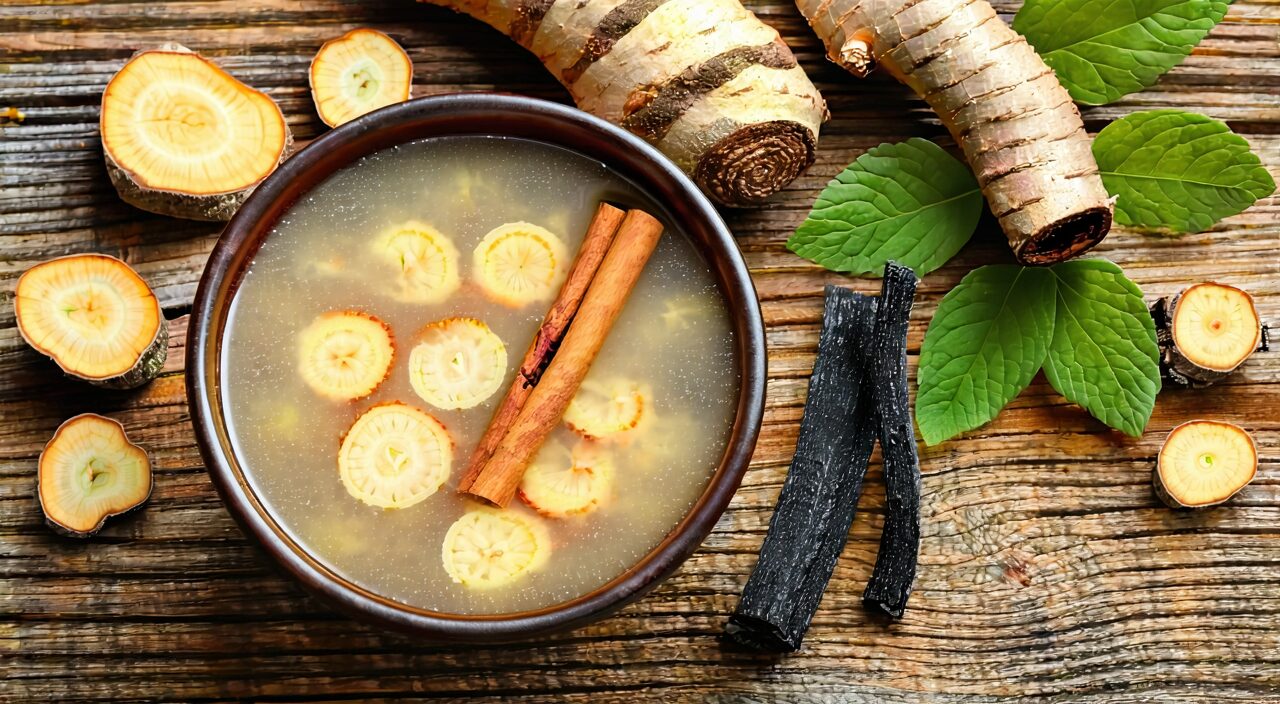
The formula consists of four meticulously selected herbs, each with a specific function:
| Herb | Traditional Action |
|---|---|
| Poria (Fu Ling) | Strengthens the spleen, drains dampness, and promotes urination; the primary herb for eliminating retained fluid |
| Cinnamon Twig (Gui Zhi) | Warms and unblocks yang qi, calms upward counterflow, improving palpitations and vertigo caused by fluid ascending |
| Atractylodes (Bai Zhu) | Dries dampness and strengthens the spleen, aids transportation, consolidating the middle burner’s defense |
| Licorice (Gan Cao) | Harmonizes the other herbs, tonifies the middle and supplements qi, synergizing with Cinnamon Twig to warm and nourish |
The overall strategy is to warm yang without harshness and drain fluid without damaging the righteous qi. The four herbs together achieve the classic principle of “using warm medicinals to harmonize,” making it suitable for chronic water-fluid retention where the body’s vitality is already weakened.
Potential Indications and Common Presentations
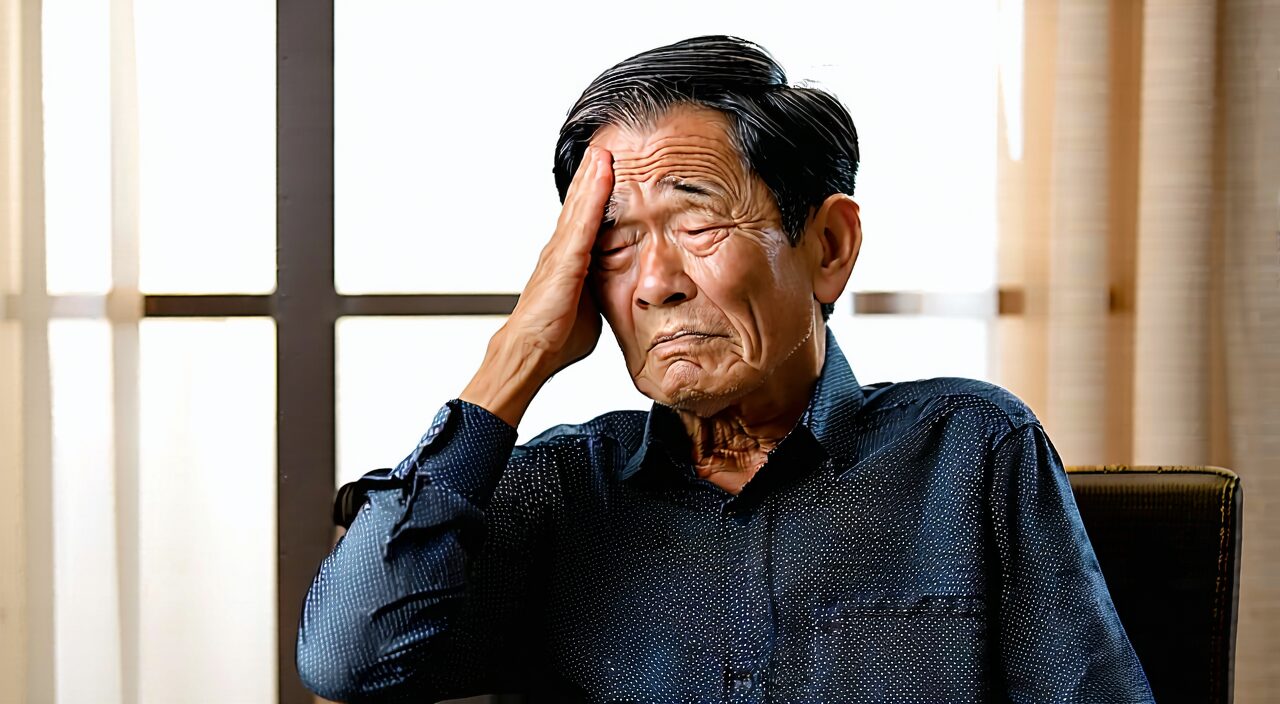
Ling Gui Zhu Gan Tang is traditionally used for regulating constitutions prone to middle-yang deficiency and internal water-fluid retention. If a person exhibits several of the following presentations concurrently, they may be considered to align with the formula’s therapeutic direction from a Chinese medicine perspective:
- Dizziness or vertigo, especially noticeable when standing up or turning the head; may feel heaviness in the head with light-headedness, or as if sitting in a rocking boat.
- Palpitations and chest tightness; sometimes a splashing sound can be felt below the heart area, or a sensation of fullness and oppression in the chest and epigastrium.
- Copious thin, clear-white phlegm that tends to recur, without obvious heat signs.
- Tendency toward a pale, swollen, and tender tongue with tooth marks on the edges; tongue coating is white-slippery or white-greasy.
- Aversion to cold with a preference for warmth; cold extremities; sensation of cold in the stomach area; preference for warm drinks.
- Urination that is either somewhat difficult, or normal but accompanied by morning eyelid puffiness and mild lower limb edema.
It is important to stress that these presentations only indicate a general tendency—they are not diagnostic criteria. Whether Ling Gui Zhu Gan Tang is appropriate for a specific individual must be determined by a professional practitioner through pulse diagnosis and comprehensive pattern differentiation. The severity of fluid retention and the presence of any concurrent patterns vary from person to person, so modifications to the formula must also be tailored individually.
Contraindications and Cautions
Although Ling Gui Zhu Gan Tang has a relatively broad range of applications, the following situations generally require avoidance or extreme caution:
- Yin deficiency with fire effulgence constitution: Heat in the palms and soles, dry mouth and throat, night sweats, red tongue with little coating—the warming and drying nature of the formula may worsen yin deficiency.
- Internal damp-heat: Bitter taste in the mouth, yellow-greasy tongue coating, sticky stools, dark scanty urine. Using warming herbs in this scenario may aggravated heat, so the formula should not be used alone.
- Severe edema of unknown cause: Generalized severe edema, or edema accompanied by shortness of breath or markedly reduced urine output, requires modern medical evaluation of cardiac and renal function first. Any formula should not be self-administered.
- Pregnant women, breastfeeding women, and infants: These are special physiological stages that require face-to-face assessment by a licensed Chinese medicine practitioner. General educational information cannot guide self-use.
- If dizziness or palpitations are severe and frequent, or accompanied by chest pain, difficulty breathing, fainting, or sudden blurred vision, seek urgent medical attention to rule out organic disorders. Managing symptoms with traditional formulas must never replace proper diagnosis and treatment.
Comparison with Similar Formulas
Several classic formulas address dampness and phlegm-fluid retention and are often confused. Understanding their different emphases helps build a clearer overall picture.
Ling Gui Zhu Gan Tang vs. Wu Ling San
| Comparison Point | Wu Ling San | Ling Gui Zhu Gan Tang |
|---|---|---|
| Composition | Polyporus, Alisma, Atractylodes, Poria, Cinnamon Twig | Poria, Cinnamon Twig, Atractylodes, Licorice |
| Main Direction | Promotes urination, drains dampness, unblocks the lower burner | Warms yang, strengthens the spleen, warms and activates the middle burner |
| Typical Indication | Urinary difficulty, vexing thirst with desire to drink, water counterflow | Dizziness and palpitations due to upward assault of water-fluid |
Wu Ling San has a stronger diuretic action, while Ling Gui Zhu Gan Tang emphasizes warming yang to transform retained fluid, addressing the upward counterflow of water-fluid.
Ling Gui Zhu Gan Tang vs. Fang Ji Huang Qi Tang
| Comparison Point | Fang Ji Huang Qi Tang | Ling Gui Zhu Gan Tang |
|---|---|---|
| Composition | Stephania, Astragalus, Atractylodes, Licorice, etc. | Poria, Cinnamon Twig, Atractylodes, Licorice |
| Main Direction | Supplements qi, stabilizes the exterior, promotes urination to reduce edema | Warms yang, strengthens the spleen, transforms retained fluid, dispels dampness |
| Typical Indication | Exterior deficiency, edema, sweating with aversion to wind | Interior yang deficiency, internally moving water-fluid, without obvious exterior-deficiency sweating |
The depth of disease location and the balance between deficiency and excess differ. Fang Ji Huang Qi Tang takes into account exterior deficiency, while Ling Gui Zhu Gan Tang focuses more on interior retained fluid.
Ling Gui Zhu Gan Tang vs. Er Chen Tang
| Comparison Point | Er Chen Tang | Ling Gui Zhu Gan Tang |
|---|---|---|
| Composition | Pinellia, Tangerine Peel, Poria, Licorice | Poria, Cinnamon Twig, Atractylodes, Licorice |
| Main Direction | Dries dampness, transforms phlegm, regulates qi and harmonizes the middle | Warms yang to transform retained fluid, strengthens the spleen and drains dampness |
| Typical Indication | Damp-phlegm cough, chest and epigastric oppression | Yang-deficiency cold-fluid, thin-clear phlegm, aversion to cold, splashing sound in the stomach |
Er Chen Tang lacks yang-warming components and targets damp-phlegm; Ling Gui Zhu Gan Tang contains Cinnamon Twig and is better suited for patterns with marked cold-fluid retention.
Ling Gui Zhu Gan Tang vs. Xiao Qing Long Tang
| Comparison Point | Xiao Qing Long Tang | Ling Gui Zhu Gan Tang |
|---|---|---|
| Composition | Ephedra, Cinnamon Twig, Dried Ginger, Asarum, etc. | Poria, Cinnamon Twig, Atractylodes, Licorice |
| Main Direction | Releases the exterior, dissipates cold, warms the lungs to transform retained fluid | Strengthens the spleen, warms yang, promotes urination and transforms fluid |
| Typical Indication | External cold with internal fluid retention—chills, fever, cough and wheezing with thin-clear phlegm | Internal fluid retention without exterior signs; focuses on regulating the middle burner |
Xiao Qing Long Tang possesses exterior-releasing power, whereas Ling Gui Zhu Gan Tang purely starts from strengthening the spleen and warming yang, not targeting external contraction.
Every formula has its unique therapeutic directions. When choosing a formula, one must never match it based on one or two symptoms alone; it must be weighed against the individual’s overall constitution and pathological stage.
Key Considerations Before Use
- The application of Chinese herbal formulas emphasizes individualized pattern differentiation. Although Ling Gui Zhu Gan Tang is widely recorded, whether it suits a particular person must rely on professional observation, listening, questioning, and pulse-taking. It is not advisable to self-prescribe based on general educational materials.
- In daily life, reducing intake of raw, cold, greasy, and sweet foods can help lessen the burden on the spleen and stomach and prevent the regeneration of water-dampness.
- If you are already taking other medications or receiving treatment for other health concerns, inform your Chinese medicine practitioner or pharmacist to avoid potential interference between therapies.
- This content is for educational reference only and cannot replace professional diagnosis or treatment advice. Consult a doctor promptly if you have any health concerns.
Summary
Ling Gui Zhu Gan Tang is a classic formula that warms yang to transform retained fluid and strengthens the spleen to drain dampness. Traditionally, it is suitable for presentations such as dizziness, palpitations, chest tightness, aversion to cold, and thin-clear phlegm arising from middle-yang deficiency and internal phlegm-fluid retention. However, it is contraindicated in patterns such as yin deficiency with fire effulgence, internal damp-heat, or severe edema of undiagnosed cause.
Comparing it with formulas like Wu Ling San, Fang Ji Huang Qi Tang, Er Chen Tang, and Xiao Qing Long Tang reveals subtle yet meaningful differences among warming yang versus draining dampness, releasing the exterior versus stabilizing the exterior, and transforming phlegm versus eliminating retained fluid—reflecting the rigor of TCM pattern differentiation. Understanding these similarities and differences helps us better recognize the scope and limitations of Ling Gui Zhu Gan Tang under professional guidance.
The use of any formula must be based on an accurate assessment of the individual’s constitution. If related symptoms recur or persist, it is advisable to seek proper medical support and avoid self-administering any formula over the long term.