
Who is Clove and Persimmon Calyx Decoction Suitable For? Composition, Effects, and Contraindications

Frequent hiccups, especially after catching cold or eating cold and raw foods, are a common annoyance in daily life. When dealing with this issue, traditional Chinese medicine often understands it from the perspective of “stomach qi rebelling upward.” Clove and Persimmon Calyx Decoction is exactly one of the classic formulas valued by physicians through the ages. Its main approach is to warm the middle and descend rebellious qi, and its application places great emphasis on matching constitution and pattern.
Starting from the approach of warming the middle and descending rebellious qi, this article will systematically introduce the composition of Clove and Persimmon Calyx Decoction, its traditional uses, the characteristics of people who may be suitable, situations where caution is needed, and its differences from several similar formulas, helping readers to form a clearer understanding.
Composition and Origin of Clove and Persimmon Calyx Decoction
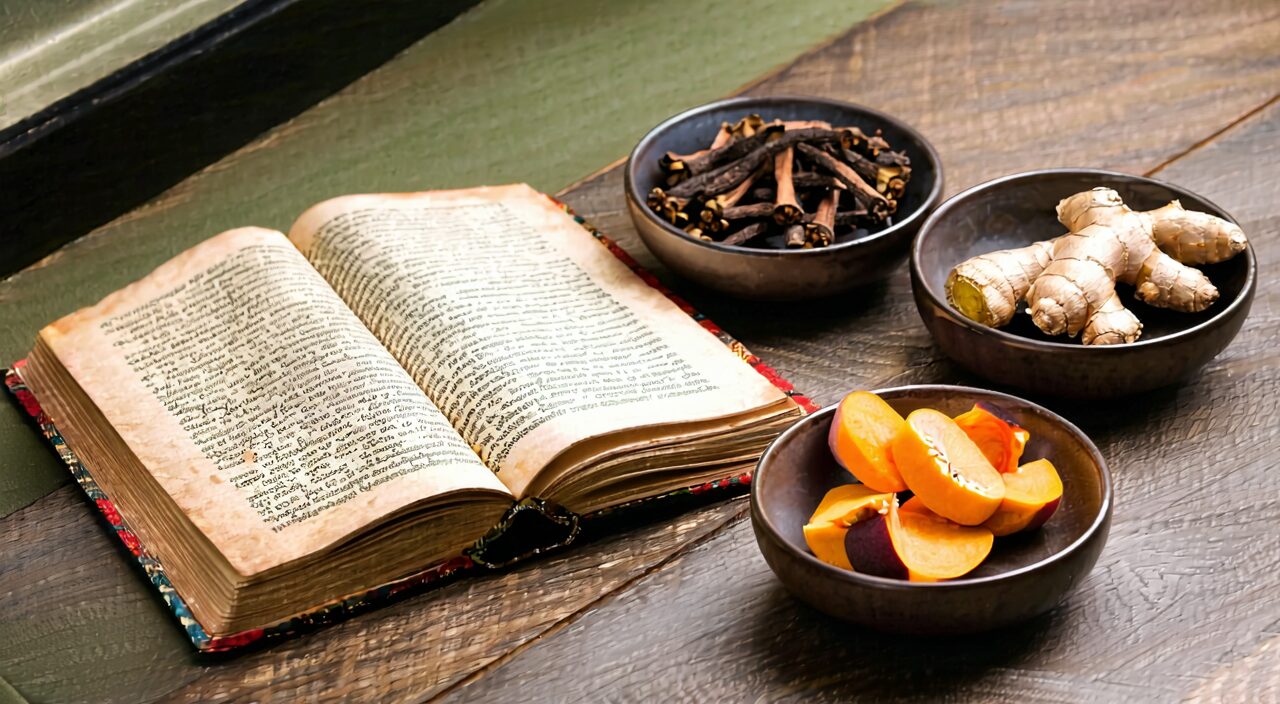
Clove and Persimmon Calyx Decoction originates from Yi Fang Ji Jie (Collected Exegesis of Recipes) written by the Ming dynasty physician Wang Ang. The original formula is composed of four herbs—simple and with a clear direction. In traditional formula studies, it is regarded as one of the representative formulas for warming the middle, descending rebellious qi, supplementing qi, and harmonizing the stomach.
| Medicinal | Common Reference Dosage (Ratio) | Traditional Action Direction |
|---|---|---|
| Clove (Ding Xiang) | About 6 parts | Warms the middle, disperses cold, descends rebellious qi, and stops hiccups |
| Persimmon Calyx (Shi Di) | About 9 parts | Descends rebellious qi, specifically for hiccups |
| Ginseng (Ren Shen) | About 3 parts | Tonifies and supplements spleen and stomach qi |
| Fresh Ginger (Sheng Jiang) | About 6 parts | Warms the stomach, disperses cold, stops vomiting, and descends rebellious qi |
It should be noted that the dosages listed in the table are only references for traditional combination ratios. In actual use, the dosage must be determined based on individual constitution, severity of symptoms, and the advice of a professional; it cannot be copied directly on one’s own.
Traditional Action Ideas of Clove and Persimmon Calyx Decoction
From the perspective of Chinese medicine theory, Clove and Persimmon Calyx Decoction mainly addresses the pathology of “deficiency cold in the stomach and stomach qi rebelling upward.”
In the formula, clove and persimmon calyx form the core pairing: clove is acrid and warm, warming the stomach and dispersing cold while also descending rebellious qi; persimmon calyx is bitter, astringent, and neutral, excelling at astringing stomach qi and stopping hiccups. The two work together, one dispersing and one astringing, capable of both dispelling cold pathogens from the stomach and calming the upwardly rebellious qi mechanism.
Ginseng tonifies stomach qi, and fresh ginger warms the stomach and harmonizes the center, further consolidating the function of the middle burner. The four herbs together achieve the effects of warming the middle, descending rebellious qi, supplementing qi, and harmonizing the stomach.
Therefore, this formula is often used as a thought process for regulating manifestations like hiccups and belching related to stomach cold. However, it does not mean that all hiccups can use it; the key lies in distinguishing cold-heat and deficiency-excess.
Who Might Be Suitable for Clove and Persimmon Calyx Decoction
Combining traditional diagnosis experience, the population targeted by Clove and Persimmon Calyx Decoction is usually characterized mainly by “stomach cold hiccups.” The following manifestations can serve as a direction for understanding, but cannot be used as a basis for self-diagnosis:
- Hiccup sounds are relatively deep, slow, and not loud, aggravated by cold, and somewhat relieved by warmth or drinking warm water
- Usually feels cold in the epigastric area, prefers warm food and drink, eats little and avoids cold and cool things
- May be accompanied by cold hands and feet, pale complexion, low spirits, and shortness of breath—manifestations leaning toward cold and deficiency
- Tongue body is pale, tongue coating is white and moist or white and slippery, pulse tends to be slow or deep and thready
These characteristics suggest insufficient yang qi in the body, deficiency cold in the stomach, and stomach qi failing to descend but rushing upward. Traditionally, the approach of warming the middle and descending rebellious qi can be considered. Clove and Persimmon Calyx Decoction is precisely one choice aimed at this direction, but whether it is specifically suitable still needs to be judged in combination with the overall condition.
Situations Where Caution Is Needed
Not all hiccups are suitable for Clove and Persimmon Calyx Decoction. If the direction is misjudged, it may not only be ineffective but could also aggravate discomfort. The following types of situations especially require attention:
- Stomach heat hiccups
The hiccup sound is loud and forceful, accompanied by dry mouth, halitosis, liking for cold drinks, red tongue with yellow coating. This belongs to stomach fire rushing upward, and it is not suitable to use acrid and warm substances.
- Yin deficiency with internal heat
When also accompanied by heat in the palms and soles, night sweats, dry mouth and throat, red tongue with little coating. Clove and Persimmon Calyx Decoction is relatively warm and drying, and can easily damage yin fluids.
- Excess heat accumulation
When stomach qi rebels upward due to food stagnation and blocked bowel qi, often accompanied by abdominal distension and pain, constipation, or foul-smelling stools. The direction should be to promote digestion and relieve stagnation, rather than warming, tonifying, astringing, and descending.
- Acute severe conditions or persistent non-resolution
If hiccups are frequent and severe, or persist for several days without stopping, and are even accompanied by chest pain, palpitations, difficulty breathing, vomiting, black stools, significant weight loss, etc., one should seek medical attention promptly to rule out potential organic problems. One should not rely solely on a single formula or herb and delay the condition.
- People in special physiological stages
Pregnant women, breastfeeding women, infants and young children, and the frail elderly must all be strictly evaluated by a professional doctor before using any formula and should not try it on their own.
Differences Between Clove and Persimmon Calyx Decoction and Similar Formulas
Among the formulas that regulate stomach qi rebelling upward, Clove and Persimmon Calyx Decoction is often easily confused with several other formulas in terms of thinking. Clarifying their respective emphases helps to more accurately understand the positioning of each.
| Formula | Core Pathology | Key Manifestation Emphasis | Main Difference from Clove and Persimmon Calyx Decoction |
|---|---|---|---|
| Inula and Hematite Decoction (Xuan Fu Dai Zhe Tang) | Stomach deficiency and phlegm obstruction, qi rebelling and not descending | Frequent hiccups or belching, with phlegm-fluid retention, epigastric stuffiness, white slimy tongue coating | Leans toward phlegm obstruction; heavily settles, descends rebellious qi, and transforms phlegm. Clove and Persimmon Calyx Decoction leans toward stomach cold without phlegm, mainly warming the middle and descending rebellious qi. |
| Evodia Decoction (Wu Zhu Yu Tang) | Liver-stomach deficiency cold, turbid yin rebelling upward | Vertex headache, retching and vomiting of foamy drool, cold extremities | Cold signs are more severe, involving the liver meridian, with stronger warming and descending power. Clove and Persimmon Calyx Decoction is relatively milder, specifically for stomach cold hiccups. |
| Pinellia Heart-Draining Decoction (Ban Xia Xie Xin Tang) | Mixed cold and heat, focal distension in the middle burner | Epigastric focal distension and fullness, vomiting, borborygmus and diarrhea | Uses both cold and heat, mainly for focal distension and diarrhea. Clove and Persimmon Calyx Decoction is for pure stomach cold without obvious mixed cold and heat. |
| Minor Center-Fortifying Decoction (Xiao Jian Zhong Tang) | Middle burner deficiency cold, qi and blood insufficiency | Intermittent abdominal pain, likes warmth and pressure, low spirits, poor appetite | Leans toward warming the middle, tonifying deficiency, and relaxing spasms and stopping pain; descending rebellious qi and stopping hiccups is not its main use. |
In actual regulation, it is necessary to combine symptoms, tongue and pulse, and constitutional characteristics, and to differentiate and choose under the guidance of a professional. One cannot simply match a single symptom to a formula.
Summary
Clove and Persimmon Calyx Decoction is a classic formula for warming the middle and descending rebellious qi, traditionally used mainly in the direction of regulating stomach cold hiccups. Its composition is simple and its direction clear, but whether it is applicable hinges on pattern differentiation.
It may be more suitable for people leaning toward cold with characteristics of deep and slow hiccups, cold sensation in the epigastric area, preference for warmth and pressure, pale tongue with white coating, but is not suitable for situations such as stomach heat, yin deficiency, or internal obstruction by excess pathogens.
When facing hiccups, distinguishing cold-heat and deficiency-excess first, and being alert to those signs accompanied by severe discomfort or persistent non-resolution, is far more important than blindly trying a certain formula.
This article is for popular science reference only and cannot replace professional diagnosis or treatment advice. If you have health concerns, it is recommended to seek help from a local registered Chinese medicine practitioner or doctor.