
Who Is Gu Chong Tang Suitable For? Composition, Benefits, and Contraindications

Many friends interested in TCM formulas may come across the name “Gu Chong Tang” when exploring health regulation approaches. In particular, those who have long suffered from heavy menstrual bleeding, prolonged periods, and easy fatigue often want to know whether this formula might be suitable for them.
This article will sort through the composition of Gu Chong Tang, its traditional functions and rationale, the characteristics of people who may consider it, important contraindications to be aware of, and the differences from similar formulas such as Gui Pi Tang and Bu Zhong Yi Qi Tang, to help everyone gain a clearer understanding.
Composition of Gu Chong Tang
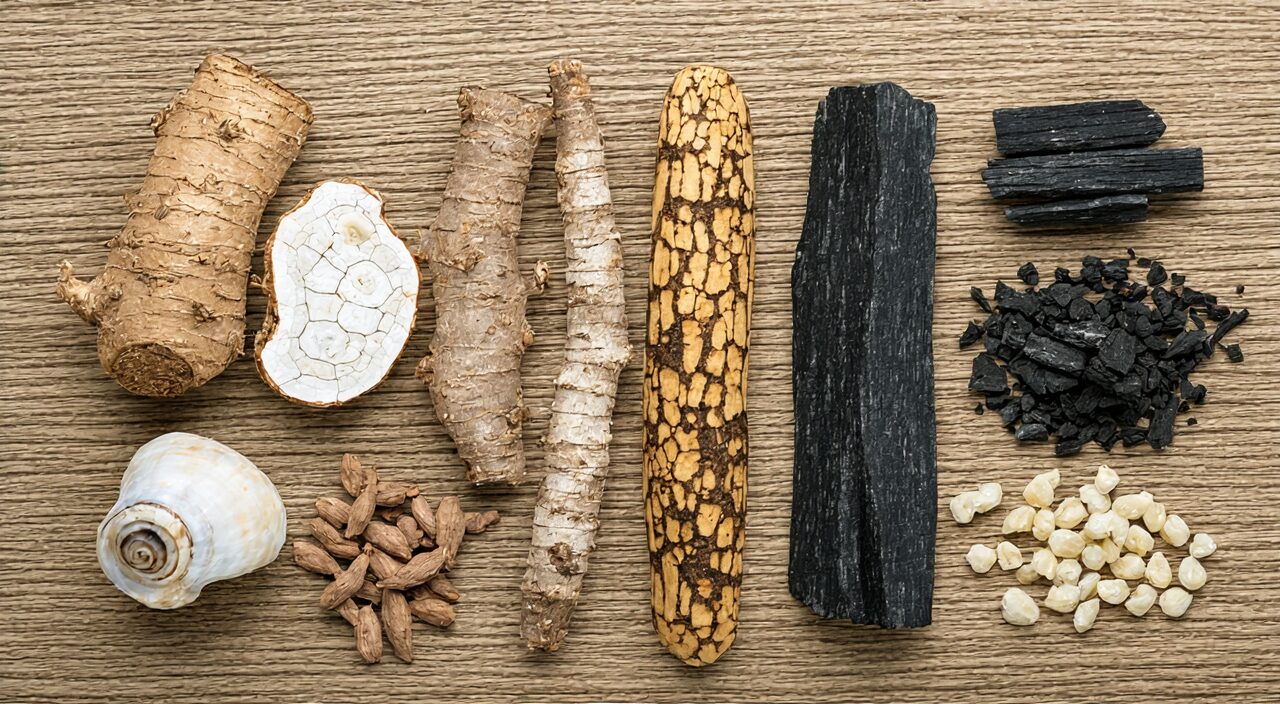
Gu Chong Tang originates from “Records of Chinese Medicine with Reference to Western Medicine”, created by the modern famous physician Zhang Xichun. Its composition centers on the approach of consolidating the Chong vessel to arrest bleeding and boosting qi to strengthen the spleen, with each medicinal herb playing a distinct role.
The table below lists the common composition and the reference dosage ranges based on traditional understanding. The exact gram amounts must be adjusted by a professional according to individual circumstances and should not be applied on one’s own.
| Medicinal | Traditional Reference Dosage (g) | Function in the Formula |
|---|---|---|
| Fried Bai Zhu (Atractylodis Macrocephalae Rhizoma) | 30 | Supplements qi and strengthens the spleen, aids production of qi and blood |
| Raw Huang Qi (Astragali Radix) | 18 | Tonifies qi and lifts the sunken, enhances astringency and holding |
| Calcined Long Gu (Fossilia Ossis Mastodi) | 24 (decocted first) | Astringes and consolidates, calms the Chong vessel and stops bleeding |
| Calcined Mu Li (Ostreae Concha) | 24 (decocted first) | Astringes and consolidates, assists in calming the Chong |
| Shan Zhu Yu (Corni Fructus) | 24 | Tonifies liver and kidney, secures essence and prevents leakage |
| Bai Shao (Paeoniae Radix Alba) | 12 | Nourishes blood and astringes yin, softens liver and relieves pain |
| Hai Piao Xiao (Sepiae Endoconcha) | 12 | Astringes to stop bleeding, secures essence and stops leukorrhea |
| Qian Cao (Rubiae Radix et Rhizoma) | 9 | Transforms stasis and stops bleeding, ensuring hemostasis without causing stasis |
| Zong Lv Tan (Carbonized Trachycarpi Petiolus) | 6 | Astringes to stop bleeding |
| Wu Bei Zi (Galla Chinensis) | 1.5 (ground into fine powder and taken with decoction) | Astringes and consolidates |
This formula combines large doses of qi-supplementing herbs with astringent herbs, aiming to tonify qi to solidify the Chong vessel and use astringents to stop bleeding. It also includes a small amount of blood-stasis-transforming ingredients to prevent excessive astringency from leaving stasis behind.
Traditional Functions and Rationale of Gu Chong Tang
In TCM theory, the Chong vessel is considered the “sea of blood” and is closely related to women’s menstruation and the circulation of qi and blood. When there is qi deficiency leading to failure to contain blood and an unconsolidated Chong vessel, the action direction of Gu Chong Tang is traditionally understood from the following two perspectives.
Consolidating the Chong Vessel and Arresting Bleeding
The herbs in Gu Chong Tang such as calcined Long Gu, calcined Mu Li, Hai Piao Xiao, Zong Lv Tan, and Wu Bei Zi are mostly astringent in nature and are traditionally used to astringe and consolidate, calm the Chong vessel and stop bleeding.
Combined with Shan Zhu Yu to tonify the liver and kidney and consolidate the Chong vessel, and Qian Cao to transform stasis and stop bleeding, it ensures that bleeding stops without causing stasis.
This combination is more suited for situations with relatively heavy bleeding, pale blood color, and prolonged duration, rather than bleeding caused by excess heat or blood stasis.
Supplementing Qi and Strengthening the Spleen
In the formula, Fried Bai Zhu and Raw Huang Qi are used in relatively large amounts with the intent of supplementing qi and strengthening the spleen.
Qi can contain blood; only when spleen qi is sufficient can it better govern and keep blood flowing within the vessels. At the same time, ample qi provides strong lifting power, which helps restore the consolidating function of the Chong vessel.
Therefore, Gu Chong Tang is often regarded as a formula that starts from supplementing qi and astringing to consolidate, rather than purely stopping bleeding.
Characteristics of People Who May Consider Gu Chong Tang

It must be emphasized that the following characteristics are only references from traditional application perspectives. Whether Gu Chong Tang is appropriate must be determined based on individual constitution and specific symptoms by a professional; self-prescription based on these features is not advisable.
Traditionally, Gu Chong Tang is more often considered for conditions of “qi deficiency failing to contain and unconsolidated Chong vessel.” Such individuals may present some of the following manifestations:
- Menstrual bleeding is markedly heavy, with pale color and thin consistency, without large clots, and without obvious burning sensation or foul odor;
- Easily feels spiritless and fatigued, shortness of breath, reluctance to speak, pale complexion; bleeding may worsen after activity;
- May be accompanied by soreness and weakness of the lower back and knees, a bearing-down sensation in the lower abdomen, with symptoms more pronounced after overexertion;
- The tongue is mostly pale, swollen or with tooth marks; the pulse is often thready-weak or large and forceless.
If these presentations largely match one’s condition and there are no obvious signs of excess heat, damp-heat, or blood stasis, Gu Chong Tang can be a direction for further exploration.
However, it must be cautioned that heavy menstrual bleeding can have very complex causes, and professional diagnosis and differentiation should be prioritized.
Situations Where Gu Chong Tang Is Not Suitable
Because Gu Chong Tang leans toward supplementing qi and astringing, the following situations are generally not suitable for considering this formula, or require extra caution:
- Bleeding due to excess heat: Bleeding is heavy but the blood is deep red or purple-black, sticky in consistency, accompanied by dry mouth, bitter taste, vexation, feverish sensation, constipation, and dark urine — signs of heat. Using Gu Chong Tang in such cases can trap the pathogen, preventing the heat from being released.
- Damp-heat pouring downward: Bleeding accompanied by profuse yellow vaginal discharge, genital itching, bearing-down burning sensation in the lower abdomen, and a yellow greasy tongue coating. At this time, one should clear and drain damp-heat rather than resort to astringents abruptly.
- Bleeding of unknown cause: Abnormal bleeding without a clear diagnosis — for instance, suspected endometrial lesions, fibroids, adenomyosis, or coagulation dysfunction. The cause must be investigated first; Gu Chong Tang should not be used to mask symptoms.
- Pregnancy and special populations: Bleeding during pregnancy is complex and high-risk; Gu Chong Tang, or any blood-activating or astringent formulas, should not be used arbitrarily. For breastfeeding, severe liver or kidney disease, or history of coagulation disorders, evaluation under strict professional guidance is necessary.
Furthermore, if bleeding is accompanied by severe abdominal pain, large clots, persistent vomiting, palpitations, chest tightness, dizziness, or black stools, prompt medical attention is required, and one should not rely solely on observing traditional formulas.
Differences Between Gu Chong Tang and Gui Pi Tang
Both Gu Chong Tang and Gui Pi Tang deal with the aspect of “qi deficiency failing to contain blood,” but their traditional uses differ markedly.
Gui Pi Tang mainly tonifies the heart and spleen, and nourishes the heart to calm the mind. It commonly uses Dang Shen, Bai Zhu, Huang Qi, Long Yan Rou, Suan Zao Ren, etc., focusing on insomnia, palpitations, heavy menstruation or flooding due to excessive worry and dual deficiency of heart and spleen. Its bleeding feature is pale blood accompanied by obvious mental restlessness.
Gu Chong Tang, on the other hand, purely takes consolidating the Chong vessel and arresting bleeding as its priority, combined with a large amount of astringent substances, focusing more on bleeding due to an unconsolidated Chong vessel. It is more often considered for heavy, acute bleeding situations.
Although both contain Huang Qi and Bai Zhu, Gui Pi Tang moves toward calming the heart and tranquilizing the mind, while Gu Chong Tang moves toward astringing and stopping bleeding — their directions have different emphases.
Brief Comparison of Gu Chong Tang with Bu Zhong Yi Qi Tang, Si Wu Tang, and Jiao Ai Tang
The following briefly distinguishes Gu Chong Tang from several common formulas in terms of traditional application orientations, to help sort out the ideas:
| Formula | Core Focus | Applicable Reference Characteristics/Examples |
|---|---|---|
| Bu Zhong Yi Qi Tang | Supplementing qi and lifting the sunken | Fatigue caused by qi deficiency with sinking, chronic diarrhea, uterine prolapse, heavy menstruation with obvious bearing-down sensation in the lower abdomen |
| Si Wu Tang | Nourishing blood and regulating blood | Menstrual irregularities, scanty periods or post-menstrual abdominal pain due to blood deficiency (generally not directly used for heavy flooding) |
| Jiao Ai Tang | Warming the meridian and nourishing blood, stopping bleeding and quieting the fetus | Bleeding of deficiency-cold type accompanied by cold pain in the lower abdomen that likes warmth and pressure, with dull pale blood |
| Gu Chong Tang | Supplementing qi and astringing, consolidating Chong to stop bleeding | Heavy menstrual bleeding with pale blood and fatigue due to qi deficiency failing to contain and unconsolidated Chong vessel |
From the table, it can be seen that Bu Zhong Yi Qi Tang’s power of astringing to stop bleeding is far inferior to Gu Chong Tang; Si Wu Tang focuses on regulating and supplementing and does not directly target flooding; Jiao Ai Tang tends to warm the meridian and is more suitable for deficiency-cold patterns, which differs from Gu Chong Tang’s approach of supplementing qi and astringing.
Understanding these differences helps sort out the general direction among many traditional formulas. However, the final choice still requires a professional’s judgment based on specific tongue and pulse presentations and overall condition.
Summary
Gu Chong Tang is a classic formula established around consolidating the Chong vessel to stop bleeding and supplementing qi to strengthen the spleen. Traditionally, it is more often referenced for heavy menstrual bleeding, fatigue, and pale complexion caused by qi deficiency failing to contain and unconsolidated Chong vessel.
Its outstanding feature is the combined use of qi supplementation and astringency, suitable for deficiency-type bleeding. It is clearly unsuitable for bleeding due to excess heat, damp-heat, unknown causes, and special states such as pregnancy.
This article has sorted through the composition, traditional functions, suitable population characteristics, and contraindications of Gu Chong Tang, and distinguished it from similar formulas such as Gui Pi Tang. These contents serve only as educational reference and cannot replace professional diagnosis.
If you indeed have long-standing menstrual issues or abnormal bleeding, it is recommended to consult a professional first. Only after a clear diagnosis should you discuss the direction of regulation.