
Who is Jiao Ai Tang suitable for? Composition, efficacy and contraindications

Many people come across the name Jiao Ai Tang when dealing with prolonged menstrual bleeding, heavy menstrual flow, or preconception care. It is often considered a formula that can “stop bleeding and calm the fetus,” but it is not clear exactly what situations it suits, nor how it differs from similar formulas like Si Wu Tang and Wen Jing Tang. This article will, from a traditional Chinese medicine perspective, sort out the composition, main effects, suitable and unsuitable populations, and comparisons with several related formulas, to help everyone establish a more complete understanding.
Positioning of Jiao Ai Tang in Traditional Chinese Medicine
Jiao Ai Tang was first recorded in “Jin Gui Yao Lue” (Essential Prescriptions from the Golden Cabinet), with its full name being Xiong Gui Jiao Ai Tang. Traditional Chinese medicine often understands this formula from the perspectives of deficiency of the Chong and Ren meridians, insufficiency of yin blood, and concurrent cold congealing.
When the body has blood deficiency with a tendency toward cold, and the securing and containing function of the Chong and Ren meridians is weakened, it is easy to experience heavy menstrual flow, prolonged periods, bleeding during pregnancy, or persistent postpartum lochia. Although these problems manifest as bleeding, the root cause is often attributed to blood deficiency failing to secure, rather than simply heat forcing blood recklessly or blood stasis obstruction.
Therefore, Jiao Ai Tang is not a universal hemostatic formula, but rather a traditional combination that tends to nourish blood, warm the meridians, stop bleeding, and regulate and supplement the Chong and Ren. Without a tendency toward blood deficiency or Chong-Ren deficiency and damage, bleeding caused solely by excess heat or damp-heat may actually be unsuitable for it.
Composition of Jiao Ai Tang and the Role of Each Herb
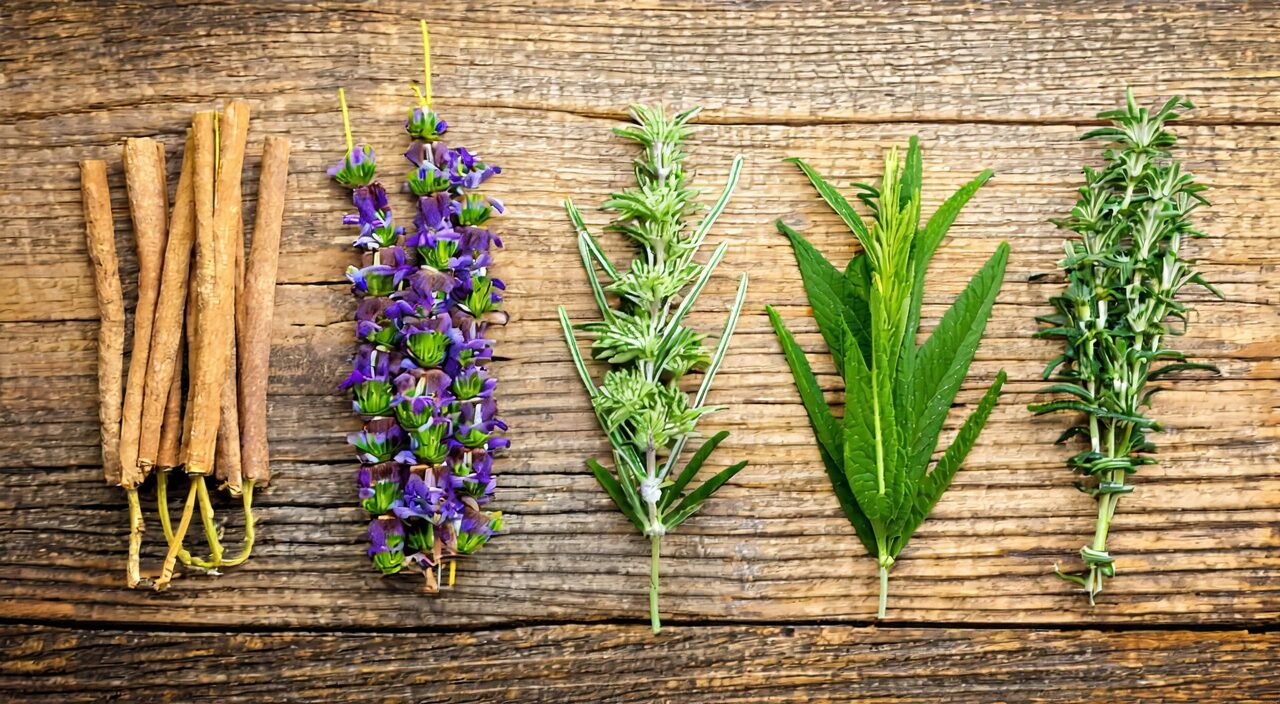
The composition of Jiao Ai Tang according to classical records includes Chuanxiong (Ligusticum chuanxiong), Ejiao (donkey-hide gelatin), Ai Ye (mugwort leaf), Gancao (licorice), Danggui (Chinese angelica root), Shaoyao (peony root), and Gan Dihuang (dried rehmannia root). Sometimes the proportions are adjusted or ginger and jujube are added based on specific situations. These herbs each have their own roles in traditional theory and work together synergistically.
Composition reference table:
| Herb | Traditional direction of action |
|---|---|
| Ejiao | Nourishes yin, supplements blood, stops bleeding; commonly used for bleeding due to blood deficiency |
| Ai Ye | Warms the meridians, stops bleeding, disperses cold, relieves pain |
| Danggui | Supplements blood, invigorates blood, regulates menstruation, relieves pain |
| Chuanxiong | Invigorates blood, moves qi, regulates blood flow |
| Shaoyao | Nourishes blood, softens the liver, astringes yin, harmonizes the nutrient aspect |
| Gan Dihuang | Nourishes yin, nourishes blood; its blood-cooling effect is milder than raw rehmannia |
| Gancao | Harmonizes all herbs, harmonizes the middle, benefits qi |
It can be seen that Jiao Ai Tang actually contains the four herbs of Si Wu Tang—Dihuang, Danggui, Shaoyao, and Chuanxiong—but on this basis adds Ejiao, Ai Ye, and Gancao, thus while supplementing and regulating blood, it markedly strengthens the effects of warming the meridians, stopping bleeding, and calming the fetus. This is also an important feature that distinguishes it from a simple blood-supplementing formula.
Traditional Effects and Direction of Action of Jiao Ai Tang

Overall, the traditional effects of Jiao Ai Tang are mainly concentrated in the two aspects of “nourishing blood to stop bleeding, regulating menstruation and calming the fetus.” Nourishing blood is to repair the foundation of Chong-Ren deficiency and damage; stopping bleeding directly addresses the manifestation of bleeding; calming the fetus is a special extension targeting the insecurity of the Chong and Ren during pregnancy.
In the practice of physicians throughout history, this formula is often used in the following directions of regulation:
- Menstrual irregularities with a tendency to bleed: such as prolonged periods, excessively heavy menstrual flow, with pale and thin menstrual blood, accompanied by a lusterless complexion, easy fatigue, etc.
- Recurrent metrorrhagia and metrostaxis: uterine bleeding outside the menstrual period, dribbling continuously, with traditional pattern differentiation indicating blood deficiency with cold, rather than obvious excess heat or blood stasis.
- Bleeding during pregnancy: vaginal bleeding during pregnancy, but after ruling out modern medical emergencies such as placental abnormalities, from a TCM perspective it may belong to abdominal pain and bleeding due to Chong-Ren insecurity.
- Persistent lochia after childbirth or miscarriage: bloody discharge continuing beyond the normal postpartum time, not large in amount but persistent, pale in color, with dull pain in the lower abdomen that likes pressure.
It should be noted that these use directions are all based on an overall assessment of the individual’s constitution and should not be self-selected based on just one or two symptoms.
Who Jiao Ai Tang Is Suitable For: Main Characteristic Tendencies

Based on traditional understanding, the following types of people may be directions where Jiao Ai Tang is more often considered, but this does not mean that fitting the description makes it suitable for use; comprehensive judgment based on the actual situation is still required.
- Obvious blood deficiency constitution: long-term pale or sallow complexion, pale lips and nails, prone to dizziness, blurred vision, palpitations, excessive dreaming, thin and weak pulse.
- Recurrent menstrual bleeding with cold tendency: menstrual blood pale in color, thin and clear in texture, cold or dull pain in the lower abdomen that reduces with warmth, cold hands and feet, aversion to cold.
- Prolonged bleeding duration: not sudden massive bleeding, but lasting for many days, dribbling and difficult to stop, or periodic heavy menstrual flow, overall in a state of “deficiency failing to secure.”
- History of recurrent miscarriage or threatened miscarriage: under TCM pattern differentiation of Chong-Ren deficiency and damage, qi and blood insufficiency, treatment traditionally proceeds from the perspective of supplementing the Chong and Ren, nourishing blood, and calming the fetus.
Whether it is truly suitable can only be reasonably determined after considering the tongue and pulse, overall constitution, and ruling out other causes of bleeding.
Situations and Contraindications Where Jiao Ai Tang Is Not Suitable
Not all bleeding problems are suitable for Jiao Ai Tang. In traditional understanding, the following situations are regarded as unsuitable or requiring extreme caution:
- Bleeding due to excess heat: heavy bleeding, bright red or deep red color, sticky consistency, accompanied by bitter taste, thirst, irritability, yellow urine, dry stools, and other heat signs. Jiao Ai Tang tends to be warmly supplementing and may aggravate bleeding by fueling heat.
- Damp-heat pouring downward: profuse yellow, thick vaginal discharge, genital itching, distension and bearing-down sensation in the lower abdomen, menstrual blood mixed with a lot of mucus and abnormal odor; at this time, it is necessary to clear and drain damp-heat, and using a cloying, warmly supplementing formula is not suitable.
- Bleeding of unknown cause: abnormal bleeding not clearly diagnosed through modern medical examination, especially postmenopausal bleeding, postcoital bleeding, or accompanied by obvious abdominal pain, abnormal discharge, etc.; one should first seek medical examination to avoid delaying diagnosis and treatment.
- Pregnancy without clear pattern of Chong-Ren deficiency: During pregnancy, any use of drugs and formulas must be under the guidance of a professional doctor; one should not self-administer based on the description of “calming the fetus.” Even if traditionally used for calming the fetus, strict pattern matching and monitoring are required.
- Severe blood stasis obstruction: bleeding with many dark clots, dark color, sharp pain in the lower abdomen that refuses pressure, dark purple tongue or with stasis spots; this type of situation requires mainly transforming stasis, and using only warmly supplementing and hemostatic methods may leave behind stagnation.
If there is excessive bleeding, prolonged duration, or accompanied by obvious dizziness, palpitations, shortness of breath, severe abdominal pain, etc., seek medical attention immediately and do not rely solely on traditional formulas for self-treatment.
Differences Between Jiao Ai Tang and Si Wu Tang, Gu Chong Tang, Wen Jing Tang, Gui Pi Tang
When many people become interested in Jiao Ai Tang, they often encounter these formula names and easily confuse them. Here is a simple sorting out from a traditional perspective to help everyone understand their respective emphases.
| Formula | Main Emphasis | Key Difference from Jiao Ai Tang |
|---|---|---|
| Si Wu Tang | Supplement blood, regulate blood, mainly nourishing blood | Jiao Ai Tang, on the basis of Si Wu Tang, adds Ejiao, Ai Ye, and Gancao; while “nourishing,” it focuses more on “stopping” and “securing.” When there is blood deficiency without obvious bleeding tendency, Si Wu Tang direction is more appropriate; when blood deficiency is accompanied by metrorrhagia, threatened miscarriage, Jiao Ai Tang is closer. |
| Gu Chong Tang | Secure the Chong, contain blood, supplement qi, fortify the spleen; mainly for “qi deficiency failing to contain” | Uses a large amount of Huangqi, Baizhu, Shanyurou, etc., with strong qi-supplementing and securing power. If there is marked shortness of breath, fatigue, bearing-down sensation, heavy pale bleeding, the thinking of Gu Chong Tang is more often considered; if blood deficiency with cold signs predominates, Jiao Ai Tang is more common. |
| Wen Jing Tang | Warm the meridians, disperse cold, invigorate blood, transform stasis; mainly for “warming and promoting” | Contains Wuzhuyu, Guizhi, Danpi, etc., with more prominent stasis-transforming action. When blood stasis signs are obvious—dark menstrual blood with clots, cold lower abdominal pain that refuses pressure, and infertility or significantly delayed menstruation—the Wen Jing Tang direction may be considered; when bleeding is continuous and blood deficiency is obvious, Jiao Ai Tang is more targeted. |
| Gui Pi Tang | Supplement qi, nourish blood, fortify the spleen, nourish the heart; used for dual deficiency of heart and spleen | Often accompanied by insomnia, palpitations, poor appetite, physical fatigue, and other heart-spleen symptoms, with action tending toward heart and spleen. Jiao Ai Tang’s action site tends more toward the liver, kidneys, and Chong-Ren, with bleeding mostly related to menstruation, leucorrhea, gestation, and childbirth. If bleeding is accompanied by distinct heart-spleen symptoms without obvious cold signs, Gui Pi Tang direction may be more suitable. |
Summary
Jiao Ai Tang is a distinctive formula in traditional Chinese medicine for nourishing blood, stopping bleeding, regulating menstruation, and calming the fetus. It is built on the basis of Si Wu Tang with the addition of Ejiao, Ai Ye, and Gancao, strengthening the function of warming the meridians and stopping bleeding.
It is more suitable for conditions such as prolonged menstruation, metrorrhagia, and threatened miscarriage arising from blood deficiency with cold and Chong-Ren insecurity, but is not suitable for bleeding due to excess heat, damp-heat, blood stasis obstruction, or of unknown cause.
Compared with formulas such as Si Wu Tang, Gu Chong Tang, Wen Jing Tang, and Gui Pi Tang, the focus of Jiao Ai Tang lies in “blood deficiency failing to secure” and “deficiency-cold bleeding,” rather than simply supplementing blood or transforming stasis. Each formula has its unique scope of application and constitutional requirements; whether to use and how to modify must be determined by professionals after fully grasping the individual situation.
This article provides reference information solely from a traditional understanding perspective and cannot replace modern medical diagnosis and professional treatment advice. If there is long-term, recurrent, or unexplained bleeding, especially accompanied by obvious pain, dizziness, fatigue, etc., it is recommended to consult a doctor promptly for a comprehensive evaluation.