
What Is Morinda Root? Medicinal Parts, Identification Tips, and Common Herbal Formulas
When learning about Chinese medicine overseas, you will commonly encounter the herb “Ba Ji Tian” (Morinda root). It comes from the dried root of Morinda officinalis, a plant in the Rubiaceae family, and has traditionally been used in strategies to tonify kidney yang and strengthen sinews and bones. Its name was recorded as early as in the Shen Nong Ben Cao Jing (Divine Farmer’s Materia Medica); the ancient people probably gave it this name because its root is tough and shaped somewhat like a halberd. For those who wish to understand the appearance, usage, and safety of Chinese medicinal materials, finding out what morinda root is, what it looks like, and which part is used is a natural starting point.
What Does Morinda Root Look Like? How to Identify It
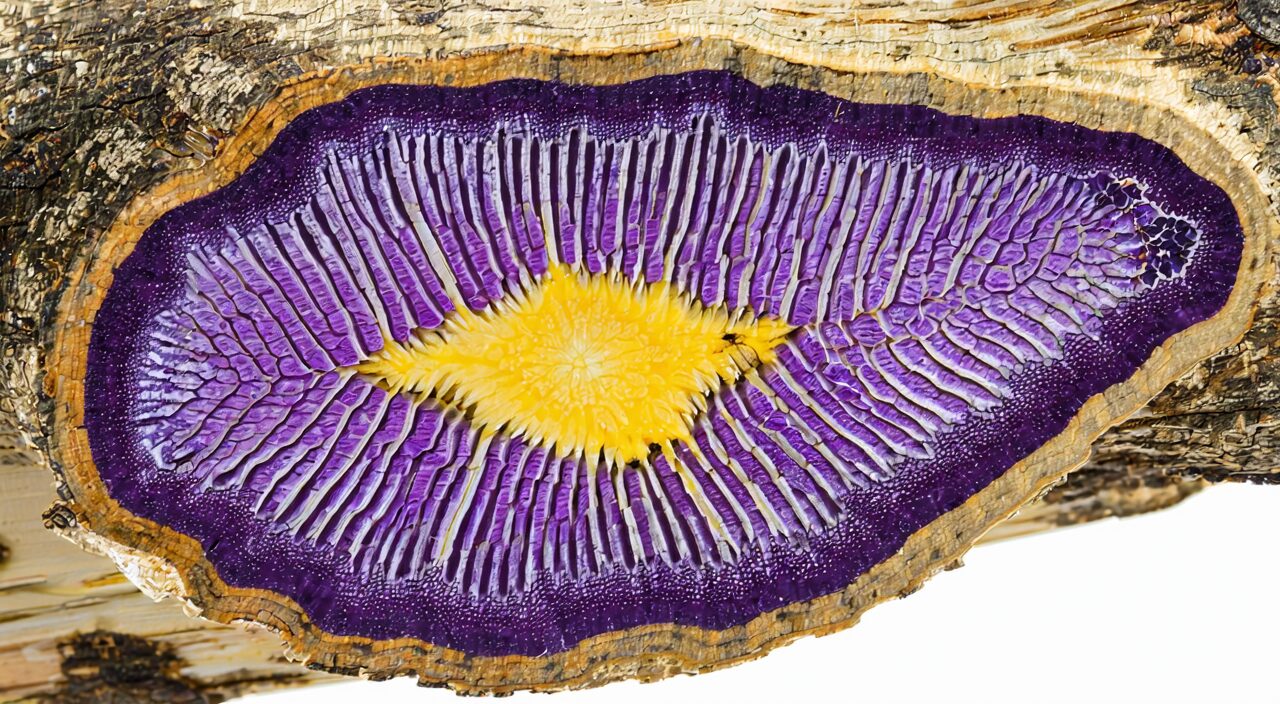
The appearance of morinda root is quite distinctive. By focusing on a few key features, it is relatively easy to distinguish it from other root herbs.
- Overall shape: The dried root is mostly flat-cylindrical, slightly curved, and varies in length, usually about 5–15 cm long with a diameter around 0.5–2 cm. The surface color is mostly grayish-yellow or dull gray, sometimes with yellowish-brown markings.
- Surface texture: The outer surface displays obvious deep longitudinal wrinkles, and some fractured areas will show transverse cracks. The cortex sometimes breaks transversely, exposing the inner wood core. This “cortex easily separates from the wood core” is one of the key identification points.
- Cross-section features: When broken, the cortex is thick and purple or pale purple in color—this is a very typical identification marker for morinda root. The wood portion is relatively small, yellowish-brown or yellowish-white, and hard in texture. Traditionally, there is a saying that “the wood core can be pulled out.”
- Texture and odor: The texture is firm and not easily broken. It has a slight odor and a sweet taste with a slightly astringent aftertaste.
When purchasing or observing samples, keep in mind that the purple hue of the cortex may vary slightly depending on the place of origin and processing method, but it will never turn completely white or black. If you see a root piece with a pale cortex, an oversized wood core, or a surface without longitudinal wrinkles, it is generally advisable to confirm its identity using additional characteristics.
What Is the Medicinal Part of Morinda Root?
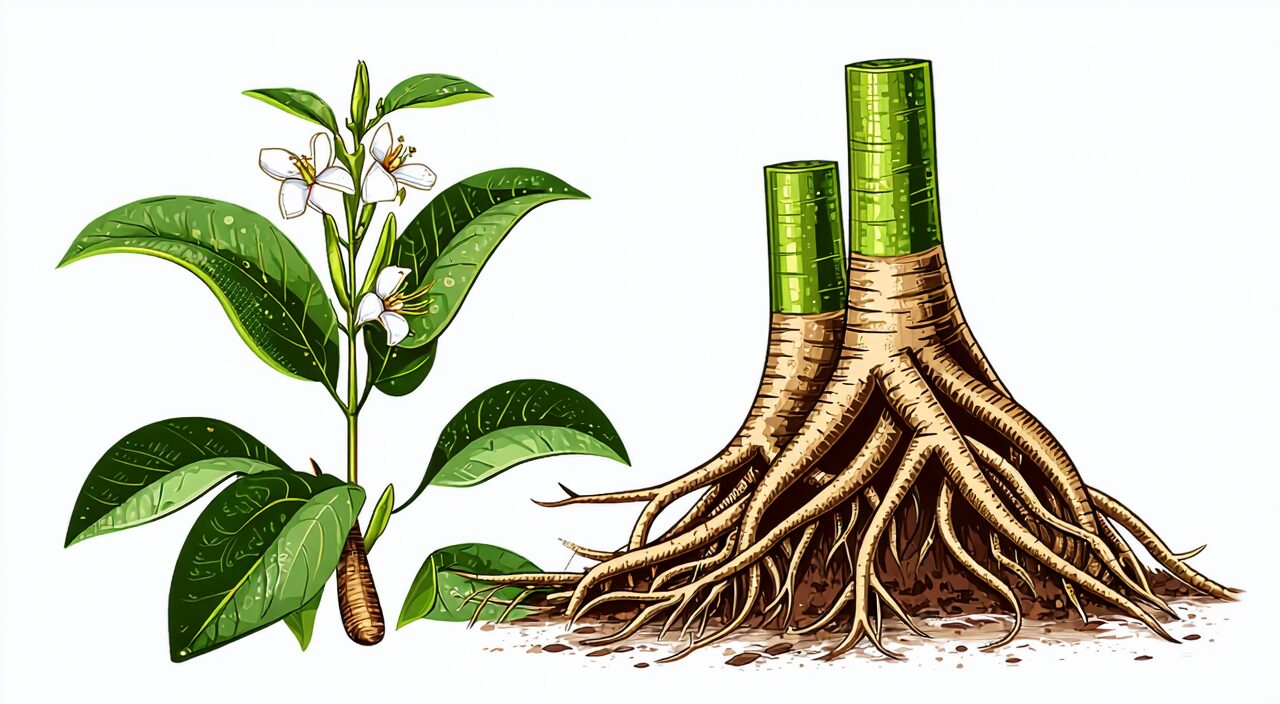
The medicinal part of Ba Ji Tian is its root. Roots from wild or cultivated plants are usually collected, cleaned of rootlets and silt, and then processed into the appropriate medicinal material or decoction pieces depending on the method.
- Harvesting and processing: Roots are mostly dug up in spring and autumn. The small fibrous roots are removed, and they are washed clean. After being dried in the sun to about 60–70% dryness, they are gently hammered flat and then dried completely. Sometimes they are sliced and dried directly.
- Common commercial forms: On the market, you may see Ba Ji Rou (morinda root meat), Yan Ba Ji Tian (salt-prepared morinda root), and Zhi Ba Ji Tian (processed morinda root). Ba Ji Rou is usually the cleaned root flesh after removing the wood core; salt-prepared morinda root is processed with a salt-water solution, which is traditionally believed to guide the herb to the kidney channel. Related products are also quite common.
If you see terms like “Ba Ji Rou” or “Yan Ba Ji Tian” on an herb package, these all refer to different processed products derived from the root. In traditional applications, different processed products are selected based on the therapeutic direction.
How Does Chinese Medicine Understand Morinda Root?
In Chinese medical theory, the nature, flavor, channel tropism, and functional orientation of morinda root are recorded with relative clarity.
- Nature, flavor, and channel tropism: It is generally recorded as slightly warm in nature and sweet and acrid in flavor, entering the kidney and liver channels primarily.
- Traditional functional directions: It is commonly understood from three angles: tonifying kidney yang, strengthening sinews and bones, and dispelling wind-dampness. Accordingly, in classical texts, morinda root was often included as a component of formulas for patterns such as kidney yang insufficiency manifesting as soreness and weakness of the lower back and knees, aversion to cold, impotence, or cold uterus infertility. For wind-damp painful obstruction and sinew-bone weakness that affect limb movement, it is also frequently added to formulas, especially for cold-damp type bi impediment.
It is worth noting that this understanding of “tonifying kidney yang” was gradually formed on the basis of the traditional zang-fu pattern differentiation system and is not equivalent to the modern medical concept of kidney function. Morinda root plays a role of warming and nourishing without being overly drying in many formulas, and therefore it has traditionally been regarded as a relatively gentle herb suitable for long-term regulation. However, accurate pattern diagnosis and appropriate herb combining are still required.
What Components and Effects Does Modern Research Focus On?
Modern research on morinda root mainly focuses on its chemical constituents and laboratory observations, while clinical evidence from human trials is still relatively limited.
- Main components of interest: Morinda root contains anthraquinone compounds, iridoid glycosides (such as monotropein), polysaccharides, and oligosaccharides. These components have shown certain biological activities in laboratory studies.
- Experimental findings suggest: Some animal and cell experiments indicate that morinda root extracts may have effects in directions such as anti-fatigue, improving reproductive function, modulating immunity, and protecting skeletal muscle. For example, studies have observed that morinda root oligosaccharides can influence the behavior of animal models with kidney yang deficiency to a certain degree, and monotropein has demonstrated anti-inflammatory potential and an ability to improve bone metabolism.
- Differences from daily human use: It should be emphasized that these are mainly results obtained with extracts under specific experimental conditions. They cannot be simply equated with the idea that drinking morinda root wine daily or taking morinda root–containing formulas will definitely produce the same physiological changes. When viewing modern research as a reference for understanding potential directions, it is advisable to maintain an objective attitude and avoid taking experimental data as direct clinical treatment conclusions.
How Does Morinda Root Differ from Similar Herbs?
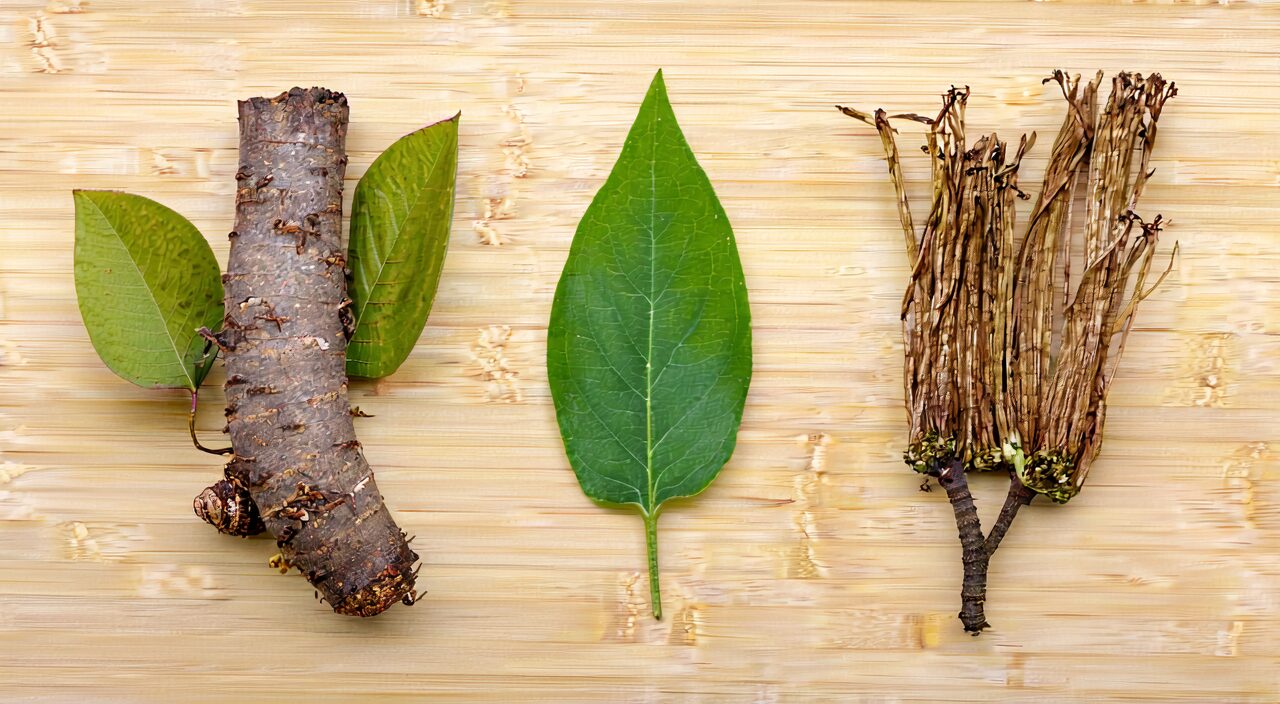
In the realm of tonifying kidney yang and strengthening sinews and bones, epimedium (Yin Yang Huo) and cistanche (Rou Cong Rong) are also frequently mentioned. The three have different origins and emphases, which can serve as reference for differentiation.
| Dimension for comparison | Morinda Root (Ba Ji Tian) | Epimedium (Yin Yang Huo) | Cistanche (Rou Cong Rong) |
|---|---|---|---|
| Source | Root of Morinda officinalis (Rubiaceae) | Aerial parts of Epimedium species (Berberidaceae) | Succulent stem of Cistanche species (Orobanchaceae) |
| Medicinal part | Root | Stems and leaves (aerial parts) | Succulent stem |
| Key identification features | Flat-cylindrical root; cortex purple; wood core can be pulled out | Slender stems; biternate compound leaves; dried material green or yellow-green | Flat-cylindrical succulent stem; surface densely covered with scales; cross-section brown |
| Traditional application emphasis | Tonifies kidney yang, strengthens sinews and bones, dispels wind-dampness; with a preference for warming and nourishing joints | Tonifies kidney yang, strengthens sinews and bones, dispels wind-dampness; also specifically assists in enhancing yang and addressing impotence | Tonifies kidney yang, boosts essence and blood, moistens intestines and promotes bowel movements |
Although all three can appear in therapeutic strategies for kidney yang deficiency, epimedium comes from a leaf-based herb and its action in dispelling wind-dampness and assisting yang tends to be more rapid; cistanche is moist and unctuous in texture and can additionally moisten dryness and relax the bowels; morinda root excels at warming and tonifying kidney yang while simultaneously addressing sinew-bone wind-damp issues. Understanding these differences can help position this herb more clearly in further study.
Which Formulas Use Morinda Root?
Morinda root often appears in formulas that warm and tonify kidney yang. Below are a few relatively well-known traditional formulas, with brief explanations of the combining role morinda root plays in them.
- Er Xian Tang (Two Immortals Decoction): Composed of Curculigo rhizome (Xian Mao), Epimedium (Xian Ling Pi), Morinda root (Ba Ji Tian), Chinese Angelica root (Dang Gui), Anemarrhena rhizome (Zhi Mu), and Phellodendron bark (Huang Bai), this formula is commonly used to regulate dual deficiency of kidney yin and yang. Morinda root assists in warming and nourishing kidney yang without generating strong heat, and by combining with cooling and moistening herbs, it is intended to warm without causing dryness.
- Zan Yu Dan (Progeny-Promoting Elixir): With warming the kidney and strengthening yang as its main approach, this formula combines morinda root with Cistanche, Curculigo, Cornus fruit, and others. Traditionally used for patterns of severe kidney yang deficiency accompanied by impotence and cold semen, morinda root plays the role of building up the foundational kidney yang in the formula.
- Ba Ji Wan (Morinda Root Pill): The name points directly to morinda root. It is often combined with Cistanche, Dodder seed, and Deer Antler (Lu Rong), emphasizing tonifying the kidney and replenishing essence. It is used for deficiency-type lower back and knee weakness and frequent urination. Here, morinda root creates a synergistic effect by supporting yang and strengthening sinews and bones.
- Ba Ji Tian Jiu (Morinda Root Wine): This is a traditional medicated wine. Morinda root is commonly steeped in alcohol together with Achyranthes root (Niu Xi), Goji berry (Gou Qi), prepared Rehmannia root (Shu Di), and other herbs. The dispersing power of alcohol is used to enhance morinda root’s direction of warming and nourishing the sinews and bones, dispelling wind, and scattering cold. It is often used for scenarios such as cold pain in the lower back and legs and impaired mobility.
The formulas and medicated wines above are merely examples of traditional usage directions. Whether they are appropriate for a specific person must be determined based on individual constitution, current presentation, local regulations, and product descriptions, under the guidance of a professional. Self-application is not advisable.
What Precautions Should Be Taken When Using Morinda Root?
Although morinda root is relatively gentle in traditional applications, there are still some aspects that require attention when using it.
- Caution for those with heat-predominant constitution: Morinda root is warm in nature. For individuals with yin deficiency leading to fire effulgence, who often have dry mouth, heat sensation in the palms and soles, night sweats, and a red tongue with little coating, traditional usage generally does not recommend using it alone or in large amounts, as it may exacerbate internal heat.
- Not suitable for those with internal damp-heat: If the tongue coating is yellow and greasy, the limbs feel heavy and sluggish, and the urine is yellow and turbid, or during an acute damp-heat illness stage, the traditional therapeutic thinking tends toward clearing heat and draining dampness, and morinda root’s warming and nourishing characteristics do not match this direction.
- When using other medications: Morinda root may interact with certain drugs. People who are currently taking antihypertensives, antidiabetics, anticoagulants, or hormone medications especially need to consult a doctor or pharmacist before adding any product related to this herb.
- Special populations: Pregnant women, those planning pregnancy, breastfeeding women, and children are generally advised to avoid self-administering morinda root due to a lack of adequate safety research data for these groups.
- Stop use promptly if discomfort occurs: If you experience rash, nausea, chest tightness, dizziness, or other discomfort after using a product containing morinda root, discontinue use, observe, and seek medical attention if necessary.
For chronic, recurring cold pain in the lower back and knees, decreased sexual function, or various types of joint discomfort—especially when accompanied by significant anxiety, palpitations, weight loss, or changes in the nature of pain—rather than self-treating with a single herb or medicated wine, it is important to promptly seek help from a professional healthcare provider.
Summary
Morinda root is a traditional herb for tonifying kidney yang. The key points for identifying its appearance are its flat-cylindrical root, deep longitudinal wrinkles, purple cortex, and wood core that can be easily pulled out. The medicinal part is the root, with common processed products including Ba Ji Rou (root meat) and salt-prepared morinda root. In Chinese medicine, it is primarily understood from the perspectives of warming kidney yang, strengthening sinews and bones, and dispelling wind-dampness. It plays a warming and nourishing foundational role in formulas such as Er Xian Tang and Zan Yu Dan. Whether or not you are interested in morinda root, it is advisable to assess your own condition and refer to reliable product instructions before use, and to consult a qualified professional first if you have health concerns.