
What Is Cao Guo? Medicinal Parts, Identification, and Common Formulas
Sometimes in braised meat or hot pot broth you might see an olive-shaped, dark brown fruit that releases a pungent, spicy aroma when bitten into—many people don’t know its name. That is Cao Guo. Cao Guo comes from the dried ripe fruit of the plant Cao Guo (in the ginger family), and in traditional Chinese medicine it is used as an herb that warms the middle and dries dampness. This article systematically introduces what Cao Guo looks like, how to select the part used medicinally, its differences from Cao Dou Kou and Sha Ren, and commonly used historical formulas.
What Does Cao Guo Look Like? How to Identify It?
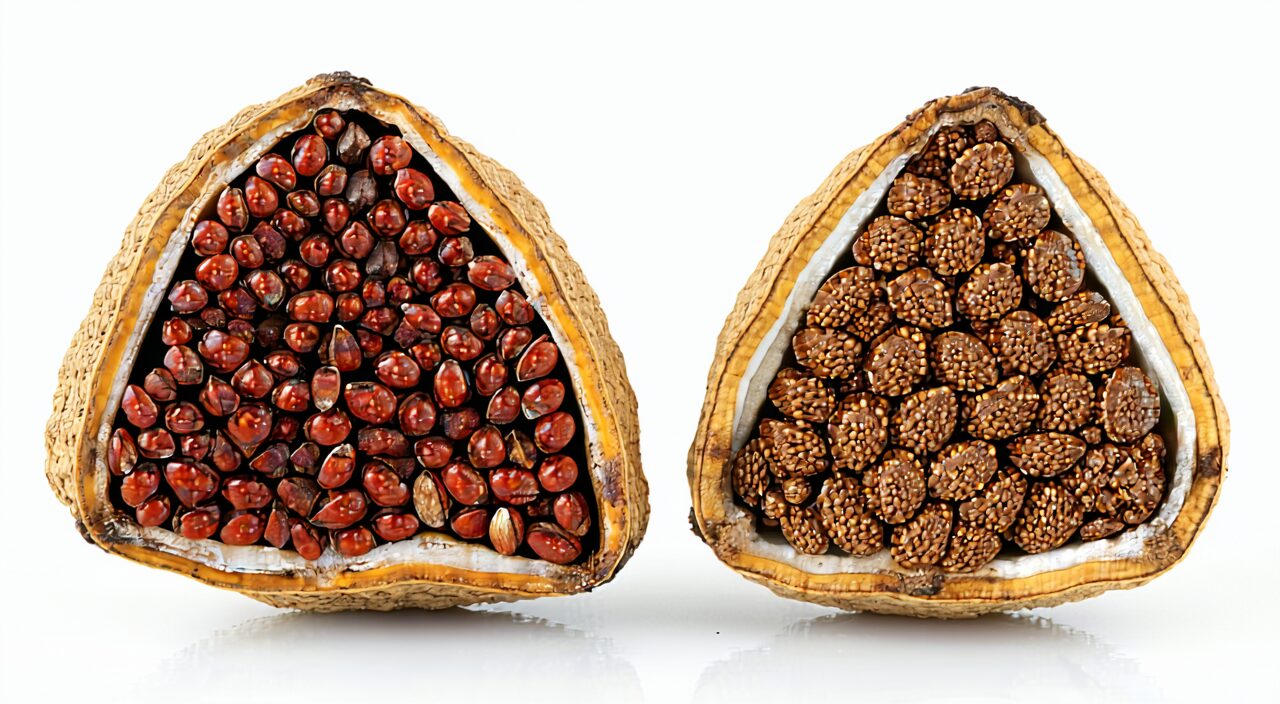
The fruit of Cao Guo is oblong, usually about two to four centimeters long and one to two centimeters in diameter, with a reddish-brown to grayish-brown outer surface marked by irregular longitudinal grooves and fine wrinkles if you look closely. The peel is tough and not easily broken open. When cut open, the interior reveals three chambers, each densely packed with small seeds, forming a triangular seed cluster. The seeds are angular and granular, with a reddish-brown or grayish-brown surface, and have a very strong aroma—a complex scent reminiscent of camphor and pungent spice. The taste is pungent and slightly bitter.
When selecting or identifying Cao Guo, you can look for several features: the fruit should be plump and intact, with distinct longitudinal grooves, a deep but not blackish color, and a pungent, spicy aroma that hits the nose when broken open; the seed cluster should be compact and not loose. If the outer surface is shriveled and grayish with a weak scent, it has likely been stored too long. The aroma of Cao Guo is stronger than that of the related Cao Dou Kou, with a more pronounced pungency, which is also a key sensory point often used to tell them apart.
What Is the Medicinal Part of Cao Guo?
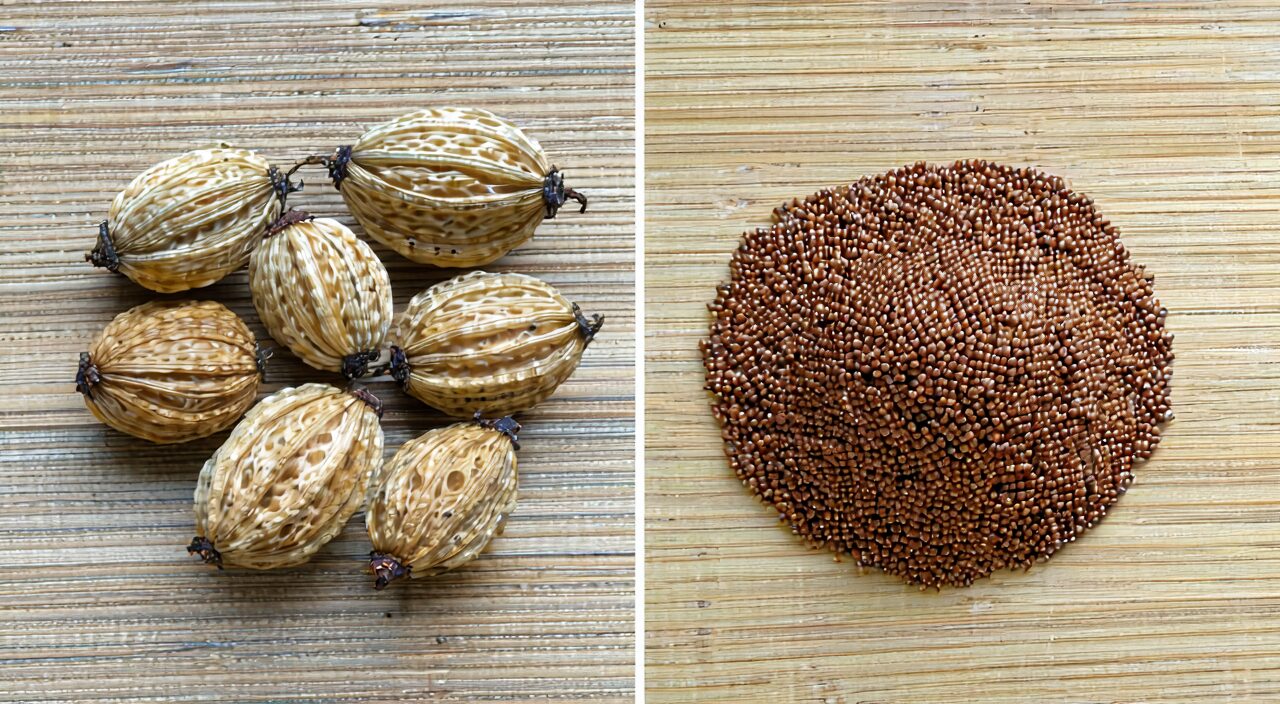
The medicinal part of Cao Guo is its dried ripe fruit. Harvesting is generally done in autumn when the fruit has fully matured and turned from green to reddish-brown. After harvest, impurities are removed, and the fruit is dried in the sun or at low temperature. Because the outer shell of Cao Guo is relatively hard, in traditional usage it is often “shelled to obtain the kernel,” meaning the shell is removed and only the inner seed cluster is used, or it is crushed when used so that the active components can be released more easily.
Although the fruit shell of Cao Guo also has some pungent aroma, the seed cluster is generally regarded as having the stronger effect. In some formulas, “Cao Guo Ren” (Cao Guo Kernel) is specified, which usually refers to the seed cluster after shelling. Therefore, understanding the medicinal part of Cao Guo requires knowing not only that it is the fruit that is used, but also that it is the ripe fruit, and that in practice the shell is often removed to use the kernels.
How Does TCM Understand Cao Guo?
From the perspective of traditional Chinese medicine, Cao Guo is pungent in flavor and warm in nature, entering the spleen and stomach meridians. It has the directional actions of drying dampness and warming the middle, resolving phlegm and stopping malaria, among others. Such descriptions do not mean that Cao Guo can directly treat a specific disease, but rather that it may be considered as part of a regulating strategy for certain manifestations caused by cold-dampness obstructing the middle burner, such as cold pain and distention in the epigastric and abdominal region, poor appetite, nausea and vomiting, and watery diarrhea.
Especially in southern regions or humid environments, dampness turbidity is traditionally thought to easily obstruct the spleen and stomach. The pungent, warm, and drying nature of Cao Guo helps to transform and dispel dampness turbidity and invigorate the spleen and stomach qi dynamic. In addition, for malaria-like presentations, some ancient formulas used Cao Guo as an adjunct to stop malaria, combined with herbs like Chang Shan (Dichroa root) and Bing Lang (areca nut). It should be noted that these applications are completely different from modern approaches to infectious diseases and can only be understood as references in historical texts. When symptoms suggestive of infectious diseases such as malaria actually occur, one must immediately seek standardized medical care and should not rely solely on traditional formulas.
What Preliminary Explorations Have Been Made in Modern Research on Cao Guo?
In modern laboratory research, the volatile oil of Cao Guo has received considerable attention, mainly containing 1,8-cineole, geraniol, citral, and other compounds. Some in vitro experiments have observed that Cao Guo volatile oil shows certain inhibitory trends against some bacteria and fungi, and animal studies have found that Cao Guo extracts exhibit anti-inflammatory effects and regulate gastrointestinal motility. Additionally, some studies have indicated that certain components in Cao Guo may affect tumor cell proliferation, but these are still in very early exploratory stages and are far from yielding clear application recommendations for humans.
These research directions only provide some clues to the material basis for the traditional use of Cao Guo, and cannot directly lead to the conclusion that “Cao Guo has a specific efficacy.” The modern understanding of Cao Guo still needs to be approached within a cautious framework that takes traditional usage experience as a reference, combined with individual circumstances and professional judgment.
What Are the Differences Between Cao Guo, Cao Dou Kou, and Sha Ren?
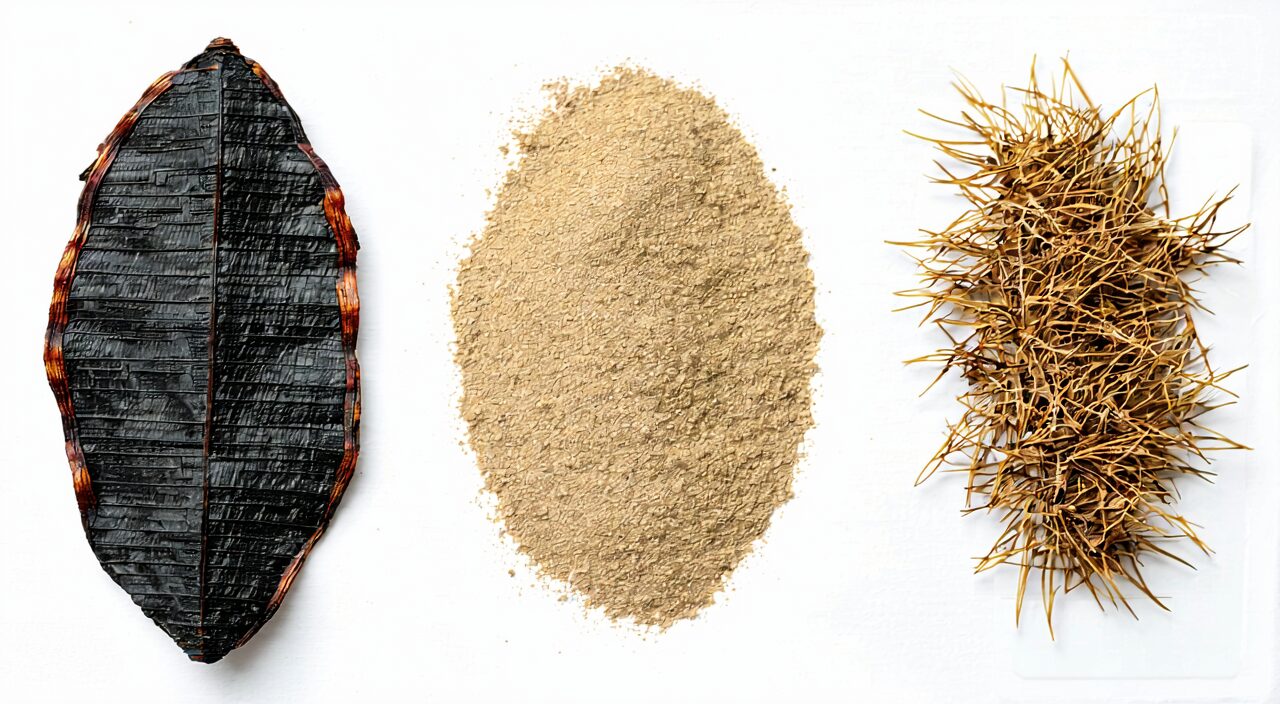
Cao Guo, Cao Dou Kou, and Sha Ren all belong to the ginger family. All three are traditional aromatic dampness-transforming Chinese medicinals, and because they have a certain similarity in appearance, they are easily confused. Overall, they can be distinguished mainly by fruit shape and aroma.
The Cao Guo fruit is relatively large, oblong, with distinct longitudinal grooves on the surface, reddish-brown to grayish-brown in color, and the seed cluster is divided into three chambers. Its pungent aroma is extremely strong, with a camphor-like sharpness. Cao Dou Kou fruit is nearly spherical or globular, about 1.5 to 2 cm in diameter, with a grayish-brown to yellowish-brown surface and indistinct longitudinal grooves; it also has three seed chambers, but the overall aroma is fragrant with a slightly milder pungency and a hint of sweetness. Sha Ren is ovate or elliptical, often with spiny protuberances or soft spines on the surface, and turns purplish-red to brown when ripe. Its aroma is clearer and more aromatic, with a milder drying pungency compared to Cao Guo.
For a simple memory aid: Cao Guo is the largest, has the most distinct longitudinal grooves, and the sharpest scent; Cao Dou Kou is roundish, with pungency combined with sweetness; Sha Ren has spines and a clearer aroma. Keeping these points in mind when purchasing or using them can help reduce mistakes.
Which Formulas Use Cao Guo?
In medical formularies throughout history, it is not uncommon to find formulas that include Cao Guo. The following are some representative ones, all reflecting the traditional approach of using Cao Guo to dry dampness and stop malaria, and to warm the middle and transform turbidity. They are presented only as a window to understand these formulas, not as direct modern treatment protocols for diseases.
Da Yuan Yin
Da Yuan Yin is a well-known formula from Ming and Qing dynasty texts on epidemic diseases, composed of Bing Lang (areca nut), Hou Po (magnolia bark), Cao Guo, Zhi Mu (anemarrhena rhizome), Shao Yao (peony root), Huang Qin (baicalensis root), and Gan Cao (licorice), among others. The original rationale was to use Cao Guo’s pungent aroma to transform turbidity, combined with other herbs to open up and reach the membrane source and eliminate filth and turbidity. It was traditionally used for conditions following exposure to foul turbidity, with manifestations such as aversion to cold with high fever and a thick, white tongue coating like piled powder.
Cao Guo Zhi Mu Tang
This formula takes Cao Guo and Zhi Mu as the main herbs, often combined with Chang Shan (dichroa root), Wu Mei (mume fruit), etc. It was traditionally used for malaria with alternating chills and fever that occurred at regular intervals. In the formula, Cao Guo’s pungent drying nature stops malaria, combined with Zhi Mu to clear heat, thus aiming to harmonize cold and heat. This approach is one of the ancient methods for stopping malaria and is far from having modern antimalarial significance.
Jie Nüe Qi Bao Yin
This formula is composed of Chang Shan, Cao Guo, Hou Po, Bing Lang, Qing Pi (green tangerine peel), Chen Pi (tangerine peel), and Gan Cao, and was one of the commonly used ancient prescriptions for treating malaria. In it, Cao Guo plays the role of warming and drying to stop malaria, regulating qi, and transforming dampness. Again, it must be emphasized that this formula only reflects some historical experiences in dealing with malaria. Since malaria is a serious infectious disease, standardized antimalarial protocols now exist, and this must not be used as a substitute.
Qing Pi Yin
Qing Pi Yin consists of Qing Pi, Hou Po, Bai Zhu (white atractylodes), Cao Guo, Chai Hu (bupleurum), Fu Ling (poria), and Ban Xia (pinellia). Its approach tends toward harmonizing the spleen and stomach, transforming dampness, and stopping malaria. It was traditionally used for alternating chills and fever, chest and epigastric stuffiness, and other manifestations attributed to spleen deficiency with dampness exuberance complicated by malarial pathogens. In the formula, Cao Guo mainly assists in transforming dampness, dispersing cold, and regulating the middle burner. This formula should only be considered under the guidance of thorough pattern differentiation.
For all formulas that mention Cao Guo, their specific composition, dosage, and applicable presentations should be evaluated in light of individual constitution and professional judgment; self-prescribing and self-medication is not advisable.
What Precautions Should Be Taken When Using Cao Guo?
Cao Guo is pungent, warm, and drying, and is not suitable for everyone. If you have a constitution of yin deficiency with blood dryness, for example, those who often have dry mouth and a red tongue, warm palms, or obvious night sweats, using Cao Guo may actually worsen the consumption of body fluids and make the discomfort more pronounced.
Pregnant women need to be especially cautious with pungent and drying herbs like Cao Guo, as it is traditionally believed to possibly affect fetal qi. It should be avoided without the guidance of a physician. For people who normally experience a burning sensation in the stomach, obvious acid reflux, or have a tendency toward gastric ulcers, taking large amounts of Cao Guo may also cause stomach discomfort or irritation.
Another point requiring special reminder concerns situations involving malaria and other infectious diseases. Although Cao Guo was used in ancient formulas to stop malaria, this absolutely does not mean it can replace standardized antimalarial or anti-infective treatment. If symptoms such as recurrent chills and high fever, severe headache, or persistent vomiting occur, one must seek medical attention as soon as possible and follow modern medical protocols strictly without delay. Any traditional medicinal substance can only be considered as an auxiliary understanding on the basis of a clear diagnosis and standardized treatment, and should not become the first-line approach.
Summary
Cao Guo is a ginger-family fruit used in both cooking and Chinese medicine. Its characteristic oblong shape, deep longitudinal grooves, and strong pungent aroma clearly distinguish it from Cao Dou Kou and Sha Ren. Traditional Chinese medicine mainly understands Cao Guo from the perspectives of drying dampness and warming the middle, resolving phlegm and stopping malaria, and it appears in formulas such as Da Yuan Yin and Jie Nüe Qi Bao Yin. For readers who want to learn about Cao Guo, it is more practical to master its visual identification points and traditional usage background. When considering its use, personal circumstances should still be taken into account, and blind internal consumption should be avoided. In the event of infectious diseases, standardized medical help should be sought as a priority.