
What Is Poria? Medicinal Parts, Identification Methods, and Common Formulas
Many readers interested in Chinese medicine often confuse Poria with Tu Fu Ling when first encountering it, or are unclear about which part of the plant it comes from and how to use it. In fact, Poria is very common in Chinese herbal formulas. Understanding its basic appearance, traditional uses, and common combinations is very helpful for everyday reference and knowledge.
What Does Poria Look Like? How to Identify It?
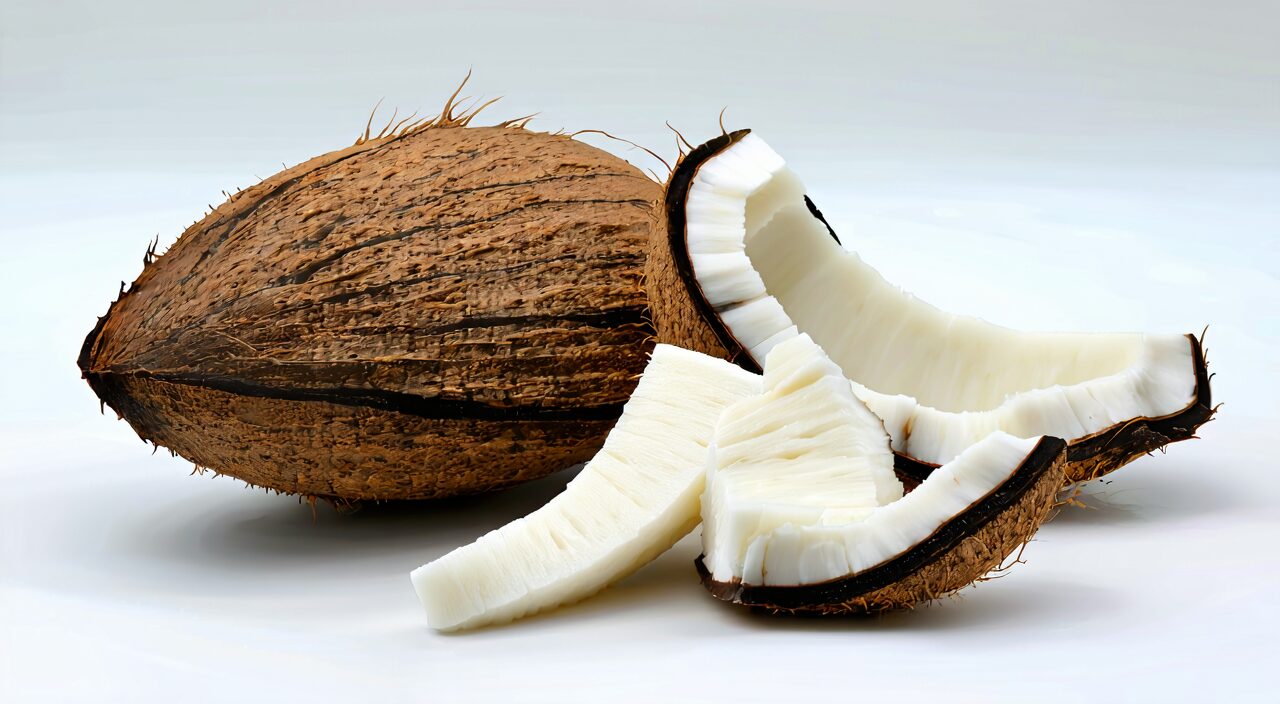
In the herbal market, Poria is most commonly found as dried sclerotium blocks, as well as sliced pieces or chunks of White Poria.
Characteristics of whole Poria sclerotium:
- Shape: Subspherical, oval, or irregular lump-like
- Outer skin: Thin and rough, brown to dark brown, with distinct wrinkled texture
- Interior: Firm texture when cut, white or pale pinkish, sometimes with lighter layers near the edge
Distinguishing features of commercially available decoction pieces:
- White Poria slices: Uneven thick slices or small pieces, surface white or slightly pinkish-white, powdery texture, feels fine and slightly sticky when rubbed between fingers.
- Poria peel: The stripped outer skin layer, appearing as irregular thin flakes, outer surface dark brown, inner surface white or light brown.
- Fu Shen (Poria with pine root): Contains pine root in the center; the cut surface shows a distinct woody core.
These morphological distinctions offer some reference for selection.
What Is the Medicinal Part of Poria?
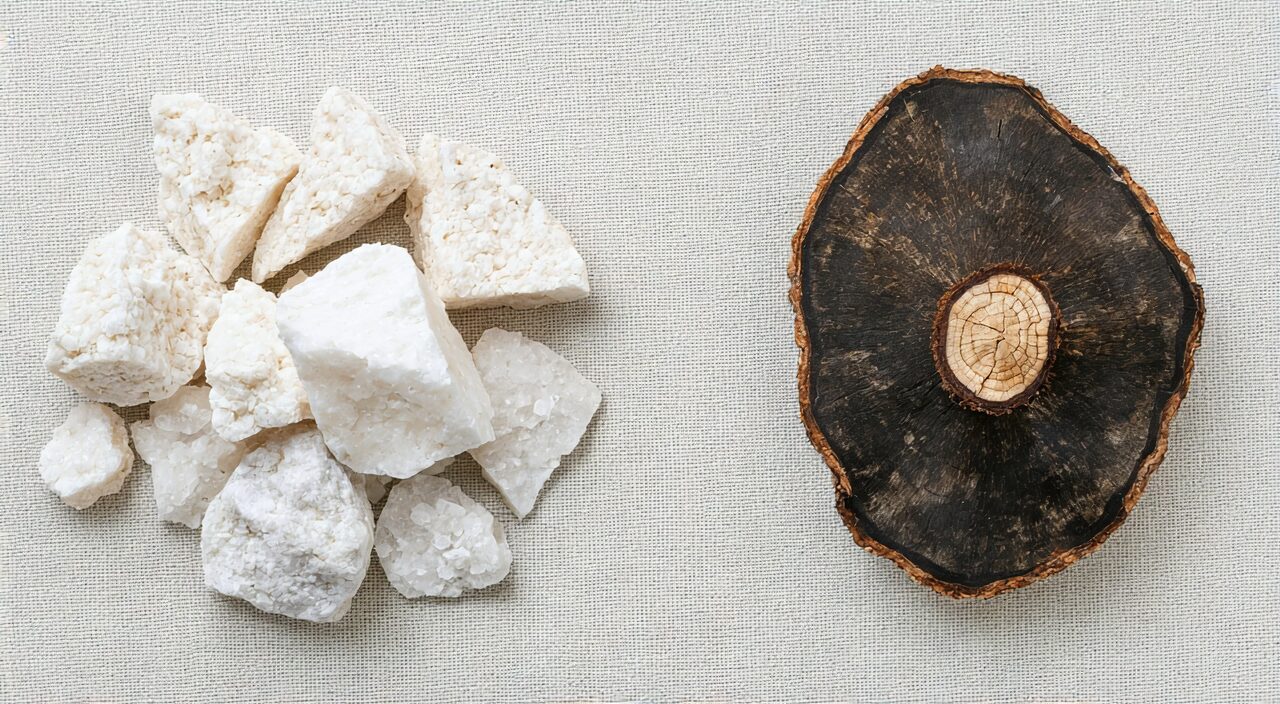
The medicinal part of Poria is the dried sclerotium of the fungus, not the root, stem, or fruit of a plant.
It grows parasitically on pine roots and is typically harvested from July to September. After removing soil, it is piled up to “sweat,” then spread out to air-dry until the surface is dry. This process is repeated until most internal moisture is lost, and then it is dried in the shade.
Afterward, it can be cut into different specifications as needed:
- White Poria: Made from the inner white part, most commonly used.
- Red Poria: The light brown part near the skin.
- Poria peel: The outer skin portion.
- Fu Shen: The sclerotium with pine root embedded in the center.
These different processed parts are traditionally considered to have different emphases, but in daily use, White Poria is most commonly used.
How Does Chinese Medicine Understand Poria?
In traditional Chinese medicine theory, Poria is sweet and bland in flavor, neutral in nature, and enters the Heart, Lung, Spleen, and Kidney meridians.
Its main function is to promote urination and drain dampness, while also strengthening the spleen and calming the mind. Many conditions related to internal water-dampness retention, such as heaviness of the body, difficult urination, edema, poor appetite, and loose stools, traditionally often involve the use of Poria.
In addition, for palpitations, insomnia, and forgetfulness caused by heart and spleen deficiency, Poria is often used as one of the choices for calming the mind. This approach is mainly based on theories such as “the spleen governs transportation and transformation of water-dampness” and “the heart houses the mind,” restoring organ function coordination by draining dampness and strengthening the spleen.
It is important to note that each person’s constitution and pattern differ, and suitability should be assessed based on individual circumstances.
What Components and Effects of Poria Are Studied in Modern Research?
Modern research mainly explores the following components and directions:
- Poria polysaccharides: Laboratory studies suggest possible immunomodulatory effects, and intervention effects have been observed in certain inflammatory models.
- Triterpenoids: Some studies focus on potential diuretic and sedative effects.
It must be particularly noted that these findings mostly come from cell or animal studies, and direct evidence in humans is still limited. Therefore, experimental data should not be directly equated to clinical effects; it is more appropriate to consider them as traditional knowledge for understanding.
How Does Poria Differ from Similar Herbs?
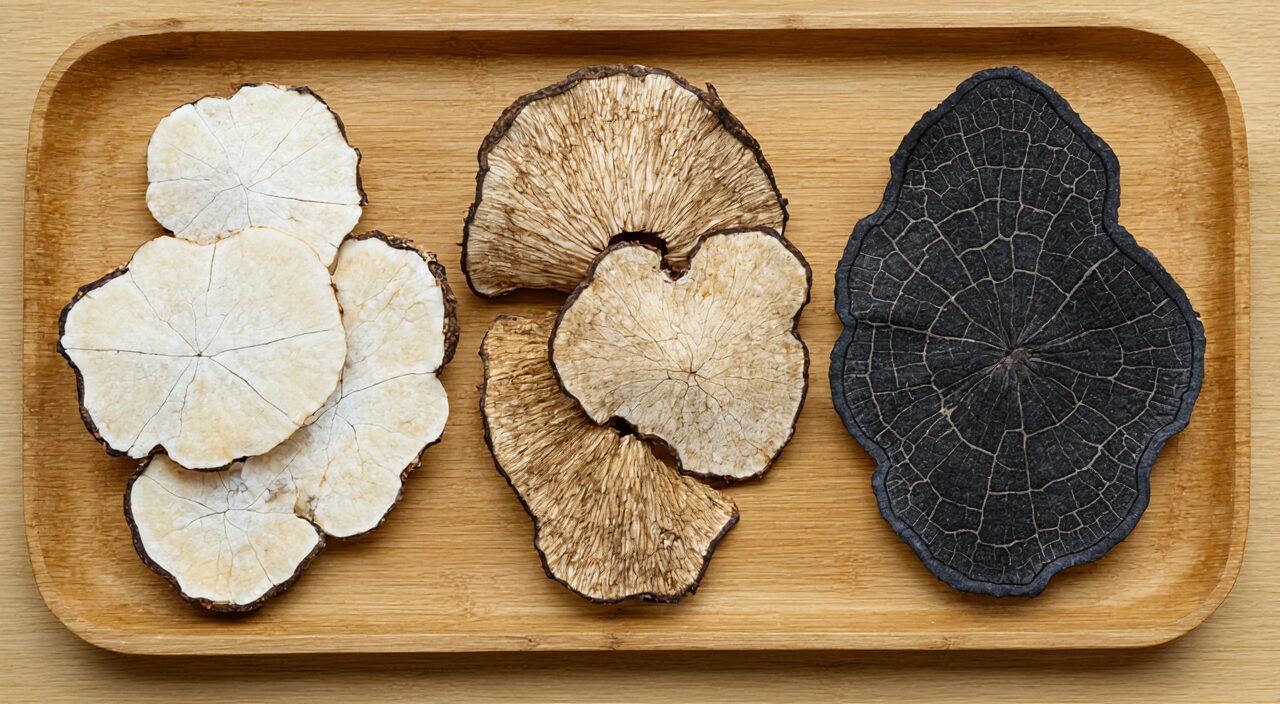
The herbs most commonly confused with Poria are Tu Fu Ling and Zhu Ling. The three differ in origin, appearance, and traditional uses.
| Comparison Dimension | Poria | Tu Fu Ling | Zhu Ling |
|---|---|---|---|
| Origin | Dried sclerotium of the fungus Poria cocos (Polyporaceae) | Dried rhizome of Smilax glabra (Liliaceae) | Dried sclerotium of the fungus Polyporus umbellatus (Polyporaceae) |
| Appearance | Subspherical or irregular lumps, outer skin brown to dark brown, interior white, firm texture | Irregular blocks or curved flattened cylindrical, surface yellowish-brown to grayish-brown, hard texture, cut surface whitish to pale reddish-brown, powdery | Bar-shaped, nearly round, or flat blocks, surface black or grayish-black, wrinkled or with tumor-like protrusions, cut surface whitish or yellowish-white, slightly granular |
| Traditional Emphasis | Promotes urination and drains dampness, strengthens the spleen, calms the mind | Detoxifies, eliminates dampness, eases joint movement | Stronger diuretic and dampness-draining action, without spleen-strengthening effect |
| Applicable Reference | Internal water-dampness retention with spleen deficiency | Damp-heat sores, joint pain, etc. | Water-dampness stagnation without prominent spleen deficiency signs |
Tu Fu Ling and Poria differ in origin, medicinal part, and therapeutic focus, and cannot be substituted for each other. Poria drains dampness while also strengthening the spleen, with a relatively gentle action; Zhu Ling is more oriented toward promoting urination and has weaker spleen-strengthening power than Poria.
Understanding these differences helps avoid misuse.
Which Formulas Use Poria?
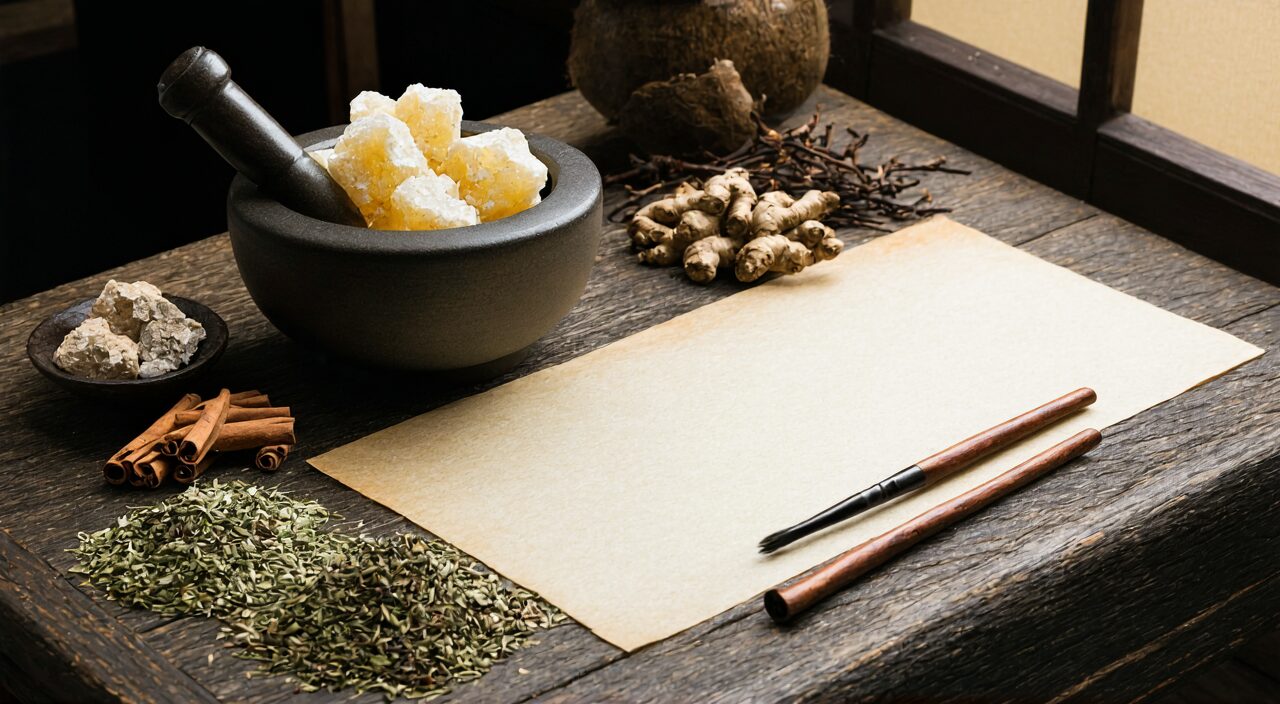
Poria appears as an adjuvant or main component in numerous classic formulas. The following lists several common formulas to help understand the role of Poria in different compositions.
- Wu Ling San (Five-Ingredient Formula with Poria): Composed of Zhu Ling, Ze Xie (Alisma), Bai Zhu (Atractylodes), Fu Ling (Poria), and Gui Zhi (Cinnamon Twig). Poria, together with Zhu Ling and Ze Xie, enhances the power to promote urination and drain dampness; Bai Zhu strengthens the spleen and transforms dampness; Gui Zhi warms yang and promotes qi transformation. Traditionally often used for difficult urination and edema caused by internal water-dampness and impaired bladder qi transformation, where Poria plays a synergistic role in strengthening the spleen and draining dampness.
- Si Jun Zi Tang (Four Gentlemen Decoction): Ren Shen (Ginseng), Bai Zhu, Fu Ling, and Gan Cao (Licorice). Poria assists Bai Zhu in strengthening the spleen and draining dampness, preventing the tonifying effects of Ren Shen and Bai Zhu from becoming stagnant. Often used for sallow complexion, low voice, poor appetite, and loose stools due to spleen-stomach qi deficiency and weak transportation, reflecting Poria’s supporting role in qi-tonifying formulas.
- Ling Gui Zhu Gan Tang (Poria, Cinnamon Twig, Atractylodes, and Licorice Decoction): Composed of Fu Ling as the chief herb, Gui Zhi, Bai Zhu, and Gan Cao. Fu Ling strengthens the spleen and drains dampness, combined with Gui Zhi to warm yang and transform fluid retention, Bai Zhu to dry dampness and strengthen the spleen, and Gan Cao to harmonize. Traditionally used for chest and rib fullness, dizziness, and palpitations due to middle-yang insufficiency with fluid retention, where Poria mainly acts to transform dampness and calm the heart.
- Xiao Yao San (Free and Easy Wanderer Powder): Dang Gui (Angelica), Bai Shao (White Peony), Chai Hu (Bupleurum), Fu Ling, Bai Zhu, Gan Cao, Sheng Jiang (Fresh Ginger), and Bo He (Mint). Poria, together with Bai Zhu, boosts qi and strengthens the spleen, supporting the generation of qi and blood. Often used for rib pain, headache, fatigue, and poor appetite due to liver qi stagnation and blood deficiency with spleen dysfunction, where Poria focuses on strengthening the spleen to help harmonize the liver and spleen.
The above formulas all have traditional use backgrounds; in practical application, comprehensive judgment based on individual symptoms and constitution is required. Self-prescribing or taking them is not recommended.
What Precautions Should Be Taken When Using Poria?
Although Poria is mild in nature and commonly seen in many formulas, it is not suitable for all situations.
The following circumstances warrant caution:
- If there is yin deficiency with fluid depletion, dry mouth and throat, or excessive urination, large doses of Poria used alone should be used cautiously.
- Long-term, high-dose use of Poria may consume body fluids due to excessive dampness draining.
If severe edema, persistent urinary abnormalities, or unexplained weight loss and abdominal pain are present, it is important to consult a professional physician first, rather than relying solely on Poria as a single herb.
Summary
Poria is a widely used traditional sclerotium-based medicinal material with the characteristics of promoting urination, draining dampness, strengthening the spleen, and calming the mind. It plays the role of draining dampness, strengthening the spleen, or tranquilizing in various formulas.
It has significant differences in origin and use from Tu Fu Ling and Zhu Ling, so care should be taken to distinguish them before use. The application of any Chinese herbal medicine must be combined with individual constitution and actual conditions, and carried out under professional guidance. This article is for traditional knowledge education only and cannot replace individualized diagnosis or treatment advice.