
What Is Ma Bo? Medicinal Parts, Identification, and Common Formulas
In the world of Chinese herbal medicine, the name Ma Bo often sparks curiosity—it is neither an insect nor a plant, but a distinctive medicinal substance originating from fungi. For overseas enthusiasts of traditional Chinese medicine, understanding the source, appearance, and how to distinguish Ma Bo from similar herbs is an important step toward safely using traditional materia medica. This article will focus on the identification features, medicinal parts, traditional Chinese medical understanding, differences from Hai Jin Sha and other substances, and common formulas involving Ma Bo, helping readers build a comprehensive understanding of this “smoky medicinal material.”
What Does Ma Bo Look Like? How to Identify It
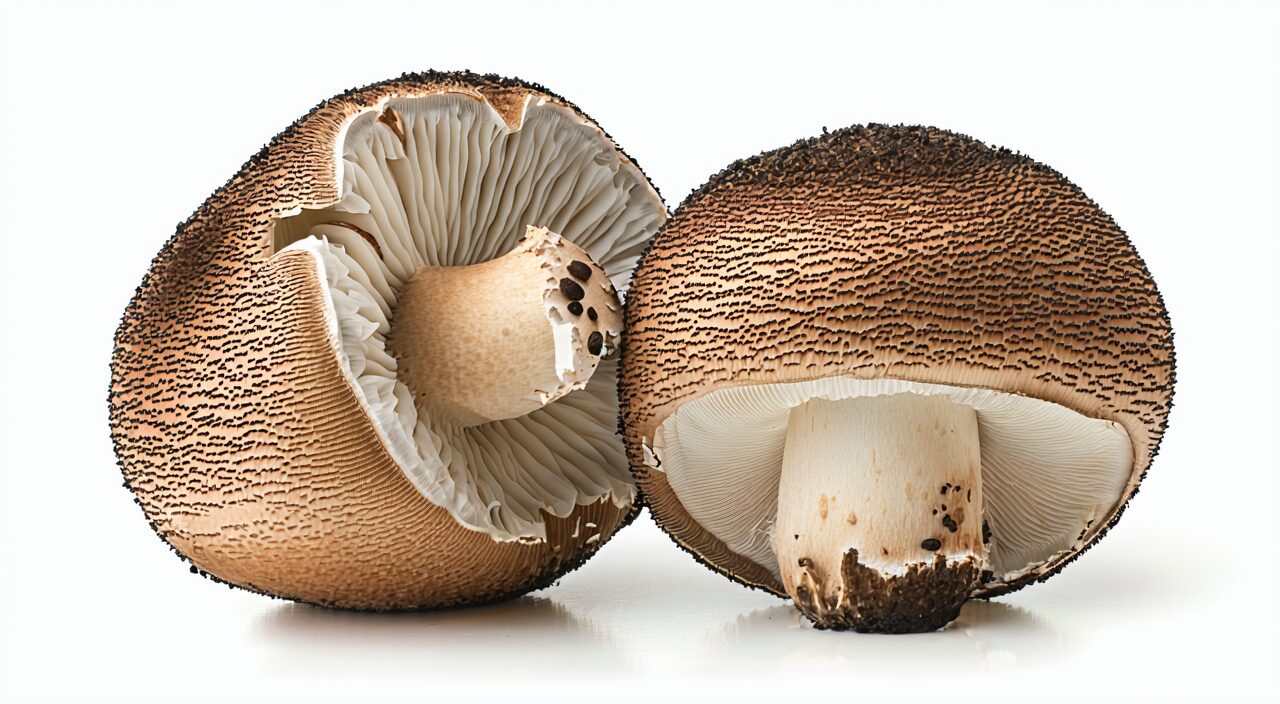
Ma Bo is the dried fruiting body of fungi from the family Lycoperdaceae, such as Lasiosphaera fenzlii, Calvatia gigantea, or Calvatia lilacina. Its shape is quite distinctive. In the wild, the fruiting bodies are mostly spherical, subspherical, or flattened-spherical, with diameters ranging from several centimeters to over twenty centimeters. When immature, the outer skin is white or pale yellow, the texture is relatively tender, and the interior is white and fleshy. As it matures, the outer peridium gradually ruptures, and the internal tissue dries out, turning into a brownish or pale brown spore powder. This spore powder is extremely fine, feels smooth and silky when rubbed between the fingers, and is very light; a light flick will release a cloud of dust-like powder. For this reason, it is also colloquially known as “grey bag” or “horse dung bag.” When identifying this fungus, it is crucial to note that many wild fungi have similar shapes, and some of them are toxic. One must never harvest and use them arbitrarily based solely on appearance. The Ma Bo available in ordinary pharmacies is mostly in dried form, appearing as irregular lumps or broken remnants of the peridium, filled or coated inside with a large amount of dark-brown spore powder.
What Is the Medicinal Part of Ma Bo?
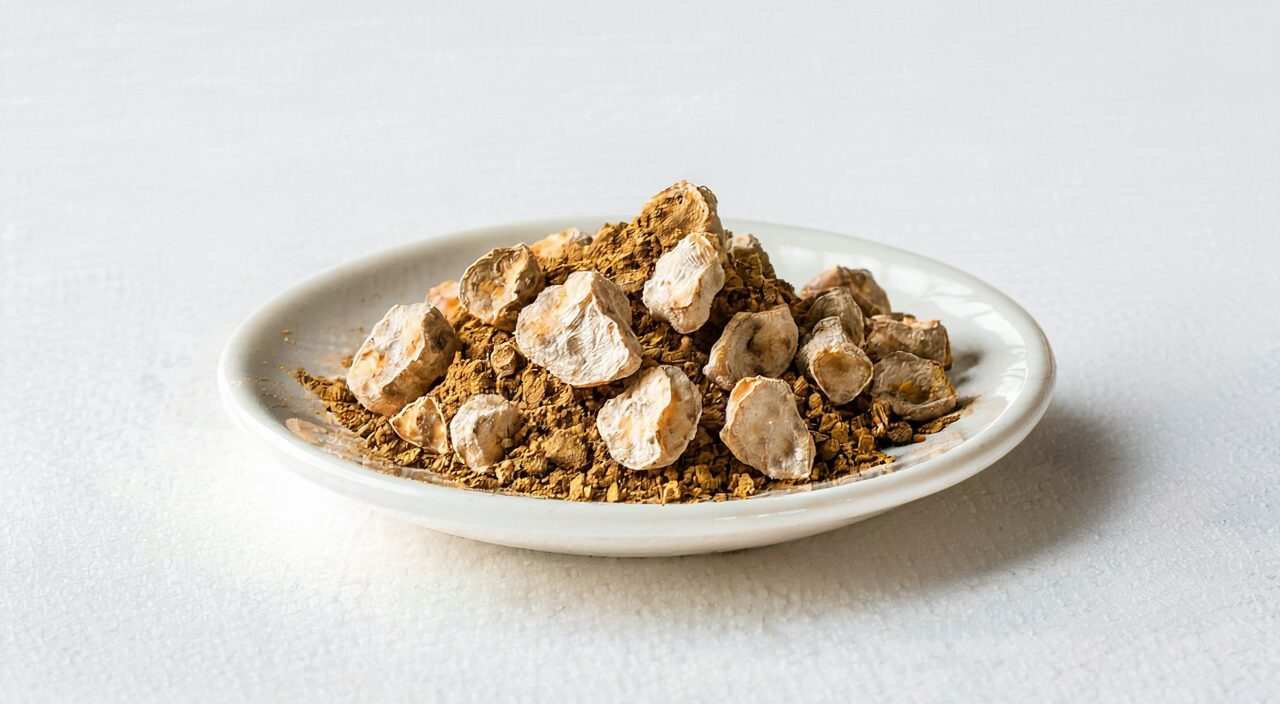
The medicinal part of Ma Bo is its dried fruiting body. The harvesting season is summer and autumn, ideally collected when the fruiting body has just matured and the outer peridium has not yet fully ruptured. After collection, soil and impurities are removed, and it is dried in the sun or at low temperatures. Commercially available Ma Bo is typically sold as whole dried fruiting bodies, compressed blocks, or processed powder. High-quality material is generally large, intact, light as fluff, with brownish spore powder that feels smooth without any gritty sensation when rubbed. Cutting open a piece of Ma Bo reveals a loose, foamy internal structure rich in powder that easily becomes airborne—an important sensory indicator that distinguishes it from other plant-based powdered herbs. Since the spore powder is easily blown away by the wind, the environment should be kept relatively stable during storage and handling to prevent the powder from scattering and contaminating other herbs.
How Does Traditional Chinese Medicine Understand Ma Bo?
In traditional Chinese medicine theory, Ma Bo is acrid and neutral in nature, and it enters the Lung meridian. Classical herbals have recorded its actions of clearing the lungs, benefiting the throat, astringing, and stopping bleeding. TCM practitioners often use it for throat discomfort, especially hoarseness, red, swollen and sore throat, and cough with scant phlegm, which tend to be associated with heat pathogens or wind-heat stagnating in the lung. Because it can disperse wind-heat, cool the blood, and stop bleeding, traditionally the powder could also be applied topically to bleeding gums, epistaxis, or small skin wounds to assist hemostasis and astringency. However, these applications all derive from summaries of ancient clinical experience. In modern use, they still need to be comprehensively analyzed in combination with individual constitution and current symptoms and should not be applied uniformly. For severe throat pain, or symptoms accompanied by fever or breathing difficulties, seeking medical attention should be the priority rather than relying solely on a single herb.
What Has Modern Research Explored About Ma Bo?
Modern researchers have conducted preliminary chemical analyses of Ma Bo and found that it contains substances such as calvacin, polysaccharides, fatty acids, and various trace elements. In experimental studies, extracts of Ma Bo have demonstrated certain antibacterial, anti-inflammatory, and antitumor activities, providing some modern perspectives to explain its traditional uses in clearing the throat and astringing to stop bleeding. However, most of these studies remain at the stage of in vitro or animal experiments and are still far from guiding clinical application. Therefore, the use of Ma Bo in traditional contexts still relies more on the support of TCM theory and should not be interpreted as possessing specific active ingredients in the modern medical sense.
What Are the Differences Between Ma Bo, Hai Jin Sha, and Pu Huang?
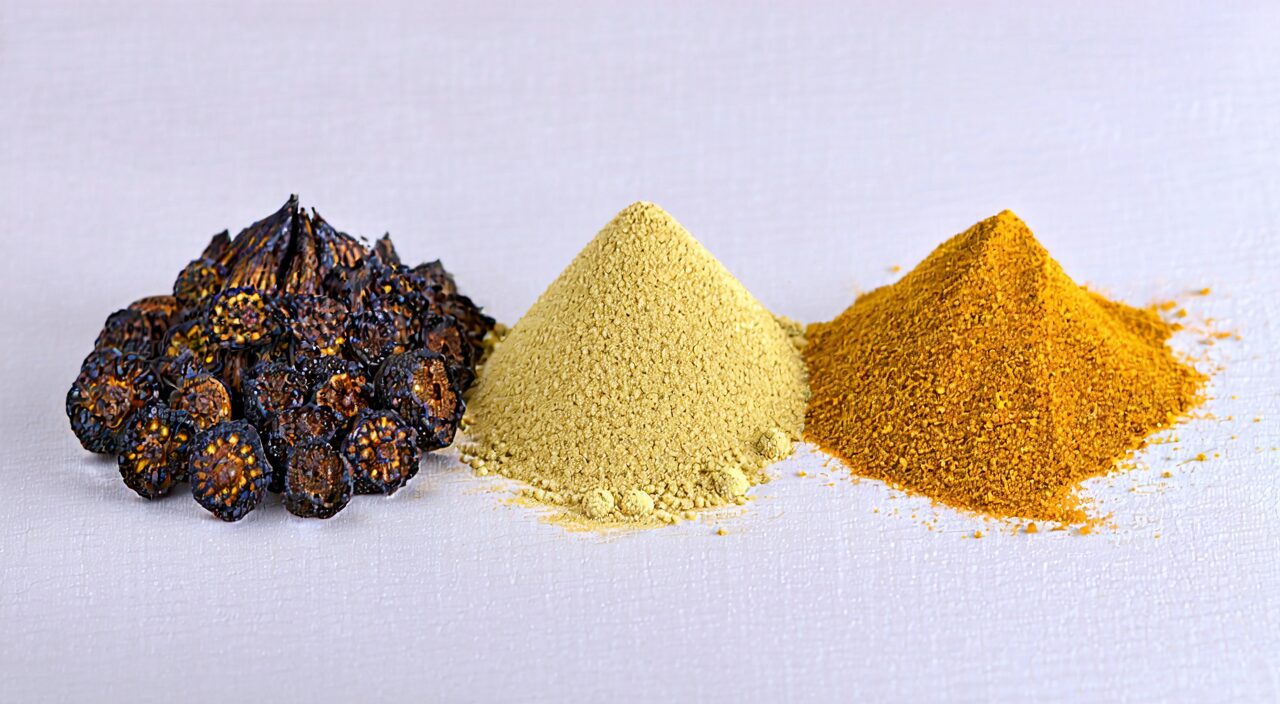
Ma Bo, Hai Jin Sha, and Pu Huang are three powdered or fine granular Chinese medicinal substances that are easily confused, but their plant origins and physical characteristics are markedly different. Ma Bo comes from fungal spores, Hai Jin Sha is the dried spores of Lygodium japonicum (a fern in the Lygodiaceae family), and Pu Huang is the dried pollen of Typha species. In terms of color, Ma Bo spore powder is mostly brownish or dark brown, Hai Jin Sha spore powder is brownish-yellow or light yellow-brown, and Pu Huang is bright yellow or yellowish-brown. As for texture, Ma Bo is extremely light with a velvety feel; Hai Jin Sha is smooth and granular, producing a rustling sound when rubbed; Pu Huang has a prominent floating sensation and tends to form clumps when pressed. In a flame test, Hai Jin Sha will crackle and flash, while Ma Bo and Pu Huang do not produce this phenomenon. Careful differentiation is needed when purchasing, especially when Ma Bo powder and Hai Jin Sha are similarly packaged. Touch and a simple flame test can provide an initial differentiation, but the most reliable method is to purchase clearly labeled herbs from trustworthy sources.
Which Formulas Use Ma Bo?
In classical formulas, Ma Bo often serves as an auxiliary herb, playing the role of clearing and soothing the throat and dispersing wind-heat. Several representative formulas include:
- Pu Ji Xiao Du Yin (Universal Benefit Powder to Eliminate Toxin): Originating from Dongyuan shi xiao fang, it is traditionally used for conditions caused by contracting wind-heat epidemic toxins, such as “large head epidemic” with redness and swelling of the head and face and throat obstruction. In this formula, Ma Bo is combined with Huang Qin, Huang Lian, Lian Qiao, and others to help clear heat-toxin from the upper burner and relieve red, swollen, and sore throat.
- Ma Bo San (Ma Bo Powder): A simple preparation made by grinding Ma Bo alone into powder, traditionally used for traumatic bleeding or bleeding gums, drawing on Ma Bo’s hemostatic effect when applied topically. In some texts, small amounts of Bing Pian (borneol) or Bai Fan (alum) may be added to enhance the heat-clearing and astringent effect.
- Qing Yan Li Ge Wan (Clear Throat and Benefit the Diaphragm Pill): A common Chinese patent medicine often used for sore throat, dry throat, and dry mouth. The formula includes Lian Qiao, Zhi Zi, Bo He, and other qi-clearing and toxin-resolving substances, with Ma Bo playing a synergistic role in benefiting the throat.
It is important to remind that each of these formulas has its own emphasis. Pu Ji Xiao Du Yin is more geared towards dispersing wind, clearing heat, and resolving toxins, while Qing Yan Li Ge Wan excels at benefiting the throat and generating fluids. Whether a formula is suitable for a specific individual should be comprehensively evaluated based on constitution, severity of symptoms, and any underlying conditions. It is recommended to use them under the guidance of a TCM professional and not to prepare formulas on one’s own.
What Precautions Should Be Taken When Using Ma Bo?
Several details are worth noting when using Ma Bo. First, its spore powder is extremely prone to become airborne. When opening the packaging or grinding, if the powder is inhaled, it may irritate the respiratory tract, causing coughing or discomfort. It is advisable to operate in a well-ventilated area or wear a mask. Second, adulterated or substitute products for Ma Bo are not uncommon on the market. The fruiting bodies of fungi not from the genuine Lycoperdaceae family, or processed products, are sometimes sold as Ma Bo. Medicinal substances from uncertain sources may pose safety risks, so it is best to purchase through formal channels. Furthermore, the method of using Ma Bo differs depending on the purpose, with distinctions between internal and external use. For internal use in decoctions, the dosage is usually small, typically controlled at 3–6 grams, or it may be used in pills or powders. For external use, an appropriate amount of powder can be applied directly or mixed into a paste. When addressing throat discomfort, if symptoms do not improve after several days of internal use of Ma Bo, or if hoarseness persists without relief or the sensation of a foreign body in the throat worsens, it is important to promptly visit an otolaryngology department to investigate deeper issues in the vocal cords or larynx. Finally, individuals with a history of allergies to fungal components should be especially cautious before using Ma Bo; it is best to test with a small amount first or consult a professional.
Summary
As a medicinal material derived from fungi, Ma Bo is commonly used in traditional Chinese medicine for red and swollen throat, hoarseness, and localized bleeding. Its key identification points are the spherical fruiting body and the light, airy, brownish spore powder. Compared with the visually similar powdered herbs Hai Jin Sha and Pu Huang, its origin and physical characteristics are distinctly different. During use, it is important to prevent accidental inhalation of the powder and to verify authenticity. Whether used internally or externally, it is recommended to make judgments under professional guidance in combination with personal circumstances. If throat symptoms persist or worsen, medical attention should be sought promptly. This article provides only popular science reference and cannot replace professional diagnosis or treatment.