
Who Is Qibao Meiran Dan Suitable For? Composition, Effects, and Contraindications

Premature graying of the beard and hair, hair loss, and soreness and weakness of the lower back and knees—these signs easily bring to mind “liver-kidney deficiency.” In traditional Chinese medicine, there is one classic formula commonly used for such conditions: Qibao Meiran Dan. Many people want to understand who it is suitable for, what medicinal ingredients it contains, and what contraindications must be noted. This article sorts out these aspects from the perspective of supplementing the liver and kidney and addressing premature graying.
The Formulation Concept of Qibao Meiran Dan
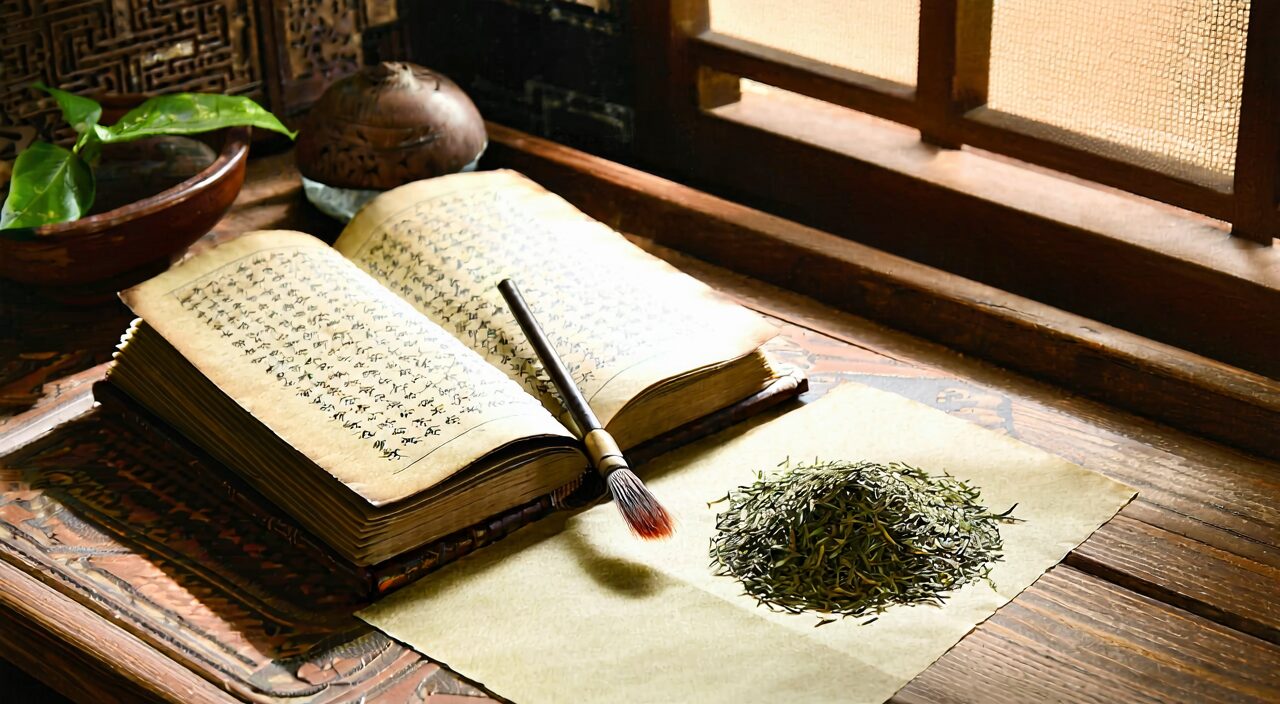
Qibao Meiran Dan is a classic formula for supplementing the liver and kidney. Traditionally, it is often used for premature graying of the beard and hair, hair loss, loose teeth, and other issues considered to be related to insufficiency of liver-kidney essence and blood.
In the formula name, “Qibao” refers to seven precious medicinal ingredients, and “Meiran” means beautifying the beard and hair. The overall concept is to improve the condition of the beard and hair by supplementing the liver and kidney and nourishing essence and blood, representing a typical “root-treatment” approach.
The Composition of Qibao Meiran Dan
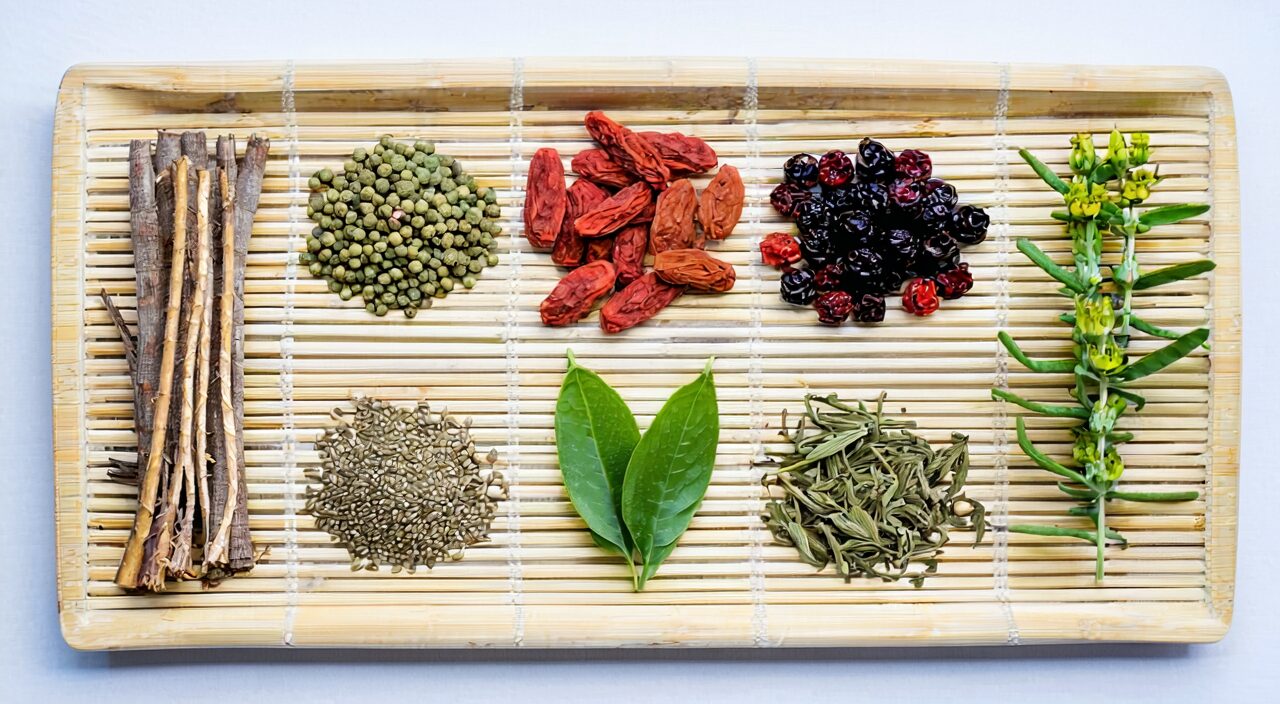
Traditional Qibao Meiran Dan is composed of the following seven medicinal ingredients. Dosage proportions may vary slightly between different sources. The table below is for reference and understanding only and should not be applied directly.
| Ingredient | Traditional Dosage Reference | Role in the Formula |
|---|---|---|
| He Shou Wu (Polygoni Multiflori Radix) | Large dose, sovereign ingredient | Supplements the liver and kidney, nourishes essence and blood, darkens gray hair |
| Gou Qi Zi (Lycii Fructus) | Appropriate dose, minister ingredient | Nourishes and tonifies the liver and kidney, benefits essence and brightens eyes |
| Tu Si Zi (Cuscutae Semen) | Appropriate dose, minister ingredient | Tonifies the kidney and secures essence, nourishes the liver and brightens eyes |
| Dang Gui (Angelicae Sinensis Radix) | Appropriate dose, assistant ingredient | Tonifies and activates blood, regulates menstruation and relieves pain |
| Niu Xi (Achyranthis Bidentatae Radix) | Appropriate dose, assistant ingredient | Supplements the liver and kidney, strengthens sinews and bones, guides blood downward |
| Bu Gu Zhi (Psoraleae Fructus) | Appropriate dose, assistant ingredient | Warms and tonifies kidney yang, secures essence and reduces urination |
| Fu Ling (Poria) | Appropriate dose, envoy ingredient | Strengthens the spleen and drains dampness, calms the heart and spirit |
It is especially important to note that in traditional use, He Shou Wu must undergo standardized processing to become processed He Shou Wu (Zhi He Shou Wu) in order to reduce potential risks. Modern research also suggests that He Shou Wu may cause liver injury; therefore, any formula containing He Shou Wu should be treated with caution.
Overseas users considering related products must understand the source and processing status of He Shou Wu in the product and use it under professional guidance. If symptoms such as fatigue, loss of appetite, yellow urine, or yellowing of the skin occur during use, discontinue use immediately and consult a doctor.
Who Is Qibao Meiran Dan Traditionally Suitable For?
From the perspective of TCM pattern differentiation, Qibao Meiran Dan is primarily suitable for constitution tendencies of liver-kidney insufficiency and depletion of essence and blood. Common manifestations include:
- Premature graying of the beard and hair, with significant white hair appearing at a relatively young age
- Sparse, dry, brittle hair that easily falls out
- Soreness and weakness of the lower back and knees
- Dizziness, tinnitus, and memory decline
- Soft, sore, or loose teeth
- Men may experience seminal emission; women may have scanty or delayed menstruation
If several of the above manifestations occur simultaneously, and the constitution tends toward deficiency-cold without obvious heat signs (such as not feeling cold but fearing heat, dry mouth and tongue, etc.), it has traditionally been believed that the condition may be suitable for a conditioning approach based on Qibao Meiran Dan. However, this is only a general summary. Ultimately, it must be combined with an individual’s specific condition through pattern differentiation; it is not advisable to make self-judgments based solely on a few symptoms.
Who Should Not Use Qibao Meiran Dan?
Qibao Meiran Dan is warm-tonifying in nature and relatively rich and cloying in texture. The following groups are traditionally considered unsuitable or require extreme caution:
- Damp-heat constitution: Thick, yellow, greasy tongue coating; bitter, sticky taste in the mouth; sticky stools; oily skin with acne. Lone warm supplementation is inadvisable.
- Obvious phlegm-dampness: Tendency to be overweight, excessive phlegm, heavy head and body sensation, abdominal distension, loose stools. Cloying formulas may promote dampness and generate phlegm.
- Liver fire flaring or yin deficiency with effulgent fire: Easily dry mouth and throat, irritability, susceptibility to anger, insomnia with excessive dreaming, heat in the palms, soles, and chest, red face and malar flush. Warm-heat medicinals may aggravate internal heat.
- Excess heat patterns: Such as during the exterior stage of a common cold or fever, sore and swollen throat, dry and bound stools, etc. Use is inappropriate during excess pattern stages.
- Spleen-stomach weakness: Usually poor appetite, post-meal abdominal bloating, unformed stools. The cloying ingredients in the formula may hinder digestion.
- Special populations: Pregnant women, breastfeeding women, children, individuals with liver or kidney dysfunction, and those allergic to any ingredient should not use it on their own.
- Concurrent use of other medications: If taking other prescription drugs or Chinese herbal medicines, consult a relevant professional first to avoid interactions.
Furthermore, anyone with a history of liver disease or suspected liver dysfunction should avoid formulas or products containing He Shou Wu. It is essential to rule out these risks before choosing to use it.
Differences Between Qibao Meiran Dan and Similar Formulas
Many people confuse Qibao Meiran Dan with other formulas that supplement the liver and kidney or nourish qi and blood. The table below clarifies their respective focuses to help differentiate them.
| Formula | Main Characteristics | Primary Conditioning Direction | Key Difference from Qibao Meiran Dan |
|---|---|---|---|
| Qibao Meiran Dan | Warmly supplements liver-kidney essence and blood; contains processed He Shou Wu, etc. | Premature graying, hair loss, lower back and knee soreness, loose teeth | Focuses on beard and hair problems caused by insufficiency of liver-kidney essence and blood; formula nature tends warm |
| Liu Wei Di Huang Wan | Mainly Shu Di Huang, Shan Zhu Yu, Shan Yao, etc.; nourishes kidney yin | Lower back and knee soreness, dizziness and tinnitus, night sweats, heat in the palms and soles caused by kidney yin depletion | Effect on premature graying is more indirect; direction leans toward nourishing kidney yin |
| Qi Ju Di Huang Wan | Liu Wei Di Huang Wan plus Gou Qi Zi and Ju Hua | Blurred vision, dry eyes, tearing when exposed to wind caused by liver-kidney yin deficiency | Emphasis on nourishing kidney, liver, and eyes; not primarily aimed at darkening gray hair |
| Si Wu Tang | Dang Gui, Chuan Xiong, Bai Shao, Shu Di Huang; basic formula for tonifying blood and regulating menstruation | Sallow complexion, dizziness, palpitations, menstrual irregularities from blood deficiency | Focuses on tonifying blood; liver-kidney supplementing power is gentler and does not directly target beard and hair |
| Ba Zhen Tang | Si Wu Tang combined with Si Jun Zi Tang (Ren Shen, Bai Zhu, Fu Ling, Gan Cao) | Pale complexion, shortness of breath, fatigue, dizziness due to dual qi and blood deficiency | Dual supplement of qi and blood; no direct effect on supplementing liver and kidney or darkening gray hair |
As can be seen, these formulas each have their own indication ranges and cannot substitute for one another. If one truly needs to choose among them, the decision must be based on individual constitution and primary manifestations, and made with professional advice to avoid using the wrong direction.
Summary
Qibao Meiran Dan is a classic formula with a long history for supplementing the liver and kidney and darkening gray hair. Traditionally, it is often used for premature graying, lower back and knee soreness, dizziness, tinnitus, and other manifestations of liver-kidney essence and blood insufficiency. However, it is not suitable for everyone. People with damp-heat, phlegm-dampness, exuberant liver fire, spleen-stomach weakness, and special populations should use it with caution. The safety issue of He Shou Wu, in particular, must be taken very seriously.
Compared with formulas such as Liu Wei Di Huang Wan, Qi Ju Di Huang Wan, Si Wu Tang, and Ba Zhen Tang, the indication directions vary. One should not arbitrarily choose a formula based solely on a single symptom.
Regardless of which traditional formula is considered, it is advisable to first understand your own constitution and specific condition, and consult a qualified TCM practitioner to obtain safe guidance. This article is for informational purposes only and cannot replace professional diagnosis or treatment advice.